


.png)


.png)

Personal Growth & Wellbeing
DASH Diet: Complete Guide, Food List, Meal Plan & Benefits for Blood Pressure
.png)
Written by
Aarohi Parakh,
Psychologist and Content Writer

Reviewed by
Sanjana Sivaram,
Psychologist and Clinical Content Head


What is the DASH Diet? (Dietary Approaches to Stop Hypertension)
Definition and Origin
The DASH diet, an acronym for “Dietary Approaches to Stop Hypertension,” was developed by the National Heart, Lung, and Blood Institute (NHLBI), a division of the U.S. National Institutes of Health (NIH). It was first introduced in the 1990s, a time when the prevalence of hypertension was on the rise, to help people manage high blood pressure naturally through food. But over the years, its benefits have extended far beyond hypertension, supporting weight management, heart health, diabetes prevention, and overall wellness. The first DASH study, conducted in 1995, was a landmark trial that laid the foundation for the DASH diet. A team of 160 health care professionals and researchers, pioneered by Dr George Bray, Dr Donna Ryan and Dr Catherine Champagne, discovered this dietary “pattern”, which has stood the test of time.
Based on the initial trial results, people who followed a combination diet that included whole grains, fruits, vegetables, lean protein, and low-fat dairy experienced significant reductions in blood pressure. High blood pressure (hypertension) is a serious health concern linked to a higher chance of conditions such as heart disease, kidney failure, and stroke.
It affects nearly half of the world’s population. The older you are, the higher your chance of developing it. It affects more than 60% of people over 60.
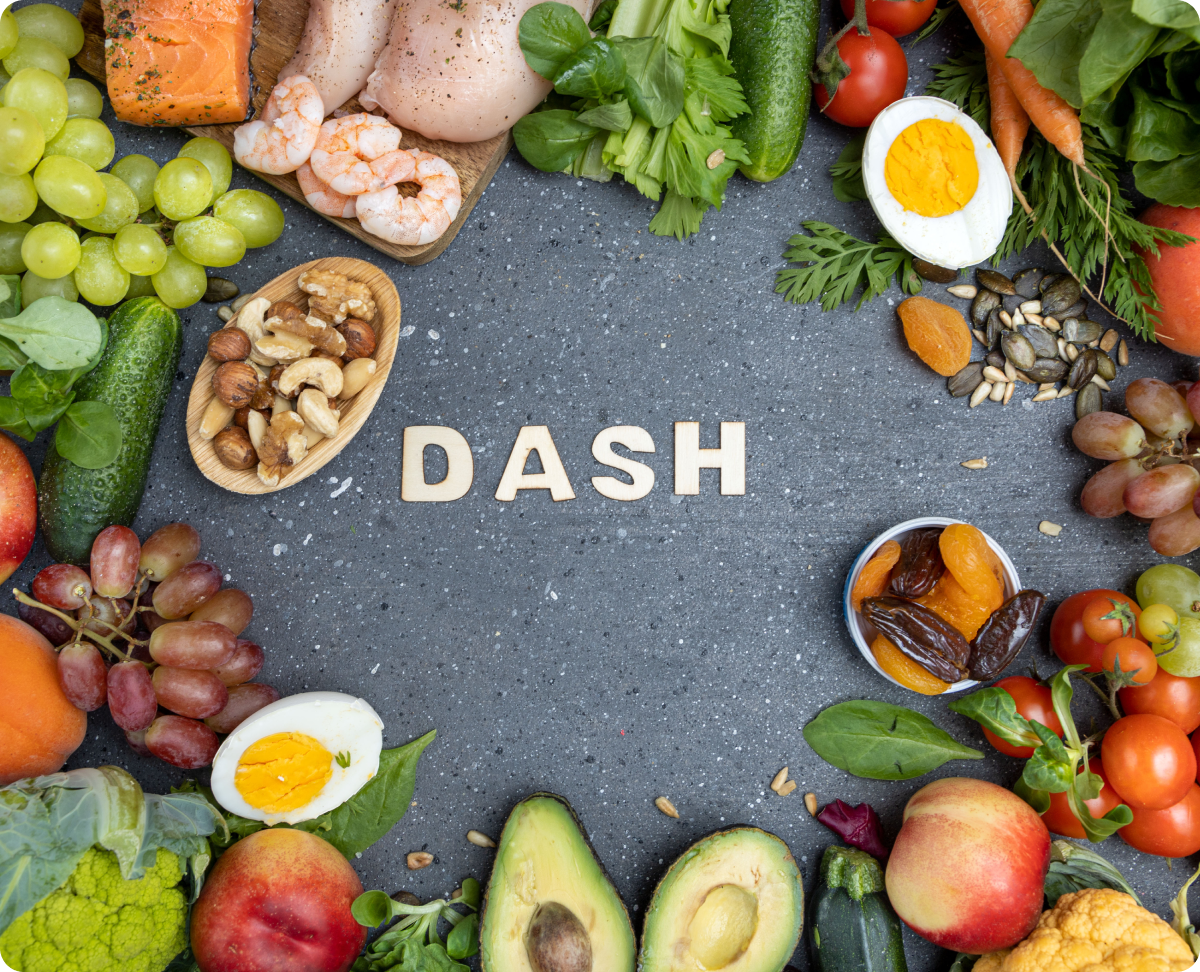
At its heart, the DASH diet encourages eating more whole, nutrient-dense foods; those naturally rich in potassium, magnesium, calcium, and fibre while cutting back on excess sodium, saturated fats, and added sugars.
Why the DASH Diet Fits Beautifully Into Indian Eating Patterns
Although the DASH diet originated in the West, it aligns well with how many Indian families cook and eat. Foods such as rice, fruits, curd, roti, sabzi, and dal already form a solid base. The main changes are in the proportions and how dishes are prepared.
- Adding a bit more vegetables and fruits.
- Choosing whole grains instead of refined ones.
- Picking low-fat dairy rather than full-cream
- Using less oil, ghee, achar, papad, namkeen, and restaurant food.
- Including more lentils, millets, and nuts.
These changes are easy to make and do not feel extreme. They still allow people to enjoy their usual family meals and cultural foods while making their diet healthier.
The Core Nutritional Principle
The DASH diet is based on boosting nutrients that counteract the effects of sodium:
- Potassium (helps balance fluids, supports heart and kidney function)
- Magnesium (relaxes blood vessels, supports nerve and muscle function)
- Calcium (supports vascular function and bone health)
Indian foods like bananas, coconut water, spinach (palak), rajma, chole, millets (jowar, bajra, ragi), dahi, and low-fat paneer are excellent sources of these nutrients.
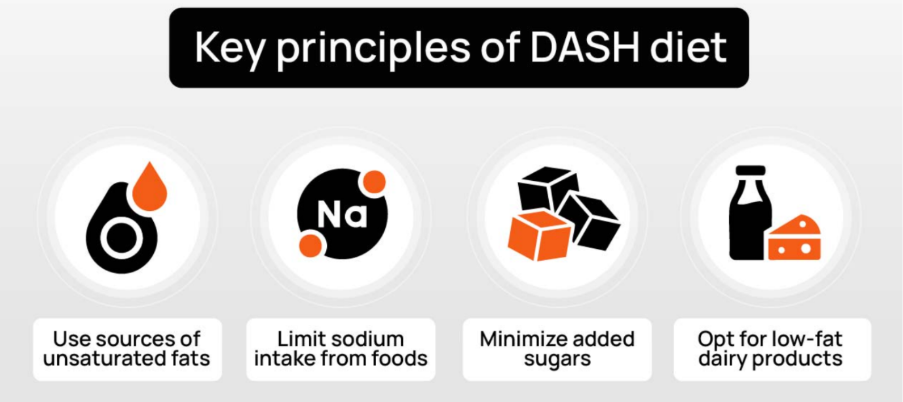
Meals prioritise fresh produce, intact whole grains, beans, nuts, seeds, and lean proteins. Additionally, the plan restricts foods high in saturated fat, sugar, and sodium. Choosing low-sodium foods, cooking with olive oil, and substituting herbs and spices for salt are some practical suggestions.
Two Versions of the DASH Diet: Standard vs Lower-Sodium
The DASH diet offers flexibility with two versions when it comes to sodium limits:
Standard DASH: up to 2,300 mg/day (equivalent to 1 teaspoon of table salt)
Lower-Sodium DASH: up to 1,500 mg/day
Note: Table salt is about 40% sodium. Below is a breakdown of the approximate sodium intake; the amount added to foods can be adjusted accordingly.
- 1/4 teaspoon salt = 575 mg sodium
- 1/2 teaspoon salt = 1,150 mg sodium
- 3/4 teaspoon salt = 1,725 mg sodium [between ½ tsp to ¾ tsp for lower sodium DASH diet]
- 1 teaspoon salt = 2,300 mg sodium
According to the Indian Council of Medical Research (ICMR) and the World Health Organization (WHO), the recommended daily sodium intake for Indians is 2300mg/day, which is about 5g (1 teaspoon) of common salt per day.
Indian food intake data indicate that average salt consumption ranges from 3g to 10g/day across states, with about 45% of the population consuming more than 5g/day.
This is attributed mainly to consumption in the form of:
- Pickles
- Papad
- Namkeen mixtures
- Street foods
- Restaurant gravies
- Ready-made masalas
- Bread, biscuits, and packaged snacks
- Instant noodles and soup powders
Reducing sodium even by 1,000 mg per day can meaningfully lower blood pressure.
💡Pro Tip: In most Indian kitchens, salt is added during tadka, cooking, and even after cooking. To begin, try reducing consumption within one of these layers. The difference adds up surprisingly fast.
How the DASH Diet Lowers Blood Pressure and Works for Weight Loss
For many adults in India, high blood pressure often develops gradually due to daily habits such as adding extra salt while cooking, eating processed snacks, choosing refined grains, or not eating enough vegetables. The DASH diet offers a practical way to change these habits. It encourages foods that help improve blood flow and slowly moves your meals toward choices that support a healthy weight and steady energy.
Primary Mechanism for Hypertension
One of the most effective aspects of the DASH diet is its ability to restore the body’s mineral balance—an essential factor in regulating blood pressure. High sodium intake, which is common in many Indian diets due to salted snacks, pickles, papad, packaged foods, and restaurant curries, causes the body to retain water. This increases fluid volume and increases pressure on blood vessels, which, in turn, raises blood pressure.
The DASH diet counters this by increasing foods naturally rich in potassium, magnesium, and calcium. These minerals work together to offset the effects of excess sodium:
- Potassium (found in bananas, coconut water, spinach, potatoes, dals) supports the body’s ability to excrete sodium efficiently.
- Magnesium (found in whole grains such as ragi, jowar, and bajra, as well as in nuts and legumes) plays a role in maintaining the normal constriction and relaxation of blood vessels.
- Calcium (from low-fat milk, curd, paneer) plays a role in maintaining healthy vascular function.
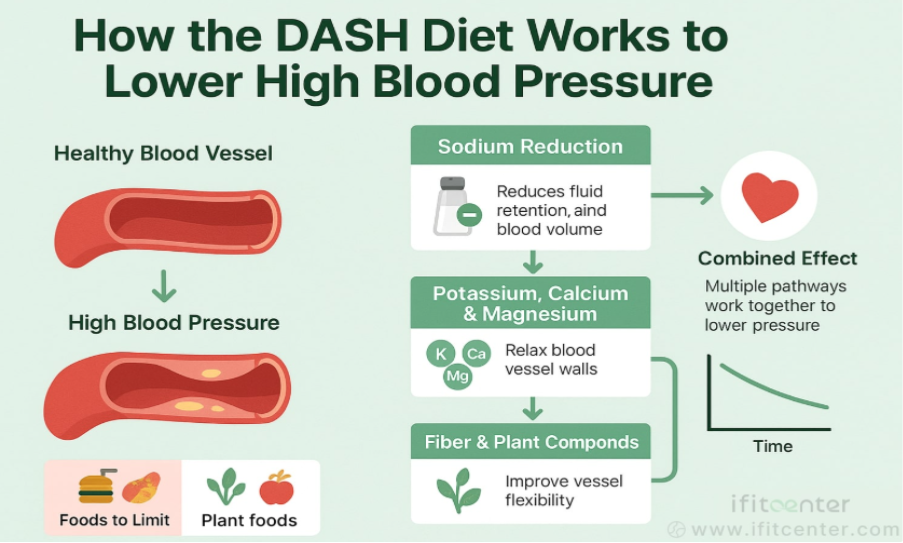
By shifting the diet toward these mineral-rich foods, such as vegetables, fruits, legumes, whole grains, and low-fat dairy, the DASH pattern helps the cardiovascular system operate with less strain. In Indian households where salt is added at multiple stages of cooking, this shift can make a measurable difference.
Research-Backed Results
- The DASH diet remains one of the most thoroughly studied dietary patterns for blood pressure. Across large, controlled studies, it has consistently demonstrated the ability to lower systolic blood pressure by meaningful margins, with improvements often seen within 2 to 4 weeks of adherence. Systolic blood pressure is the top number in a BP reading and refers to the amount of pressure experienced by the arteries while the heart is beating.
- Individuals with hypertension typically show the greatest benefit, but even those with moderately elevated blood pressure experience noticeable reductions. When the DASH diet is combined with a moderate decrease in sodium intake, the improvements become even more pronounced.
💡Takeaway: Adjusting the overall eating pattern rather than relying on any single food can lead to clinically relevant changes in blood pressure in a relatively short timeframe.
DASH for Weight Loss
Although the DASH diet was developed specifically to manage blood pressure, its structure naturally supports healthy weight loss. By design, it emphasises nutrient-dense, lower-calorie foods such as vegetables, fruits, whole grains, pulses, lean proteins, and low-fat dairy. These foods provide volume, vitamins, minerals, and fibre, with fewer calories than the high-fat, high-sugar, highly processed options that often dominate modern diets. In addition, the diet’s low glycemic index helps to regulate blood sugar levels and improve insulin sensitivity, which promotes weight loss.
As whole foods occupy more space on the plate, higher-calorie components such as fried snacks, heavy gravies, refined grains, and sweets automatically decrease. This creates a gentle, sustainable caloric deficit without requiring strict portion rules or deliberate restriction. The result is gradual, steady weight loss that aligns with long-term health goals. Studies have also shown that the DASH Diet can be effective for weight loss, particularly when combined with regular physical activity.
Fibre and Satiety
A key contributor to this natural reduction in calories is fibre. High-fibre foods (vegetables, fruits, legumes, whole grains) digest slowly, creating a sense of fullness and helping moderate appetite throughout the day. They help stabilise energy levels and reduce the likelihood of overeating, particularly in the evening, a typical pattern in many Indian households.
By incorporating fibre-rich foods such as rajma, chole, moong dal, whole-wheat rotis, millets, leafy vegetables, and fruits like guava and papaya, meals become more satisfying, and hunger remains controlled for longer. This leads to more mindful eating, smaller portions, and fewer cravings, all of which support weight management without feeling restrictive.
💡Takeaway: For Indian households, where salt and refined foods often creep in unnoticed, DASH offers a practical and sustainable way to improve overall cardiometabolic health.
DASH Diet Food List: Recommended Servings Per Day
The DASH eating plan requires no special foods and instead provides daily and weekly nutritional goals. This plan recommends:
- Eating vegetables, fruits, and whole grains
- Including fat-free or low-fat dairy products, fish, poultry, beans, nuts, and vegetable oils
- Limiting foods that are high in saturated fat, such as fatty meats, full-fat dairy products, and tropical oils such as coconut, palm kernel, and palm oils
- Limiting sugar-sweetened beverages and sweets
Based on these recommendations, the following table shows examples of daily and weekly servings that meet DASH eating plan targets for a 2,000-calorie-a-day diet.
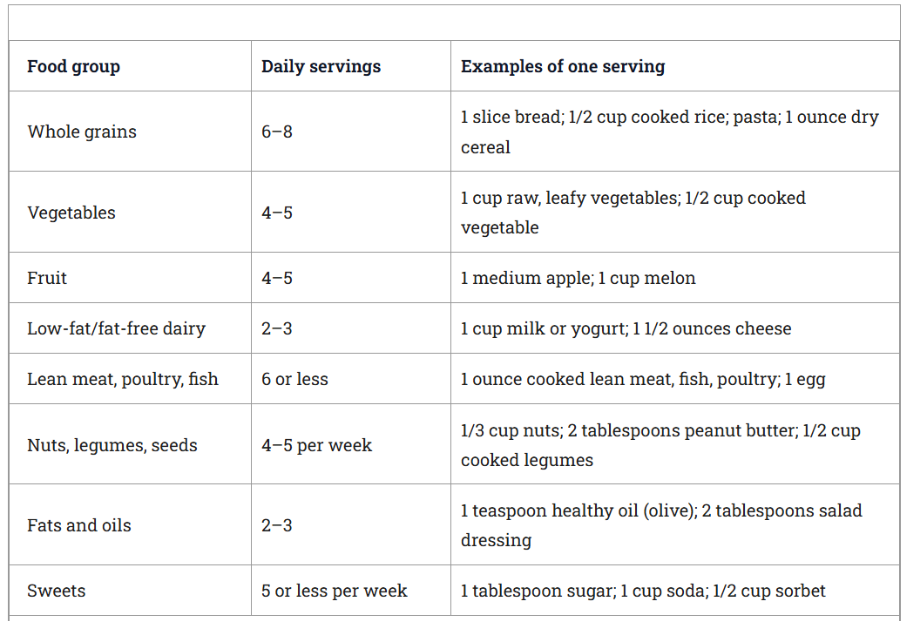
The number of servings you should have each day depends on your daily calorie needs. Recommended daily caloric intake depends on gender, age, weight, and activity level. Use a calorie calculator or speak with a healthcare provider if you need help determining how many calories to eat in a day.
💡Pro-Tips for each food group:
- Grains are the foundation of energy, and the goal is to make at least half of our grain choices whole. When buying bread or cereals, look for the word “whole” as the first ingredient on the list. “Multigrain” or “wheat flour” isn’t always the same as “100% whole wheat.”
- Vegetables are powerful sources of nutrients. They are naturally low in calories and sodium and rich in fibre, vitamins, and minerals. Eating a variety of colours ensures you get a wide range of nutrients.
- Fruits offer fibre, vitamins, and minerals, along with a natural sweetness to satisfy your cravings. Aim for whole fruits more often than juice, as they contain more fibre. For canned fruit, choose options packed in their own juice or water, not in heavy syrup, to avoid added sugars.
- Protein is vital for building and repairing tissues, but the source matters. The DASH diet favours lean sources to keep saturated fat intake low. Try baking, broiling, grilling, or poaching your proteins instead of frying to keep them lean and healthy.
- Dairy products are a major source of calcium and vitamin D, which are essential for bone health and have a role in blood pressure regulation. Choose skim or 1% milk, low-fat or fat-free yoghurt (especially plain Greek yoghurt), and low-fat cheese.
- Nuts, seeds, and legumes are sources of healthy fats and fibre, but are also calorie-dense, so portion control is the key. A small handful of almonds makes a great afternoon snack. You can also add a tablespoon of chia seeds to your morning yoghurt or oatmeal for a fibre boost.
- Fat is a necessary part of any diet, but the DASH diet emphasises healthier unsaturated fats over saturated and trans fats. Use olive oil in salad dressings or for sautéing vegetables over medium heat.
💡Foods to Limit or Avoid on the DASH Diet
- Sodium: Read food labels carefully. Choose “low sodium” or “no salt added” versions. Rinsing canned beans and vegetables can also reduce sodium. At home, flavour your food with herbs, spices, lemon juice, and vinegar instead of salt.
- Saturated and Trans Fats: These are limited on the DASH diet because they can raise LDL (“bad”) cholesterol and increase risk for heart disease. Replace butter with olive oil for cooking. Choose lean protein and low-fat dairy. Always check labels for “partially hydrogenated oil,” which is another name for trans fat, and avoid those products.
- Sweets and Added Sugars: High sugar intake is linked to weight gain, inflammation, and other health issues that can negatively impact blood pressure. Limit intake of soda and other sugary drinks, candy, cookies, pastries, and ice cream.
- Red Meats: The DASH diet recommends limiting red meat to a few servings per week. While it can be a source of iron and protein, it’s often higher in saturated fat and cholesterol than poultry or fish.
- Alcohol: Alcohol can increase blood pressure, so should be consumed in moderation.

Sample DASH Diet Meal Plan for a Week
Here is a practical example of how an Indian household can follow the DASH diet, integrating the nuances of their cultural identity.
🌿 DAY 1
Breakfast
- Vegetable upma (low oil, lots of carrots, peas, beans)
- 1 small banana
- 1 cup low-fat milk or plain tea without sugar
Mid-Morning Snack
- Coconut water
- 4–5 almonds
Lunch
- 2 whole wheat rotis
- Lauki (bottle gourd) sabzi
- Moong dal tadka (light salt, no fried tempering)
- Kachumber (cucumber, tomato, onion, lemon)
Evening Snack
- Roasted makhana (1 small bowl)
Dinner
- Grilled or tawa paneer/chicken (minimal salt; seasoned with lemon, garlic, pepper)
- Steamed broccoli + carrots
- Small bowl brown rice
The sample menus for Day 2 to Day 7 have been shared below for reference:
Comprehensive Health Benefits of the DASH Eating Plan
The benefits of the DASH diet extend beyond lowering blood pressure and promoting weight loss. It can also provide other health benefits as described below:
- Improved Heart Health: Many Indian diets rely heavily on deep frying, oil-rich gravies, and salty snacks, all of which adversely impact heart health. DASH helps reduce cholesterol, inflammation, and sodium intake, leading to better heart health over time.
- Diabetes Management: Millets, whole grains, pulses, and high-fibre vegetables stabilise sugar spikes. This is especially helpful for Indians, who have a higher genetic predisposition to insulin resistance.
- Reduced Risk of Chronic Diseases: Research shows that following DASH could lower risk of breast cancer, colorectal cancer and metabolic syndrome, a group of conditions that raises the risk of Type 2 diabetes, heart disease and stroke.
Getting Started: Practical Tips for Adopting the DASH Diet
Adopting the DASH diet doesn’t require a complete overhaul of your kitchen. Small, consistent adjustments can make the diet easy to adopt in Indian households where meals are culturally rooted, shared as a family, and often prepared fresh. These practical steps help ease the transition while keeping everyday routines intact.
Transition Gradually
The most sustainable way to adopt the DASH approach is to introduce changes one step at a time. Begin by adding one extra serving of vegetables to your lunch or dinner, perhaps an additional sabzi, leafy greens, or a simple salad. Once this feels natural, switch to whole grains such as whole-wheat rotis, brown rice, or millets like jowar and bajra on a few days of the week. Gradual shifts are easier to maintain than sudden dietary changes and blend seamlessly into the rhythm of Indian home cooking.
Read Food Labels
Hidden sodium is common in foods we don’t usually consider “salty.” In Indian households, this often includes bakery bread, biscuits, ready-made gravies, instant noodles, snack mixes, papad, ketchup (154 mg of sodium), and even certain brands of masalas. Reading labels helps identify products with high sodium, added sugars, or excessive saturated fats. Choose items marked “low sodium,” “unsalted,” or those with shorter ingredient lists. Over time, these informed choices significantly reduce overall salt intake without affecting meal satisfaction.
Cook More at Home
Home cooking is one of the strongest advantages of Indian households—and it aligns beautifully with the DASH diet. Preparing meals at home provides greater control over the amounts of salt, oil, and packaged ingredients used. Small adjustments—using less salt during tempering, avoiding multiple layers of seasoning, or opting for fresh tomatoes and onions instead of packaged gravies—can meaningfully reduce sodium intake. Making fresh ginger-garlic paste at home can also reduce sodium intake, as commercially available versions contain 245-480 mg per serving. Relying on traditional methods such as steaming, pressure cooking, or using minimal oil helps maintain both flavour and nutrition.
Dining Out Strategies
Eating out is a part of modern life, but thoughtful choices can keep meals DASH-friendly. Opt for dishes that are grilled, steamed, or tawa-cooked rather than fried or loaded with creamy gravies. When ordering Indian cuisine, dal preparations, tandoori items (with minimal salt), and simple vegetable dishes are often better choices. Request that food be prepared with less salt, and avoid add-ons such as papad, salted chaas, or extra sauces, which can significantly increase sodium intake. Even small decisions, like choosing roti over naan, help maintain the balance you’ve built at home.
Common Challenges of Following the DASH Diet
- The DASH diet is generally considered a healthy and effective plan for most adults; however, individuals with kidney disease may need to limit their potassium intake, which could make it difficult to follow the eating plan. It may not be suitable for pregnant or breastfeeding women who have different nutritional needs. It is recommended that individuals consult with a healthcare professional or registered dietitian before starting the DASH Diet or any other new eating plan.
- One of the most common challenges of following the DASH Diet is reducing sodium intake. Many processed and packaged foods are high in sodium, making it challenging to stay within the diet’s recommended daily limit.
- Finding healthy alternatives to favourite foods, managing cravings for unhealthy snacks, and staying motivated and accountable could be challenging for individuals.
- It may require some upfront planning and preparation, particularly when it comes to meal planning and grocery shopping, which requires commitment and lifestyle changes.
Having said that, these obstacles can be overcome with time and practise, with DASH diet being a long-term, sustainable, and enjoyable part of one’s lifestyle
FAQs
Q1. Is the DASH diet suitable for Indian meals?
Yes. It fits naturally with dal, sabzi, roti, curd, fruits, whole grains, and millets, which are everyday Indian staples.
Q2. Does the DASH diet require eliminating salt completely?
No. It simply encourages reducing excess sodium from cooking, processed foods, papad, pickles, and packaged snacks.
Q3. Can vegetarians follow the DASH diet?
Absolutely. Indian vegetarian foods such as dals, legumes, paneer (low-fat), tofu, nuts, fruits, and vegetables are a perfect fit.
Q4. How soon can I expect a change in my blood pressure?
Many people notice improvements within 2–4 weeks, especially when reducing salt intake alongside the DASH diet.
Q5. Does the DASH diet help with weight loss?
Yes. High-fibre, nutrient-dense foods keep you full longer and naturally reduce calorie intake.
Q6. Is the DASH diet safe for people with diabetes?
Yes. Its emphasis on whole grains, vegetables, fruits, and lean proteins supports stable blood sugar levels.
Conclusion
The DASH diet offers a practical, sustainable way to support heart health, manage blood pressure, and improve overall well-being, without giving up familiar Indian meals. Small, consistent changes in daily eating patterns make a meaningful difference over time.
Need Support? If you’d like personalised guidance or help building DASH-friendly habits, you can connect with 1to1help’s dietitians and wellbeing experts through the Employee Assistance Programme (EAP). Our specialists can help you get started and stay on track.
References
- Appel, L. J., Moore, T. J., Obarzanek, E., Vollmer, W. M., Svetkey, L. P., Sacks, F. M., … Karanja, N. (1997). A clinical trial of the effects of dietary patterns on blood pressure. The New England Journal of Medicine, 336(16), 1117–1124. https://doi.org/10.1056/NEJM199704173361601
- Sacks, F. M., Svetkey, L. P., Vollmer, W. M., Appel, L. J., Bray, G. A., Harsha, D., … Karanja, N. (2001). Effects on blood pressure of reduced dietary sodium and the Dietary Approaches to Stop Hypertension (DASH) diet. The New England Journal of Medicine, 344(1), 3–10. https://pubmed.ncbi.nlm.nih.gov/11136953/
- Filippou, C. D., Tsioufis, C., Thomopoulos, C., Mihas, C., Dimitriadis, K., & Tousoulis, D. (2020). Dietary Approaches to Stop Hypertension (DASH) diet and blood pressure reduction: A meta-analysis of randomized controlled trials. Journal of Human Hypertension, 34, 367–374. https://pubmed.ncbi.nlm.nih.gov/32330233/
- Juraschek, S. P., Miller, E. R., & Weaver, C. M. (2021). Potassium, magnesium, and calcium and their role in blood pressure regulation. Frontiers in Nutrition, 8, 655. https://pmc.ncbi.nlm.nih.gov/articles/PMC8109864/
- EatHealthy365. (n.d.). What to eat on the DASH diet: Your ultimate food guide. https://eathealthy365.com/what-to-eat-on-the-dash-diet-your-ultimate-food-guide/
- Cleveland Clinic. (n.d.). DASH diet: What it is, meal plans, and recipes. https://health.clevelandclinic.org/dash-diet-what-is-it-meal-plans-and-recipes
- National Heart, Lung, and Blood Institute. (n.d.). DASH eating plan. https://www.nhlbi.nih.gov/education/dash-eating-plan
- Verywell Health. (2024). DASH diet: Food list. https://www.verywellhealth.com/dash-diet-7487469#toc-dash-diet-food-list
- Verywell Health. (n.d.). Systolic and diastolic blood pressure. https://www.verywellhealth.com/systolic-and-diastolic-blood-pressure-1746075
- Healthline. (n.d.). DASH diet: A detailed beginner’s guide. https://www.healthline.com/nutrition/dash-diet#foods-to-eat
- Harvard Health Publishing. (2019). The DASH diet: A great way to eat foods that are healthy and delicious. https://www.health.harvard.edu/blog/the-dash-diet-a-great-way-to-eat-foods-that-are-healthy-and-delicious-2019072517326
- Pennington Biomedical Research Center. (n.d.). DASH diet: What you need to know. https://www.pbrc.edu/training-and-education/community-health-resources/pennington-nutrition-series/dash-diet-what-you-need-to-know.aspx
- ShortFoodBlog. (n.d.). Where did the DASH diet originate from? https://shortfoodblog.com/where-did-the-dash-diet-originate-from/
- Mayo Clinic. (n.d.). DASH diet: Healthy eating to lower blood pressure. https://www.mayoclinic.org/healthy-lifestyle/nutrition-and-healthy-eating/in-depth/dash-diet/art-20048456
- Neura Health. (n.d.). DASH diet – Glossary entry. https://neura.health/glossaries/nutrition/dash
- OnManorama. (2024). How much salt should you have in a day? https://www.onmanorama.com/food/features/2024/09/17/how-much-salt-should-you-have-in-a-day.html
- World Health Organization. (2023). Sodium reduction: Key facts. https://www.who.int/news-room/fact-sheets/detail/sodium-reduction
- Medical News Today. (n.d.). What to know about hypertension. https://www.medicalnewstoday.com/articles/248958
- Cleveland Clinic. (n.d.). Magnesium: Why you need it. https://health.clevelandclinic.org/magnesium
- Health.com. (2024). Potassium: What does it do? https://www.health.com/potassium-7564162#toc-what-does-potassium-do
- Mayo Clinic. (n.d.). Diabetes prevention: 5 tips for taking control. https://www.mayoclinic.org/diseases-conditions/type-2-diabetes/in-depth/diabetes-prevention/art-20047639
- Healthline. (n.d.). High blood pressure (hypertension). https://www.healthline.com/health/high-blood-pressure-hypertension
- Verywell Health. (n.d.). Insulin sensitivity: What to know. https://www.verywellhealth.com/insulin-sensitivity-8621169
- Verywell Health. (n.d.). Glycemic index chart for common foods. https://www.verywellhealth.com/glycemic-index-chart-for-common-foods-1087476
- Verywell Health. (n.d.). What to know about arteries. https://www.verywellhealth.com/arteries-8681283
- National Institute of Diabetes and Digestive and Kidney Diseases. (n.d.). Body Weight Planner. https://www.niddk.nih.gov/bwp
- WebMD. (n.d.). LDL cholesterol: The “bad” cholesterol. https://www.webmd.com/heart-disease/ldl-cholesterol-the-bad-cholesterol
- Perez-Martinez, P., Mikhailidis, D. P., Athyros, V. G., Bullo, M., Couture, P., Covas, M. I., … Delgado-Lista, J. (2019). Lifestyle recommendations for the prevention and management of metabolic syndrome. Metabolism: Clinical and Experimental, 101, 153994. https://pubmed.ncbi.nlm.nih.gov/31235081/
- Cleveland Clinic. (n.d.). Breast cancer: Overview. https://my.clevelandclinic.org/health/diseases/3986-breast-cancer
- Cleveland Clinic. (n.d.). How to prevent colon cancer. https://health.clevelandclinic.org/how-to-prevent-colon-cancer
- Cleveland Clinic. (n.d.). Type 2 diabetes. https://my.clevelandclinic.org/health/diseases/21501-type-2-diabetes
- Cleveland Clinic. (n.d.). Heart disease. https://my.clevelandclinic.org/health/diseases/24129-heart-disease
- Cleveland Clinic. (n.d.). Stroke. https://my.clevelandclinic.org/health/diseases/5601-stroke


.svg)
.svg)
.svg)
.svg)