


.png)


.png)

Parenting Challenges
Self-Care for Parents: 7 Ways to Find Your Me Time While Parenting

.png)
Written by
Aarohi Parakh,
Psychologist and Content Writer

Reviewed by
Sanjana Sivaram,
Psychologist and Clinical Content Head


Introduction
It is 11:30 at night in an Indian urban household. The kitchen has finally been tidied up, meal preparations have been finalised for the next morning, and the laptop display screen has been lowered. Everyone else is asleep. A parent sits quietly with their phone, scrolling without interest, simply because this is the first moment of silence they have had in the day. But there is still work to be done, clothes to be folded, and emails to be answered. Yet their body feels too tired to do anything more. A familiar thought arises: “I should be doing something productive, but I am exhausted.”
This moment is deeply familiar to many parents. Parenting is one of the most rewarding yet demanding roles anyone can take on. Amidst constant juggling of work responsibilities, household duties, childcare, and family expectations, personal time often comes last. Even thinking about taking time for oneself can bring up guilt.
This is where self-care for parents becomes essential. It is not a luxury or an act of selfishness, but a means of sustaining one’s mental and physical health. According to a study published in the “Journal of Family Psychology,” carving out personal time for self-care while parenting can lead to improved well-being and overall family satisfaction. This article explores seven practical ways to find me time while parenting, grounded in everyday Indian realities so that parents can care for themselves without guilt or unrealistic expectations.
The Demands and Rewards of Parenthood
Becoming a parent is a transformative experience that brings a deep sense of meaning, a myriad of emotions, responsibilities, and opportunities for personal growth. Watching a child grow, learn, and express themselves can be profoundly fulfilling. Parents often refer to these times as the emotional core of their lives; however, they also come with their share of challenges. Sacrifices, time demands, substantial financial commitments, and emotional or physical exhaustion are rarely discussed or openly acknowledged as challenges.
In India, parenting is frequently accompanied by complex expectations and demands. Parents may experience emotional and physical strain due to long workdays, long commutes, household chores, school responsibilities, and extended family obligations. Even when they work full-time, mothers in particular frequently bear the emotional burden of childcare.
Navigating these demands can eventually lead to fatigue and burnout. Many parents normalise this weariness as part of being a good parent. In reality, parenting can be both rewarding and taxing. The first step to better self-care is acknowledging this dual experience.
Is It Normal to Feel Guilty? Dealing with Parenting Guilt and Self-Care
Why Parenting Guilt Is So Common
Dealing with parenting guilt is one of the biggest emotional challenges parents face. Guilt often arises when parents think about resting, asking for help, or choosing themselves, even for a brief moment.
In Indian families, guilt is reinforced by cultural beliefs such as:
- Children should always come first
- Good parents sacrifice personal comfort
- Taking time for oneself is selfish
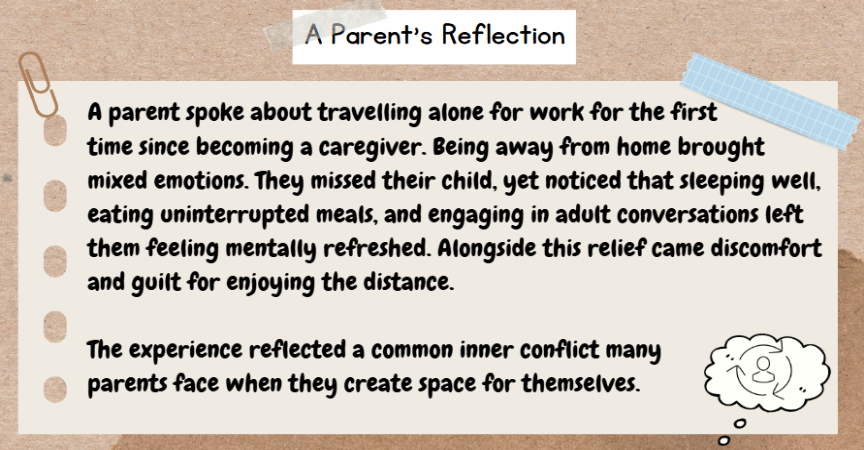
Social comparison adds to this pressure. Seeing other parents appear organised and composed can make individuals question their own adequacy. Joint family systems can further increase guilt when older generations equate constant availability with good parenting. Studies show that the most significant barrier preventing mothers from prioritising their own wellness was family responsibilities (57%), followed by lack of time and guilt (27%).
Why Finding Me Time Is Not Selfish, But Necessary
Finding me time while parenting is not about escape or indulgence. It is about emotional regulation and sustainability.
Parents who do not get time to rest are more likely to feel irritable, overwhelmed, or emotionally withdrawn. Small frustrations escalate quickly when emotional reserves are depleted.
From a psychological perspective, children benefit when caregivers are calm, regulated, and emotionally present. A rested parent responds with patience rather than reactivity. The analogy of the flight attendant asking passengers to put on their own oxygen mask before helping others is befitting in this context.
The Proven Benefits of Parental Respite and Recharge
Consider this example. A parent discovered that self-care did not need to be a day off to make a difference. After joining a six-week stress-management programme at work, they began practising a short evening mindfulness exercise and pausing for five minutes before reacting to challenging moments with their child. Over time, they observed that they were more emotionally available at the end of the day, felt calmer during playtime, and argued less over mundane tasks. Rather than having more time, the change was brought about by an improvement in their ability to handle stress.
This effect is well supported by research. Research indicates a strong correlation between parental stress and diminished emotional health, as well as poorer-quality interactions with children. Parents who learn how to control their emotions and handle stress report less distress and improved relationships with their children. Practising self-care enhances emotional regulation and psychological resilience, which are key to responding thoughtfully rather than reacting in frustration.
A recent meta-analysis pooling data from over 22,000 parents found a consistent negative relationship between parental stress and overall well-being. Higher stress was linked with lower happiness, life satisfaction, and emotional health. This review highlights the importance of supporting parental mental health not just for parents themselves, but for improved family functioning.
According to the World Health Organization (WHO), caregivers who prioritise their own well-being are more likely to maintain nurturing and consistent caregiving over time.
In summary, self-care for parents leads to:
- Reduced stress and emotional exhaustion
- Better mood regulation
- Improved focus and patience
- Healthier communication within families
7 Strategies for Parenting Time Management and Self-Care
Self-care does not require long breaks or perfect routines. It requires parenting time management, intentional choices, and small habits that protect emotional well-being.
1. The Power of Micro-Breaks: Taking Tiny Chunks of Alone Time
Many parents believe self-care requires hours of uninterrupted time, which often feels impossible. In reality, short breaks can be highly effective.
Micro-breaks are intentional, short pauses that allow the nervous system to reset. These quick breaks, which can last up to 5 minutes, can reduce fatigue and improve overall well-being. Parents need to note that even taking out 15 minutes a day for themselves counts.
Examples include:
- Sitting on the balcony with chai before the household wakes up
- Taking a brisk walk after lunch or dinner
- Listening to music during a commute
- Practising slow breathing while waiting during a child’s tuition class
- Using a quick break to check in with a friend or relative

💡Pro-Tip: For effective self-care for parents, treat micro-breaks as non-negotiable appointments with yourself. Even fifteen minutes of intentional rest in a day supports emotional regulation and can reduce burnout.
2. Implement a Collaborative Co-Parenting Schedule
One of the most effective ways to create consistent me time is through collaborative co-parenting.
It is a dynamic approach in which parents work harmoniously together towards their child’s development. Teaming up with your partner to create a support system, alternating responsibilities, and allowing each other time for personal pursuits are key dynamics of this approach. In the Indian context in particular, societal norms may prevent women from asking for help from their spouses, there can be fear of judgement from “in-laws”, or the husband’s schedule may be “too busy”. Conversely, the gender conditioning for men may prevent them from asking for help in matters of logistics/drop-offs/financial decisions. It is therefore imperative that partners, through honest conversations, agree on the division of responsibilities that works for them.
This not only strengthens the partnership but also reduces stress and provides individual breaks, ensuring everyone’s well-being is prioritised. Instead of waiting until exhaustion sets in, partners can consciously share responsibilities. This requires open communication and mutual respect.
Examples include:
- One parent handles weekend mornings while the other rests (this can be switched on alternate weekends)
- Alternating school-related duties
- Sharing evening routines
- Dividing household chores as per skills, not gender-specific duties
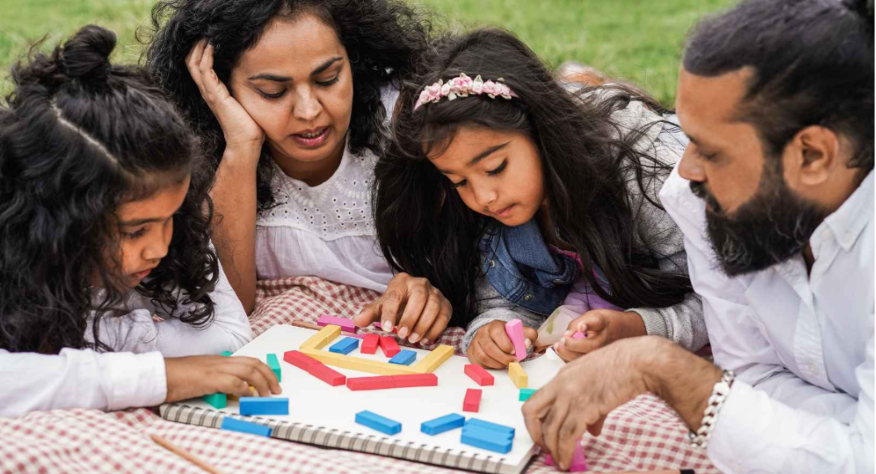
💡Pro-Tip: Collaborative co-parenting works best when expectations are discussed openly. Clear agreements reduce resentment and make me time while parenting more predictable and guilt-free.
3. Integrate Fun: Doing Self-Care Activities with Your Child
Self-care does not always require separation from children. It can be integrated into shared activities. Making tasks fun or engaging in self-care activities with their child when it feels difficult or impossible for them to find time away just for themselves.
Examples include:
- A child doing homework while the parent reads nearby
- Listening to music together while cooking or folding clothes
- Stretching or light exercise at home while children play
- A child colouring in their book, while the parent also colours or paints.
These moments not only strengthen the parent-child connection but also provide emotional relief to the parent, who craves some space and time.

💡Pro-Tip: When time is limited, combining connection with rest supports both parenting and self-care. This approach is beneficial for parents with minimal external support.
4. Prioritise Your Free Time: Choosing Rest Over Chores
Many parents automatically use quiet moments to complete chores. While responsibilities matter, constant productivity without intentional rest can lead to burnout.
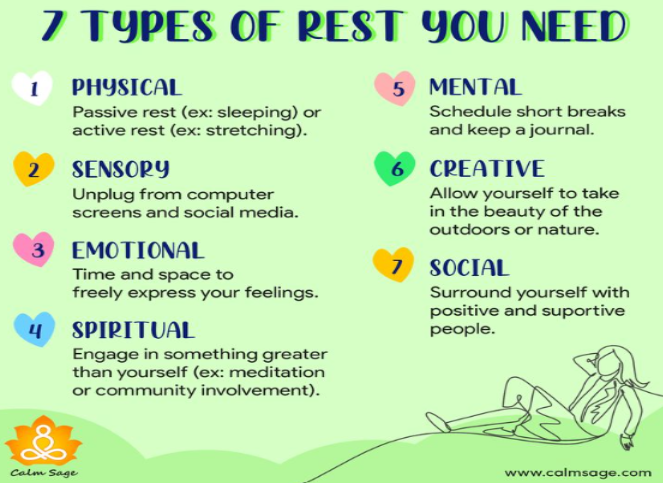
Effective parenting time management involves deciding when to prioritise rest over completing every task. If the child is sleeping or playing with their friends, parents can make conscious choices on how to spend their free time. Activities such as screen time, social media use, or video watching may not help the parent feel refreshed. Reconnecting to an old hobby, simply resting, or doing something fun for oneself could be more effective choices.
Choosing rest, even briefly, can restore emotional balance and reduce irritability.
💡Pro-Tip: Ask yourself whether a task must be done immediately or can wait. Choosing rest occasionally is an essential part of self-care for parents, not a failure of responsibility.
5. Schedule Dedicated Time to Reconnect as a Couple
Parenting often shifts focus away from the partner relationship. Conversations become centred around children, expenses, responsibilities, and daily routines. As the parenting role takes precedence, couples often find that they do not get enough time together away from their child.
It is important for them to consciously set aside time for this at least once a week. During this time, they can engage in something fun or relaxing and intentionally avoid discussing parenting-related matters or other responsibilities. Scheduling intentional couple time helps rebuild emotional connection.
Examples include:
- Sharing a quiet meal after the children sleep
- Evening walks
- Setting aside time weekly for an uninterrupted conversation
- Fun or romantic date night/game nights
Strong partner relationships provide emotional stability for the entire family.
💡Pro-Tip: Even thirty minutes of dedicated couple time strengthens emotional bonds and reduces stress. A connected partnership supports better collaborative co-parenting.

6. Practice Mindfulness and Self-Compassion in the Chaos
The concept of mindfulness seems unattainable to many parents. In daily parenting life, quiet times, extended meditation sessions, or serene surroundings are uncommon. In reality, avoiding chaos or noise is not the goal of mindfulness for parents. It involves paying attention to the here and now and reacting mindfully, even for a brief moment.
Mindfulness can be practised in brief, ordinary moments. These small pauses help parents slow down their internal reactions, especially during emotionally charged situations.
Simple practices that fit into daily parenting routines include:
- Taking three slow, deep breaths before responding to a child’s behaviour
- Bringing attention to physical sensations, such as feet touching the floor or hands resting on a surface
- Pausing for a moment before speaking when feeling triggered or overwhelmed
These practices help parents shift from automatic reactions to more intentional responses. Over time, this improves emotional regulation and reduces feelings of overwhelm.
Self-compassion plays an equally important role. Many parents are quick to criticise themselves for losing patience, feeling tired, or wanting space. This inner criticism often intensifies stress and parenting guilt rather than improving behaviour.
Self-compassion involves acknowledging that parenting is difficult, that mistakes are part of the process, and that personal needs matter. Instead of harsh self-talk such as “I should be handling this better”, parents can practise kinder inner dialogue like “This is hard, and I am doing the best I can right now”.
💡Pro-Tip: Practising mindfulness and self-compassion helps parents manage guilt and prevent burnout. Pausing to notice the present moment and speaking to oneself with kindness builds emotional resilience and makes daily parenting challenges more manageable.

7. Ask for Help: Leaning on Friends, Family, or Support Systems
Many parents hesitate to ask for help, fearing judgement. Yet parenting has always been a shared responsibility in Indian communities. As it's often said, “it takes a village to raise a child”. And leaning on friends and trusted family members for support can help parents sustain their mental well-being and practise self-care. These individuals may be able to care for children or offer unique perspectives on self-care and parenting. For single or divorced parents, leaning on support systems becomes all the more important, and should be normalised within the social circles.
Support may come from:
- Grandparents or extended family
- Trusted neighbours or friends
- Childcare services or domestic help
- Professional counselling or parenting support
There are also parenting support groups available in addition to friends and family. These groups, which are frequently composed of people going through similar struggles, may concentrate on addressing mental health challenges or emotional distress for parents. Even occasional support creates breathing space.
💡Pro-Tip: Asking for help is a form of parenting strength. External support enables sustainable self-care for parents and prevents emotional exhaustion.

FAQs
Q1. Why is self-care important for parents?
Self-care for parents is important because parenting is emotionally and physically demanding. Regular self-care helps reduce stress, prevent burnout, and support better emotional regulation, allowing parents to respond calmly and consistently to their children.
Q2. How can parents find me time while parenting without feeling guilty?
Finding me time while parenting becomes easier when parents view self-care as necessary rather than selfish. Even short breaks, such as quiet moments or brief walks, support emotional well-being and help parents be more patient with their children.
Q3. What is collaborative co-parenting, and how does it support self-care?
Collaborative co-parenting involves partners sharing responsibilities intentionally and communicating openly about needs. This approach allows both parents to take regular breaks, reduces resentment, and makes parents' self-care more sustainable.
Q4. How does parenting time management help reduce stress?
Parenting time management helps parents prioritise rest, connection, and essential tasks rather than trying to do everything at once. By making conscious choices about time, parents can reduce overwhelm and create space for self-care.
Q5. How can parents deal with parenting guilt when prioritising themselves?
Dealing with parenting guilt starts with recognising that caring for oneself improves caregiving capacity. Practising mindfulness and self-compassion helps parents respond to guilt with understanding rather than criticism, reducing emotional exhaustion over time.
Conclusion: Setting a Positive Example Through Self-Care
For parents, self-care is not about doing more. It is about sustaining oneself in a challenging and significant role. Children grow up in more peaceful and caring environments when parents prioritise their emotional and mental health. They also set an example of self-respect and appropriate boundaries.
Creating a Harmonious Balance Between Nurturing and Well-Being
Self-care is a long-term habit, not only a one-time action. Parents do not need to adopt all strategies at once. Starting with one small, consistent change can make a lasting difference.
When parenting feels overwhelming, professional support can help. 1to1help services, such as counselling provided under their Employee Assistance Programme (EAP) or cohort-based programs like 1to1parenting, provide structured guidance to parents navigating stress, guilt, and emotional exhaustion.
Caring for oneself is not separate from caring for family; it is an essential part of it.
References
- American Psychological Association. (n.d.). Parenting. https://www.psychologytoday.com/us/basics/parenting
- American Psychological Association. (n.d.). Journal of Family Psychology. https://www.apa.org/pubs/journals/fam
- BetterHelp. (n.d.). Self-care for parents isn’t selfish: Strategies for improving mental health at home. https://www.betterhelp.com/advice/parenting/self-care-for-parents-isnt-selfish-strategies-for-improving-mental-health-at-home/
- Child Mind Institute. (n.d.). Self-care for parents: Tips and advice. https://childmind.org/article/self-care-for-parents-tips-advice/
- Cleveland Clinic. (n.d.). Realistic ways to practice self-care as a parent. https://health.clevelandclinic.org/realistic-ways-to-practice-self-care-as-a-parent
- Clinical Effects. (n.d.). Micro-breaks: Why short breaks matter. https://www.clinicaleffects.com/blog/micro-breaks/
- Healthline. (n.d.). Fatigue. https://www.healthline.com/health/fatigue
- Jeulli. (n.d.). 7 strategies for balancing self-care and parenting without guilt. https://jeulli.com/blogs/kids/7-strategies-for-balancing-self-care-and-parenting-without-guilt-nurturing-yourself-while-raising-happy-kids
- Mindful. (n.d.). What is mindfulness? https://www.mindful.org/what-is-mindfulness/
- National Center for Biotechnology Information. (2023). Parental stress and caregiver burden. In StatPearls. https://www.ncbi.nlm.nih.gov/books/NBK606662/
- Positive Elite. (n.d.). How to make time for yourself as a parent: 12 self-care tips. https://positiveelite.com/how-to-make-time-for-yourself-as-a-parent-12-self-care-tips/
- Positive Psychology. (n.d.). How to practice self-compassion. https://positivepsychology.com/how-to-practice-self-compassion/
- Springer. (2025). Parental stress and well-being: A meta-analysis. Child & Family Behavior Therapy. https://link.springer.com/article/10.1007/s10567-025-00515-9
- UNICEF. (n.d.). Parent self-care tips. https://www.unicef.org/parenting/mental-health/parent-self-care-tips#time
- Verywell Mind. (n.d.). Parent guilt: Causes, characteristics, and coping strategies. https://www.verywellmind.com/parent-guilt-causes-characteristics-and-coping-strategies-6746224
- Verywell Mind. (n.d.). Stress and health. https://www.verywellmind.com/stress-and-health-3145086
- WebMD. (n.d.). What to know about parental burnout. https://www.webmd.com/parenting/what-to-know-about-parental-burnout
- World Health Organization. (n.d.). Self-care health interventions. https://www.who.int/news-room/fact-sheets/detail/self-care-health-interventions
- YourStory. (2025). 57% Indian mums say family duties prevent them from prioritising wellness: Report. https://yourstory.com/socialstory/2025/05/57-indian-mums-family-duties-prevent-prioritising-wellness-report


.svg)
.svg)
.svg)
.svg)