

.png)


.png)

Mental Health Concerns
What Really Happens in Counselling? A Step-by-Step Guide for First-Time Clients in India

.png)
Written by
Aarohi Parakh,
Psychologist and Content Writer

Reviewed by
Sanjana Sivaram,
Psychologist and Clinical Content Head


Introduction: Why This Matters
Shruti had been struggling with getting her life back after a breakup, and with support from her closest friend, she finally decided to go for counselling. She was nervous before attending her first session, and wondered: “Will I be judged?”, “Do I have to talk about everything?”, or even “What exactly happens in counselling?”.
This is not the story of Shruti alone. In India, although the stigma around seeking help is slowly fading, many individuals still hesitate to reach out. This hesitation often comes from not knowing what to expect or assuming that counselling is only for people with deep emotional or mental distress. In reality, counselling is a safe, structured, and non-judgemental space that helps people navigate everyday emotional, relational, and mental health challenges.
This guide aims to explain the counselling process step by step clearly — so you know exactly what happens in a session, what your counsellor’s role is, and how the process unfolds.
What Is Counselling, Really?
Counselling is a structured and confidential conversation with a trained professional, designed to help individuals understand and manage emotional, psychological, or situational challenges. It provides a safe space to talk openly, reflect on thoughts and feelings, and develop healthier ways to cope. The American Counselling Association (ACA) defines counselling as the process of building therapeutic relationships that help individuals reach goals in their mental health, education and/or careers.
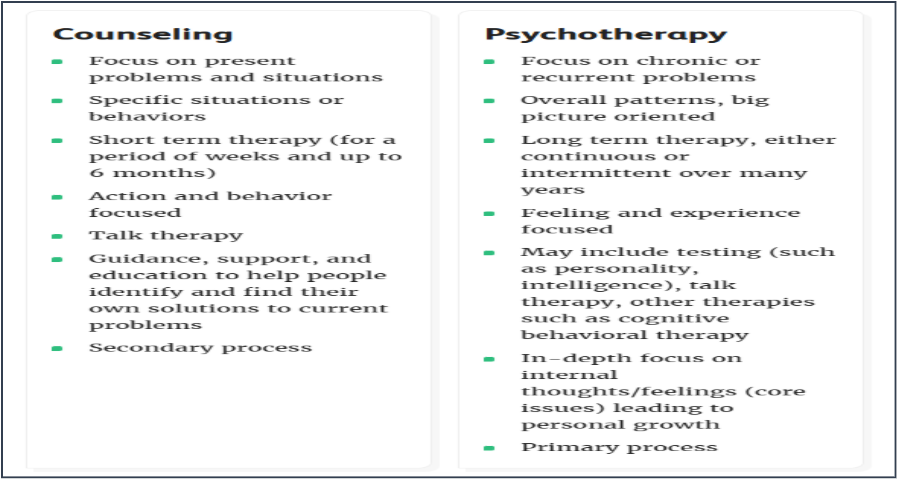
However, counselling is often confused with other forms of mental health support—particularly therapy and psychiatric treatment. While these three can overlap, they serve different purposes and levels of care.
Counselling (often termed as a form of ‘talk therapy’) usually focuses on present concerns and aims to improve day-to-day emotional well-being. It often helps individuals cope with stress, grief, relationship strain, burnout, parenting challenges, or adjustment difficulties. The approach is short- to medium-term and largely problem-solving in nature.
Therapy (or psychotherapy) typically involves deeper, long-term work with emotional patterns or psychological issues that may have developed over years. Therapists use structured approaches such as Cognitive Behavioural Therapy (CBT), Dialectical Behaviour Therapy (DBT), or Psychodynamic Therapy to explore root causes and foster lasting change.
Psychiatric help, on the other hand, involves a medical approach. Psychiatrists are doctors who diagnose mental health conditions and prescribe medication when needed. Counsellors and therapists often collaborate with psychiatrists if medication or diagnostic evaluation forms part of a client’s care plan.
In summary:
- Counselling helps you cope and manage life’s challenges.
- Therapy helps you understand and transform deeper patterns.
- Psychiatry helps you treat and stabilise conditions through medical support.
Types of Counselling Available in India
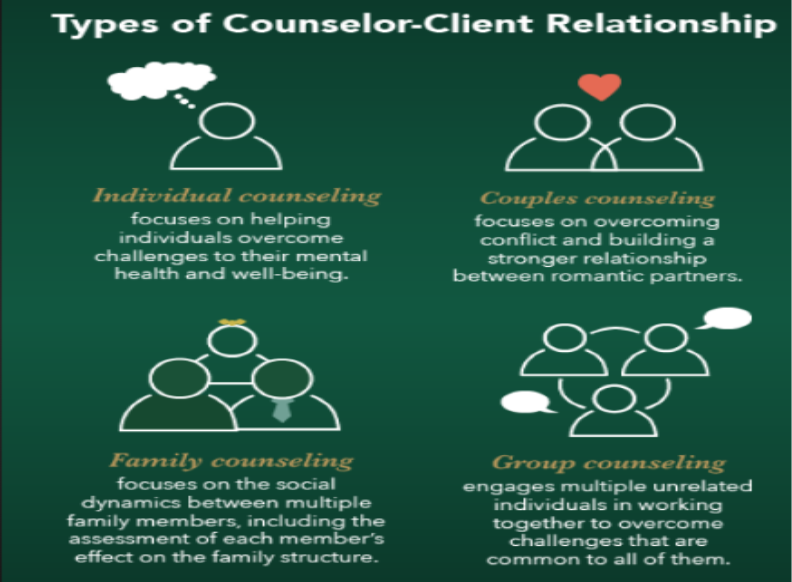
Counselling services in India are now widely available and through different modes:
- Individual Counselling: 1:1 session focusing on personal or emotional struggles.
- Couples or Marital Counselling: For couples addressing communication, conflict, fidelity, or intimacy concerns.
- Family Counselling: Helps families improve relationship dynamics, especially where caregiving or parenting stress is involved.
- Workplace or Employee Assistance Programme (EAP) Counselling: Many organisations partner with platforms such as 1to1help to offer confidential employee support.
- Group Counselling: Focuses on the interaction of unrelated individuals (with common challenges for e.g. addiction) in a variety of social settings.
- Online or tele-counselling: Virtual sessions have grown rapidly since COVID-19, improving access for those in smaller cities, with busy schedules, or for those who need convenience and flexibility..
It should be noted that in addition to offline/in-person sessions, recent times have seen the proliferation of online counselling sessions.
The Counselling Journey: Step-by-Step Breakdown
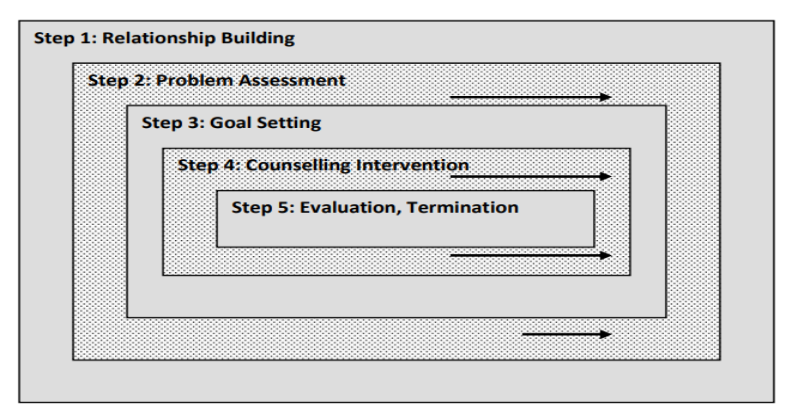
The counselling process is a planned, structured dialogue between a counsellor and a client, and each practitioner may tailor it to the client’s needs. The fact that counselling is described as a process implies a progressive movement toward a conclusion. Hackney and Cormier (1987) describe the counselling process as a series of stages through which the counsellor and the client move.
Stage 1: (Initial Disclosure) Relationship Building
This stage focuses on the counsellor engaging with the client to explore the issues that directly affect them. The first meeting sets the tone for what is expected to come in the next sessions. The counsellor focuses on using good listening skills and reading verbal and non-verbal cues to build confidence and trust. Many clients in India initially feel unsure about expressing emotions openly; counsellors focus on providing a non-judgemental, safe environment where you can begin to relax.
Continuing with our initial example, Shruti, a 28-year-old sales executive, comes to counselling because she’s been feeling exhausted and anxious about constant deadlines. In the first meeting, the counsellor listens attentively, notices her body language, and reassures her that it’s okay to take her time. The focus is on creating a safe space where Shruti begins to feel comfortable expressing herself.
Stage 2: (In-depth exploration) Problem Assessment
The counsellor carefully listens and draws out information regarding the client’s situation (life, work, home, education, etc.) and the reason they have engaged in counselling. Information crucial to subsequent stages of counselling includes identifying triggers, timing, environmental factors, stress levels, and other contributing factors.
With Shruti, the counsellor learns that her anxiety stems from unclear work boundaries—she often works late to meet her manager’s expectations and fears disappointing the team. Through open-ended questions, the counsellor helps her identify specific triggers, such as Sunday-night dread or physical tension before presentations.
Stage 3: (Commitment to action) Goal setting
Effective counselling relies on setting appropriate and realistic goals, building on the previous stages. Together, the client and the counsellor agree on achievable goals, such as reducing anxiety, improving confidence, or managing relationship stress. This process is collaborative, not directive—the counsellor works with you, not on you.
In Shruti’s case, they agree on three short-term goals:
- Learning to set small, realistic daily boundaries at work.
- Reducing anxiety symptoms through mindfulness breathing.
- Rebuilding confidence in her ability to manage workload.
The counsellor doesn’t tell Shruti what to do, but helps her discover what feels right for her situation.
Stage 4: Counselling intervention
This is where the main therapeutic work occurs. Depending on the client's goals, counsellors may draw from different approaches such as Cognitive Behavioural Therapy (CBT), Solution-Focused Brief Therapy (SFBT), mindfulness-based methods, or expressive techniques.
The client might be asked to complete short reflections, practise breathing exercises, or keep a journal between sessions. Although sessions have a structure, they remain flexible and responsive to the client's needs.
For Shruti, the counsellor introduces Cognitive Behavioural Therapy (CBT) exercises to challenge her thought patterns, like “If I say no, my boss will think I’m lazy.” They also practise assertive communication through role-play and set small “homework” tasks—such as journaling moments when she successfully said no or took a break.
Since Indian professionals often deal with family and social expectations about being “successful,” the counsellor might help Shruti explore how those beliefs shape her self-worth and work habits. Each session remains structured yet flexible, depending on how she’s progressing.
Stage 5: Evaluation, termination, or referral
Every few sessions, counsellors revisit earlier goals to check what has improved and what still feels challenging. This ongoing reflection helps track growth and adjust strategies.
For Shruti, they notice that her anxiety has reduced and she’s become more comfortable asserting her limits at work. Before ending counselling, they discuss relapse prevention strategies—for example, how she can recognise early signs of stress and what coping techniques to use.
If needed, the counsellor might suggest a referral for specialised therapy or workplace coaching. In many Indian contexts, clients hesitate to give feedback about the process, so the counsellor explicitly invites it, ensuring Shruti feels heard and confident as sessions conclude.
Termination may not seem like a stage, but the art of ending the counselling journey is critical. Drawing counselling to a close must be planned well in advance to ensure a positive conclusion is reached while avoiding anger, sadness, or anxiety. Part of the process is to reach an early agreement on how the therapy will end and what success looks like.
💡While there are clear stages to the typical counselling process, other than termination, each may be ongoing. For example, while setting goals, new information or understanding may surface that requires additional assessment of the problem.
What a Typical Session Looks Like
What to Expect in Your First Therapy Session
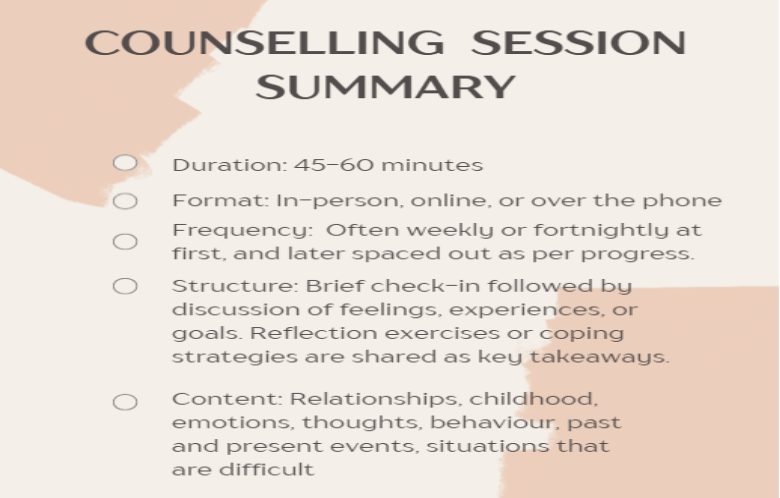
Counselling can take different forms basis the needs of the client, however, there’s an underlying framework to each session which helps process emotions safely.
- The counsellor begins with introductions, explaining their background and approach, while the client is free to ask questions about the process. Together, they set a tone of openness and trust.
- An initial assessment follows, where the client shares what has brought them to counselling—this could be through forms or a simple conversation about current challenges. The counsellor listens to understand the client’s story and goals.
- Finally, they agree on basic terms, such as confidentiality, session timings, and expectations—a process known as contracting.
The first session is about building connection. It helps both the counsellor and client decide if they feel comfortable working together.
What You Don’t Have to Worry About
- You can pause or stop counselling at any point.
- You don’t need to have everything figured out before you start your counselling journey.
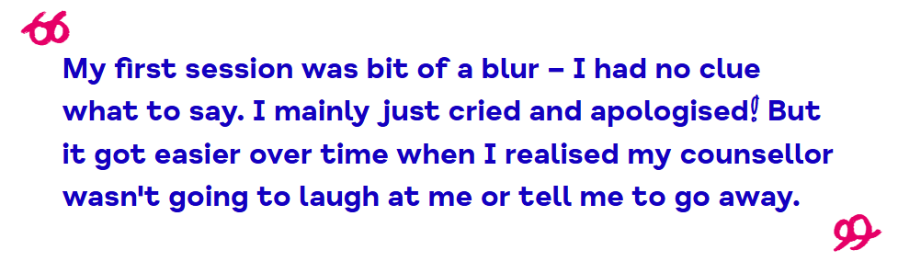
- It’s perfectly fine to cry, sit in silence, or struggle for words.
- Your counsellor won’t judge your past, lifestyle, or choices.
The space exists solely for your emotional growth and self-understanding.
Common Myths About Counselling in India
- “It’s only for serious mental illness.”
Counselling supports anyone dealing with stress, relationship strain, burnout, or grief.
- “It means I’m weak.”
Seeking help shows courage—the willingness to take responsibility for your well-being.
- “Counsellors just give advice.”
Counselling isn’t about being told what to do or solve your problems; it’s about discovering your own insights.
- “Talking doesn’t help.”
Evidence shows that verbal expression and structured emotional reflection reduce distress and build resilience.
- “It’s a quick fix”
It takes time and effort, and you are equally a part of the process
How Counselling Differs from Talking to Friends or Family
While speaking with a compassionate family member or friend can be helpful, there are significant distinctions in how counsellors listen. Listening involves more than just hearing words; it’s about understanding the underlying meaning and emotions behind them. Counsellors provide objective support without bias or emotional enmeshment.
- They maintain confidentiality.
- They use evidence-based methods rather than opinions.
- They help you explore patterns and possibilities you may not notice in everyday conversation.
This neutrality is especially valuable when the issue involves people close to you or workplace conflicts.
What Makes Counselling Effective
The success of counselling doesn’t depend on a single factor; it’s shaped by the relationship, the efforts from both sides, and how well the overall process fits into the client’s real world.
There are a few key elements that make counselling truly effective;
- A strong therapeutic alliance: Trust and respect between counsellor and client are crucial. When clients feel heard, understood, and accepted without judgement, they are more likely to open up honestly and explore deeper issues. Research consistently shows that this relationship—the therapeutic alliance—is one of the strongest predictors of positive outcomes in therapy
- Client engagement: Progress tends to be faster when clients are regular with sessions, complete small reflective tasks, and communicate openly about what’s working or not. For example, trying out a breathing exercise discussed in a session or noting thoughts in a journal can make insights more tangible.
- Reflection between sessions: Change doesn’t just happen during the 60 minutes spent in counselling—it often happens between sessions. When clients take time to notice patterns, apply new coping strategies, or reflect on what they’ve learnt, they strengthen their emotional resilience and self-awareness.
- Cultural sensitivity: In India, counselling becomes most effective when it honours both psychological science and cultural wisdom. Counsellors often integrate practical tools like Cognitive Behavioural Therapy (CBT) or mindfulness with an understanding of local values—such as family interconnectedness, spirituality, or community belonging. This makes counselling feel more authentic and relevant to everyday life.
FAQs
Q1. How many sessions will I need?
There isn’t a fixed number. It depends on your goals and what feels right for you. Some people notice a difference after four to six sessions, while others continue for a few months or longer. You and your counsellor can decide together as you go along.
Q2. What if I cry, go blank, or don’t know what to say?
That’s completely fine. Many people feel emotional or unsure at first—it’s a safe space to be yourself. Your counsellor will give you time and support to express things at your own pace, without any judgement.
Q3: Will my counsellor tell anyone what I say?
No—all sessions are confidential. What you share stays private unless there’s a serious risk of harm to you or someone else. In such rare situations, your counsellor will always discuss it with you before taking any next steps.
Q4. Can I talk about childhood trauma or difficult memories?
Yes, you can bring up anything that feels important. Counsellors are trained to help you explore difficult memories safely, at a pace that feels manageable for you.
Q5. Can I stop counselling if I feel better?
Absolutely. Counselling is voluntary—you decide when you’re ready to pause or end. Many people find it helpful to discuss this with their counsellor so they can reflect on their progress and think about next steps for self-care. Developing a plan with your counsellor in case of relapse of any emotional distress can be beneficial.
Conclusion: Your First Step Is the Hardest
Taking the first step towards counselling can feel overwhelming, but it is also deeply empowering. Counselling isn’t about being “fixed”; it’s about being supported while you understand yourself better and build the resilience to face life’s challenges.
A safe, confidential space to talk can make an enormous difference—sometimes more than you expect.
If you’re prepared to begin that journey, 1to1help offers access to qualified counsellors and employee wellness initiatives that promote emotional well-being for individuals and organisations across India.
Resources
- Checklist: “How to Prepare for Your First Counselling Session”
- Journal Prompt: “My Goals for Counselling”
References
- British Association for Counselling and Psychotherapy (BACP). (2024). What is counselling? https://www.bacp.co.uk/about-therapy/what-is-counselling/
- Choosing Therapy. (n.d.). How to prepare for your first therapy session. Retrieved October 23, 2025, from https://www.choosingtherapy.com/prepare-for-first-therapy-session/
- Cleveland Clinic. (n.d.). Stress: Symptoms, causes, and treatment. Retrieved October 23, 2025, from https://my.clevelandclinic.org/health/diseases/11874-stress
- Cleveland Clinic. (n.d.). Addiction: Symptoms, causes, and treatment. Retrieved October 23, 2025, from https://my.clevelandclinic.org/health/diseases/6407-addiction
- Clinical & Counseling Institute (CCI). (n.d.). Ethics in counseling. Retrieved October 23, 2025, from https://www.cci.org.in/download/Ethics_in_CCI.pdf
- Counselling Connection. (2022, October 13). Introduction to expressive therapies. Retrieved October 23, 2025, from https://www.counsellingconnection.com/index.php/2022/10/13/introduction-expressive-therapies/
- DSPMU Ranchi. (2023). Stages of counselling. https://dspmuranchi.ac.in/pdf/Blog/stages%20of%20counselling.pdf
- GoodTherapy. (n.d.-a). Change: How therapy can help. Retrieved October 23, 2025, from https://www.goodtherapy.org/learn-about-therapy/issues/change
- GoodTherapy. (n.d.-b). Mindfulness-based interventions. Retrieved October 23, 2025, from https://www.goodtherapy.org/learn-about-therapy/types/mindfulness-based-interventions
- Grow Through What You Go Through | Tall Cedars Counselling https://www.tallcedarscounselling.com/
- Mayo Clinic. (2023). Burnout: Symptoms and prevention. Retrieved October 23, 2025, from https://www.mayoclinic.org/healthy-lifestyle/adult-health/in-depth/burnout/art-20046642
- Marriage.com. (2023). Parenting challenges: 5 common challenges faced by parents. Retrieved October 23, 2025, from https://www.marriage.com/advice/parenting/parenting-challenges/#5-common-challenges-faced-by-parents
- Mind UK. (2024). What to expect from therapy. https://www.mind.org.uk/information-support/drugs-and-treatments/talking-therapy-and-counselling/what-to-expect-from-therapy/
- NHS. (2024). Counselling. https://www.nhs.uk/mental-health/talking-therapies-medicine-treatments/talking-therapies-and-counselling/counselling/
- PMC. (2000). Counseling effectiveness: Research review. PMC10803859. Retrieved October 23, 2025, from https://pmc.ncbi.nlm.nih.gov/articles/PMC10803859/
- PositivePsychology.com. (2024). The counselling process. https://positivepsychology.com/counseling-process/
- PositivePsychology.com. (n.d.-a). Characteristics of effective counselors. Retrieved October 23, 2025, from https://positivepsychology.com/characteristics-effective-counselors/
- PositivePsychology.com. (n.d.-b). Termination in therapy. Retrieved October 23, 2025, from https://positivepsychology.com/termination-in-therapy/
- Psychology Today. (n.d.-a). Grief. Retrieved October 23, 2025, from https://www.psychologytoday.com/us/basics/grief
- Psychology Today. (2020, September 3). The top 12 relationship problems according to the experts. Retrieved October 23, 2025, from https://www.psychologytoday.com/us/blog/social-instincts/202009/the-top-12-relationship-problems-according-the-experts
- Simply Psychology. (n.d.). Cognitive therapy. Retrieved October 23, 2025, from https://www.simplypsychology.org/cognitive-therapy.html
- Talk Your Heart Out. (2023). What happens in a counselling session: Five stages to know. https://talkyourheartout.com/what-happens-in-a-counselling-session-5-stages-to-know/
- Tata Institute of Social Sciences (TISS) Counselling Centre. (2024). What to expect from counselling. https://tiss.ac.in/view/6/counselling-centre/what-to-expect-from-counseling-3/
- Verywell Mind. (n.d.). What is solution-focused brief therapy? Retrieved October 23, 2025, from https://www.verywellmind.com/what-is-solution-focused-brief-therapy-2337728
- Vision Counselling & Psychology Services. (2024). What is counselling? https://www.visioncounselling.com.au/what-is-counselling/
- William & Mary Counseling Education. (n.d.). List of counseling skills. Retrieved October 23, 2025, from https://counseling.education.wm.edu/blog/list-of-counseling-skills


.svg)
.svg)
.svg)
.svg)