

.png)


.png)

Workplace Well-Being & Support
The Definitive Guide to EAP (Employee Assistance Programs) and How Exactly They Work

.png)
Written by
Aarohi Parakh,
Psychologist and Content Writer

Reviewed by
Sanjana Sivaram,
Psychologist and Clinical Content Head



Employees’ well-being is not just a company perk, it’s a strategic necessity.
Thirty-seven per cent of employees say that employer-provided mental health resources can contribute to a better work environment (APA, October 2021). Employee assistance programs (EAPs) are a valuable tool to help achieve this.
[Leveling up: Supporting employees’ psychological well-being for maximum return, American Psychological Association]
In the fast-paced and often demanding world of modern work, employee well-being has emerged as a critical concern for organizations and underscores the importance of addressing it. The challenges of balancing personal and professional lives, coupled with the pressures of the workplace, can impact an employee’s mental and emotional health. Enter Employee Assistance Programs (EAPs), a strategic initiative that supports employees through personal and professional challenges, ultimately enhancing both their well-being and job performance.
What is an Employee Assistance Program (EAP)?
Employee Assistance Programs (EAPs) are employer-sponsored initiatives designed to provide confidential support, counselling and resources to employees facing a range of challenges, from stress and mental health issues to personal and family concerns. EAPs offer a structured framework that enables employees to access professional assistance and guidance when they need it most. These programs are designed to address issues before they escalate, ensuring that employees have the necessary tools to navigate life’s challenges effectively.
Why are Employee Assistance Programs (EAPs) Important?
- EAPs are essential for fostering a healthy work environment that prioritizes employee well-being. The modern workplace can be a source of stress and pressure, affecting mental, emotional, and physical health. EAPs demonstrate a commitment to employees’ holistic well-being, contributing to improved morale, job satisfaction, and overall productivity. By offering a support system that addresses both personal and professional concerns, organizations show that they value their employees not only as workers but as individuals.
- EAP programs are not just a workplace perk; they are a strategic necessity in ensuring the well-being of employees, who are the lifeblood of any organization. As organizations grapple with the challenges of an evolving work landscape, EAPs emerge as beacons of support, shining light on the path toward a healthier and more engaged workforce.
- At the heart of the matter lies the complexity of modern work. The demands of the digital age, with its constant connectivity and blurred lines between work and personal life, have given rise to unprecedented levels of stress, anxiety, and burnout. In this context, EAPs stand as a crucial safety net, ready to catch employees before they spiral into a state of emotional turmoil or physical exhaustion.
- The significance of EAPs goes beyond the surface, reaching deep into the core of employee satisfaction, engagement, and overall organizational resilience. By promoting a culture of care, EAPs send a powerful message that employees’ well-being matters. This gesture creates an environment where employees feel valued, supported, and motivated to contribute their best. Moreover, EAPs have the potential to mitigate the negative effects of stress and burnout, which can often lead to decreased productivity and increased absenteeism.
- Supporting mental health is another key aspect of EAPs. In an era where mental health concerns are gaining recognition, EAP counselling and EAP programs offer employees a haven to address their emotional challenges without fear of stigma. This safe space empowers employees to seek help and access the resources they need to cope with their struggles. As a result, organizations that prioritize EAPs play an active role in breaking down the barriers associated with mental health support.
- EAPs also play a pivotal role in improving overall productivity and performance. When employees receive assistance to manage their personal issues, they can channel their energy more effectively into their job responsibilities. This enhanced focus translates into improved performance and a healthier bottom line for the organization. Additionally, EAPs contribute to reducing absenteeism and turnover rates. By addressing the root causes of personal and family-related challenges, EAPs help minimize unplanned absences and enhance employee loyalty.
- Beyond these immediate benefits, EAPs have a ripple effect that resonates throughout the entire organization – employee assistance programs benefit employers. Employees who feel valued and supported become advocates for the organization’s values and mission. This alignment leads to a more engaged workforce that is motivated to contribute their best efforts toward organizational success.
As the work landscape continues to evolve, EAPs find themselves at the forefront of innovation. With remote work and flexible arrangements becoming the norm, EAPs are adapting to meet employees wherever they are, whether in traditional office spaces or virtual realms. By offering virtual counseling, digital resources, and remote access to support, EAPs ensure that employees have access to the assistance they need, regardless of their physical location.
How Do EAPs Work?
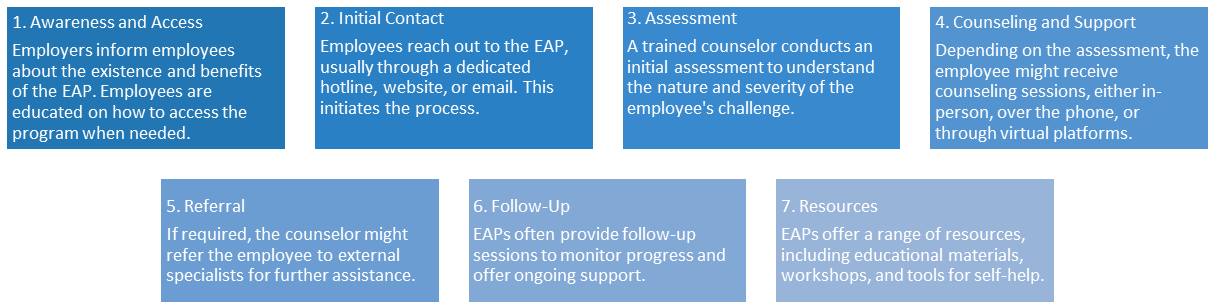
The functioning of EAPs revolves around providing employees with accessible and confidential resources to address their challenges. The process typically includes:
What’s the Cost of an Employee Assistance Program?
The cost of an EAP can vary depending on factors such as the size of the organization, the scope of services offered, and the chosen EAP service provider. Some EAPs are offered as part of a comprehensive benefits package, while others might have a separate subscription cost. Despite the initial investment, many organizations view EAPs as cost-effective solutions due to their potential to reduce turnover, absenteeism, and improve overall employee well-being and productivity.
How Can You Start an Employee Assistance Program at Your Workplace?
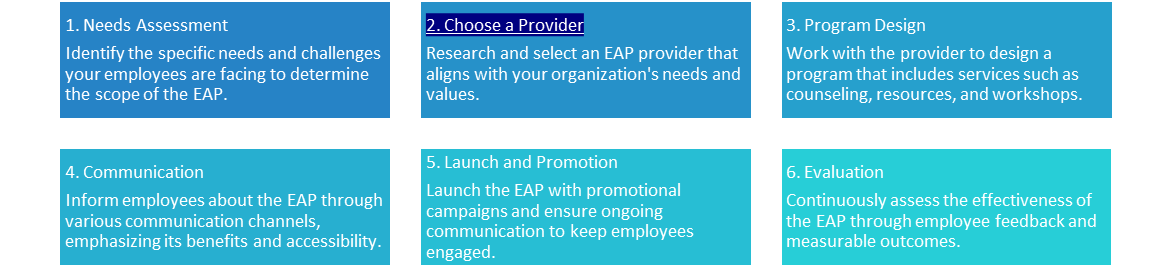
Starting an EAP at your workplace involves several key steps:
Benefits of Employee Assistance Programs
The advantages of EAPs are multifaceted:

FAQ’s About EAPs
Q1: What is the full form of EAP?
A: EAP stands for Employee Assistance Program.
Q2: Who pays for the employee assistance program?
A: EAPs are typically funded by employers as part of their benefits package.
Q3: Is EAP confidential?
A: Yes, EAPs emphasize confidentiality. Employee interactions with the program are protected to ensure privacy.
Q4: What is an EAP provider?
A: An EAP provider is an external organization that partners with employers to deliver EAP services to employees.
EAPs in the Future of Work
As workplaces continue to evolve, EAPs will play a pivotal role in ensuring employee well-being. With the rise of remote work and flexible arrangements, EAPs can adapt by offering virtual counseling and digital resources to cater to the changing needs of employees.
Employee Assistance Programs (EAPs) are a strategic investment in employee well-being, fostering a culture that values both personal and professional growth. By providing confidential support, resources, and guidance, EAPs empower employees to navigate life’s challenges with confidence. Organizations that prioritize EAPs demonstrate their commitment to a healthy, engaged, and productive workforce, setting the stage for a brighter future for both employees and the organization as a whole.


.svg)
.svg)
.svg)
.svg)