

.png)


.png)

Workplace Communication
Difference Between Communication and Conversation: The Guide to Mastering the Art

.png)
Written by
Aarohi Parakh,
Psychologist and Content Writer

Reviewed by
Sanjana Sivaram,
Psychologist and Clinical Content Head


Introduction
Your workplace may be communicating constantly and still not talking at all.
On a typical Monday morning, a manager sends out a clear, well-structured email outlining new quarterly targets. The instructions are precise. The expectations are documented. Everyone is copied. Yet by the end of the week, the team seems disengaged. Some employees feel overwhelmed, others feel confused, and a few quietly feel unheard.
Nothing was technically wrong with the message.
The issue was not communication.
The issue was the absence of conversation.
This situation is far more common than organisations realise. In many workplaces, communication happens all day via email, meetings, dashboards, and announcements. However, despite the volume of information exchanged, genuine understanding and connection often remain missing.
This is where the difference between communication and conversation becomes essential. Communication focuses on delivering information so work can move forward. Conversation focuses on people, relationships, and shared meaning. One ensures tasks are completed and that systems run smoothly. The other ensures people remain engaged while doing them.
This guide examines the distinction between communication and conversation, explains why it matters in the workplace, and offers practical tips for conversation. Additionally, it discusses conversation techniques for shy individuals, demonstrating that mastering the art of conversation is more about intention than personality.
Communication vs Conversation: Defining the Core Difference
Although communication and conversation are closely related, they serve different purposes. Understanding the difference between communication and conversation begins with understanding intent.
What Is Communication?
Communication is primarily functional. It is the act of sending or receiving information to ensure clarity and task completion. Communication can be one-way or two-way, but it does not require emotional engagement.
Common workplace examples include:
- Emails and memos
- Instructions and directives
- Reports and presentations
- Policy announcements
Communication is successful when information is delivered accurately and efficiently.
Example: A project manager sends a document outlining deadlines and responsibilities. The team reads it and proceeds with their tasks. The communication has done its job.
What Is Conversation?
Conversation is relational. It is a two-way exchange in which both parties actively participate to understand each other's perspectives, emotions, and meaning. Conversation requires presence, listening, and responsiveness.
Common workplace examples include:
- 1:1 check-ins
- Feedback discussions
- Team problem-solving dialogues
- Informal interactions that build rapport
Conversation is successful when people feel understood and connected.
Example: Instead of only sending deadlines, the project manager invites feedback, asks how manageable the workload feels, and listens to concerns. The work still progresses, but trust and engagement increase.
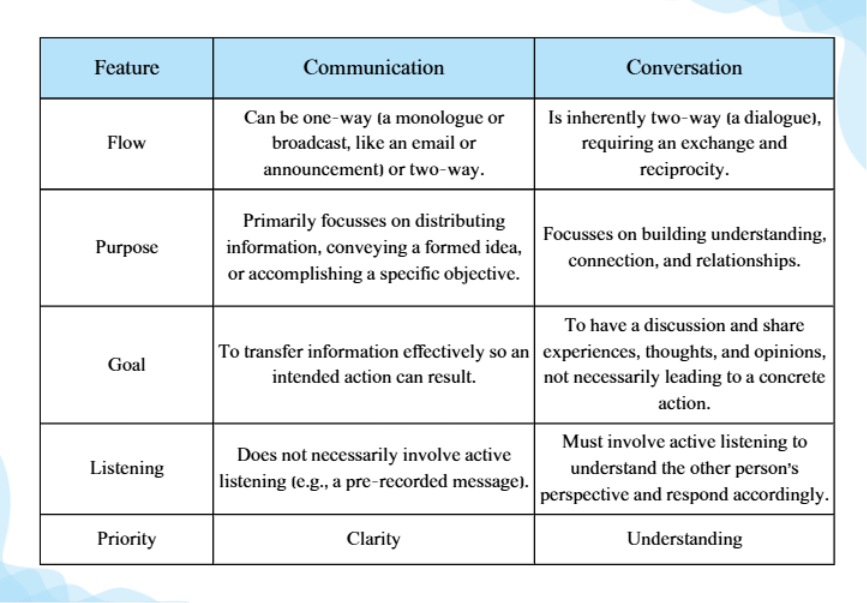
Key Differences Between Communication and Conversation
Understanding the distinction between communication and conversation explains why workplaces feel efficient yet emotionally disconnected.
💡In Summary: All conversations are a form of communication, but not all communication is a conversation.
Mastering the Art of Conversation: Essential Workplace Tips
Mastering the art of conversation does not require dramatic personality changes. It requires a shift from simply delivering messages to intentionally engaging with people. Preparation, the outcome you aim for, and the other person's perspective are key factors to consider. The following workplace conversation tips offer practical ways to do this.
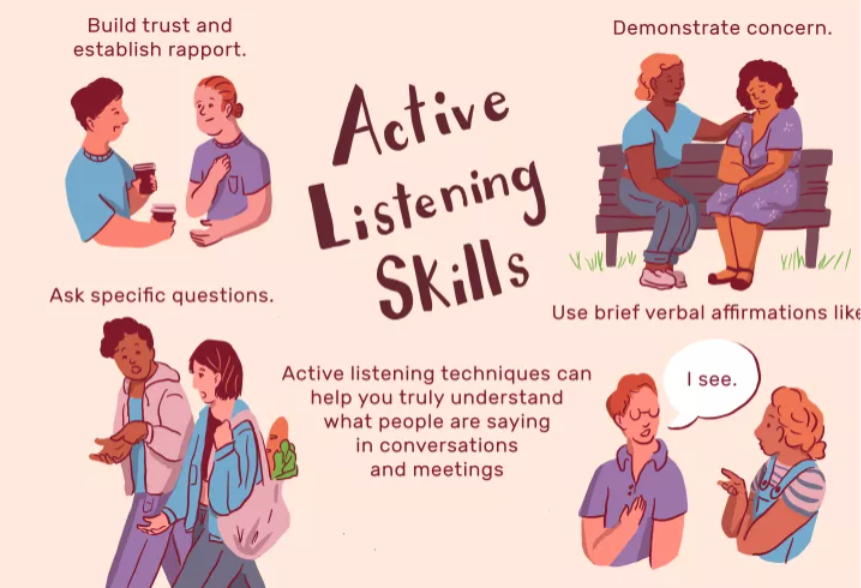
Listen Actively (Don't Just Wait to Talk)
The foundation of any good conversation is active listening. Yet, in many professional interactions, people listen with the intention of replying, correcting, or defending rather than understanding. In conversation, this approach quickly creates emotional distance.
Active listening requires full attention. This means listening not only to words, but also to tone, pauses, and what remains unsaid. It also means resisting the urge to mentally rehearse a response while the other person is speaking.
Active listening includes:
- Maintaining eye contact
- Offering verbal acknowledgements
- Asking clarifying questions
- Avoiding distractions such as phones or multitasking
Listening shows respect and creates psychological safety.
Example:
An employee says they are struggling to meet a deadline. A manager who listens passively might respond immediately with solutions. A manager who listens actively first acknowledges the pressure, asks what feels most challenging, and then explores options together. The difference lies not in the solution, but in how supported the employee feels.
💡Pro tip: If unsure what to say, summarise what you heard. Statements like “What I am hearing is…” deepen understanding and reduce miscommunication.
Ask Open-Ended Questions to Fuel Dialogue
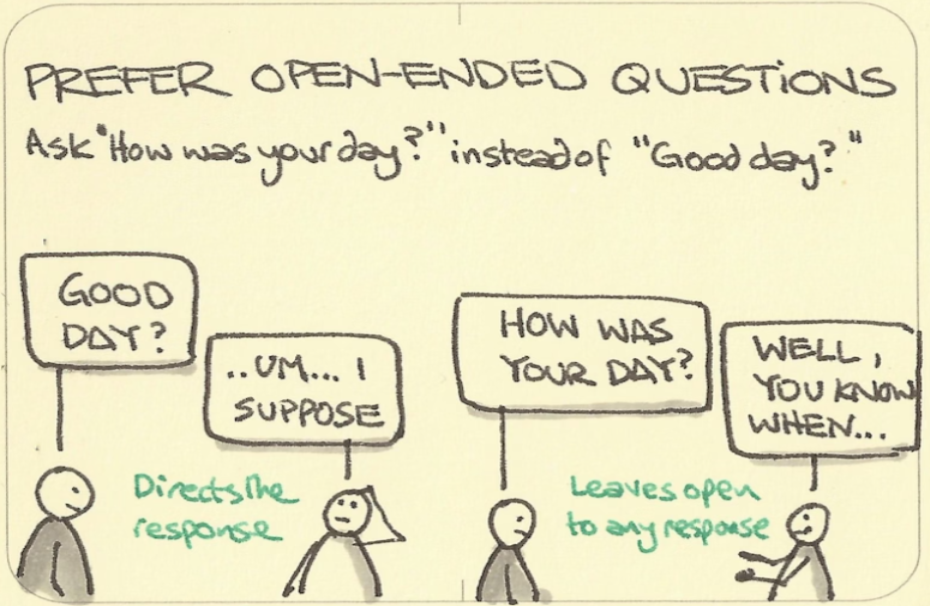
Questions shape the quality of conversations. Closed questions can sometimes leave no room for discussion, while open-ended questions invite exploration. Encourage depth in your conversations by asking open-ended questions that require more than a simple "yes" or "no" answer. This prompts the other person to share their thoughts and feelings, leading to a more meaningful exchange of ideas.
Compare the two scenarios:
- Did the project go well?
- How did the project go, and what stood out for you?
In the first case, there will be an obvious answer of “yes” or “no”, whereas the latter scenario emphasises the feelings of the person. Open-ended questions also give the other person an opportunity to pause and reflect.
Example:
During a performance check-in, a manager asks, “Are you happy in your role?” The employee replies yes, and the discussion ends. When asked, “What parts of your role feel most energising and what feels draining?” the employee shares insights that help shape future workload and development.
💡Pro tip: Use “how, what, and tell me about” to open conversations naturally.
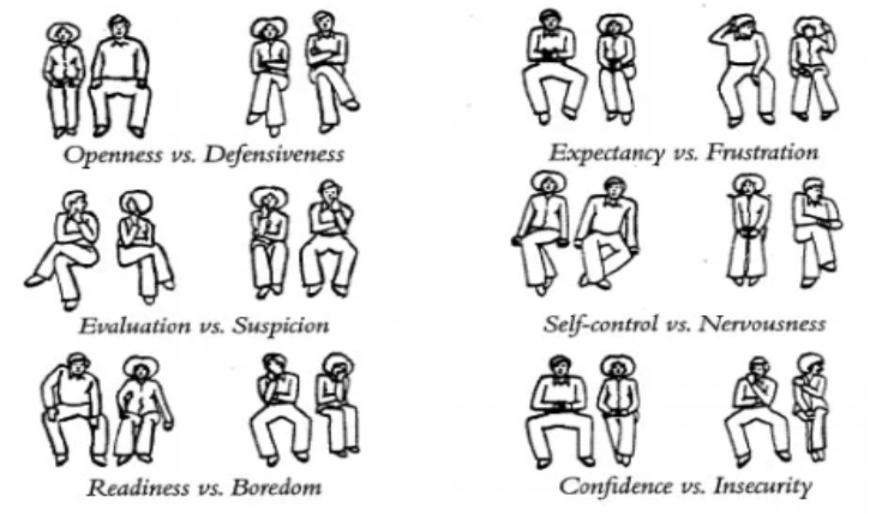
Utilize Positive Body Language
Conversation is shaped as much by non-verbal cues as by spoken language. Body language communicates interest, openness, and safety, often before words are processed.
Effective conversational body language includes:
- Facing the speaker rather than angling away
- Keeping arms and shoulders relaxed
- Matching tone and facial expressions to words
- Maintaining an open posture
- Maintaining gentle eye contact without staring
In professional settings, subtle cues such as posture, eye contact, and facial expression significantly influence how messages are received.
Example:
An employee approaches a manager with a concern. If the manager continues typing, avoids eye contact, or sighs, the conversation feels discouraging. The same words delivered with open posture and attention feel supportive.
💡Pro tip: During important conversations, remove physical barriers such as laptops when possible.
Find and Build on Common Ground
Conversation flows more naturally when people feel a sense of shared experience. Common ground reduces perceived hierarchy and builds rapport quickly.
In workplaces, common ground does not have to be personal. It often emerges from shared challenges, goals, or values.
Common sources of connection include:
- Shared deadlines or project pressures
- Similar learning curves or mistakes
- Mutual organisational goals
- Common interests related to work culture
Example:
Two colleagues disagree on an approach. By acknowledging that both want the project to succeed, the discussion shifts from opposition to collaboration.
💡Pro tip: Stating common ground out loud often softens difficult conversations.
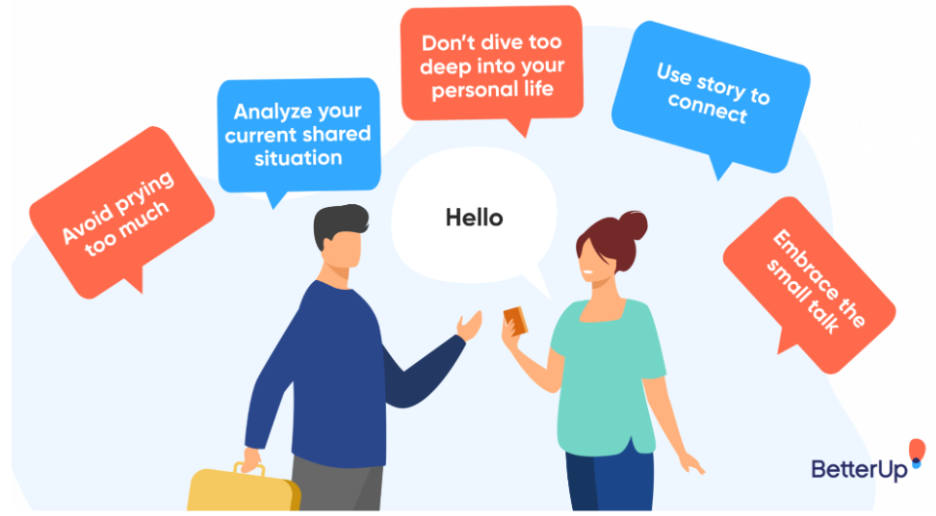
Share Your Own Story (Reciprocity is Key)
Conversation is not passive listening alone. It requires appropriate sharing from both parties to build mutual trust. When one person consistently listens without sharing, the interaction can feel uneven or distant.
Thoughtful sharing includes:
- Brief personal experiences related to the topic
- Acknowledging uncertainty or learning moments
- Expressing values or intentions clearly
Example:
A leader shares that they once struggled with a similar task. This normalises challenges and encourages open dialogue.

💡Pro tip: Share with purpose. The goal is connection, not self-focus.
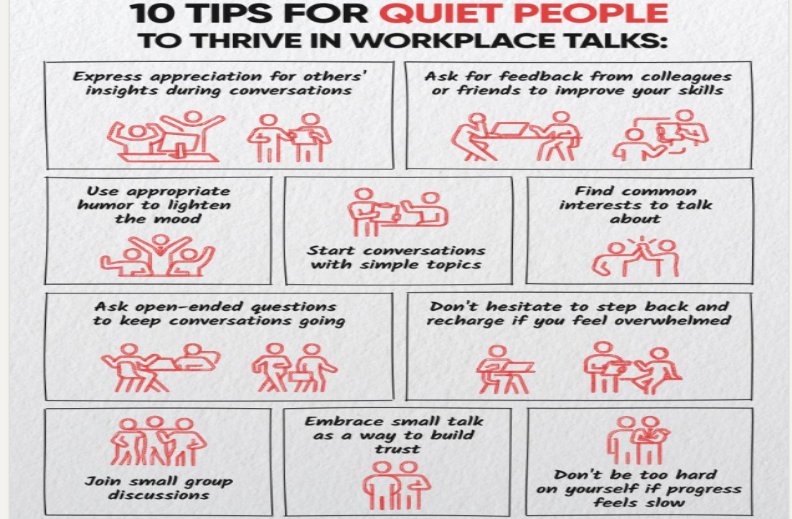
Conversation Skills for Shy Individuals
Conversation skills for shy individuals are often misunderstood because workplace culture may not provide opportunities for quiet individuals to grow. Shy individuals may process internally, prefer reflection, and need time to respond. However, none of these traits prevents effective conversation.
In fact, many shy individuals excel at meaningful dialogue when given the right conditions and strategies. The key is to reduce pressure and increase predictability. Here are some tips to help shy individuals strengthen their conversation skills:
Prepare and Practise in Advance
Preparation is a powerful tool for shyness, but preparation alone is often not enough. Practising in advance helps turn thoughts into familiar patterns, reducing anxiety when the real conversation takes place. Knowing where to begin is more important than knowing what to say.
Preparation and practice might include:
- Mentally rehearsing opening questions and likely responses
- Practising short conversational starters out loud or in writing
- Identifying one or two topics relevant to the context
- Visualising common workplace scenarios and how to respond to them
Practising does not mean memorising a script. It means becoming comfortable with the rhythm of starting a conversation so that it feels familiar rather than intimidating.
Example:
A shy employee prepares for a one-to-one meeting by writing down three discussion points and practising how to introduce each one. When the meeting begins, they feel grounded and able to engage without becoming overwhelmed.
💡Pro tip: Practise builds familiarity. Familiarity reduces uncertainty. Reduced uncertainty lowers anxiety.
Start with Small Talk and Escalate
Many shy individuals struggle when conversations start at high emotional intensity. Beginning with light, neutral topics allows time to adjust and build comfort.
Low-stakes topics include:
- Observations about work processes
- Recent team updates
- Neutral professional experiences
Example:
A shy employee begins meetings by asking clarifying questions before sharing ideas later. This gradual entry builds confidence.
💡Pro tip: Depth is built over time. There is no requirement to go deep immediately.
Use Active Listening as a Focus Strategy
Active listening can be reframed as a strength for shy individuals. By focusing on the speaker, shy individuals reduce self-monitoring and conversational pressure.
Listening allows:
- Natural follow-up questions to arise
- Deeper understanding of context
- Stronger relational presence
Example:
A shy team member becomes a trusted colleague when others feel genuinely heard in their conversations.
💡Pro tip: Good conversation is measured by connection, not quantity.
Choose Environments That Support Authentic Conversation
Shy individuals often perform better in smaller groups or one-to-one settings. Recognising this allows for strategic participation rather than forced exposure.
Example:
A shy employee contributes more effectively in focused discussions than in large meetings and schedules conversations accordingly.
💡Pro tip: Playing to strengths is not avoidance. It is self-awareness.
Reframe Conversation as Skill, Not Personality
Perhaps the most important shift for individuals who are shy is understanding that conversation is a learnable skill. It is not a personality trait reserved for extroverts.
With practise, reflection, and self-compassion, conversation becomes manageable and even enjoyable.
💡Pro tip: Confidence in conversation grows through repetition, not perfection.
FAQs
Q1. Can strong communication still fail to build trust at work?
Yes. Communication can be clear and frequent while still feeling impersonal. Trust is built through conversation, where people feel heard, acknowledged, and emotionally understood, not just informed.
Q2. Why do some workplaces feel emotionally distant despite constant interaction?
Because most interactions are transactional. When exchanges focus only on tasks and outcomes, relationships are neglected. Conversation introduces empathy, context, and shared meaning.
Q3. Is conversation a leadership skill or a universal workplace skill?
It is a universal skill. While leaders set the tone, conversation skills improve peer collaboration, team cohesion, and conflict resolution at every level of an organisation.
Q4. What if someone feels anxious or unsure during workplace conversations?
This is common and valid. Conversation anxiety often reflects fear of judgement rather than lack of ability. One-to-one counselling can help individuals explore these fears and build confidence in a supportive, structured way.
Q5. How can counselling support better workplace conversations?
Counsellors help individuals understand their communication patterns, manage social or performance anxiety, and practise conversational skills in a safe environment. This support often leads to clearer boundaries, stronger relationships, and improved workplace well-being.
Conclusion: The Power of Intentional Dialogue
Workplaces rarely fail because of a lack of communication. Emails are sent, meetings are scheduled, and updates are shared. What often fails is something quieter and more human—the absence of real conversation.
Communication keeps work moving. Conversation keeps people connected. One ensures tasks are completed, while the other ensures people feel respected, understood, and motivated while completing them. When organisations rely only on communication, efficiency may improve, but engagement slowly erodes. When conversation becomes intentional, workplaces become more collaborative, psychologically safe, and resilient.
Mastering the art of conversation does not require confidence, appeal, or extroversion. It requires awareness, listening with intention, asking better questions, and being present rather than transactional. These small shifts, practised consistently, can transform everyday workplace interactions into moments of trust and connection.
The most crucial step is not waiting for the “right” conversation. It is choosing to start differently today. One check-in instead of one directive. One open-ended question instead of one closed response. One moment of presence instead of one more message sent in haste.
For individuals and teams who find these shifts challenging, support can make a meaningful difference. 1to1help’s counselling and professional guidance can help people build confidence in conversation, navigate workplace dynamics, and develop communication patterns that feel authentic rather than forced. With the right support, intentional dialogue becomes a skill that strengthens both performance and well-being.
A more connected workplace does not begin with better words. It begins with better conversations. And those conversations can start now.
References
- American Psychological Association. (2018). Introversion. APA Dictionary of Psychology.
https://dictionary.apa.org/introversion
- Meaning Guide. (2020, October 28). What is shared meaning and why does it matter?
https://meaning.guide/2020/10/28/what-is-shared-meaning-and-why-does-it-matter/
- Apeejay Newsroom. (2023, October 25). Master the art of effective workplace conversations.
https://apeejay.news/master-the-art-of-effective-workplace-conversations/
- Professional & Executive Development at Harvard University. (2024). 8 ways you can improve your communication skills. Harvard University.
https://professional.dce.harvard.edu/blog/8-ways-you-can-improve-your-communication-skills/
- VegOut Magazine. (2024). The art of conversation: 10 skills that take you from awkward to charming.
https://vegoutmag.com/lifestyle/a-bt-the-art-of-conversation-10-skills-that-take-you-from-awkward-to-charming/
- BetterUp. (n.d.). How to carry a conversation: The art of making connections.
https://www.betterup.com/blog/how-to-carry-a-conversation
- Council for Creative Leadership. (n.d.). Coaching others to use active listening skills.
https://www.ccl.org/articles/leading-effectively-articles/coaching-others-use-active-listening-skills/
- Vantage Circle. (n.d.). How to have difficult conversations with employees.
https://www.vantagecircle.com/en/blog/how-to-have-difficult-conversations-with-employees/
- Adedayo, B. (n.d.). Mastering the art of conversation: 10 proven strategies. LinkedIn.
https://www.linkedin.com/pulse/mastering-art-conversation-10-proven-strategies-bonojo-adedayo-mpalf/
- LinkedIn. (n.d.). The critical difference between conversation and communication.
https://www.linkedin.com/pulse/critical-difference-between-conversation-/
- Psychology Today Staff. (n.d.). Shyness. Psychology Today. Retrieved December 31, 2025, from https://www.psychologytoday.com/us/basics/shyness psychologytoday.com
- Verywell Mind. (n.d.). Signs you are an introvert.
https://www.verywellmind.com/signs-you-are-an-introvert-2795427


.svg)
.svg)
.svg)
.svg)