

.png)


.png)

Personal Growth & Wellbeing
Mastering the Art of Rapport Building: 10 Powerful Techniques for Meaningful Connections
.png)
.png)
Written by
Aarohi Parakh,
Psychologist and Content Writer

Reviewed by
Sanjana Sivaram,
Psychologist and Clinical Content Head


Introduction
Imagine entering an official dinner party where the conversation seems overly formal, the responses are courteous but aloof, and something seems "off" even though there isn't any overt disagreement. Now compare that to a conversation in which the other person, even if you have just met them, is easy to talk to, listens without interrupting, and makes you feel understood. The difference between these two experiences is not luck or personality. It is rapport.
Building rapport goes beyond surface-level interactions; it involves creating a genuine bond that fosters trust, understanding, and mutual respect. It determines whether discussions become meaningful or remain transactional. Whether it is a manager speaking to a team member, a parent listening to a child, or two friends navigating a difficult conversation, rapport shapes how messages are received and remembered.
Building rapport has become more crucial than ever in a world where people are interconnected, overstimulated, and yet guarded. The ability to build rapport is essential for fostering relationships in both your personal and professional spheres. This article explores 10 powerful rapport-building techniques, grounded in psychology and real-world application, to help build meaningful connections across professional and personal settings.
Why Learning How to Build Rapport is Essential for Success
Defining Rapport
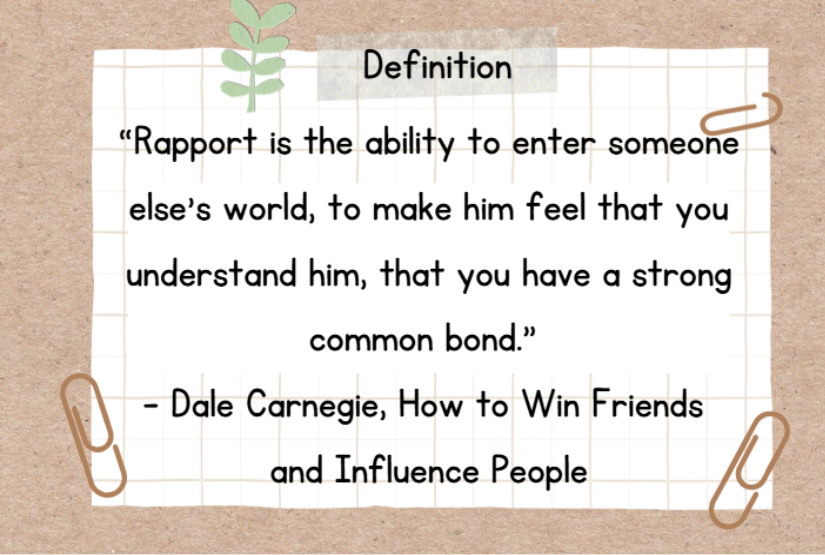
Rapport is a fundamental aspect of human interaction. In psychology, rapport refers to a felt sense of connection—mutual trust, ease, and psychological safety that helps two people work together toward a shared aim. People are more open and cooperative when they feel understood rather than evaluated.
When rapport is present:
- People speak more freely
- Defensiveness reduces
- Misunderstandings are repaired faster
- Influence happens naturally, not forcefully
When rapport is missing, even well-intended communication can feel threatening or dismissive.
The Benefits of Strong Connections
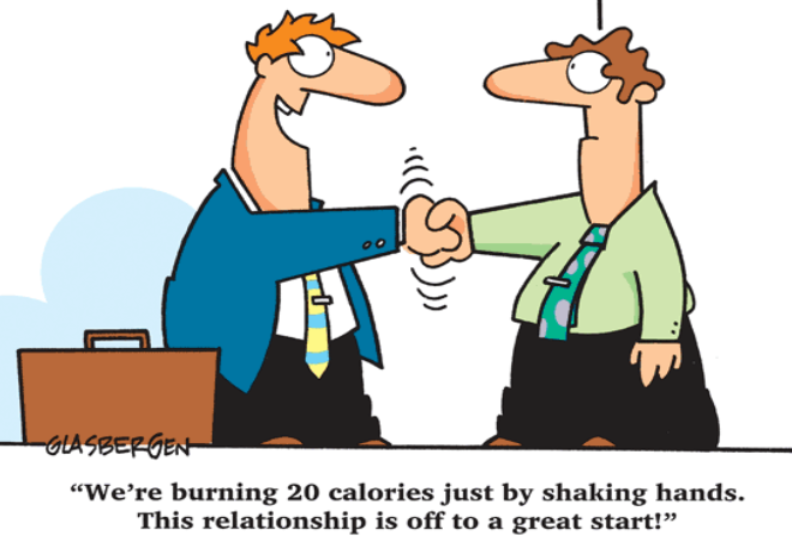
Rapport is not just “nice to have”; it is a key predictor of whether people engage, learn, and follow through. Research shows that strong interpersonal connections have profound implications on various aspects of life. According to research from the University of Pennsylvania, individuals who develop rapport effectively are perceived as more likeable and trustworthy, which can lead to more successful personal and professional relationships.
- In the workplace, rapport improves leadership effectiveness, teamwork, sales outcomes, client trust, and conflict resolution.
- In personal relationships, rapport enhances emotional intimacy, reduces miscommunication, and supports healthier emotional regulation.
- The benefits of building rapport extend even further, promoting psychological well-being by reducing stress and anxiety linked to social interactions.
At its core, rapport building meets a fundamental human need: the need to feel understood.
Foundational Rapport Building Techniques (Tips 1–3)
This section breaks down the most critical, fundamental skills needed to start a connection.
Tip 1: Master Active Listening for Rapport
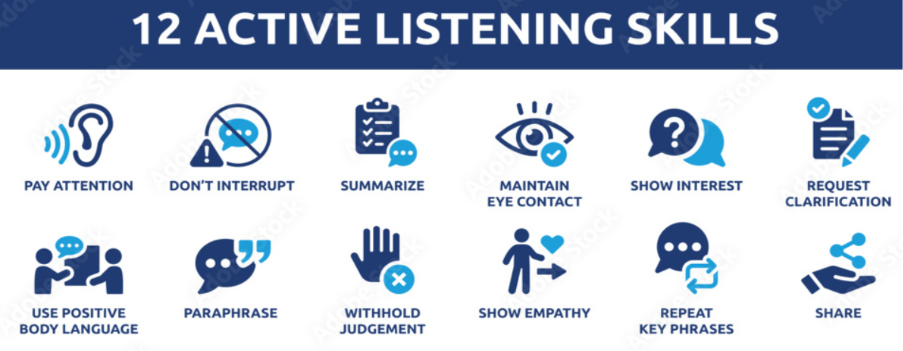
Active listening is a foundational skill often underestimated for its ability to build rapport. In a world filled with distractions, offering someone undivided attention has become both rare and deeply meaningful. When an individual practises active listening, they go beyond merely hearing words; they attune themselves to tone, body language, and underlying emotions. This process involves setting aside personal assumptions and internal judgments to understand the speaker’s perspective genuinely.
Maintaining appropriate eye contact signals sincere interest, nodding reflects engagement, and using verbal prompts such as “I understand” or “Tell me more” encourages the speaker to continue sharing. Through active empathetic listening, a safe and respectful space is created; one in which the speaker feels valued, validated, and truly heard. These elements form the foundation of a strong rapport and meaningful connection.
Psychology behind it: Rooted in Carl Rogers’ Person-Centred Theory, active listening communicates unconditional positive regard, i.e. “I am listening to understand, not to judge or fix.” When people feel heard, the brain’s threat response (amygdala activation) reduces, making them more open and reflective.
What active listening looks like in practice
- Listening without interrupting
- Reflecting back meaning, not just words
- Responding with curiosity, not solutions
Professional Example:
A team member says: “I’m struggling to keep up with deadlines.”
Ineffective response: “You need to manage your time better.”
Active listening response: “It sounds like the workload feels overwhelming right now. What part is taking the most energy?”
Personal example:
A friend says: “I feel like no one checks in on me anymore.”
Active listening response: “It sounds like you’re feeling lonely. When did you start feeling this way?”
💡Pro Tip: Avoid starting responses with “At least…” or “You should…”. These shut down emotional sharing and weaken rapport.
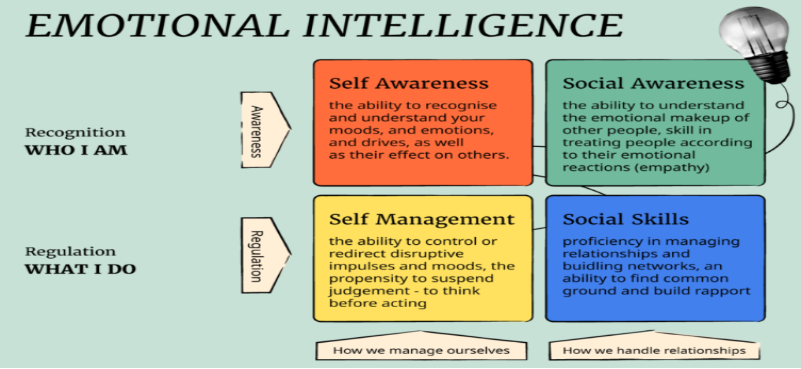
Tip 2: Harness Your Emotional Intelligence (EQ)
Emotional intelligence plays a central role in building rapport, as it shapes how individuals perceive, interpret, and respond to emotions. It refers to the ability to recognise, understand, and manage one’s own emotions while remaining attuned to others' emotional states. When emotional intelligence is present, conversations feel balanced, respectful, and psychologically safe.
People with high emotional intelligence adjust their tone, facial expressions, and body language to match others' emotional needs. For instance, saying things like “That sounds like it was really difficult for you” or “I can see why that situation would feel frustrating” shows they are aware of and attuned to others’ feelings without taking over the conversation.
Emotional intelligence helps prevent misunderstandings and defensiveness. It helps people feel seen and respected, even in tough conversations. This awareness and control of emotions make it easier to have open, honest talks and build strong connections.
Psychology behind it: Simply put, emotions are contagious. According to Emotional Contagion Theory, people unconsciously absorb the emotional tone and related behaviours of those around them.
How EQ builds rapport
- Naming emotions gently
- Adjusting communication style accordingly
Professional example:
During feedback, a manager notices defensiveness and says:
“I sense this feels uncomfortable. That makes sense, feedback can be hard. Let’s take this step by step.”
This acknowledgement reduces threat and preserves rapport.
Personal example:
During a fight with a friend, instead of saying, “You’re overreacting.”
An EQ-based response would be: “I can see this really upset you. Help me understand what hurt.”
💡Pro Tip: Label emotions softly (“It seems like…”, “I might be wrong, but…”) to avoid sounding accusatory.
Tip 3: The Power of Positivity
Positivity acts as a social magnet, naturally drawing people into conversation and connection. Approaching interactions with a positive attitude helps set the emotional tone for building rapport from the outset. This does not mean avoiding reality or difficult topics altogether; rather, it means choosing warmth, openness, and optimism, especially in the early stages of a relationship. A positive demeanour not only uplifts one’s own mood but also shapes the emotional climate of the interaction, making others feel more comfortable and receptive.
Psychology behind it: This is explained by the concept of positive affect, which refers to emotions such as joy, enthusiasm, interest, and optimism. According to the Broaden-and-Build Theory of Positive Emotions (Barbara Fredrickson), positive emotions broaden an individual’s thinking and behavioural responses, making them more open, flexible, and socially engaged. Over time, these positive interactions help build stronger interpersonal bonds and trust, key elements of rapport.
When positive affect is present in a conversation, people are more likely to perceive the interaction as safe and rewarding. This reduces emotional defensiveness and increases willingness to engage, share, and collaborate.
Professional example:
Instead of opening a meeting with: “We’re behind schedule.”
A manager focussing on rapport-building would say:
“We’ve handled tough deadlines before. Let’s look at what will help us move forward.”
Personal Example:
At a social gathering, engaging in light-hearted and uplifting conversation, such as discussing shared interests, recent positive experiences, or plans, creates an emotionally inviting atmosphere. This positive affect encourages others to relax, participate more freely, and feel a sense of connection, even among people meeting for the first time.
💡Pro Tip: A positive tone at the start of a conversation sets the emotional direction for everything that follows.
Advanced Strategies: Nonverbal Communication and Psychological Cues (Tips 4-6)
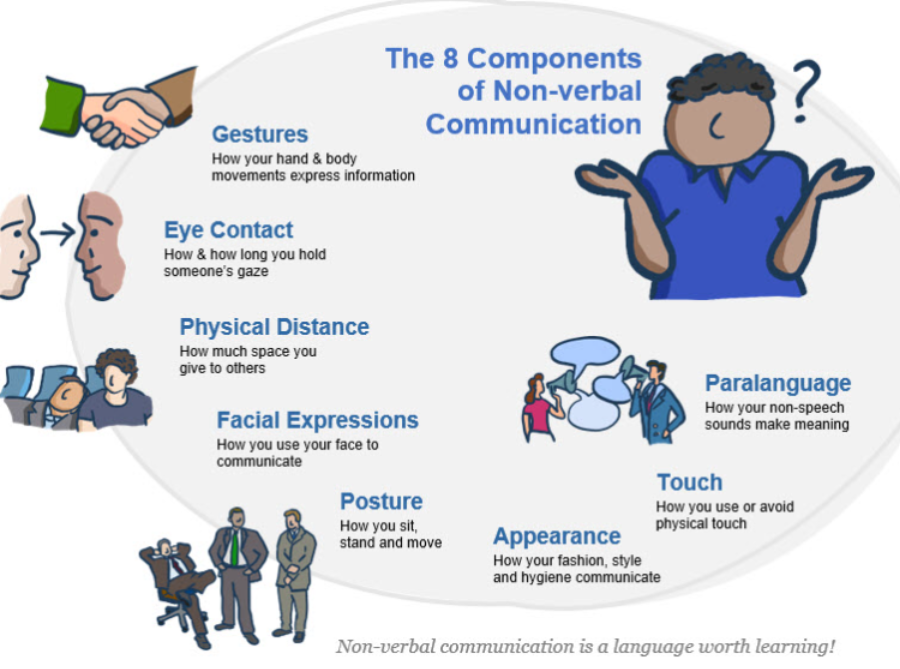
Tip 4: Optimise Your Nonverbal Communication in Rapport Building
Nonverbal communication often speaks louder than words. Facial expressions, posture, eye contact, gestures, and physical orientation send constant signals about interest, openness, and emotional availability. Findings from Stanford University affirm that non-verbal communication, such as appropriate eye contact, nodding, and smiling, conveys warmth and understanding, two critical pillars of rapport.
Optimising nonverbal communication involves consciously adopting open, relaxed, and attentive physical cues that align with one’s spoken words. Simple behaviours such as uncrossing arms, maintaining appropriate eye contact, and facing the speaker directly can significantly enhance connection and trust.
Psychology behind it: This is supported by Mehrabian’s Communication Model, which highlights that emotional meaning in communication is mainly conveyed through tone of voice and body language rather than words alone. Additionally, Embodied Cognition Theory suggests that body posture not only influences how others perceive us but also shapes our own emotional state. Open postures tend to reduce defensiveness and increase feelings of safety; both essential for building rapport.
Professional Example:
Consider attending a networking event where you meet potential clients. By offering a genuine smile, making eye contact, and maintaining open body language, you convey approachability and create an environment conducive to rapport building.
Personal Example:
In a personal conversation with a friend/partner, turning fully towards the speaker, nodding gently, and maintaining a calm facial expression helps the other person feel emotionally held, especially during vulnerable disclosures.
💡Pro Tip: If verbal and nonverbal messages conflict, people instinctively trust the nonverbal ones. Align body language with intention to strengthen rapport.
Tip 5: Establish Unconscious Bonds with Mirroring and Matching (Neuro-Linguistic Programming)
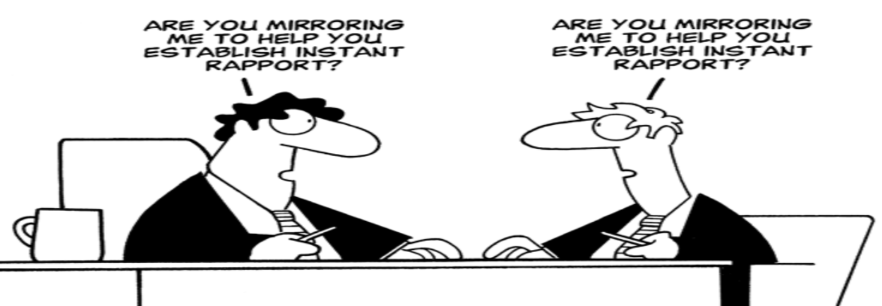
Mirroring and matching are techniques rooted in the psychology of human interaction. Humans have an innate tendency to connect with others who seem familiar. Subtly imitating the speaker’s body language, gestures, and speech patterns can create an unconscious bond. For instance, if the speaker leans forward, you might also lean forward after a moment. If they use certain hand gestures, you might naturally incorporate them into your conversation. The timing differs between the techniques: mirroring provides instant reflection, whereas matching has a slight delay (3-5 seconds).
This technique should, however, never feel exaggerated or mechanical. Effective mirroring is subtle and respectful, supporting connection rather than manipulating it.
Psychology behind it: Neuro-Linguistic Programming (NLP) is a psychological approach that examines how language and patterns of behaviour can be used to achieve specific goals. Mirroring and matching are NLP techniques that involve aligning your communication style with the other person's to establish rapport.
When people sense similarity, often unconsciously, they experience increased trust and rapport. This is sometimes referred to as the “like me” effect.
Professional Example:
If a client speaks slowly and thoughtfully, responding at a similarly calm pace rather than in a rushed, enthusiastic tone helps establish comfort.
For example, matching tone rather than content:
Client: “I’d like to consider the next steps carefully.”
Response: “That makes sense. Let’s walk through it step by step.”
Personal Example:
In a serious conversation with a friend who is speaking quietly, lowering one’s voice instead of maintaining a loud or upbeat tone supports emotional attunement.
💡Pro Tip: Mirror energy and rhythm, not exact gestures or phrases. If mirroring becomes obvious, it loses effectiveness.
Tip 6: Remember the Small Things
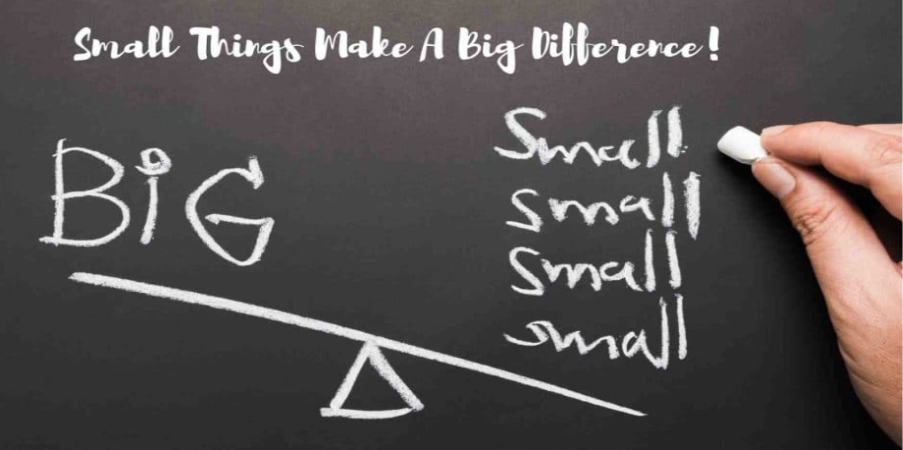
Remembering names, preferences, and personal details communicates attentiveness and care. These small acknowledgements signal that the relationship extends beyond the present moment, reinforcing continuity and trust. Remembering details showcases one’s investment in the relationship, reinforcing the rapport they’ve been building.
This technique is especially powerful because it emphasises consistency over performance.
Psychology behind it: This aligns with the Cognitive Load Theory that explores how the brain processes and retains information. Remembering details from conversations reduces cognitive load for the speaker, as they feel valued and understood, ultimately contributing to stronger rapport.
Professional Example:
A team leader saying:
“Last time you mentioned preparing for a presentation—how did it go?”
demonstrates interest beyond immediate tasks and builds long-term rapport.
Personal Example:
Remembering a friend’s important week and checking in later reinforces emotional connection:
“You have a tough week coming up, how are you feeling about it?”
💡Pro Tip: Brief notes after meaningful conversations can help retain important details and support consistent rapport building.
Strategies for Building Deeper, Lasting Meaningful Connections (Tips 7-10)
Tip 7: Find Common Ground through Shared Experiences
One of the quickest ways to establish rapport is to find common ground. Having things in common with others helps build strong connections. Looking for shared hobbies, work interests, or similar life experiences can lead to better conversations and closer relationships. After you find something in common, try talking more about it. This could be a favourite sports team, a hobby like pottery, or a travel destination you’ve both visited. Sharing these experiences helps you connect and feel like you belong.
This does not require identical backgrounds; emotional or situational overlap is often enough.
Psychology behind it: Social Identity Theory explains that people feel safer and more trusting when they perceive shared group membership or values. Finding common ground leverages this theory by focussing on shared identities and experiences to help people connect.
Professional example:
If you find out that a coworker also enjoys hiking, try talking about recent hikes, swapping tips, or planning a trip together. This can help you build a connection that extends beyond work.
Personal example:
Imagine you’re at a party and meet someone who shares the same alma mater. You start talking about your time there, share memories, and mention your favourite professors. This helps you connect by focusing on what you have in common.
💡Pro Tip: Values-based common ground (shared priorities or intentions) is often more powerful than surface-level similarities.
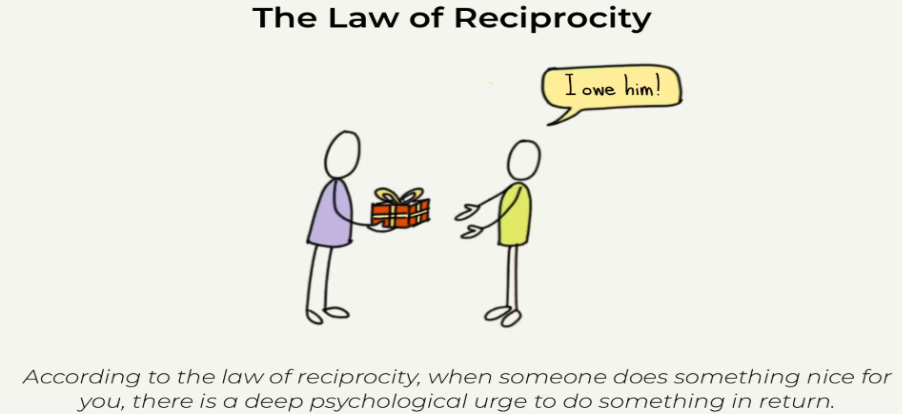
Tip 8: Make it a Two-Way Street (Reciprocity)
Building rapport is a two-way street. It’s important to listen and engage with what the other person says, but it also helps to share something about yourself. When you offer personal stories or insights, you create a sense of give and take. As you open up, the other person understands your perspective better, which leads to a more balanced and meaningful conversation where both people can learn from each other.
Psychology behind it: Social Exchange Theory suggests that people form relationships by weighing the costs and benefits, aiming to get the most rewards while keeping costs low. Reciprocity fits this idea because it balances giving and receiving, helping people build trust through shared effort.
Professional example:
After listening to an employee’s challenge, a leader might say:
“I’ve experienced something similar earlier in my career—it took time to adjust.”
This normalises the experience without shifting focus away.
Personal example:
In friendships, sharing a relevant personal experience after listening deeply helps build emotional attunement.
💡Pro Tip: Share to relate, not to redirect attention. Timing and relevance matter more than quantity.
Tip 9: Give Genuine Compliments
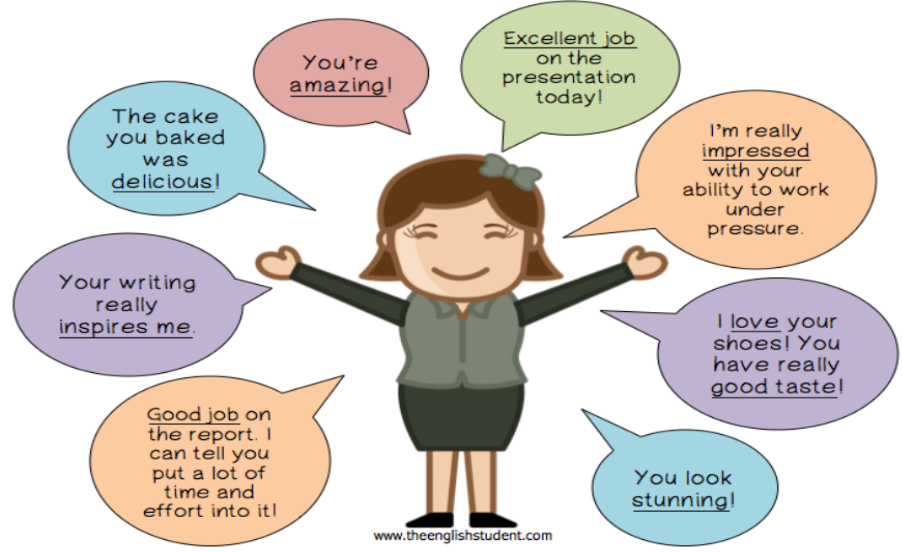
Sincere compliments help create positive feelings and make relationships stronger. When you give a genuine compliment, it shows you are paying attention and value the other person. The best compliments are specific and highlight real qualities, efforts, or achievements, not just general praise.
For example, if someone tells you about something they achieved, recognising their hard work and dedication helps build trust and respect. Being genuine matters, because people can usually tell if praise is not honest. Instead of bringing you closer, a fake compliment can actually hurt trust and make the relationship weaker.
Psychology behind it: Recognition, a key idea in Positive Psychology, helps build self-worth and motivation. When praise is specific, it triggers reward pathways in the brain and helps people feel closer to each other.
Professional example:
In a team meeting, you notice a colleague presents very well. If you give them a genuine compliment about how they engage the audience, you recognise their strength and help build stronger teamwork.
Personal example:
At a social event, you meet someone who shares your interest in a unique hobby. Complimenting their knowledge helps you form a positive connection based on your shared passion.
💡Pro Tip: Focus compliments on effort, values, or impact rather than traits.
Tip 10: Patience Pays Off
Building rapport takes time and patience. Real connections grow slowly, and if you try to hurry things, the relationship can feel forced or fake. Letting rapport develop through regular interactions and shared experiences helps trust and familiarity build over time. Being patient leads to deeper, more meaningful, and lasting connections.
Rapport is built through consistency, not speed. While initial warmth matters, lasting connection develops through repeated respectful interactions over time.
Psychology behind it: The Social Penetration Theory explains that relationships grow from surface-level interactions to deeper, more meaningful bonds over time. Being patient supports this process, helping rapport form naturally and genuinely.
Professional example:
When starting a new professional relationship, sharing personal insights and experiences as you work together on projects helps build rapport and trust over time.
Personal example:
To build rapport with a neighbour, start with regular small talk and slowly move to more personal topics. This approach helps the relationship grow naturally over time.
💡Pro Tip: Consistency matters more than intensity. Small, repeated actions build stronger rapport than grand gestures.
Building Rapport in a Virtual Environment
It can be harder to build rapport online, but it is possible with thoughtful communication. Since there are fewer non-verbal cues and less physical presence, it is important to pay close attention to how you send and receive messages. Here are some ways to build rapport in digital spaces:
- Clear and mindful communication: Paying close attention to tone, word choice, and response time helps maintain warmth and clarity, preventing messages from being misinterpreted.
- Use of video-based interaction: Seeing each other's facial expressions and body language makes conversations feel more personal and helps build a stronger emotional connection.
- Consistency and responsiveness: Checking in regularly, sending thoughtful messages, and replying on time show that you care, can be trusted, and want to keep the connection going.
FAQs
Q1. Is rapport the same as being liked?
No. Rapport means building mutual trust, feeling safe, and working together toward a shared goal. Being liked can help, but real rapport is possible even during difficult conversations if there is respect and teamwork.
Q2. What if I disagree—won’t that negatively impact rapport?
No, not if you handle it well. Acknowledge what makes sense, share your thoughts openly, and ask for feedback. Building rapport is about being respectfully honest, not always agreeing.
Q3. How long does it take to build rapport?
How quickly rapport forms depends on the situation and past experiences. You can build initial rapport in just a few minutes by being clear, showing understanding, and asking good questions. Deeper trust develops over time through consistency, keeping your promises, and fixing mistakes when they happen.
Q4. How do I repair rapport after a mistake?
Name what has happened, take responsibility for your actions, ask what would help, and make changes. Fixing things quickly and clearly can build trust, showing that your relationship can handle honesty and growth.
Q5. Can rapport be built over video calls?
Yes. Set a clear structure with an agenda and regular check-ins. Slow down your pace and use clear nonverbal cues. Say what you are doing, like 'I’m taking notes,' and check for understanding often. Building digital rapport depends on being clear and present.
Conclusion
Rapport building is a continuous skill that influences the quality of personal and professional relationships. By practising active listening, emotional intelligence, positive communication, and consistency, individuals foster safe, respectful, and meaningful interactions. These skills, when applied intentionally, strengthen trust, enhance collaboration, and support emotional well-being.
For those seeking structured support, the 1to1help Employee Assistance Programme (EAP) provides confidential counselling and wellbeing services to improve communication, emotional awareness, and relationship skills. Consider the 1to1help EAP to help individuals and organisations build healthier connections and succeed at work and beyond.
References
- AckySHINE. (n.d.). Developing rapport and connection in interactions. https://ackyshine.com/personal-development/communication-skills-personal-development/developing-rapport-and-connection-in-interactions
- BrainApps. (2025, May). Understanding embodied cognition: How our bodies shape thinking. https://brainapps.io/blog/2025/05/understanding-embodied-cognition-how-our/
- BusinessBalls. (n.d.). Mehrabian’s communication theory: Verbal, vocal and visual communication. https://www.businessballs.com/communication-skills/mehrabians-communication-theory-verbal-non-verbal-body-language/
- Cleveland Clinic. (n.d.). Amygdala. https://my.clevelandclinic.org/health/body/24894-amygdala
- Communication Theory. (n.d.). Social penetration theory: Bringing people closer together. https://www.communicationtheory.org/social-penetration-theory-bringing-people-closer-together/
- English Plus Podcast. (n.d.). How to build rapport in conversations: Master the art of connection. https://englishpluspodcast.com/how-to-build-rapport-in-conversations-master-the-art-of-connection/
- Journey Cloud. (n.d.). How to build rapport. https://blog.journey.cloud/how-to-build-rapport/
- Leader Navigation. (n.d.). Building rapport. https://www.leadernavigation.com/building-rapport-2/
- Mayo Clinic. (n.d.). Anxiety disorders: Symptoms and causes. https://www.mayoclinic.org/diseases-conditions/anxiety/symptoms-causes/syc-20350961
- NLP Yourself. (n.d.). Matching vs mirroring in NLP. https://nlpyourself.com/matching-vs-mirroring-in-nlp/
- Positive Psychology. (n.d.). Broaden-and-build theory of positive emotions. https://positivepsychology.com/broaden-build-theory/
- Positive Psychology. (n.d.). Emotional contagion: How emotions spread. https://positivepsychology.com/emotional-contagion/
- Positive Psychology. (n.d.). What is positive psychology?. https://positivepsychology.com/what-is-positive-psychology-definition/
- Practical Pie. (n.d.). Cognitive load theory. https://practicalpie.com/cognitive-load-theory/
- Psychology For. (n.d.). What is rapport in psychology: Importance, types and examples. https://psychologyfor.com/what-is-rapport-in-psychology-importance-types-and-examples/
- Psychology Today. (2024). 16 ways to become a better listener. https://www.psychologytoday.com/us/blog/fulfillment-at-any-age/202401/16-ways-to-become-a-better-listener
- Psychology Today. (2024). Emotional intimacy: The key to a resilient and fulfilling life. https://www.psychologytoday.com/us/blog/the-discomfort-zone/202408/emotional-intimacy-the-key-to-a-resilient-and-fulfilling
- Simply Psychology. (n.d.). Client-centred therapy (Carl Rogers). https://www.simplypsychology.org/client-centred-therapy.html
- Simply Psychology. (n.d.). Social identity theory. https://www.simplypsychology.org/social-identity-theory.html
- Verywell Mind. (n.d.). Social exchange theory. https://www.verywellmind.com/what-is-social-exchange-theory-2795882
- Verywell Mind. (n.d.). Stress and health. https://www.verywellmind.com/stress-and-health-3145086
- Yale School of Management. (2025, March 7). How to build rapport with your team and why it matters. https://cdo.som.yale.edu/blog/2025/03/07/how-to-build-rapport-with-your-team-and-why-it-matters/
- 7 Minute Mind. (n.d.). Building rapport with emotional intelligence. https://www.7minutemind.com/building-rapport-with-emotional-intelligence/


.svg)
.svg)
.svg)
.svg)