Counselling helpline for employees of partner organisations


.png)
Counselling helpline for employees of partner organisations
Counselling helpline for employees of partner organisations


In India’s hospitals, nurses and doctors carry invisible wounds- Second Victim Syndrome, emotional exhaustion, and unspoken trauma after adverse events. One leading hospital network with 16,000+ staff partnered with 1to1help to rebuild resilience through customised workshops, screenings, and campaigns—transforming how caregivers care for themselves.
Access this case study to discover how healthcare leaders achieved:

In the quiet moments after a code blue event,when the machines are silent and the hallwaystills, something lingers in the air. Grief, doubt,and a kind of exhaustion that has nothing todo with sleep.
Across India’s hospitals, these moments playout almost every day.
Their faces remain composed. Their duties continue. But inside, something shifts.
At one of India’s largest multi-specialty hospital networks, with over 16,000 employees working across dozens of sites, that unspoken emotional strain was starting to show. Not in dramatic outbursts—but in the small cracks.

When HR leaders began to connect the dots, a pattern emerged: a quiet epidemic of emotional distress, most acutely felt by nurses and frontline caregivers. Those trained to heal others were carrying wounds of their own which were often unseen, unspoken, and untreated.
.png)
At the centre of this challenge was Second Victim Syndrome (SVS)—a condition that refers to the significant emotional and psychological distress experienced by healthcare professionals following adverse patient events. Nurses were struggling with overwhelming guilt, self-doubt, and trauma in the aftermath of patient complications or unexpected outcomes.
Combined with long shifts, clinical pressure, and a cultural hesitancy to speak up, the hospital’s staff silently bear emotional wounds without adequate support. Despite having an Employee Assistance Programme (EAP) in place, awareness and usage were low. It became clear the traditional EAP model wouldn’t work. 1to1help offered an EAP that was preventive, compassionate, industry-informed, and brought a new perspective on well-being.
The hospital group turned to us – 1to1help, India’s most trusted EAP provider. What stood out was not just our clinical expertise, but our cultural sensitivity and ability to design programmes thats poke the language of frontline healthcare workers.
Together, we launched a series of initiatives tailored to the everyday realities of life inside a hospital.
.png)
The deployment began with 8 hospital sites, where over 800 nurses and managers participated in the SVS program. The sessions were filled with quiet nods, tears, and relief.
Next came the self-care campaigns in Kolkata, Howrah, Jaipur, Delhi, and Bangalore. These were safe spaces, co-created by employees and facilitators, where emotional wellbeing finally had a seat at the table.
At the same time, EAP awareness sessions were scaled across 20+ locations, supported by visual campaigns, QR codes, WhatsApp nudges, and a redesigned onboarding experience that made mental health support just a click away.
.png)
The numbers told a powerful story:
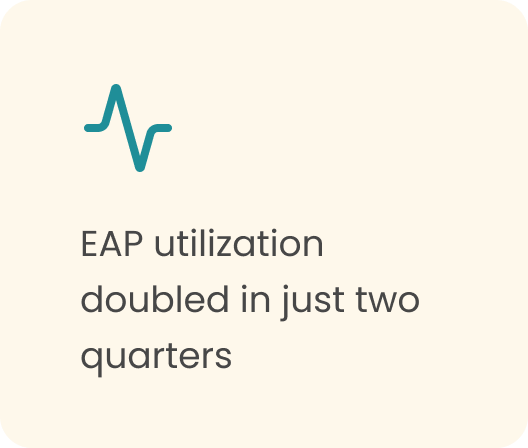
But behind the data were the human truths. The PHQ9 screening revealed:
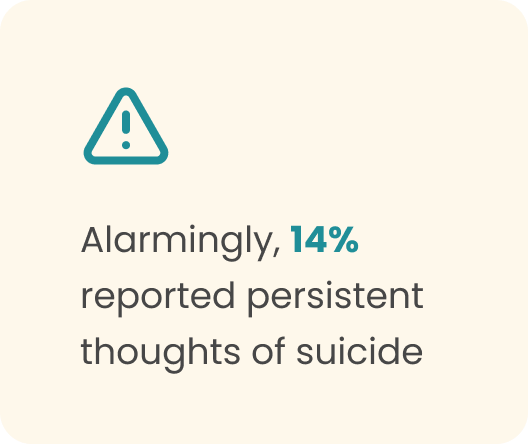
These trends spanned across departments, genders, and age groups confirming that mental health didn’t discriminate.
What began as a set of workshops became a shift in culture.
Team leaders started referring employees to the EAP with confidence. Nurses began checking inon each other after emotionally difficult shifts. Conversations once held in hushed tones are now happening at team huddles. Mental health was becoming a shared responsibility.
.png)
This was just the beginning. The hospital is now:
.png)
Ready to Create a Workplace Where Caregivers Feel Cared For?


.svg)
.svg)
.svg)
.svg)
.png)