

.png)


.png)

Mental Health Concerns
Anxiety: Meaning, Symptoms, Types & How to Overcome It (India Guide 2026)
.png)
.png)
Written by
Aarohi Parakh,
Psychologist and Content Writer

Reviewed by
Sanjana Sivaram,
Psychologist and Clinical Content Head


Introduction
Neha is a 24-year-old postgraduate student in Delhi, preparing for her UPSC Mains. She has not slept properly in three weeks. She wakes at 3 AM with her heart racing, certain she has forgotten something crucial. During study sessions, she re-reads the same paragraph six times and feels like she hasn’t absorbed anything. At mealtimes, she feels sick. She tells herself she is just stressed. She is right that stress is involved. But what she is living with has a more precise name: anxiety.
Neha is one of an estimated 44.9 million Indians living with an anxiety disorder. Most of them, like her, may have never received a diagnosis or any professional support. Anxiety is the most searched mental health term in India, yet it remains highly misunderstood.
This guide covers anxiety meaning, types, anxiety symptoms, causes, treatment options, and evidence-based strategies for overcoming it, written specifically for the Indian context where cultural factors, academic pressure, and limited access to care shape the experience of anxiety in particular ways.

What is Anxiety? Meaning & Definition
Anxiety meaning, at its most essential: anxiety is the body and mind's natural alarm system, a response to perceived threat or uncertainty. Experiencing some level of anxiety is a normal part of life. It can arise during situations like final exams, starting a new job, moving to a new city, before an important work presentation, or worrying about your child’s safety. In many cases, this kind of anxiety can even be helpful, as it sharpens focus, improves performance, and prepares us to respond quickly in stressful situations. The Hindi equivalents, "chinta" (चिंता) and "ghabrahat" (घबराहट), capture the emotional texture, but the clinical condition goes significantly beyond everyday worry. However, when these feelings continue even after the situation has passed, it may indicate an underlying anxiety disorder.
An anxiety disorder develops when anxiety becomes excessive, persistent, and begins to interfere with daily life. The World Health Organisation classifies anxiety disorders as the most common mental health conditions globally. In India, they are the second most prevalent mental health condition after depression.
The distinction between normal anxiety and an anxiety disorder rests on three questions:
- Is the anxiety disproportionate to the actual risk?
- Does it persist even when the threat has passed or is not real?
- Does it significantly disrupt your ability to function at work, in relationships, or in daily life?
If the answer to all three is yes, it is worth seeking a professional assessment.
What Happens in Your Body During Anxiety: The Fight-or-Flight Response
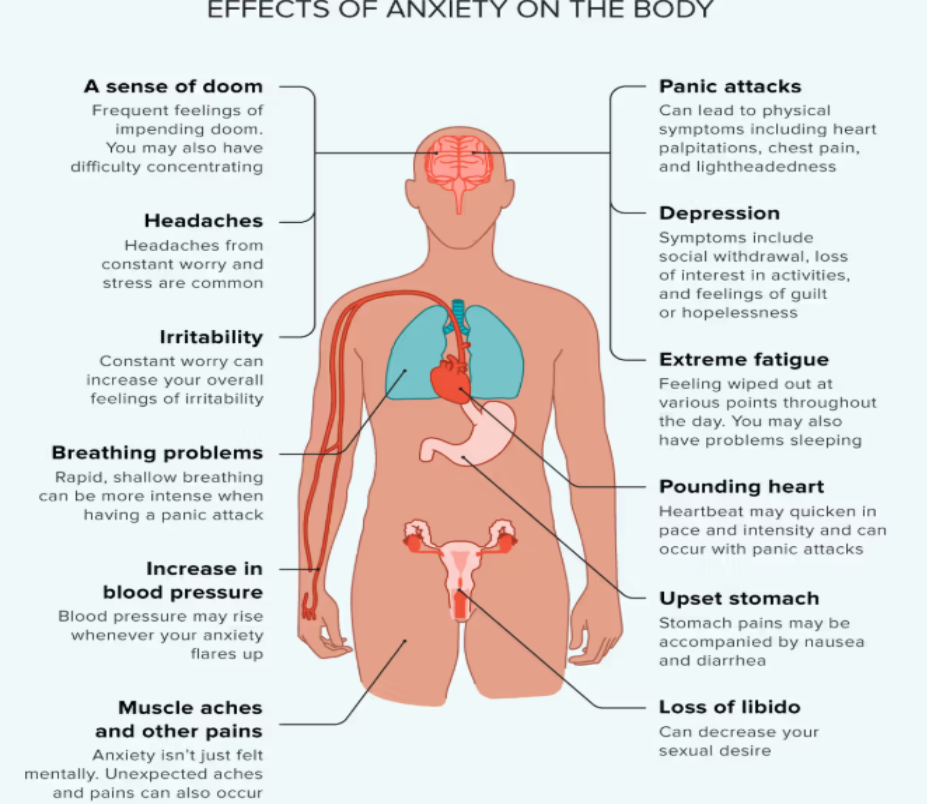
Everyone has anxiety from time to time, but chronic anxiety can interfere with your quality of life. While perhaps most recognized for behavioral changes, anxiety can also have serious consequences on your physical health. Understanding what happens physically makes the experience less frightening and more manageable.
During an anxiety response, often referred to as the fight-or-flight response, multiple body systems become activated in a coordinated way.
- Brain (Amygdala): Detects a perceived threat and sends out an alarm signal, often overriding the prefrontal cortex and reducing rational thinking.
- Adrenal Glands: Release stress hormones like cortisol and adrenaline, preparing the body for immediate action.
- Heart: Beats faster and increases blood pressure, pumping more blood to the muscles for quick response.
- Lungs: Breathing becomes faster and more shallow, which may cause chest tightness or hyperventilation during intense anxiety.
- Muscles: Tighten in preparation for action, with common tension in the shoulders, jaw, and neck.
- Digestive System: Slows down since it is not essential for immediate survival, leading to symptoms like nausea, stomach cramps, or Irritable Bowel Syndrome (IBS)-like discomfort.
- Immune System: Gets temporarily suppressed during stress, and repeated activation due to chronic anxiety can increase susceptibility to illness.
- Prefrontal Cortex: Activity reduces, making calm, logical thinking harder and increasing the likelihood of catastrophic thoughts.
India Focus: In India, anxiety very often presents through the body before it is named emotionally. Recurring stomach problems with no clear medical cause, persistent headaches, or constant fatigue in the absence of illness are common ways that anxiety surfaces in Indian clinical settings, particularly among people who have no vocabulary or cultural permission to describe emotional distress directly.
💡Pro-tip: If you are an Indian HR professional or manager, notice patterns. Frequent physical complaints without a clear medical explanation can sometimes be linked to stress or emotional strain. Avoid making assumptions or diagnoses. Instead, create space for conversation. A compassionate “How have things been going for you lately?” often opens the door more effectively than “Is everything okay?”
Types of Anxiety Disorders
Anxiety disorder is not a single condition. It is a family of related disorders, each with distinct triggers, symptoms, and treatment approaches. Understanding which type applies to you is the starting point for effective treatment.
- Generalized Anxiety Disorder (GAD): Involves ongoing and excessive worry about everyday situations such as work, health, or routine responsibilities. This persistent anxiety often interferes with daily functioning and may include symptoms like restlessness, fatigue, poor concentration, muscle tension, and sleep difficulties.
- Panic Disorder: Characterised by repeated panic attacks, which are sudden episodes of intense fear accompanied by physical and emotional symptoms such as rapid heartbeat, breathlessness, dizziness, chest pain, or fear of losing control or dying. These episodes can feel so severe that they are often mistaken for medical emergencies.
- Specific Phobias: Marked by an intense and irrational fear of a particular object, situation, or activity, such as flying, heights, or animals. Even though individuals recognise that the fear is disproportionate, they may go to great lengths to avoid the trigger.
- Agoraphobia: Involves a strong fear of being in situations where escape might be difficult, or help may not be available during distress. This can include crowded places, public transport, or being outside alone. Over time, avoidance can become so severe that it restricts a person’s ability to leave their home.
- Social Anxiety Disorder: Defined by a deep fear of being judged, embarrassed, or rejected in social or performance situations. Individuals may avoid interactions like public speaking, meeting new people, or eating in front of others, which can significantly impact daily life.
- Separation Anxiety Disorder: Involves excessive fear or distress related to being away from attachment figures. While commonly seen in children, it can persist into adulthood and may include worries about harm to loved ones, reluctance to be alone, or physical symptoms during separation.
- Selective Mutism: A condition where children are unable to speak in certain social situations, such as school, despite speaking normally in comfortable settings like home. This can affect social interaction and academic functioning, often alongside high social anxiety.

- Substance/Medication-Induced Anxiety Disorder: Involves anxiety symptoms that arise due to the effects of substances such as caffeine, alcohol, drugs, or certain medications, or during withdrawal from them. Symptoms may mirror other anxiety disorders but are directly linked to substance use, intoxication, or withdrawal, and often improve once the substance-related cause is addressed.
Disclaimer: While medications like Selective Serotonin Reuptake Inhibitors (SSRIs) and benzodiazepines are commonly used to treat anxiety disorders, they should only be taken under the supervision of a qualified psychiatrist. This guide is for educational purposes and not a substitute for medical advice.
In substance-induced anxiety, treating the underlying substance use or withdrawal is the primary intervention. Symptoms often improve once the substance's effects are addressed.
Generalized Anxiety Disorder (GAD): India's Most Common Anxiety Disorder
Generalized Anxiety Disorder is marked by persistent and excessive worry about multiple everyday concerns that are hard to control and often out of proportion to the actual situation. Unlike situational anxiety, it does not depend on a specific trigger. Instead, it presents as a constant undercurrent of worry affecting areas such as work, health, finances, relationships, and routine decisions. The GAD-7 questionnaire, available through PHQ Screeners, is a widely validated tool used for both self-screening and clinical assessment.
Social Anxiety Disorder: The Invisible Challenge in Indian Contexts
Social anxiety disorder involves an intense, persistent fear of being judged, embarrassed, or negatively evaluated in social or performance situations. In India, it is commonly seen among adolescents and young adults, particularly in environments that involve high evaluation, such as academic and professional settings. Research shows that social anxiety is one of the most prevalent anxiety disorders in Indian students, often linked to performance pressure, peer comparison, and fear of negative judgment.
Contextual factors such as transitioning from smaller towns to urban environments, language barriers, and navigating new social norms may further intensify these experiences for some individuals. Additionally, increased reliance on digital communication and social media may shape how socially anxious individuals interact, sometimes reinforcing avoidance of in-person situations rather than reducing anxiety.
For more on this, see our dedicated section on social anxiety disorder in this article.
Anxiety Symptoms: How to Recognise an Anxiety Disorder
Anxiety symptoms can show up across emotional, physical, cognitive, behavioural, and somatic dimensions. Because these experiences are so varied, and because in India physical complaints are often prioritised over emotional ones, anxiety may be frequently under-identified and under-treated.
Emotional symptoms: Persistent and excessive worry, feeling constantly on edge or irritable, a vague sense of dread, difficulty concentrating, and, at times, feeling detached from oneself or surroundings.
Physical symptoms: Rapid heartbeat, shortness of breath, sweating, trembling, muscle tension, headaches, nausea, chest tightness, dry mouth, and ongoing fatigue.
Cognitive symptoms: Racing or intrusive thoughts, a tendency to catastrophise or expect the worst, difficulty making decisions, problems with memory, and mental blanking in stressful situations.
Behavioural symptoms: Avoiding anxiety-triggering situations, withdrawing from social interactions, procrastinating tasks, engaging in repetitive checking behaviours such as checking phones or locks, and frequently seeking reassurance.
Somatic symptoms: Anxiety often presents through bodily complaints such as stomachaches, headaches, and fatigue. Emotional distress is commonly expressed physically, which can lead to people seeking medical help for physical symptoms without recognising the underlying anxiety.

10 Signs You Might Have an Anxiety Disorder: A Self-Check
Tick any that apply to you for 6 months or more:
- Worry most days about things others consider manageable
- Difficulty stopping the worry once it starts
- Persistent fatigue that sleep does not fully resolve
- Frequent headaches, stomach problems, or muscle tension without clear medical cause
- Avoiding situations because of anticipated anxiety
- Difficulty concentrating; mind going blank at critical moments
- Feeling irritable or on edge without a clear reason
- Sleep problems: difficulty falling asleep, waking during the night, restless sleep
- Episodes of heart racing, breathlessness, or dizziness without a cardiac diagnosis
- Anxiety affecting your work, relationships, or daily activities significantly
Disclaimer: This checklist can be used for personal reflection on anxiety disorder symptoms and is not a diagnostic tool. If you ticked 5 or more: consider using the GAD-7 questionnaire (free at phqscreeners.com) or speaking with a mental health professional.
India Focus: The Indian Psychiatric Society's 2024 data indicates that 40% of Indian teenagers report experiencing significant stress or anxiety. Yet fewer than ~15% of those who need mental health care in India actually receive it. If you are a parent, teacher, or school counsellor, recognising the somatic signs in young people, stomach aches before exams, headaches on school days, and sleep problems during exam season, is an important early identification skill.
What Causes Anxiety? Risk Factors in India
Anxiety does not have a single cause. It develops through the intersection of biological predisposition, psychological patterns, and environmental stressors. In India, several contextual factors amplify this intersection in specific ways.
Biological Causes
- Genetics: anxiety disorders have a 30-40% heritability rate; a family history of anxiety or depression increases individual risk
- Brain chemistry: reduced GABA and serotonin activity in the brain is associated with heightened anxiety responses
- Chronic illness: conditions including thyroid disease, cardiovascular disease, and diabetes are closely linked to anxiety in Indian clinical populations
- Sleep disruption: anxiety and insomnia are bidirectional; each worsens the other in a reinforcing cycle
Psychological Triggers
- Trauma: adverse childhood experiences, abuse, accidents, or loss create neurological vulnerability to anxiety
- Negative thought patterns: catastrophising, perfectionism, and black-and-white thinking fuel anxiety
- Low self-esteem: the link between poor self-concept and anxiety is particularly evident in academic and professional competitive contexts
- COVID-19 legacy: the WHO estimated that anxiety rates rose 25% globally during the pandemic; Indian youth were disproportionately affected by isolation, academic disruption, and family bereavement
Social and Cultural Factors in India
- Competitive academic pressure: JEE, NEET, UPSC, and CAT preparation creates sustained, multi-year anxiety in millions of Indian students. Educational institutions play a critical role here — a structured Student Assistance Programme gives students access to confidential counselling and crisis support during high-pressure exam cycles like these.
- Job insecurity: post-2023 tech layoffs and gig economy precarity generate ongoing threat-response in the workforce
- Financial stress: first-generation earners supporting families carry multiple competing financial obligations
- Urban overcrowding and commute stress: the daily experience of Mumbai or Delhi commutes creates chronic low-grade physiological stress
- Social media comparison: curated social media feeds amplify comparison and inadequacy, particularly in 18-34 year olds
- Cultural stigma: many Indians misattribute anxiety symptoms to weakness or a "weak character", preventing help-seeking

Anxiety Attack vs Panic Attack: What is the Difference?
Both anxiety attack and panic attack are terms that appear in high-volume searches, and they are frequently confused, including by clinicians. The distinction matters because the two experiences have different patterns, different clinical implications, and different management strategies.

Anxiety Attack Symptoms: What to Watch For
An anxiety attack builds gradually in response to a stressor and is typically associated with a known worry or threat. Anxiety attack symptoms include: a racing or pounding heart, shortness of breath, tightening in the chest, trembling, sweating, dizziness, and a strong sense of dread. Unlike panic attacks, anxiety attacks tend to be proportionate to a situation, even if the response is disproportionate to the actual risk. They subside when the stressor passes.
💡Important: In India, panic attacks are routinely rushed to emergency departments and treated as cardiac events. Cardiac causes must be ruled out by a doctor, but once they are, a panic attack diagnosis should be followed by a referral to a psychologist or psychiatrist rather than repeated ECG testing. If you experience sudden, intense episodes of chest pain, breathlessness, and fear, please see a doctor first, then follow up with mental health support.
How to Overcome Anxiety: Evidence-Based Strategies
How to overcome anxiety, how to control anxiety, how to deal with anxiety: these three questions represent hundreds of thousands of searches from people who are looking not just for information but for practical help. The strategies below are evidence-based, culturally relevant, and scalable from home practice through to professional intervention.
How to Control Anxiety: Self-Help Strategies That Work
- Diaphragmatic breathing and pranayama: slow, belly-focused breathing activates the parasympathetic nervous system and reduces cortisol within minutes. The 4-7-8 technique (inhale 4 counts, hold 7, exhale 8) is particularly effective during acute anxiety
- Progressive Muscle Relaxation (PMR): systematically tense and release muscle groups from feet to face; reduces the physical residue of anxiety that accumulates in the body; free guided audio available from iCall and Vandrevala
- Exercise: Research shows that 30 minutes of aerobic activity three to five times per week is as effective as medication for mild anxiety; walking, cycling, or swimming qualify
- Sleep hygiene: anxiety and insomnia feed each other; consistent sleep and wake times, dark and cool sleeping environment, and limiting screens before bed are effective first steps
- Limit caffeine and alcohol: both significantly worsen anxiety symptoms; tea and coffee intake is particularly worth monitoring during exam and project delivery periods
- Journalling (the anxiety dump): write every worry down without censoring, then go back and write one counter-thought for each; this is a basic CBT technique with strong evidence
- Mindfulness and meditation: 10 minutes of daily mindfulness practice reduces cortisol measurably over time; apps including Headspace and Insight Timer offer free India-localised content
- Social support: talk to a trusted person; the act of verbalising anxiety reduces its intensity; peer support via helpline numbers are also available free of cost
How to Deal with Anxiety: When to Seek Professional Support
Self-help can be a useful starting point, but it may not be enough for moderate to severe anxiety. If your anxiety has lasted for six months or more, is significantly affecting your daily functioning, involves panic attacks, or leads you to avoid important situations, it is advisable to seek professional support.
Cognitive Behavioural Therapy (CBT) is considered the gold standard, evidence-based treatment for anxiety disorders. It is typically delivered over 12 to 20 sessions and focuses on identifying and changing unhelpful thought patterns and behaviours. In India, CBT is available both online and in person through qualified mental health professionals, including hospital-based services, independent practitioners, and digital therapy platforms. Costs can vary, but more affordable options are increasingly available through helplines, non-profit organisations, and public mental health services.
If you are employed in an organisation that offers an Employee Assistance Programme (EAP), you may also have access to confidential counselling services at no additional cost. EAPs, such as those offered by 1to1help, provide short-term, professional support for concerns like anxiety, stress, and emotional well-being, while maintaining strict confidentiality.
💡Pro-Tip: If you feel unsure about starting therapy, consider reaching out to Tele-MANAS (14416), a comprehensive mental health service by GoI. It is a free, confidential, 24/7 helpline available in multiple Indian languages and staffed by trained mental health professionals. For many people, this can be a simple, no-commitment first step toward seeking support.
Anxiety Treatment Options Available in India
India offers a fuller spectrum of anxiety treatment than most people realise, from free government services to online therapy platforms to integrative AYUSH approaches. The table below maps the main options against suitability, cost, and access.

Anxiety Medicine: What You Need to Know
Searches for anxiety medicine reflect a genuine need for information about pharmacological options. SSRIs (Selective Serotonin Reuptake Inhibitors) such as Escitalopram and Sertraline are the first-line medications for most anxiety disorders. They are safe, effective, non-addictive, and widely available in India at low cost in generic form.
Benzodiazepines (such as Alprazolam or Clonazepam) are sometimes prescribed for short-term symptom relief but carry dependency risks if used long-term. They should not be taken without a psychiatrist's supervision. Buspirone is a non-addictive anxiolytic that works more slowly but without dependency risk.
💡Important: All anxiety medications in India require a prescription from a licensed psychiatrist or physician. Do not purchase anxiolytics over the counter or borrow medication from others. Anxiety medicine works best as part of a combined treatment plan alongside therapy, not as a standalone intervention.
Ayurveda and Ashwagandha for Anxiety
Ashwagandha (Withania somnifera) has the strongest evidence base among Ayurvedic interventions for anxiety. A 2019 randomised controlled trial in Medicine found that 240mg of standardised Ashwagandha extract significantly reduced anxiety and cortisol levels compared to placebo. It is considered a safe complementary intervention but should not replace evidence-based therapy or prescribed medication for moderate-to-severe anxiety, and should be used under AYUSH practitioner guidance particularly if combined with SSRIs.
Social Anxiety Disorder: A Special Focus for India
Social anxiety disorder (social anxiety in everyday language) is the intense, persistent fear of social situations in which one might be judged, embarrassed, or humiliated. It is not shyness. Shyness is a manageable personality trait that does not disrupt functioning. Social anxiety disorder is a clinical condition that causes significant distress and avoidance of situations that most people navigate comfortably.
In India, social anxiety disorder is shaped by cultural dynamics that make it both more common and less likely to be identified:
- Joint family settings create constant social performance pressure, particularly around family gatherings, festivals, and extended family scrutiny
- Arranged marriage contexts involve repeated, high-stakes social evaluation that is deeply activating for anyone with social anxiety
- Professional networking in India's corporate culture, which increasingly mirrors Western norms, creates sustained social performance demands
- Academic performance pressure in JEE, NEET, and UPSC circles generates public failure anxiety that generalises to social contexts
Social Anxiety Disorder Symptoms
- Blushing, trembling, or sweating in social situations
- Avoidance of parties, meetings, presentations, or any situation involving public scrutiny
- Excessive worry in the days before a social event
- Difficulty making eye contact or speaking in groups
- Post-event rumination: replaying conversations and searching for evidence of humiliation
Cognitive Behavioural Therapy (CBT) with exposure therapy is the most effective treatment for social anxiety disorder, with exposure components that gradually increase the person's tolerance for feared social situations. SSRIs are also effective. Group therapy, increasingly available in metro cities, has the additional benefit of providing a structured, supportive social environment.
A Final Word
Neha, the UPSC student from our opening, eventually reached out for support after reading about anxiety online. The first thing the counsellor told her was: what you are experiencing has a name, it is common, and it is treatable. That sentence marked the beginning of a different relationship with her own mind.
Anxiety is one of India’s most searched mental health concerns for a reason. It shows up everywhere. In classrooms and offices, in WhatsApp groups and late-night spirals, in bodies that ache and minds that struggle to quiet down. What is less visible, but steadily growing, is the awareness that it does not have to remain this way.
If you are ready to take the next step, you can reach out to Tele-MANAS at 14416 for free, 24/7 support in multiple Indian languages, or speak to a qualified professional through available counseling services. If you are employed in an organisation that offers an Employee Assistance Programme, you may also have access to confidential counselling support at no additional cost through providers such as 1to1help.
You do not need to be in crisis to ask for help. You only need to decide that you deserve better than living in a constant state of anxiety.
FAQs
Q1. What is anxiety and what does it mean?
Anxiety is a natural emotional response to stress or perceived threats. It involves feelings of worry, nervousness, or fear about future events. In small amounts, anxiety is normal and even helpful as it sharpens focus and motivates preparation. However, when anxiety becomes excessive, persistent, and interferes with daily life, it may indicate an anxiety disorder. In India, it is one of the most common mental health concerns, affecting millions across all age groups. The Hindi equivalents are chinta (चिंता) and ghabrahat (घबराहट), though the clinical condition goes beyond everyday worry.
Q2. What are the symptoms of anxiety?
Anxiety symptoms include emotional, physical, cognitive, and behavioural signs. Emotionally, this may look like constant worry, restlessness, irritability, or a sense of dread. Physically, it can include a racing heart, shortness of breath, sweating, trembling, muscle tension, and sleep problems. Cognitively, people may experience difficulty concentrating, racing thoughts, or catastrophising. Behaviourally, it may involve avoiding anxiety-triggering situations. In India, anxiety often first presents as physical complaints such as recurring stomachaches, headaches, or unexplained fatigue without a clear medical diagnosis. This can happen when individuals are not fully aware of what anxiety feels like or do not have the language to describe emotional distress. If these symptoms persist for six months or more and disrupt daily functioning, consulting a mental health professional is recommended.
Q3. What is the difference between anxiety and a panic attack?
Anxiety typically builds gradually in response to a known stressor, while a panic attack is a sudden, intense surge of fear that peaks within minutes and may occur without an obvious trigger. Anxiety symptoms include a racing heart, chest tightness, shortness of breath, and a sense of unease. Panic attacks are more intense and may involve chest pain, numbness, dizziness, and a feeling of losing control or impending doom. In India, panic attacks are often mistaken for cardiac issues, leading to emergency visits. Both conditions are treatable, and an accurate diagnosis is important.
Q4. How can I overcome anxiety naturally?
Several evidence-based strategies can help manage anxiety without medication. Regular aerobic exercise, such as 30 minutes five times a week, has been shown to significantly reduce anxiety levels. Breathing practices like pranayama, including the 4-7-8 technique, can help activate the body’s relaxation response. Reducing caffeine intake and maintaining good sleep hygiene can lower baseline anxiety. Mindfulness meditation for even 10 minutes daily can help regulate stress over time. Journalling techniques, such as writing down worries and challenging them, are simple cognitive strategies derived from CBT. However, if anxiety persists beyond six months, professional support is often more effective than self-help alone.
Q5. Is anxiety treatment free in India?
Yes, several free and low-cost options are available. Tele-MANAS (14416) provides free, 24/7 counselling in multiple Indian languages. District Mental Health Programme (DMHP) centres across many districts offer free outpatient psychiatric care, including treatment for anxiety disorders. Some non-profit organisations and government-supported services also provide subsidised counselling.
If you are employed in an organisation that offers an Employee Assistance Programme (EAP), you may also have access to free, confidential counselling sessions as part of your workplace benefits. EAP providers such as 1to1help offer short-term professional support for concerns like anxiety, stress, and emotional well-being.
Under schemes like Ayushman Bharat, certain mental health treatments may be covered for eligible individuals. Affordable online therapy options are also increasingly available.
Q6. What is generalised anxiety disorder (GAD)?
Generalised anxiety disorder (GAD) is characterised by persistent, excessive worry about a wide range of everyday matters such as health, finances, work, and relationships. Unlike normal worry, it is difficult to control, disproportionate to the situation, and lasts for at least six months. Physical symptoms may include fatigue, muscle tension, difficulty concentrating, and sleep disturbances. GAD is one of the most common anxiety disorders in India and responds well to therapy and, when needed, medication. The GAD-7 questionnaire is a widely used, validated self-assessment tool.
Q7. When should I see a doctor for anxiety?
You should consider seeking professional help if your anxiety lasts more than six months, is difficult to control, and significantly interferes with your daily life, work, or relationships. It is also important to seek support if you experience panic attacks, rely on alcohol or substances to cope, have thoughts of self-harm, or feel unable to identify the cause of your anxiety. Many people in India delay seeking help due to stigma, but early intervention leads to better outcomes. You can start by reaching out to Tele-MANAS at 14416 for free, confidential guidance.
Additional Resources
- Calming Pocket Guide : Click Here
- Relaxation Skills for Anxiety : https://medicine.umich.edu/sites/default/files/content/downloads/Relaxation-Skills-for-Anxiety.pdf
Related Articles You Will Find Helpful
References
- American Psychiatric Association. (2013). Diagnostic and statistical manual of mental disorders (5th ed.).
- American Psychological Association. (n.d.). Exposure therapy. https://www.apa.org/ptsd-guideline/patients-and-families/exposure-therapy
- American Heart Association. (n.d.). Understanding blood pressure readings. https://www.heart.org/en/health-topics/high-blood-pressure/understanding-blood-pressure-readings
- Cleveland Clinic. (n.d.). Anxiety disorders. https://my.clevelandclinic.org/health/diseases/9536-anxiety-disorders
- Cleveland Clinic. (n.d.). Generalized anxiety disorder (GAD). https://my.clevelandclinic.org/health/diseases/23940-generalized-anxiety-disorder-gad
- Cleveland Clinic. (n.d.). Panic attacks and panic disorder. https://my.clevelandclinic.org/health/diseases/4451-panic-attack-panic-disorder
- Cleveland Clinic. (n.d.). Separation anxiety disorder. https://my.clevelandclinic.org/health/diseases/separation-anxiety-disorder
- Cleveland Clinic. (n.d.). Selective mutism. https://my.clevelandclinic.org/health/diseases/selective-mutism
- Cleveland Clinic. (n.d.). Hyperventilation. https://my.clevelandclinic.org/health/diseases/hyperventilation
- Cleveland Clinic. (n.d.). Irritable bowel syndrome (IBS). https://my.clevelandclinic.org/health/diseases/4342-irritable-bowel-syndrome-ibs
- Cleveland Clinic. (n.d.). Prefrontal cortex. https://my.clevelandclinic.org/health/body/prefrontal-cortex
- Cleveland Clinic. (n.d.). Amygdala. https://my.clevelandclinic.org/health/body/24894-amygdala
- Cleveland Clinic. (n.d.). Serotonin. https://my.clevelandclinic.org/health/articles/22572-serotonin
- Cleveland Clinic. (n.d.). Gamma-aminobutyric acid (GABA). https://my.clevelandclinic.org/health/articles/22857-gamma-aminobutyric-acid-gaba
- Cleveland Clinic. (n.d.). Benzodiazepines. https://my.clevelandclinic.org/health/treatments/24570-benzodiazepines-benzos
- Cleveland Clinic. (n.d.). Anxiolytics. https://my.clevelandclinic.org/health/treatments/24776-anxiolytics
- Healthline. (n.d.). Effects of anxiety on the body. https://www.healthline.com/health/anxiety/effects-on-body
- Healthline. (n.d.). Anxiety: Causes and symptoms. https://www.healthline.com/health/anxiety
- Healthline. (n.d.). Panic attack vs anxiety attack. https://www.healthline.com/health/panic-attack-vs-anxiety-attack
- Mayo Clinic. (n.d.). Selective serotonin reuptake inhibitors (SSRIs). https://www.mayoclinic.org/diseases-conditions/depression/in-depth/ssris/art-20044825
- Mayo Clinic. (n.d.). Specific phobias. https://www.mayoclinic.org/diseases-conditions/specific-phobias/symptoms-causes/syc-20355156
- Mayo Clinic. (n.d.). Agoraphobia. https://www.mayoclinic.org/diseases-conditions/agoraphobia/symptoms-causes/syc-20355987
- Mayo Clinic. (n.d.). Social anxiety disorder. https://www.mayoclinic.org/diseases-conditions/social-anxiety-disorder/symptoms-causes/syc-20353561
- Mindvoyage. (n.d.). Latest statistics of anxiety disorders in India. https://mindvoyage.in/latest-statistics-of-anxiety-disorders-in-india/
- Ministry of Health and Family Welfare. (n.d.). Tele-MANAS. https://telemanas.mohfw.gov.in/home
- Press Information Bureau. (n.d.). Mental health initiatives in India. https://www.pib.gov.in/PressReleasePage.aspx?PRID=2188003®=3&lang=2
- Spitzer, R. L., Kroenke, K., Williams, J. B. W., & Löwe, B. (2006). A brief measure for assessing generalized anxiety disorder: The GAD-7. Archives of Internal Medicine, 166(10), 1092–1097.
- Suhas, S., Jayasankar, P., Patley, R., & Manjunatha, N. (2023). Nationally representative epidemiological study of social anxiety disorder from India. Indian Journal of Psychiatry. https://doi.org/10.4103/indianjpsychiatry.indianjpsychiatry_10826865
- World Health Organization. (2022). Anxiety disorders. https://www.who.int/news-room/fact-sheets/detail/anxiety-disorders
- World Health Organization. (2022). COVID-19 pandemic triggers 25% increase in prevalence of anxiety and depression worldwide. https://www.who.int/news/item/02-03-2022-covid-19-pandemic-triggers-25-increase-in-prevalence-of-anxiety-and-depression-worldwide
- Yale Medicine. (n.d.). Substance/medication-induced anxiety disorder. https://www.yalemedicine.org/clinical-keywords/substancemedication-induced-anxiety-disorder


.svg)
.svg)
.svg)
.svg)