

.png)


.png)

Mental Health Concerns
Depression: Symptoms, Causes, Types & How to Overcome It: India 2026 Guide
.png)
Written by
Aarohi Parakh,
Psychologist and Content Writer

Reviewed by
Sanjana Sivaram,
Psychologist and Clinical Content Head


Introduction
Depression doesn’t always arrive with a name.
It can begin on a day that looks completely ordinary. The alarm rings, messages come in, everything appears unchanged. And yet, something feels off. Not strong enough to explain, not visible enough for others to notice. Just a quiet heaviness that lingers through the day.
At first, it’s easy to dismiss. You call it stress or exhaustion. You tell yourself it will pass. You continue showing up, doing what needs to be done. From the outside, nothing seems different.
But inside, small things begin to shift.
What once felt effortless now takes intention. Getting out of bed becomes a choice. Conversations feel distant. Even moments that should feel joyful seem slightly out of reach. And often, there isn’t a single clear reason why.
Clinically, this is more than just feeling low for a few days. It is a recognised mental health condition that affects how a person thinks, feels, and functions over time.
This blog takes a closer look at something that often goes unnoticed, until it doesn’t. It focuses on depression as a clinical condition that shapes how a person thinks, feels, and functions over time. It examines how it presents, what contributes to it, and how it can be recognised early, along with the approaches used to manage it effectively.
What Is Depression? Definition & Meaning
At a clinical level, depression is not defined by a single emotion. It is classified as a mood disorder that involves a constant change in how a person feels, thinks, and functions over time.
Persistent low mood, loss of interest, fatigue, changes in sleep or appetite, and difficulty concentrating are some of the core markers. For a diagnosis, these symptoms typically last at least two weeks and begin to interfere with everyday life.
This is where the distinction becomes important.
Feeling sad is a natural emotional response. It is usually linked to a situation, it fluctuates, and over time, it eases. The angle of depression, however, does not follow that pattern.
It is more constant, less dependent on immediate circumstances, and more disruptive in how it affects daily functioning. It changes not just how someone feels, but how they think, respond, and engage with the world around them.
In many cases, it does not even present as “feeling low.” It can show up as fatigue, irritability, or physical discomfort, which is one reason it is often overlooked or misinterpreted.
Globally, over 280 million people are estimated to be living with depression, making it one of the leading causes of disability. In India, according to the last census, 57 million people are affected, with a significant gap between those who need support and those who receive it.
The meaning of depression, then, is not just in its definition, but in recognising how it shifts a person’s baseline over time. The word itself is often used loosely, sometimes even in entirely different contexts. But here, the focus is precise. A clinical condition, with defined patterns, measurable impact, and clear pathways for identification and care.
Types of Depression
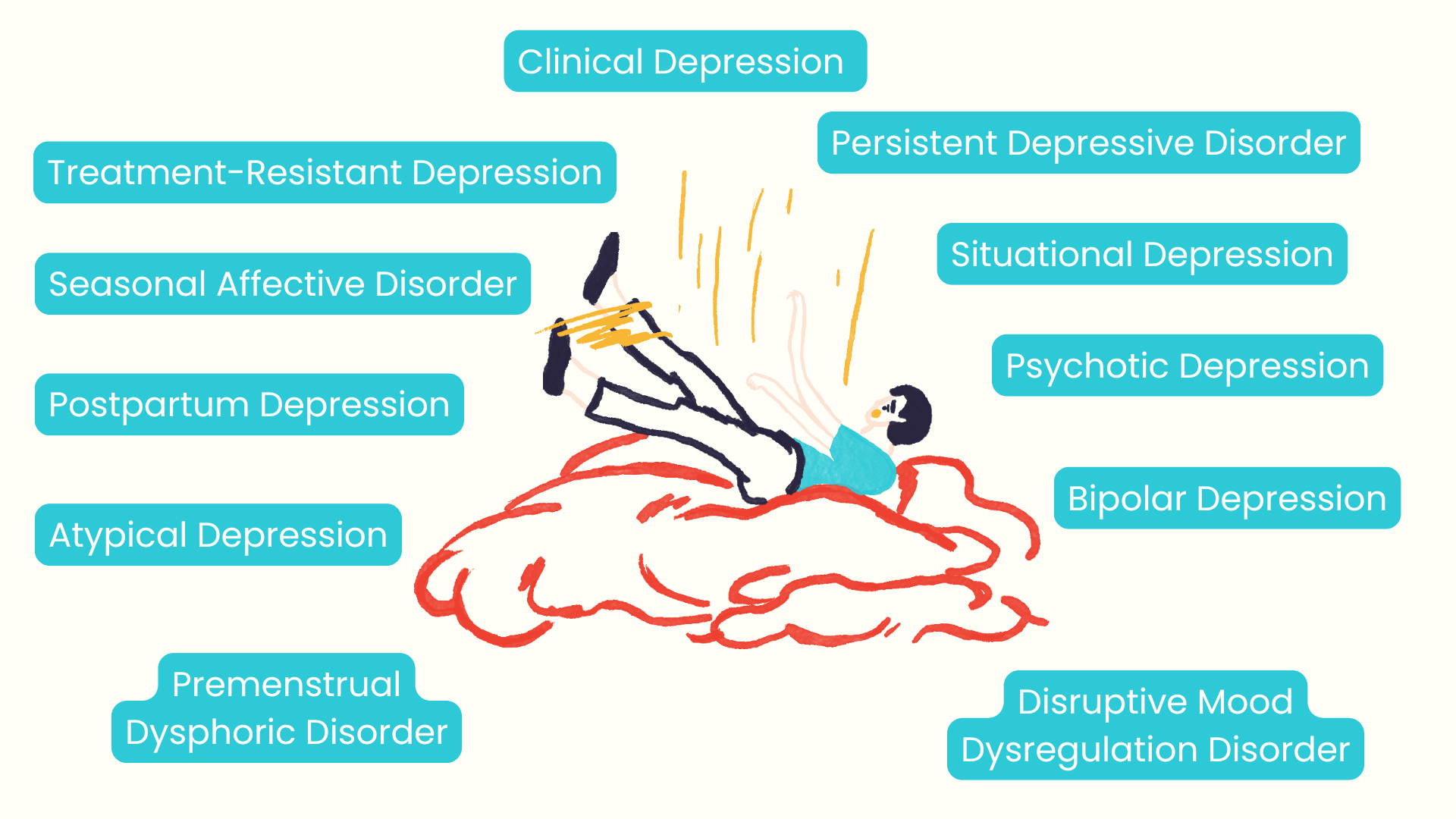
Depression is not a single, uniform condition. Clinically, it presents in different forms based on duration, severity, underlying causes, and symptom patterns. Understanding these distinctions is important because each type can require a different approach to identification and treatment.
Below are the major clinically recognised types.
Clinical Depression
Clinical depression is the commonly used term for what is medically classified as Major Depressive Disorder (MDD).
It refers to a form of depression that meets formal diagnostic criteria, where symptoms are persistent, clinically significant, and interfere with daily functioning. This distinguishes it from temporary emotional distress or short-term mood changes.
MDD can be:
- Single episode or recurrent
- Mild, moderate, or severe
- With specific features such as melancholic (deep loss of pleasure), atypical (mood reactivity), or anxious distress
While the term is often used broadly in everyday language, in a clinical context it significantly impairs daily functioning and often requires structured treatment through therapy, medication, or a combination of both
Persistent Depressive Disorder (Dysthymia)
This is a chronic, long-term form of depression.
Symptoms are typically less intense than MDD but last for two years or more. Because of its prolonged nature, it is often normalised or overlooked.
Common features include:
- Ongoing low mood
- Low energy and motivation
- Poor self-esteem
- Reduced productivity
Despite being “milder” in intensity, its chronic course can make it equally, if not more, impairing over time.
Postpartum Depression
Postpartum depression occurs after childbirth, typically within the first few months, but it can develop anytime within the first year. Clinically, it falls under what is termed “peripartum onset,” which includes depressive episodes that begin during pregnancy as well as after delivery.
It goes beyond the short-term “baby blues” and includes:
- Persistent low mood or emotional numbness
- Difficulty bonding with the baby
- Severe fatigue or anxiety
- Feelings of guilt, inadequacy, or detachment
Estimates suggest that up to 1 in 5 women in India may experience postpartum depression, though many cases remain undiagnosed due to social and cultural pressures.
Seasonal Affective Disorder (SAD)
This type follows a seasonal pattern, most commonly emerging during months with reduced sunlight.
While more prevalent in countries with long winters, it can still occur in certain regions or contexts in India.
Symptoms include:
- Low mood during specific seasons
- Low energy and increased sleep
- Changes in appetite, often cravings for carbohydrates
It is linked to disruptions in circadian rhythm and light exposure.
Psychotic Depression
A severe form of depression that includes psychotic features such as:
- Delusions (fixed false beliefs)
- Hallucinations (seeing or hearing things not present)
These symptoms are usually mood-congruent, meaning they align with depressive themes such as guilt, worthlessness, or illness.
Psychotic depression requires immediate psychiatric care, often involving a combination of antidepressant and antipsychotic treatment.
Bipolar Depression
This occurs as part of bipolar disorder, where depressive episodes alternate with periods of mania or hypomania.
The depressive phase can appear similar to Major Depressive Disorder, but the presence of manic episodes distinguishes it clinically.
Note: Treating bipolar depression requires a different approach than MDD, as standard antidepressants alone may not be sufficient and can sometimes worsen symptoms.
Situational Depression (Adjustment Disorder with Depressed Mood)
This form is triggered by a specific life event or stressor, such as:
- Job loss
- Relationship breakdown
- Bereavement
- Financial stress
Symptoms resemble depression but are closely tied to the triggering event and typically resolve as the individual adapts.
However, if symptoms persist or intensify, it may progress into a more severe depressive disorder.
Premenstrual Dysphoric Disorder (PMDD)
PMDD is a hormone-related mood disorder linked to the menstrual cycle.
Symptoms occur in the luteal phase (1–2 weeks before menstruation) and may include:
- Severe mood swings
- Irritability or anger
- Depressive symptoms
- Difficulty concentrating
Unlike typical premenstrual symptoms, PMDD significantly disrupts daily functioning and requires clinical attention.
Atypical Depression
A subtype of Major Depressive Disorder with distinct features:
- Mood can temporarily improve in response to positive events
- Increased appetite or weight gain
- Excessive sleep
- Sensitivity to rejection
Despite the name, it is not uncommon and requires tailored treatment considerations.
Treatment-Resistant Depression (TRD)
This refers to depression that does not respond adequately to at least two standard treatments.
It highlights the complexity of the condition and may require:
- Combination therapies
- Advanced interventions such as ECT or newer neuromodulation techniques
Disruptive Mood Dysregulation Disorder (DMDD)
This condition is primarily diagnosed in children and adolescents and is characterised by persistent irritability and frequent, intense temper outbursts.
Common features include:
- Severe, recurrent outbursts that are disproportionate to the situation
- Irritable or angry mood present most of the day, nearly every day
- Symptoms occurring across multiple settings, such as home and school
- Onset typically before the age of 10
DMDD represents a pattern where mood disturbance is chronic rather than episodic, and was introduced to reduce the overdiagnosis of bipolar disorder in younger populations.
Depressive Disorder Due to Another Medical Condition
In some cases, depressive symptoms are not primary but directly linked to an underlying medical condition.
This may include conditions such as thyroid disorders, neurological illnesses, chronic pain, or hormonal imbalances that affect mood regulation.
Common indicators include:
- Persistent low mood or loss of interest linked to a medical diagnosis
- Changes in energy, sleep, or concentration without a clear psychological trigger
- Symptoms emerging alongside or following the onset of a physical illness
- Mood changes that cannot be fully explained by emotional or situational factors
In these cases, depression is understood as a physiological consequence, making it essential to address both the underlying condition and the psychological symptoms.
How Depression Is Clinically Classified
These categories are based on diagnostic frameworks such as the DSM-5 and ICD-11. In practice, there can be overlap between types, and individuals may experience features from multiple categories over time.
Understanding these distinctions is not about labelling, but about improving accuracy in diagnosis and ensuring the right kind of intervention is used.
Depression Symptoms: How to Know If You Have Depression
Recognising depression symptoms is not always straightforward. The condition does not present in a single, predictable way. Instead, it affects how a person feels, thinks, and functions, often at the same time.
Clinically, symptoms are identified not just by their presence, but by their duration, consistency, and impact on daily life.
At a broad level, symptoms of depression tend to fall into three categories:
Emotional experiences may include:
- Persistent low mood or a sense of emptiness
- Loss of interest or pleasure in activities
- Feelings of hopelessness, worthlessness, or guilt
- Emotional numbness
- In more severe cases, thoughts of death or suicide
Behavioural changes may include:
- Withdrawing from social interactions or avoiding responsibilities
- Reduced engagement in work, studies, or daily activities
- Neglecting self-care or personal hygiene
- Increased reliance on substances such as alcohol
- Changes in routine, including irregular sleep or eating patterns
Cognitive patterns often involve:
- Difficulty concentrating or sustaining attention
- Slowed thinking or mental fatigue
- Indecisiveness
- Repetitive negative thinking
Physical changes can include:
- Ongoing fatigue or low energy
- Changes in appetite or weight
- Sleep disturbances, including insomnia or excessive sleep
- Restlessness or slowed movement
In many cases, especially in India, depression may be expressed through physical symptoms such as chronic pain, headaches, or fatigue, partly due to how emotional distress is understood and communicated. This can delay recognition and support.
There are also differences in how symptoms are expressed in different genders. The signs of depression in men may appear as irritability, anger, risk-taking, or increased substance use, rather than sadness.
In contrast, women may be more likely to report emotional distress such as low mood, guilt, or withdrawal. These differences affect recognition, not the underlying condition itself.
<Image: Could it be depression>
If this feels familiar, it’s worth taking it seriously. Many people look for a depression test online free to make sense of their symptoms, but self-assessments can only offer a rough indication.
A more reliable next step is to seek a professional evaluation. A qualified mental health professional can assess your symptoms in context, provide clarity, and guide you toward appropriate support if needed.
What Causes Depression? Risk Factors in the Indian Context
There isn’t a single, universal cause of depression. Unlike many physical conditions, it does not develop from one clearly identifiable factor. Instead, it typically emerges from a combination of biological, psychological, and environmental influences over time.
Understanding the causes of depression in India means looking at how these factors interact, rather than isolating one trigger.
1. Biological Factors
These relate to how the body and brain regulate mood:
- Genetics: Family history can increase vulnerability, with heritability estimated at 40–50%
- Brain chemistry: Imbalances in neurotransmitters such as serotonin, dopamine, and norepinephrine
- Hormonal changes: For example, during pregnancy, postpartum, or thyroid dysfunction
- Chronic illness: Long-term physical conditions can impact mood and energy regulation
These factors influence susceptibility, but do not determine outcomes on their own.
2. Psychological Factors
These shape how individuals interpret and respond to experiences:
- Negative core beliefs about oneself, others, or the future
- Rumination, or repetitive negative thinking
- Perfectionism and high self-criticism
- Learned helplessness, where repeated stress reduces a sense of control
- Past trauma or prolonged stress exposure
Over time, these patterns can increase vulnerability to depression.
3. Life Events and Stressors
Certain experiences can act as triggers, especially when intense or prolonged:
- Loss of a loved one
- Relationship breakdown or divorce
- Job loss or financial strain
- Academic pressure or failure
The same event does not affect everyone equally, which is why individual context matters.
4. Social and Cultural Context in India
Some risk factors are more prominent within the Indian context:
- Family conflict and interpersonal stress
- Domestic violence and gender-based pressures
- Highly competitive education systems
- Job insecurity, particularly in gig and informal sectors
- Social isolation in urban settings, despite dense populations
These factors can shape both the onset of symptoms and delays in seeking help.
5. Behavioural Patterns and Lifestyle Factors
Certain behavioural patterns can also interact with mood over time. These are not direct causes, but they can reinforce or worsen depressive symptoms, especially when combined with other risk factors.
This includes patterns such as social withdrawal, reduced physical activity, irregular sleep cycles, and avoidance-based coping. Over time, these can limit positive reinforcement and increase a sense of isolation or low energy.
A commonly discussed area is the link between pornography and depression. Current evidence suggests that compulsive or excessive use may be associated with low mood in some individuals, potentially through reward system dysregulation and behavioural patterns such as avoidance.
However, this relationship is not universal or directly causal, and varies significantly across individuals.
When behavioural patterns begin to feel difficult to control or start affecting daily functioning, it is important to approach them without judgement and consider professional support.
How to Overcome Depression: Evidence-Based Strategies
When thinking about how to overcome depression, it’s important to start with one clear point: professional treatment remains the most effective approach.
If you have been diagnosed with clinical depression, the priority is to follow the treatment plan recommended by your mental health professional. The strategies below are not replacements. They are evidence-based ways to support recovery alongside therapy or medication, especially in mild to moderate cases or as part of ongoing care.
1. Seek Professional Support First
Before anything else, speak to a qualified mental health professional.
Therapies such as CBT (Cognitive Behavioural Therapy) and, when needed, medication, are backed by strong clinical evidence.
Self-help strategies work best when they are guided, contextualised, and monitored, not used in isolation.
2. Behavioural Activation
One of the core features of depression is withdrawal from activities. Behavioural activation focuses on:
- Scheduling small, manageable activities
- Reintroducing routine and structure
- Gradually increasing engagement
Even low-effort actions can help counter the cycle of avoidance and low mood over time.
3. Movement and Exercise
Regular physical activity has a measurable impact on depressive symptoms. Try 30–45 minutes of aerobic exercise, 3–5 times a week. The goal is consistency, not intensity. Even walking can be effective.
4. Sleep Regulation
Sleep disruption is both a symptom and a contributing factor. Focus on:
- Maintaining a consistent wake-up time
- Reducing irregular sleep patterns
- Avoiding long daytime naps
Stabilising sleep helps regulate mood and cognitive function.
5. Social Connection
Depression often leads to isolation, which can reinforce symptoms. Instead of aiming for large social changes:
- Focus on one meaningful interaction a day
- Keep it simple and low-pressure
- Consistency matters more than intensity.
6. Sunlight and Routine Exposure
Morning sunlight plays a role in regulating the body’s circadian rhythm. Aim for 10–20 minutes of natural light exposure early in the day. It helps improve sleep-wake cycles and overall mood regulation This is a simple but often overlooked intervention.
7. Nutrition and Gut Health
Emerging research highlights the connection between diet and mental health. Supportive approaches include:
- A balanced, Mediterranean-style diet
- Adequate intake of omega-3 fatty acids and B vitamins
- Regular, structured meals
While not a standalone treatment, nutrition supports overall brain function.
8. Mindfulness and Attention Training
Mindfulness-based approaches, including Mindfulness-Based Stress Reduction (MBSR), have been shown to:
- Reduce rumination
- Lower risk of relapse
The focus is on observing thoughts without becoming absorbed in them.
9. Structured Reflection (Journaling)
Simple practices like the “3 Good Things” technique can help shift attention patterns. Writing down three positive or neutral experiences each day gradually builds cognitive flexibility. This is not about forced positivity, but about broadening attention.
Before You Rely on These
Many people search for how to overcome depression naturally, looking for immediate solutions. While these strategies are useful, they are not substitutes for clinical care, especially in moderate to severe cases.
If symptoms persist, worsen, or interfere significantly with daily life, seeking professional help is essential.
Recovery is rarely based on a single change. It is usually the result of small, consistent adjustments combined with the right support system.
Depression Treatment: Therapy, Medication & Support in India
There is no single standard approach to treating depression. The course of treatment depends on severity, duration, underlying factors, and individual context. In clinical practice, health providers typically recommend a combination of psychological therapies, medication, and support systems, tailored to the individual.
The goal is not just symptom reduction, but restoring functioning and preventing relapse.
Psychotherapy (Talk-Based Interventions)
For mild to moderate depression, psychotherapy is often the first-line treatment.
The most widely used approaches include:
- Cognitive Behavioural Therapy (CBT): Focuses on identifying and restructuring negative thought patterns and behaviours. Strong evidence base for reducing symptoms and preventing relapse.
- Interpersonal Therapy (IPT): Addresses relationship dynamics and life transitions that may contribute to depressive symptoms.
- Behavioural Activation: Helps individuals re-engage with daily activities to counter withdrawal and inactivity.
Therapy provides a structured space to understand patterns, build coping strategies, and gradually shift behaviour and thinking.
In India, therapy is available through:
- Private practitioners (psychologists, psychiatrists)
- Hospital-based mental health services
- Online platforms offering remote sessions
Medication (Antidepressants)
For moderate to severe depression, or when symptoms significantly impair functioning, medication may be recommended alongside therapy.
Commonly prescribed medications include:
- Selective Serotonin Reuptake Inhibitors (SSRIs)
- Other classes depending on individual response and clinical profile
Key considerations:
- Antidepressants typically take 2–4 weeks to show noticeable effects
- They must be taken under medical supervision
- Stopping medication abruptly can lead to withdrawal effects or relapse
Medication is not about “quick fixes,” but about stabilising underlying biological processes that contribute to depression.
Combination Treatment
Research consistently shows that for moderate to severe depression, a combination of therapy and medication is often the most effective approach.
- Therapy addresses psychological and behavioural patterns
- Medication supports biological regulation
Together, they provide a more comprehensive pathway to recovery.
Advanced and Specialist Interventions
In more severe or treatment-resistant cases, providers may consider additional interventions:
- Electroconvulsive Therapy (ECT): Used in severe depression, especially when rapid response is required or other treatments have not been effective
- Neuromodulation techniques: Such as rTMS (Repetitive Transcranial Magnetic Stimulation), available in select centres
These are clinically supervised treatments and are considered based on specific medical criteria.
Support Systems and Non-Clinical Care
Treatment does not operate in isolation. Support systems play a critical role in recovery and long-term management.
This includes:
- Family and social support
- Workplace accommodations where needed
- Structured daily routines
- Psychoeducation for both individuals and caregivers
In India, where stigma can delay help-seeking, supportive environments can significantly influence outcomes.
Accessing Support in India
Mental health support is available across different channels:
- Tele-MANAS (14416) for immediate mental health support
- Public hospitals and institutions such as National Institute of Mental Health and Neurosciences
Cost, accessibility, and awareness remain challenges, but options have expanded significantly in recent years.
What to Expect from Treatment
Treatment for depression is a gradual process, not an immediate shift. Most individuals begin to notice changes over a few weeks, especially when following a structured plan, but improvement is often incremental rather than linear.
It is common for treatment to require adjustments over time, whether that involves refining therapeutic approaches, modifying medication, or addressing new concerns as they emerge. Early stages can sometimes feel slow, which is why consistency is important.
Progress is usually reflected in small but meaningful changes. Better sleep, improved concentration, or increased ability to manage daily tasks. Recognising these shifts can help maintain motivation and reduce the likelihood of disengaging from treatment prematurely.
A Clinical Perspective
Treatment is not about choosing between therapy or medication. It is about identifying what combination works best for a given individual.
Early intervention improves outcomes. Delayed treatment can make symptoms more persistent and recovery more complex.
With the right support, depression is highly treatable, and many individuals are able to return to stable, functional, and meaningful lives.
Frequently Asked Questions About Depression
1. What is depression and what are its symptoms?
Depression is a mental health condition characterised by persistent low mood, loss of interest, and reduced energy lasting at least two weeks. It affects how a person thinks, feels, and functions.
Common symptoms include feelings of emptiness or worthlessness, fatigue, changes in sleep and appetite, difficulty concentrating, and, in more severe cases, thoughts of death or suicide. In India, it may also present through physical complaints such as fatigue or headaches. With the right support, depression is highly treatable.
2. What is the difference between feeling sad and having depression?
Sadness is a normal emotional response to difficult experiences and usually eases with time. Depression is different in duration, intensity, and impact.
It persists for two weeks or more, may not be tied to a specific event, and begins to interfere with daily functioning. It also includes physical and cognitive symptoms such as fatigue, sleep changes, and difficulty concentrating. A mental health professional can help distinguish between the two.
3. How can I take a free depression test online?
Tools like the PHQ-9 are widely used to screen for depression symptoms, and many platforms offer versions of these tests online.
However, these are screening tools, not diagnostic assessments. They can indicate whether symptoms may need attention, but they cannot confirm a diagnosis. If your results suggest moderate to severe symptoms, the next step should be a professional evaluation. Services like Tele-MANAS (14416) can help guide you to appropriate support.
4. What are the signs of depression in men in India?
The signs of depression in men may not always appear as sadness. They are more likely to show up as irritability, anger, risk-taking behaviour, substance use, or emotional withdrawal.
Men are also less likely to seek help due to social expectations around self-reliance. This contributes to under-recognition and delayed support, making awareness of these patterns important.
5. What is postpartum depression?
Postpartum depression is a form of depression that occurs after childbirth, typically within the first year. It goes beyond short-term “baby blues” and includes persistent low mood, anxiety, exhaustion, and difficulty bonding with the baby.
It is common and treatable, but often underdiagnosed due to social pressures. Early support through therapy, and when required, medication, can significantly improve outcomes.
6. Is depression curable? Can it come back?
Depression is highly treatable, and many people recover fully, especially with early and appropriate intervention.
However, it can recur, particularly if the initial episode was severe or underlying stressors remain. Ongoing support, whether through therapy, medication, or lifestyle adjustments, can reduce the risk of relapse and help maintain long-term stability.
7. How do I help someone with depression in India?
Start by listening without judgement. Avoid dismissive advice or trying to “fix” the situation.
Encourage them to seek professional help and offer practical support, such as helping them find a therapist or contacting services like Tele-MANAS (14416). Stay in touch, be patient, and take any mention of self-harm seriously by seeking immediate help.
8. Can depression go away on its own?
In some cases, mild depressive episodes may improve over time, especially if they are linked to a specific situation. However, this is not always predictable.
Moderate to severe depression typically does not resolve on its own and may worsen without support. Early intervention improves outcomes and reduces the risk of recurrence. If symptoms persist for more than two weeks or begin to affect daily functioning, it is advisable to seek professional help.
9. How long does depression last?
The duration of depression varies widely. A single episode may last several weeks to months, while some individuals experience recurrent or long-term patterns.
With appropriate treatment, symptoms can improve significantly within a few weeks, although full recovery may take longer. Duration depends on factors such as severity, underlying causes, and access to treatment.
10. When should I seek help for depression?
It is important to seek help when symptoms persist for two weeks or more, begin to interfere with daily life, or feel difficult to manage on your own.
Other indicators include:
- Loss of interest in most activities
- Significant changes in sleep or appetite
- Difficulty functioning at work or in relationships
- Thoughts of self-harm or suicide
Seeking help early can make treatment more effective and prevent symptoms from becoming more severe.
Final Note
Depression is often discussed in terms of symptoms and treatment, but its impact is usually more visible in how it shapes everyday functioning.
Insights from the State of Emotional Wellbeing Report 2025 reflect this clearly. Across counselling sessions, individuals frequently reported overthinking, difficulty concentrating, changes in sleep, and reduced self-care, alongside emotional distress. These are not isolated experiences, but consistent indicators of how mental health concerns translate into daily challenges.
The data also highlights something that is easy to overlook. Many individuals continue to meet responsibilities while experiencing these difficulties, which can delay recognition and support. By the time symptoms are acknowledged, they have often already begun to affect work, relationships, and overall well-being.
At the same time, the outcomes point in a different direction. With structured intervention, there is a clear shift in symptom severity, with more individuals moving into lower-risk categories after counselling.
This reinforces a practical takeaway. Depression does not need to reach a visible or severe stage before it is addressed. Early recognition, combined with appropriate support, changes how it progresses.
Understanding the condition is important. Acting on it at the right time is what makes the difference.
References
- American Psychiatric Association. (2022). Diagnostic and statistical manual of mental disorders (5th ed., text rev.; DSM-5-TR).
- Cochrane Library. (n.d.). Psychological therapies for depression. https://www.cochranelibrary.com
- Harvard Medical School. (n.d.). Exercise and depression. https://www.health.harvard.edu
- Mayo Clinic. (n.d.). Depression (major depressive disorder): Symptoms and causes. https://www.mayoclinic.org/diseases-conditions/depression/symptoms-causes/syc-20356007
- Ministry of Health and Family Welfare. (n.d.). Tele-MANAS: Tele Mental Health Assistance and Networking Across States. https://telemanas.mohfw.gov.in
- National Crime Records Bureau. (2023). Accidental deaths & suicides in India 2023. https://ncrb.gov.in
- National Institute of Mental Health. (n.d.). Depression. https://www.nimh.nih.gov/health/topics/depression
- National Institute of Mental Health and Neurosciences. (2016). National mental health survey of India, 2015–16.
- National Institutes of Health. (n.d.). Depression: Overview and neurobiology. https://www.ncbi.nlm.nih.gov
- National Health Service. (n.d.). Clinical depression. https://www.nhs.uk/mental-health/conditions/clinical-depression
- World Health Organization. (n.d.). Depression. https://www.who.int/news-room/fact-sheets/detail/depression
- 1to1help. (2026). State of Emotional Wellbeing Report 2025. https://www.1to1help.com/whitepapers-guides/state-of-emotional-wellbeing-report-2025-indian-workforce


.svg)
.svg)
.svg)
.svg)