

.png)


.png)

Workplace Well-Being & Support
Employee Assistance Programs (EAP): Benefits, ROI & Workplace Wellbeing Strategy

.png)
Written by
Aarohi Parakh,
Psychologist and Content Writer

Reviewed by
Sanjana Sivaram,
Psychologist and Clinical Content Head


Introduction: Defining the Modern EAP
Let’s begin with a number that should drive any HR leader to pause. A Deloitte India workplace wellbeing survey found that over 80% of Indian employees reported experiencing mental health or stress-related symptoms in the past year. At the same time, a significant proportion of respondents either did not seek support or felt their workplace did not offer adequate mental health resources. The strain is visible. The support systems are often underused or misunderstood. People simply are not reaching for them, often because they do not fully understand what is on offer.
An Employee Assistance Programme, or EAP, is a work-based intervention programme designed to help employees navigate personal and professional challenges that might otherwise spill into their everyday lives. Think of it less like a corporate HR tick-box and more like a confidential safety net. It is available around the clock and entirely free for the employee who chooses to use it.
The origins of EAPs sound rather unglamorous. They emerged in the United States in the 1930-40s as occupational alcoholism programmes, created to address substance misuse on the factory floor. Over the following decades, they quietly expanded their remit. By the 1980s, the framework had widened to include mental health, legal issues, and financial stress.
Today, a well-designed EAP is a holistic wellbeing ecosystem. It might connect an anxious software engineer in Bengaluru with a counsellor late at night, or help a senior manager in Gurugram find reliable eldercare for an ageing parent living in another city. For employees navigating pregnancy and the return to work, a dedicated maternity benefit programme provides that same continuity of care at one of the most vulnerable transitions in the employee lifecycle..
Three principles sit at the heart of every credible EAP.
- Services are voluntary. No manager can mandate that an employee uses the helpline.
- They are confidential. What you share stays between you and the provider, not HR and not your line manager.
- And they are free at the point of use, available to the employee and typically their immediate family members too.
This combination is what separates a genuine Employee Assistance Programme from a symbolic wellbeing initiative.

In this blog, we examine what a modern Employee Assistance Programme actually includes, how it delivers measurable return on investment for organisations, and why utilisation remains low in many Indian workplaces. We also explore how HR leaders can implement and optimise an EAP to make it a strategic workplace wellbeing tool rather than only a passive employee benefit.
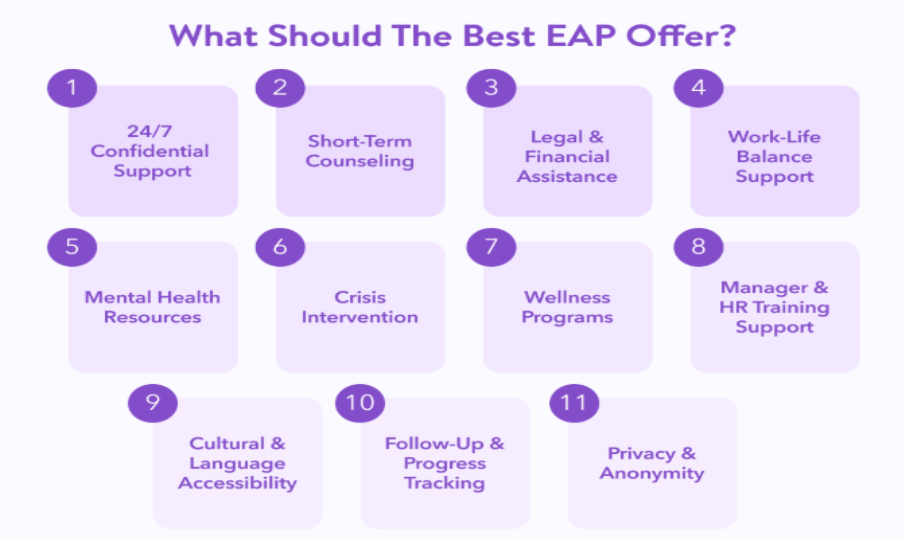
What’s Included? (Scope of Services)
One reason Employee Assistance Programmes struggle with low utilisation rates is simple: employees often do not fully understand what the service covers. Ask around in most organisations and the common response is, “It’s for mental health, right?” That is partly true. But the scope of a modern EAP is considerably broader. Modern EAPs offer a diverse range of services designed to address the complex challenges employees face in both their professional and personal lives.
Mental Health Support
Mental health support remains the core offering of any Employee Assistance Programme, and rightly so. Most EAP providers offer short-term confidential counselling, typically between three and eight sessions, for concerns such as stress, anxiety, depression, grief, burnout, and relationship difficulties.
In the Indian context, access and need matter enormously. According to the State of the Global Workplace 2025 report, about 30% of Indian employees experience stress every day, and nearly half are actively considering new jobs, underscoring how stress is affecting both wellbeing and organisational retention. A survey also reported that over 45% of employees experience anxiety every Sunday evening when preparing to return to work, and close to 80% feel their organisations could do more to address mental health challenges. These trends highlight both the prevalence of stress and anxiety in Indian workplaces and the expectation gap around employer support services.
Psychiatrist density in India remains low relative to population size, and access to affordable private therapy is limited for many working professionals. An Employee Assistance Programme helps bridge that gap by providing structured, professional support at no personal cost to the employee.
The pandemic years made the relevance of EAP mental health support even clearer. Several large Indian organisations, including major IT and services firms, reported significant increases in EAP utilisation between 2020 and 2022 as employees navigated isolation, job insecurity, and health-related anxiety. Counselling shifted to phone and video formats, making access easier and more discreet. For many employees, contacting an EAP during that period was their first experience of formal psychological support.
For HR leaders, this is the preventative mental care advantage. When employees receive support early, issues are less likely to escalate into long-term absence or resignation.
Work-Life Balance Resources
Work-life balance resources are often the most under-communicated part of an Employee Assistance Programme.
EAPs frequently provide access to practical life services, including childcare referrals, eldercare navigation, parenting consultations, nutrition guidance, and legal aid for tenant or housing disputes. These services may not be labelled as “mental health,” yet they directly influence stress levels and workplace performance.
In India, caregiving responsibilities often extend across generations. An employee based in Mumbai may be responsible for coordinating medical appointments for ageing parents in another city while managing demanding work schedules. Access to vetted eldercare advisors through an EAP can significantly reduce decision fatigue and emotional strain.
Workplace wellbeing in India must reflect lived realities. When practical stressors are addressed, productivity improves organically.
Financial and Legal Consultations
Financial stress is one of the most significant but least visible contributors to presenteeism.
Reserve Bank of India data shows sustained growth in personal loans in recent years, reflecting rising household borrowing. EMI obligations, student loan payments, medical expenses, and extended family financial responsibilities create ongoing pressure for many employees.
Modern Employee Assistance Programmes typically include:
- Debt management guidance
- Budgeting consultations
- Identity theft support
- Basic legal advice on matters such as tenancy, consumer disputes or documentation
Consider a mid-level employee anxious about mounting credit card debt. Without support, that stress may show up as distraction, irritability or reduced output. A single structured session with a financial counsellor can help the employee develop a repayment plan and regain a sense of control. That intervention is small, but its workplace impact can be meaningful.
Crisis Intervention
Crisis intervention is a critical component of a robust EAP, particularly in sectors such as manufacturing, healthcare, logistics, and infrastructure.
When a workplace accident occurs, when an employee passes away unexpectedly, or when teams experience traumatic events, structured psychological first aid is essential. EAP providers offer immediate crisis counselling designed to stabilise individuals in acute distress and prevent longer-term psychological harm.
Indian organisations operating in high-risk environments increasingly treat crisis support as a non-negotiable element of their EAP contracts. The business case is straightforward. Rapid psychological intervention reduces prolonged absence, reputational risk and team disruption.
Substance Abuse Referrals
While Employee Assistance Programmes originated as addiction-focused initiatives, their role today is primarily that of a confidential referral gateway.
Employees in the early stages of substance misuse are unlikely to self-refer to a rehabilitation centre. They are more likely to call a confidential helpline when distress becomes difficult to manage. The EAP can then guide them toward appropriate treatment pathways.
The confidentiality element is particularly important in the Indian workplace context, where stigma around addiction remains high. A trusted, employer-funded channel increases the probability of early intervention.

The Dual-Benefit Proposition: Why Employers and Employees Both Win
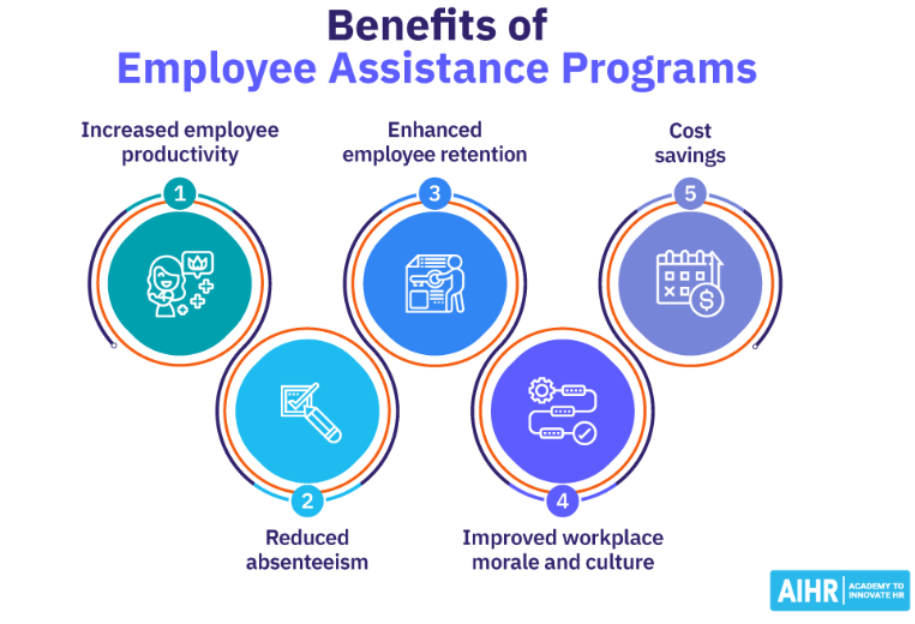
An Employee Assistance Programme is often positioned as an employee benefit. In reality, it is a lever for business performance. When designed and communicated effectively, it delivers measurable returns for employers while providing meaningful support to employees.
The Employer Perspective: What the Numbers Actually Say
The business case for EAPs is supported by global and Indian data.
The Employee Assistance Professionals Association (EAPA) reports that organisations typically see a return of between $3 and $10 for every $1 invested in an EAP, driven by reductions in absenteeism, healthcare claims, and productivity losses. While Return on Investment (RO)I varies by market and utilisation levels, the direction of impact is consistent.
In India, the scale of workplace mental health costs is substantial. A Deloitte-based industry analysis estimates that poor mental health costs Indian employers approximately ₹1.1 lakh crore annually, with presenteeism alone accounting for around ₹51,000 crore of that total loss.
Reduced Absenteeism
Absenteeism is the most visible impact area. When employees experience anxiety, burnout, or depression without support, sick leave or time away from work increases. Recent reports suggest that absenteeism costs Indian employers roughly ₹14,000 crore (around $1.9 billion) every single year. This eye-watering figure doesn’t just represent lost workdays; it reflects the cascading impact on business continuity.
Structured, confidential counselling allows employees to address issues before they escalate into extended absence. Even small reductions in stress-related leave can create financial savings when applied across large workforces.
Presenteeism Mitigation
Presenteeism is often more expensive than absenteeism, yet harder to detect.
Research published in the Indian Journal of Psychiatry found that among employees with depression, 81 % of total productivity loss was due to presenteeism rather than absenteeism. Employees were at work, but not fully functioning
A more recent workforce survey reported that the proportion of employees working while unwell increased from 38 % to over 41 % within one year, with presenteeism estimated to cost organisations up to three times more than absenteeism in productivity terms.
This is where Employee Assistance Programmes become strategic. By addressing personal stressors early, EAPs restore focus, decision-making capacity, and team effectiveness.
Lower Healthcare Costs
Chronic stress contributes to hypertension, cardiovascular conditions, sleep disorders, and metabolic disease. Preventive mental health care reduces the long-term burden on employer-funded medical insurance plans. While these savings accumulate over time rather than immediately, they are part of the broader ROI picture.
Higher Retention
Retention remains volatile in sectors such as IT, BFSI and retail, where attrition rates often exceed 20 % annually.
When employees perceive that their organisation invests meaningfully in workplace wellbeing, loyalty strengthens. Mental health support increasingly influences employer choice decisions, particularly among younger professionals.
Replacing a mid-level employee can cost several months of salary, once recruitment, onboarding, and productivity lag are factored in. Preventing even a small number of avoidable exits can justify the cost of an EAP.
The Employee Perspective: What It Feels Like to Have a Safety Net
For employees, the value of an Employee Assistance Programme is immediate and personal.
- Confidential, 24-hour access to a qualified professional removes logistical and financial barriers. In India, where private therapy may cost between ₹2,000 and ₹5,000 per session and public access remains limited, employer-funded counselling significantly improves accessibility.
- Family coverage strengthens the impact further. Employees often manage responsibilities that extend beyond themselves, including caregiving for ageing parents, supporting spouses, or guiding children through academic pressure. Knowing that these concerns can be discussed confidentially with a professional reduces emotional isolation.
- There is also a cultural impact. Data consistently show that a large proportion of individuals with mental health conditions in India do not seek timely treatment, often due to stigma or fear of reputational harm. When organisations openly promote their Employee Assistance Programme and leaders endorse its use, they send a powerful signal that seeking support is safe and professionally acceptable.
Over time, that signal reshapes workplace norms and dynamics.

Implementation & Types of EAPs
Understanding how an Employee Assistance Programme is structured is essential for HR leaders evaluating effectiveness, utilisation, and compliance. While the core objective of an EAP remains consistent, the delivery model significantly influences employee trust and programme performance.
Three Models Worth Understanding
1. In-House EAP Model
The in-house model is typically adopted by very large organisations with sufficient scale and resources to employ internal psychologists, counsellors, or occupational health professionals.
The advantage of this model is integration. The EAP aligns closely with HR strategy and broader workplace wellbeing initiatives.
However, perceived confidentiality can become a concern. Even with strict internal protocols, employees may hesitate to share sensitive information when the provider is directly employed by the organisation. Trust perception directly impacts utilisation rates.
2. Outsourced EAP Model
Outsourced EAPs are the most common model in India.
Under this structure, a third-party vendor provides confidential counselling, crisis intervention, financial and legal consultations at arm’s length from the employer. Reputable providers in the Indian market include 1to1help, Optum, and other dedicated behavioural health service firms.
The primary advantage of this model is structural anonymity. The vendor is contractually restricted from sharing identifiable employee information with the employer. Only aggregated, anonymised usage data is shared. For example, HR may receive quarterly reports indicating utilisation rates, general issue categories, or session volumes, but never employee identities or session content.
Industry research from the Employee Assistance Professionals Association (EAPA) consistently shows positive returns on investment from structured EAP programmes, with organisations reporting ROI ranging from $3 to $10 for every $1 invested.
3. Blended Model
The blended model combines outsourced counselling with internal ownership of communication and manager training.
Under this structure:
- The external provider delivers confidential counselling
- HR drives awareness campaigns
- Managers are trained in referral conversations
- Leadership visibly endorses the programme
For mid-to-large Indian organisations, this hybrid structure often balances confidentiality with contextual integration. The external provider protects privacy, while the internal champion drives utilisation.
Privacy, DPDPA, HIPAA and What “Confidential” Actually Means
Confidentiality is the foundation of any effective Employee Assistance Programme. Without it, the utilisation collapses.
In India, personal data protection is governed by the Digital Personal Data Protection Act, 2023 (DPDPA). The Act imposes obligations on entities that collect and process personal data, particularly sensitive health-related information. It requires lawful processing, purpose limitation, data security safeguards and explicit consent mechanisms.
Any reputable EAP vendor operating in India should be compliant with DPDPA requirements.
If the vendor services multinational clients or processes data across borders, alignment with international frameworks, such as the Health Insurance Portability and Accountability Act (HIPAA), may also be required. HIPAA governs the protection of sensitive health information in the United States and is often referenced as a benchmark for health data confidentiality standards.
What Confidentiality Means in Practice
For HR leaders and employees, confidentiality under an EAP typically means:
- The employer does not receive the names of employees who use the service
- Session content is not shared with HR or managers. Even if managers are formally referring a team member for counselling, they do not have information on the number of sessions or what was discussed during the sessions
- Reports provided to the organisation are anonymised and aggregated
- Data is stored securely with access controls in place
If an employee discloses severe depression, marital conflict or financial stress, that information remains between the employee and the provider.
Exceptions are limited and legally defined. These may include:
- Imminent risk of harm to self or others
- Court orders
- Mandatory legal reporting obligations
These boundaries should be clearly communicated during onboarding and awareness campaigns to strengthen trust.

What Does an Employee Assistance Programme Cost?
Pricing transparency strengthens the ROI conversation.
EAP pricing in India varies based on the scope of services, number of counselling sessions, inclusion of family member coverage, and vendor scale. Based on current benefit-services market estimates and typical vendor rate ranges shared by HR service providers in India, outsourced EAP programmes generally range from approximately ₹60 to ₹180 per employee per month. Actual rates depend on service inclusions and contract terms.
For a 500-employee organisation, that translates to an estimated ₹30,000 to ₹90,000 per month in programme fees.
To contextualise this cost, consider the costs of employee replacement.
According to SHRM, the cost to replace an employee can range from 50% to 200% of their annual salary, depending on role and level.
Preventing even a small number of avoidable stress-related exits annually can offset the entire cost of an Employee Assistance Programme.
When framed this way, EAP investment is a small fraction of total benefits spend and compares favourably against the cost of absenteeism, presenteeism, and employee replacement.
Overcoming Barriers (Disadvantages & Solutions)
The Usage Gap: Why Most EAPs Are Quietly Underperforming and How to Fix It
There is an uncomfortable reality at the centre of most Employee Assistance Programme discussions. Despite the growing conversation around mental health in India, the actual adoption and usage of the Employee Assistance Program provider remains uneven. MHFA India reports that utilization rates of EAPs in India are very low, estimated at 5%-10 % of employees. This data aligns with the reality of these services globally: EAPs have low usage due to limited promotion, fear of stigma, and a lack of innovative features.
The result is predictable. Companies invest in a well-designed, thoughtfully priced programme with a comprehensive scope of services, yet only a small fraction of the workforce engages with it.
The problem is rarely the availability of support. It is the gap between access and action.
Why Utilisation Rates Remain Low
The reasons are layered and interconnected.
Stigma remains a barrier: Despite progress in mental health awareness, many employees still associate counselling with weakness, instability, or career risk. In competitive Indian workplaces, where performance and reputation matter deeply, employees may hesitate to seek help if they believe it could affect perception.
Awareness is often superficial: It is common for employees to be enrolled in an EAP they do not remember signing up for. Information shared during onboarding is forgotten. Benefits booklets are rarely revisited. If the EAP is mentioned only once a year, it fades into background noise.
Access friction discourages follow-through: When contacting the EAP requires navigating complex IVR menus, remembering membership IDs or sending formal emails, the motivation to seek help can dissolve quickly. Emotional distress often requires immediate, simple pathways. Any barrier reduces the likelihood of action.
Trust deficits persist: In some Indian workplaces, employees remain sceptical about confidentiality. Even the perception that HR or line managers might gain visibility into who has used the helpline leads to a drop in usage. Confidentiality must not only exist. It must be believed.
What Actually Moves the Needle
Organisations that consistently achieve utilisation rates above 10% approach the Employee Assistance Programme differently. They treat it as an active system, not a passive benefit.
1. Radical Ease of Access
Ease of access directly influences engagement.
High-performing organisations simplify entry points:
- QR codes placed in common areas linking directly to booking portals
- A single helpline number printed on payslips and ID cards
- App-based booking systems
- Always-available chat options for those uncomfortable with phone conversations
- Awareness about EAP during the induction process for new joiners
The principle is simple. The fewer the steps required to initiate support, the higher the likelihood of usage.
2. Manager Involvement, Not Just HR Promotion
Managers are often the most influential drivers of EAP utilisation.
When a team leader can say, calmly and without hesitation, “There is a confidential support service available to you. I encourage you to consider using it,” the act of reaching out becomes normalised.
However, this requires training.
Managers need:
- Clear referral scripts
- Confidence in how to introduce the EAP
- Clarity on confidentiality boundaries
- Guidance on what they should not ask or disclose
Without structured training, managers may avoid the topic entirely or handle it inconsistently.
3. Using Anonymised Usage Data Strategically
Most EAP vendors provide aggregated, anonymised usage data. Yet many organisations under-utilise this insight.
Usage patterns can reveal:
- Spikes following restructuring or appraisal cycles
- Departmental stress trends
- Geographic variation in engagement
- Low uptake among specific workforce segments
- Feedback on sessions, awareness events, self-help resources, intake experiences
Forward-looking HR teams treat EAP data like operational analytics. It becomes a signal, not a statistic. If usage increases after a merger, that is not just a data point. It is an indicator of workforce strain requiring attention.
4. Visible Leadership Endorsement
Communication from HR alone is insufficient.
When senior leaders reference the Employee Assistance Programme in town halls, internal newsletters or all-hands meetings, credibility increases. In hierarchical organisational cultures, leadership cues strongly influence behaviour.
Even a simple statement such as, “If you are going through something difficult, our EAP is confidential and available,” can shift perception.
Where leaders share personal endorsement, the effect is stronger. Normalisation reduces stigma.
5. Assigning Clear Ownership
One structural change consistently improves programme performance: accountability.
Borrowing from product management frameworks, organisations can assign a Directly Responsible Individual (DRI) to own EAP utilisation as a tracked metric. This person monitors engagement rates, reviews anonymised data, drives awareness campaigns, and reports outcomes to leadership.
When ownership is distributed across committees, programmes drift. When one person is accountable, progress accelerates.
A Final Word
A modern Employee Assistance Programme is not a symbolic employee benefit. It is a strategic workplace wellbeing investment.
In India, where mental health infrastructure remains stretched and financial and caregiving pressures are common, a confidential, accessible EAP provides structured support when employees need it most. When implemented effectively, it delivers measurable ROI by reducing absenteeism, lowering presenteeism, and improving employee retention.
Organisations that make their EAP visible, trusted, and easy to access do more than improve utilisation rates. They build cultures where seeking support is normal, not risky.
That cultural shift drives performance.
Partner with 1to1help for a High-Impact EAP
If you are looking to strengthen your Employee Assistance Programme in India, 1to1help offers confidential counselling, crisis intervention, financial and legal consultations, and actionable anonymised usage insights aligned with Indian compliance standards.
Connect with 1to1help to customise an EAP that moves beyond compliance and delivers real workplace wellbeing impact.
With a deep understanding of Indian workplace realities and cultural nuance, 1to1help helps organisations move beyond low utilisation and transform EAPs into active workplace wellbeing systems.
The EAP Toolkit
Practical Resources to Improve EAP Awareness, Utilisation and Impact
A well-designed Employee Assistance Programme delivers value only when employees understand and use it. Below are ready-to-use tools for employees, managers, and HR leaders to strengthen EAP utilisation and workplace wellbeing outcomes.
Tool 1: The EAP Usage Checklist
“When Should I Call the EAP?”
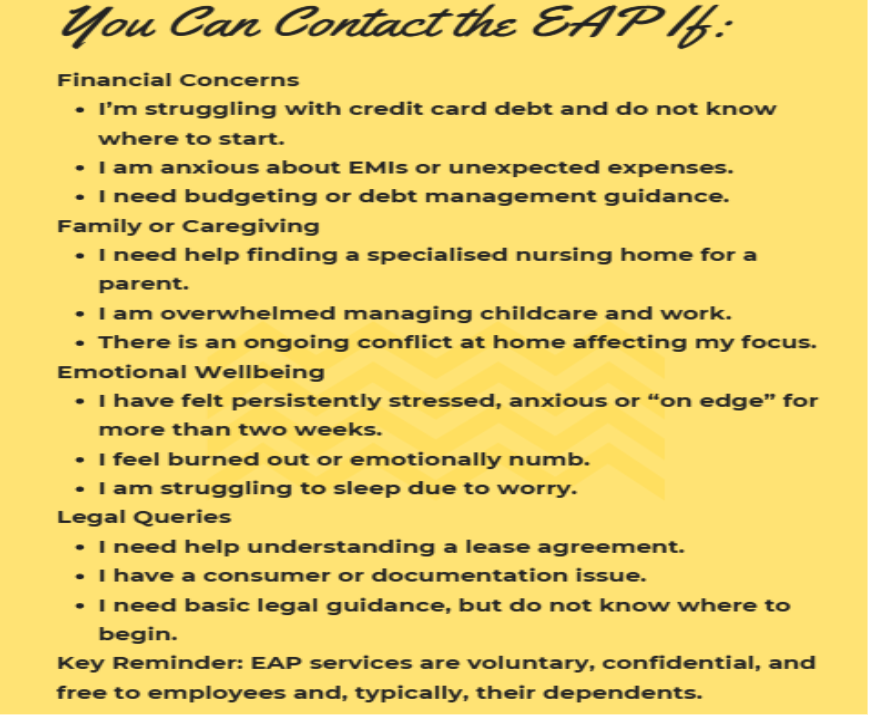
Many employees delay reaching out because they assume their concern is “not serious enough.” This quick guide clarifies when confidential counselling or advisory support may help.
Tool 2: The Manager’s EAP Referral Script
A Practical Guide for Supportive Conversations
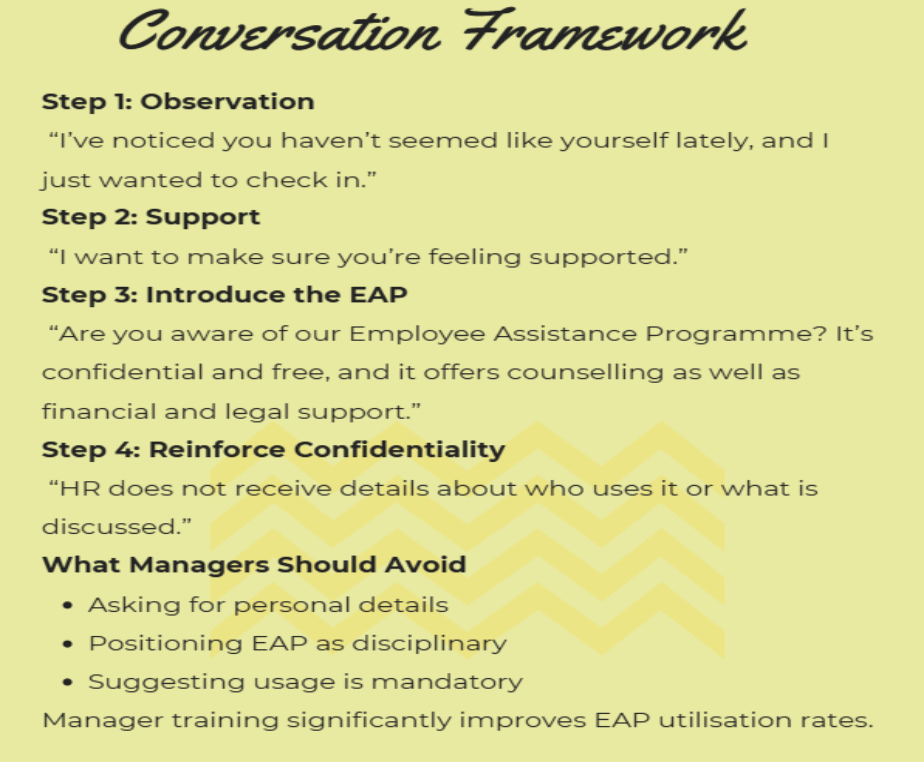
Managers are often the first to notice behavioural shifts. A structured script helps avoid overstepping while normalising support.
Tool 3: Implementation Roadmap for HR
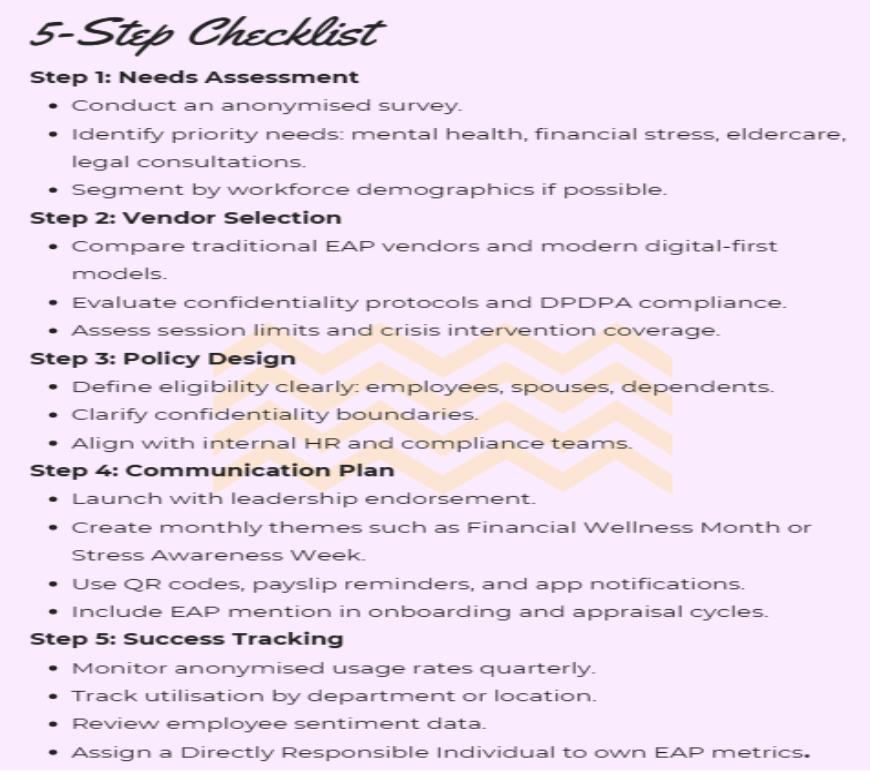
An Employee Assistance Programme succeeds when it is treated as a system rather than a static benefit.
Tool 4: Anonymised EAP Feedback Survey Template
To improve effectiveness without compromising privacy, use aggregated post-engagement surveys.
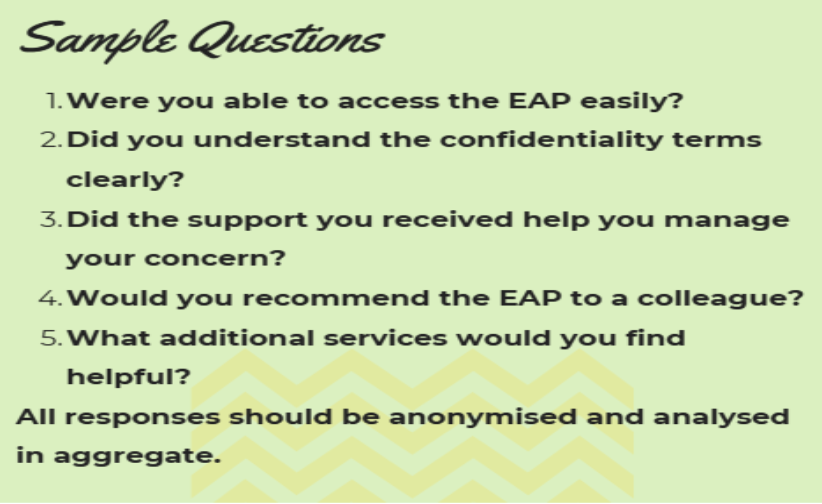
Recommended Readings
References
- AIHR. (n.d.). Employee assistance program (EAP): Benefits & best practices. https://www.aihr.com/blog/employee-assistance-program-eap/#benefits
- Aon. (2023). 8 in 10 companies increased spend on employee well-being in 2023 vs 2019: Aon study. The Economic Times. https://economictimes.indiatimes.com/jobs/hr-policies-trends/8-in-10-companies-increased-spend-on-employee-well-being-in-2023-vis-a-vis-2019-aon-study/articleshow/101935504.cms
- Business Standard. (2025). Indian employees face workplace stress and job-switch concerns. https://www.business-standard.com/industry/news/indian-employees-workplace-environment-mental-health-stress-job-switch-125050100651_1.html
- Cleveland Clinic. (n.d.). Anxiety disorders. https://my.clevelandclinic.org/health/diseases/9536-anxiety-disorders
- Cleveland Clinic. (n.d.). Stress. https://my.clevelandclinic.org/health/diseases/11874-stress
- Cleveland Clinic. (n.d.). Cardiovascular disease. https://my.clevelandclinic.org/health/diseases/21493-cardiovascular-disease
- Cleveland Clinic. (n.d.). Sleep disorders. https://my.clevelandclinic.org/health/diseases/11429-sleep-disorders
- Drishti IAS. (n.d.). Rising household debt in India. https://www.drishtiias.com/daily-updates/daily-news-analysis/rising-household-debt-in-india
- HelpGuide. (n.d.). Burnout prevention and recovery. https://www.helpguide.org/mental-health/stress/burnout-prevention-and-recovery
- Indian Journal of Psychiatry. (2023). Work productivity, absenteeism and presenteeism in persons with common mental disorders. https://journals.lww.com/indianjpsychiatry/fulltext/2023/65040/work_productivity__absenteeism_and_presenteeism_.4.aspx
- Indian Journal of Psychiatry. (2024). Mental health and well-being at the workplace. https://journals.lww.com/indianjpsychiatry/fulltext/2024/66002/mental_health_and_well_being_at_the_workplace.16.aspx
- MedlinePlus. (n.d.). Metabolic disorders. https://medlineplus.gov/metabolicdisorders.html
- Meditopia. (n.d.). What’s included in an EAP? https://meditopia.com/en/forwork/articles/whats-included-in-eap
- Meditopia. (n.d.). Top EAP providers in India. https://meditopia.com/en/forwork/articles/top-eap-providers-in-india#section5
- Mayo Clinic. (n.d.). High blood pressure (hypertension). https://www.mayoclinic.org/diseases-conditions/high-blood-pressure/symptoms-causes/syc-20373410
- Psychology Today. (n.d.). Grief. https://www.psychologytoday.com/us/basics/grief
- Psychology Today. (n.d.). Relationship challenges. https://www.psychologytoday.com/us/basics/relationships/relationship-challenges
- SHRM India Executive Network. (n.d.). Myth of replaceability: Preparing for the loss of key employees. https://www.shrm.org/in/executive-network/insights/myth-replaceability-preparing-loss-key-employees
- TAGGD. (n.d.). Absenteeism: Meaning and impact. https://taggd.in/hr-glossary/absenteeism/
- TAGGD. (n.d.). Employee assistance program (EAP). https://taggd.in/hr-glossary/employee-assistance-program/#what-services-do-eaps-offer
- The Economic Times. (2022). 80% Indian workforce reported mental health issues during the past year: Deloitte survey. https://health.economictimes.indiatimes.com/news/industry/80-per-cent-indian-workforce-reported-mental-health-issues-during-the-past-year-deloitte-survey/94078117
- The Economic Times HRSEA. (2025). Presenteeism at workplace rises by 8%: Survey findings. https://hrsea.economictimes.indiatimes.com/news/industry/presenteeism-at-workplace-rises-by-8-stress-management-skills-drop-by-2-survey-finds/119190057
- Times of India. (2024). Over 45% of employees experience anxiety every Sunday evening. https://timesofindia.indiatimes.com/life-style/health-fitness/de-stress/over-45-per-cent-of-employees-experience-anxiety-every-sunday-evening-finds-report/articleshow/113767884.cms
- Upstox. (2024). India’s workplace stress epidemic: A silent crisis claiming lives and billions. https://upstox.com/news/trending/latest-updates/india-s-workplace-stress-epidemic-a-silent-crisis-claiming-lives-and-billions/article-177871/
- Wisemonk. (n.d.). Managing attrition in India. https://www.wisemonk.io/blogs/managing-attrition-in-india
- World Health Organization. (n.d.). Depression fact sheet. https://www.who.int/news-room/fact-sheets/detail/depression
- World Health Organization. (2011). Psychological first aid: Guide for field workers. https://www.who.int/publications/i/item/psychological-first-aid


.svg)
.svg)
.svg)
.svg)