

.png)


.png)

Workplace Well-Being & Support
Employee Stress Management: 10 Proven Ways to Reduce Workplace Stress in India (2026)

.png)
Written by
Aarohi Parakh,
Psychologist and Content Writer

Reviewed by
Sanjana Sivaram,
Psychologist and Clinical Content Head


Introduction
India holds a distinction that no country should want. According to McKinsey's 30-country burnout study, 59% of Indian employees show significant burnout symptoms, nearly three times the global average of 20%. The Cigna 360 Well-Being Survey puts it more bluntly: 89% of the Indian workforce reports feeling stressed at work, among the highest rates anywhere in the world.
Employee stress management, in other words, is not a wellness trend in India. It is an operational crisis. For organisations seeing rising absenteeism, disengagement, or burnout, understanding the broader state of workforce wellbeing is critical. Read our State of Emotional Wellbeing Report 2025 for deeper insights into stress, burnout risk, and mental health trends across Indian workplaces.
The financial cost alone is staggering. Poor mental health costs Indian employers an estimated Rs. 1.1 lakh crore, roughly USD 14 billion, per year in lost productivity, according to Deloitte. And yet most organisations respond to this with a wellness calendar and a helpline number no one calls.
This guide does not offer that. It is built for two audiences: employees who need tools they can actually use at work, and HR leaders and managers who need to make structural changes that outlast any single programme. The 10 ways to reduce stress at work and five employer interventions that follow are evidence-backed, India-adapted, and designed for how Indian workplaces actually function, not how a Western self-help manual assumes they do.
Understanding Workplace Stress, What It Is and Why It Is a Crisis in India
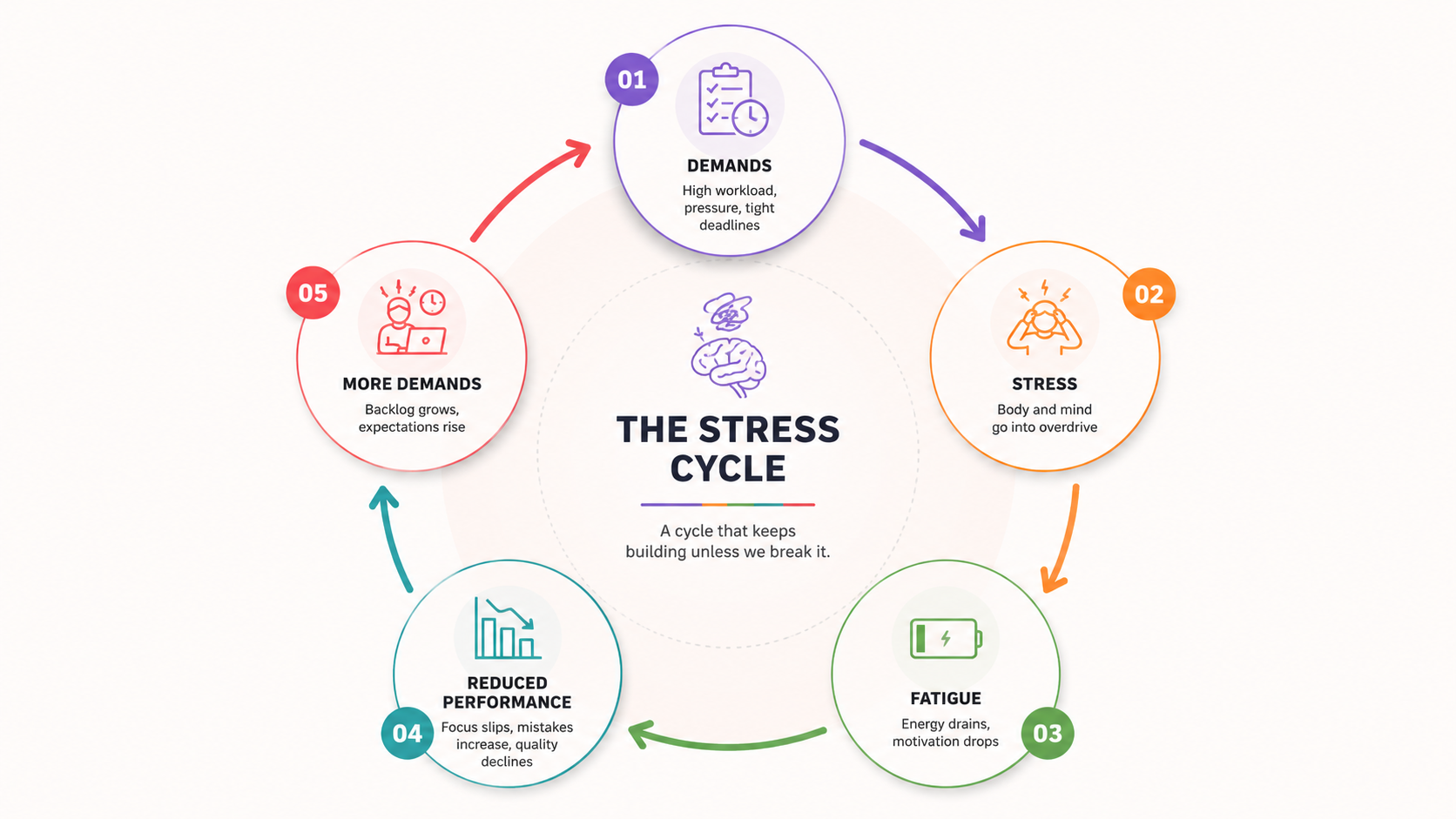
Workplace stress is what happens when job demands consistently exceed an employee's capacity to cope with them. That is the clinical definition. The lived version in India is more specific: it is the junior analyst who cannot push back on a midnight deadline because her manager's WhatsApp message carries the implicit weight of hierarchy. It is the mid-career professional who has not taken his full annual leave in three years because doing so feels like professional risk. It is the 28-year-old in Bengaluru who dreads Sunday evenings more than Monday mornings.
Healthy pressure and chronic stress are not the same thing. Pressure is short-term, specific, and motivating, it sharpens performance. Chronic stress is sustained, diffuse, and corrosive. The distinction matters because most Indian managers treat both as identical, which is why well-meaning interventions often miss.
What Makes Workplace Stress Worse in India Than Elsewhere
India-specific amplifiers make the employee stress management problem structurally different from the global picture.
Hierarchical management culture. Speaking up when overloaded is, in many Indian workplaces, a reputational risk. Employees absorb workload silently rather than flag concerns, and the stress compounds invisibly. Our State of Emotional Wellbeing Report 2025 found that work demands and long working hours were the two biggest drivers of psychological strain among Indian employees, and that a negative ethical climate at work was directly associated with higher levels of depression, anxiety, and stress.
The always-on culture. WhatsApp work groups active at 11pm are not an exception in Indian corporate life; they are a norm. India has no legal right to disconnect, which means the psychological workday frequently extends well beyond the official one.
Sunday anxiety. Research found that 45% of Indian employees feel anxiety every Sunday evening at the prospect of returning to work. That is not stress that begins on Monday. It is stress that colonises the weekend.
Commute load. Daily commutes of one to three hours in Mumbai, Delhi, and Bengaluru are proven stress multipliers, arriving at work already depleted before the first meeting starts.
Financial and family obligations. Joint family financial responsibilities, the pressure of being a primary earner, and EMI obligations create a baseline of external stress that amplifies whatever is happening inside the office.
The Top Causes of Employee Workplace Stress in India
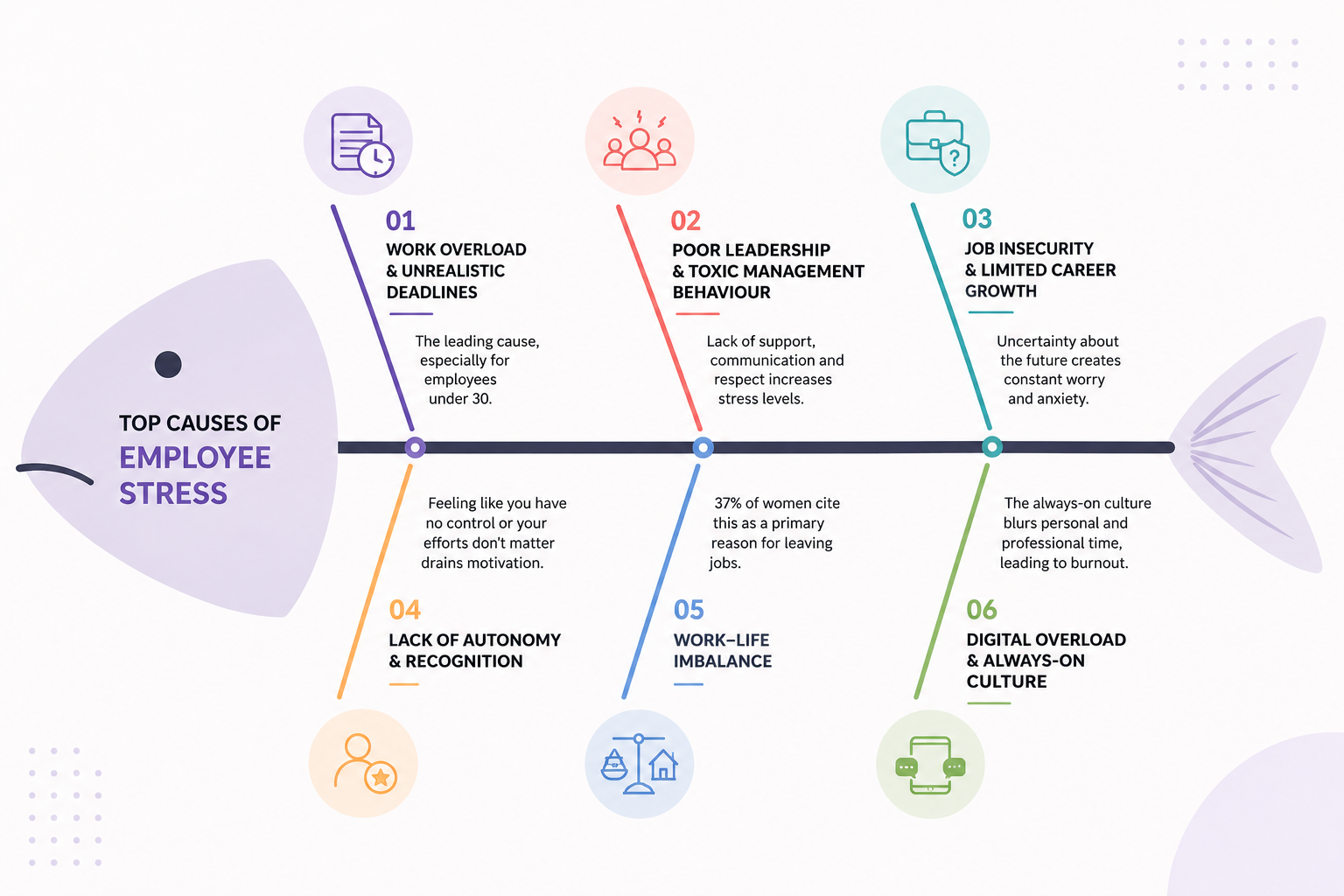
- Work overload and unrealistic deadlines, the leading cause, especially for employees under 30
- Poor leadership and toxic management behaviour
- Job insecurity and limited career growth
- Lack of autonomy and recognition
- Work-life imbalance. 37% of women cite this as a primary reason for leaving jobs
- Digital overload. The always-on culture blurs personal and professional time
Among employees aged 21 to 30, 64% report high stress levels, a 31% year-on-year increase, with work overload cited by 16% of the 18 to 26 cohort as their primary stressor, double the rate of older workers.
Separately, our report found that work-related counselling concerns rose from 13% to 15% between 2024 and 2025, with mental health at work concerns rising from 17% to 18% in the same period.
What Chronic Stress Does to the Body
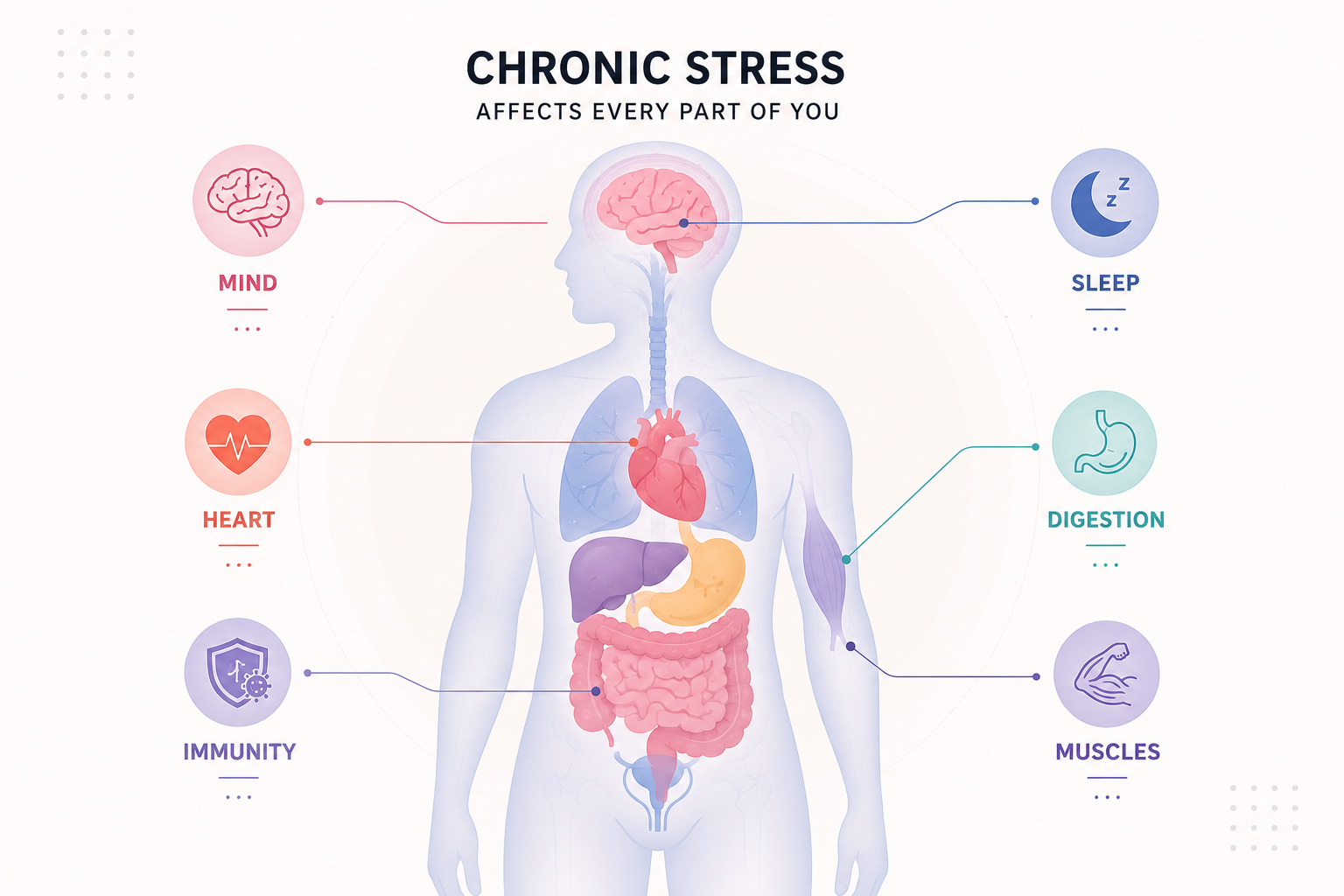
Stress is not only psychological. Chronic workplace stress raises the risk of heart disease, hypertension, and diabetes. Between 35% and 40% of Indian working professionals show early hypertension indicators linked to occupational stress (HCL Healthcare). The 1to1help 2025 Emotional Risk Survey found that among employees at high burnout risk, the three most common indicators were poor sleep quality, persistent exhaustion by end of day, and declining physical health including frequent headaches, back pain, and recurring illness.
10 Ways to Reduce Stress at Work: Proven Strategies for Employees
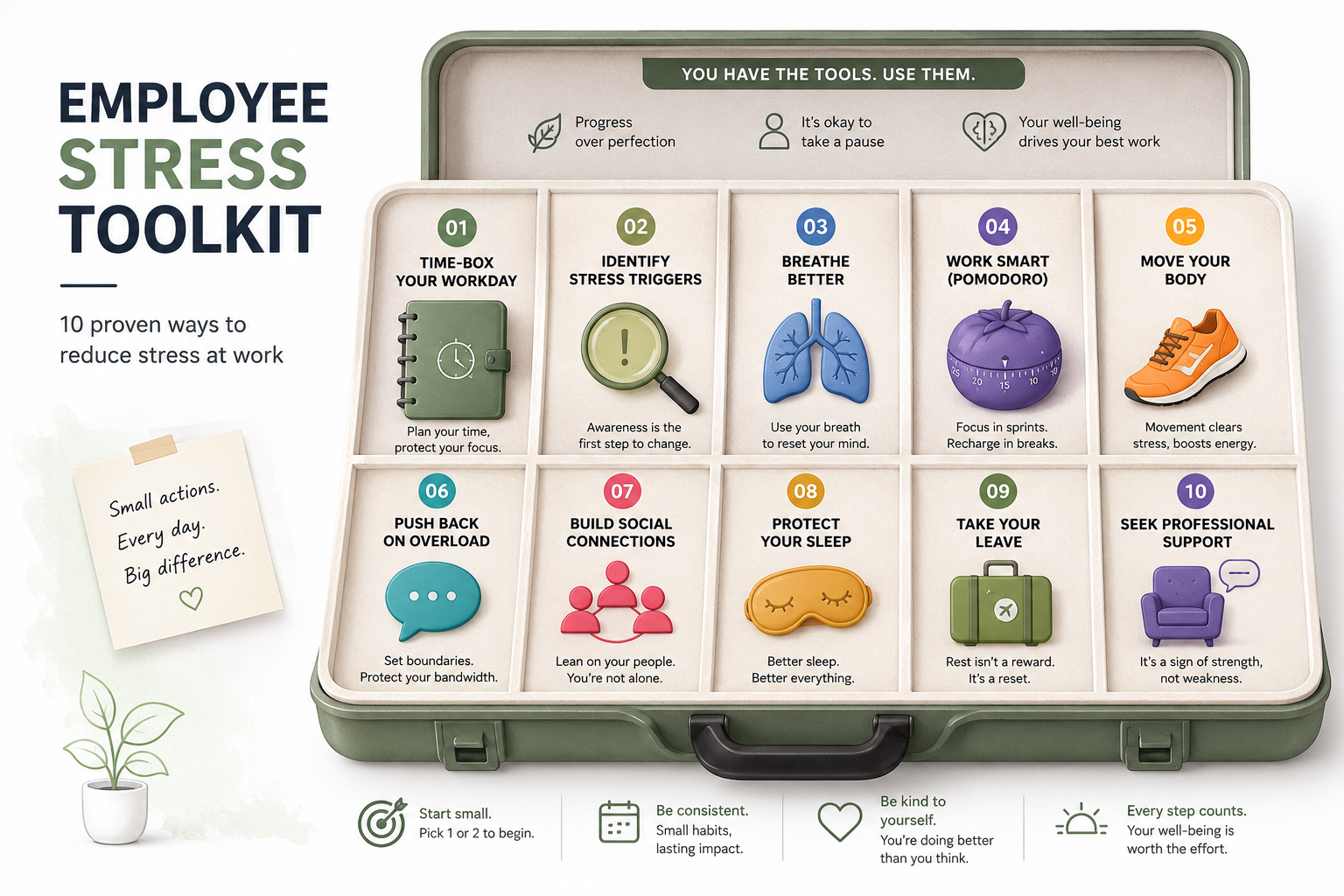
These are not generic productivity tips with an Indian flag stuck on them. Each strategy accounts for the specific cultural and structural realities of working in India in 2026.
1. Time-Box Your Workday and Set Hard Stops
Assign specific time slots to tasks and, more importantly, commit to a finish time and protect it. The Pomodoro principle applied to daily planning, designating focused blocks followed by transitions, reduces the open-ended overwhelm that Indian always-on culture produces.
The harder part is cultural. Leaving at 6pm when your manager is still at their desk feels like a statement. It should not have to be. Start by leaving on time two days a week. Build the habit in increments. The goal is not rebellion; it is sustainability.
2. Name Your Stress Triggers Before They Name You
Keep a two-week log of what moments spike your anxiety, which emails, which meetings, which people, which types of tasks. Pattern recognition is the first step to control. When you can see the trigger, you can prepare for it rather than simply absorb it.
MHFA India recommends building a personal Wellness Action Plan that maps your specific triggers against your specific coping strategies. Generic stress advice does not stick; personalised plans do.
3. Use Breathing Techniques in Real Time
The physiological stress response, elevated cortisol, racing heart, shallow breathing, can be interrupted within 90 seconds using controlled breathwork. Box breathing (four counts in, hold for four, out for four, hold for four) is the most practical technique for a workplace setting: silent, invisible, and effective before a difficult meeting or after a difficult one.
For a more sustained practice, five to ten minutes of guided pranayama in the morning, particularly Anulom Vilom (alternate nostril breathing), activates the parasympathetic nervous system and sets a lower baseline stress level for the day.
4. Practice the Pomodoro Technique for Focus and Recovery
Twenty-five minutes of focused work followed by a five-minute break. Then repeat. Four cycles, followed by a longer break. This is not time management theory; it is neuroscience. The human brain is not built for sustained, unbroken concentration, and forcing it to work that way creates cognitive fatigue that registers as stress.
Apps that support the technique: Forest, Be Focused, Toggl Track. The five-minute break is not optional. It is the mechanism.
5. Move Your Body During the Workday
Physical activity triggers endorphin release and directly reduces cortisol levels. This does not require a gym. A 15-minute walk during lunch, desk stretches between calls, or standing during video meetings all produce measurable stress reduction. The target for working professionals is 7,000 to 8,000 steps per day as a minimum.
For employees with long commutes, the walk from the station to the office counts. So does the one back. Build the steps in where you already are, rather than adding a new obligation.
6. Set Realistic Goals and Push Back on Overload
Chronic overload is structural, not personal. The instinct to absorb an unrealistic target silently, rather than raise it with a manager, is understandable in Indian hierarchical workplaces. It is also the fastest route to burnout.
Use SMART goal frameworks to make workload conversations concrete. "This project requires X hours; I currently have Y hours available; here is what I can deliver by the deadline and what would need to move" is not a complaint. It is project management. Frame it that way.
7. Build Social Connection at Work, Deliberately
Workplace loneliness is a stress multiplier. Employees who feel genuinely seen and connected at work report 40% lower stress levels than those who feel isolated. In hybrid and remote settings, this connection does not happen automatically, it has to be created.
Regular informal catchups, peer check-ins that are not agenda-driven, and team rituals (however small) create the psychological safety that buffers individual stress. This matters more in Indian workplaces than the individual coping strategies above, because connection is both a stress buffer and a source of belonging that most stress management content ignores entirely.
8. Protect Your Sleep as Seriously as Your Calendar
Sleep deprivation amplifies the stress response by 30 to 60%. A chronically undersleeping brain is a chronically oversensitised stress detector. Set a digital curfew one hour before bed, no work messages, no email. Charge the phone outside the bedroom. These are not lifestyle preferences; they are performance decisions.
The three most common burnout indicators found in our survey were poor sleep quality, end-of-day exhaustion, and physical health decline. Sleep is where all three intersect. Address it first.
9. Take All of Your Annual Leave, Every Year
Indian employees are among the most leave-underutilised workers globally. Unused leave is deferred burnout. The belief that taking leave signals low commitment is one of the most expensive myths in Indian corporate culture, expensive to the individual who burns out, and to the organisation that then loses them.
Short breaks of three to four days are as restorative as longer holidays, research shows. You do not need a fortnight in Goa. You need a genuine disconnect from work, on a schedule that does not require emergency approval.
10. Seek Professional Support Early, Not in Crisis
EAPs, counselling platforms, and workplace mental health helplines exist precisely so that employees do not have to wait until they are in crisis to get support. Reaching out when stress is moderate, not when it is severe, dramatically improves outcomes and reduces recovery time.
How to Manage Stress at Work: 5 Structural Strategies for Employers and HR
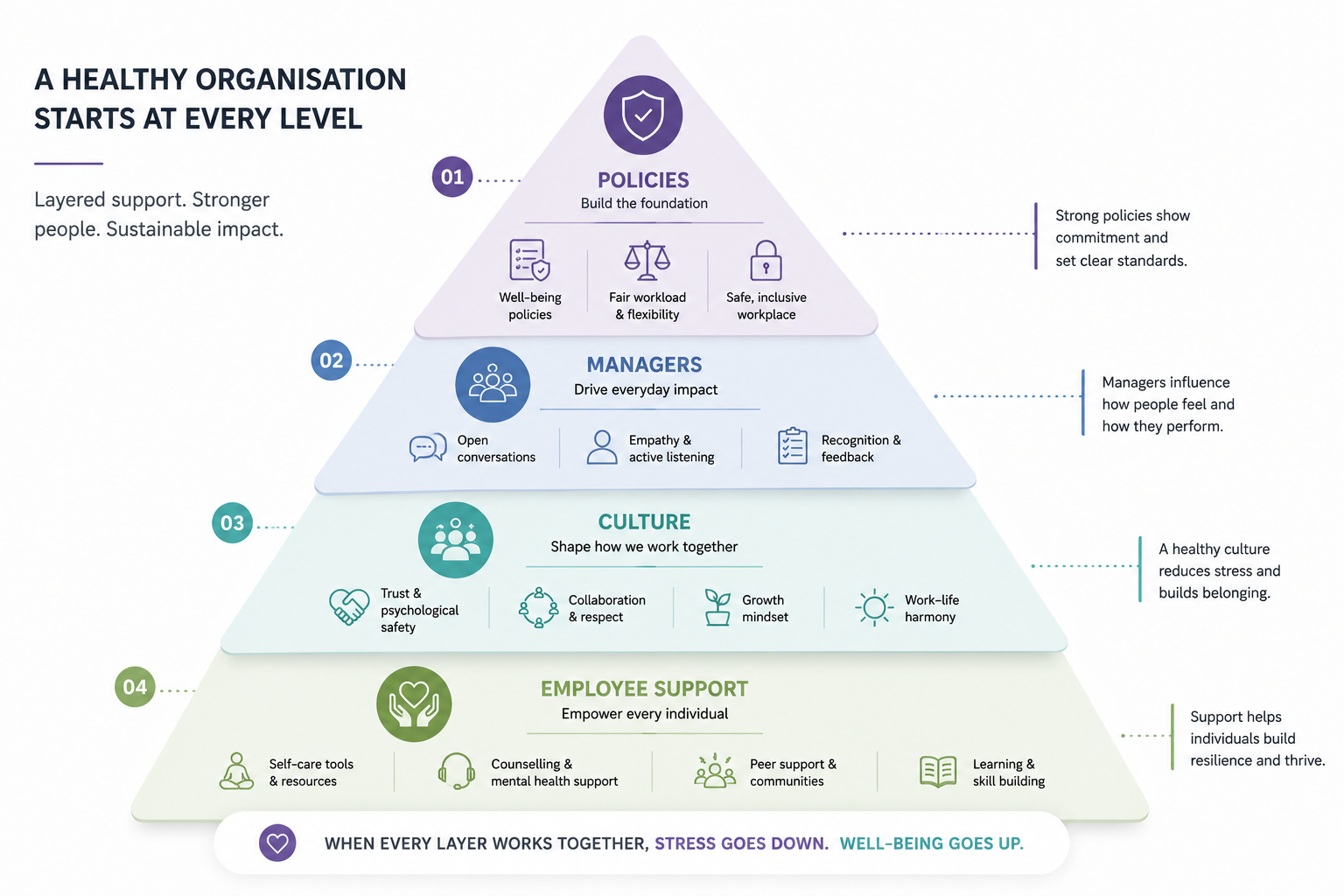
Individual coping strategies treat symptoms. Structural interventions change the conditions that produce them. HR leaders who want to understand how to manage stress at workplace level without structural change will find themselves running wellbeing programmes on top of a burning platform.
These five ways to manage stress in the workplace are the ones with the strongest evidence base for reducing employee workplace stress at an organisational level.
Strategy 1: Conduct a Workplace Stress Audit
You cannot manage what you have not measured. Anonymous pulse surveys, monthly or quarterly, identify which teams, roles, and managers are generating the most stress before it shows up as attrition or sick leave.
Tools like Culture Amp and Leapsome offer this capability, as does the 1to1help Emotional Risk Survey (ERS), which measures four domains across the workforce: emotional regulation, resilience, burnout symptoms, and workplace characteristics. The ERS provides cohort-level data, segmented by department, age, gender, and role, allowing HR to target interventions precisely rather than deploy blanket programmes. Based on data from 13,000+ Indian employees assessed through ERS, 33% showed burnout risk and 20% struggled with emotional regulation. Knowing where those employees are concentrated changes where you intervene.
Strategy 2: Train Managers as Stress Buffers
Research is consistent: managers are the single most influential variable in an employee's mental health at work. A well-trained manager can recognise distress early and respond appropriately. An untrained one, even with good intentions, can make things significantly worse.
Mental Health First Aid (MHFA) training equips managers with practical skills: how to notice warning signs, how to have a supportive conversation without crossing professional lines, and when to refer to professional support. In India, where 84% of corporate employees report low mood or depressive thoughts, managers are frontline responders whether they are trained or not. The question is whether they are equipped for that role.
The action protocol is simple: Observe, Check in privately, Listen without judgement, Signpost support, Follow up. Do not diagnose. Refer.
Strategy 3: Implement Workload Governance
This is the structural intervention that individual wellness programmes cannot substitute for. Workload governance means creating formal processes by which employees can flag unrealistic targets without career consequences: sprint planning reviews, regular team workload check-ins, or simple manager check-ins that ask "what is on your plate and what needs to move?"
Practical additions: no-meeting time blocks (deep work mornings or No Meeting Fridays), explicit norms around after-hours communication, and results-orientation over hours-tracking. If you are looking for 5 ways to manage stress in the workplace that your managers can implement tomorrow, workload governance, manager MHFA training, an active EAP, flexible working, and regular stress audits are those five. Indian employees are disproportionately penalised under presenteeism culture, where being seen to work long hours is valued over what is actually produced. Addressing this directly is stress management in the workplace at its most structural.
Strategy 4: Build Flexibility Into How Work Happens
Hybrid and remote options reduce commute stress and restore autonomy, two of the most significant drivers of employee workplace stress in Indian metros. Flexible start and end times within a defined core hours window (for example, 10am to 4pm as the common window) allows employees to manage school runs, medical appointments, and the realities of metro commuting without using it as a professional liability.
The goal is results-orientation. If the work is done and the quality is there, the hours and location should be secondary. For organisations resistant to this framing, the productivity data is straightforward: autonomy reduces stress, and reduced stress increases output quality.
Strategy 5: Deploy an EAP and Communicate It Like It Matters
An EAP that employees do not know about is functionally non-existent. Awareness of EAP availability is the single biggest predictor of utilisation. Yet most Indian employees have no idea their company has one, or how to access it, or what it covers.
Active communication means more than a launch email. It means managers mentioning it in team meetings. It means leadership visibly endorsing it. Senior leaders who share their own experiences of using mental health support remove the stigma at scale in ways that no poster campaign can. It means reminders at the moments when people are most likely to need it: before performance review season, during restructuring periods, in the wake of high-profile project failures.
1to1help's EAP, which has served 1,000+ Indian organisations over 25 years, addresses this directly through its Emotional Care Champions (ECC) network, trained peer supporters distributed across teams who extend the reach of formal support into the parts of the organisation where formal help-seeking is least likely to happen spontaneously.
The ROI framing for budget conversations: every Re.1 invested in employee mental health programmes returns Rs.4 in improved productivity (WHO). Deloitte's India data puts the annual cost of not acting at Rs.1.1 lakh crore. This is not a welfare argument. It is a business performance argument.
How to Identify Stress in Employees, Warning Signs HR Should Know
Most stressed Indian employees will not self-disclose. Cultural stigma around mental health and fear of career consequences are the most commonly cited barriers. Recognition, therefore, falls to managers and HR, who need to know what to look for.
Behavioural Warning Signs
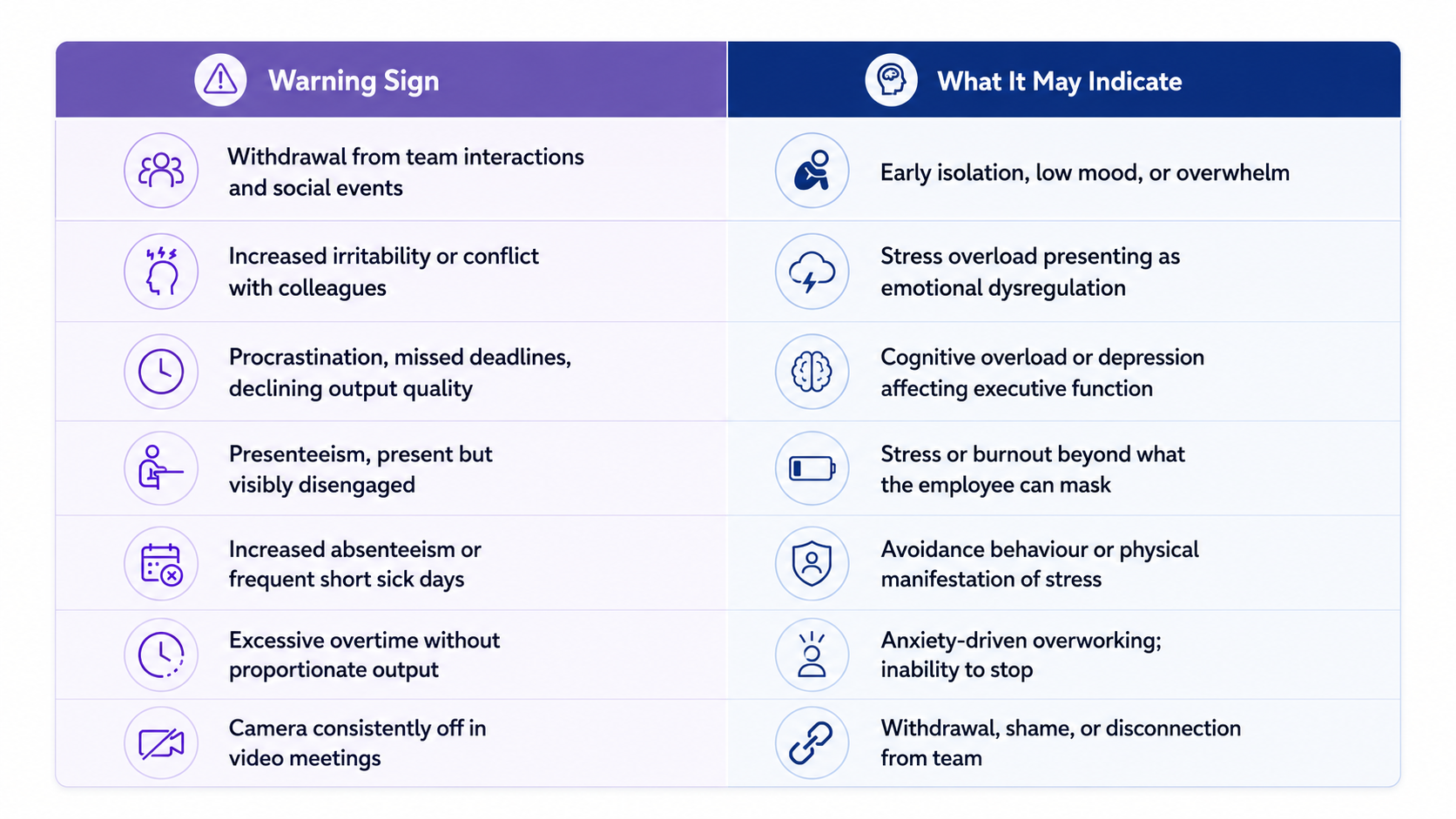
Physical Warning Signs
Persistent headaches, fatigue, or complaints of poor sleep. Changes in appetite, noticeable weight loss or gain. Frequent minor illnesses. Research from the 1to1help 2025 ERS found that among high-burnout employees, the three most reported physical signs were sleep difficulty, end-of-day exhaustion, and recurring physical pain (headaches, back or stomach pain). These are not soft signals. They are clinical indicators of a system under sustained load.
The Manager's Action Protocol
Observe signs over time: a pattern, not a single incident. Check in privately with a genuine, open question rather than a performance-framed one. Listen without trying to fix or diagnose. Signpost available support, EAP, counselling resources, HR. Follow up. The first check-in opens a door; the follow-up keeps it open. Do not diagnose. Do not minimise. Refer to professional support when in doubt.
India context: 40% of Indian employees worry about being judged if they share mental health concerns at work (NAMI, 2024). The way a manager responds to the first disclosure determines whether the second one ever happens.
Stress Management Techniques From India's Wellness Tradition
Every global stress management guide recommends meditation and breathing exercises. This section is not that. These are practices that are clinically validated, deeply rooted in Indian wellness traditions, and meaningfully more accessible to Indian employees than the generic Western versions of the same ideas.
- Yoga Nidra (Yogic Sleep). A 20 to 30 minute guided deep relaxation technique that produces a state between sleep and wakefulness, measurably reducing cortisol. Particularly effective for shift workers and high-stress professionals who are too mentally activated to fall asleep. Free guided sessions in Hindi and regional languages are widely available on YouTube. Research published in peer-reviewed journals has validated its cortisol-lowering effects.
- Pranayama. Anulom Vilom (alternate nostril breathing) and Bhramari (humming bee breath) are clinically shown to activate the parasympathetic nervous system, the rest-and-digest response that directly counteracts the stress response. Five minutes of Anulom Vilom before a high-stakes meeting or performance review produces a measurable reduction in physiological stress markers. These are not wellness metaphors; they are documented interventions.
- Ayurvedic Adaptogens. Ashwagandha (Withania somnifera) is among the most extensively researched natural stress-reduction supplements globally, with multiple clinical trials demonstrating significant cortisol reduction and improvement in stress and anxiety scores. It is widely available in India and significantly more affordable here than in Western markets. Consult an Ayurvedic physician for appropriate dosage and formulation.
- Marma Therapy and Acupressure. Brief self-administered pressure on specific marma points, particularly the Hridayam (heart) point, provides a mid-day stress reset validated within Ayurvedic practice and increasingly incorporated into corporate wellness retreats. Accessible without any equipment, training, or disruption to the workday.
- The Mindful Chai Break. This one requires no study. Chai culture in Indian offices is already a natural pause ritual. The five minutes spent making and drinking tea can be deliberately used as a mindfulness break: no phone, no screen, attention on the cup and the conversation. A culturally resonant reset that requires nothing additional.
A note on positioning: these practices complement professional mental health support. For employees dealing with clinical stress, anxiety disorders, or burnout, they are adjuncts, not replacements, for evidence-based treatment.
Employee Stress Management: The Legal and Compliance Context for Indian Employers
Stress management in the workplace, or stress management at workplace level as HR teams increasingly frame it, is not just good HR practice in India. It is increasingly a legal obligation. The regulatory environment is tightening.
- Occupational Safety, Health and Working Conditions (OSHWC) Code 2020. This legislation creates a broad duty of care for employers to maintain safe working environments. That duty is increasingly being interpreted to include psychosocial safety, excessive workload, harassment, and toxic management culture are all within scope. Employers who cannot demonstrate active measures to address work-related stress face growing compliance exposure.
- Mental Healthcare Act 2017. This Act prohibits discrimination in employment against individuals with mental health conditions. Employers may not dismiss, demote, or disadvantage an employee on grounds of mental illness. Stress-related conditions that reach clinical threshold (clinical anxiety, depression, adjustment disorders) fall squarely within its protections. This has direct implications for how performance management and disciplinary processes are handled.
- Prevention of Sexual Harassment (POSH) Act 2013. Sexual harassment is a leading cause of workplace stress for women. Non-compliance with POSH creates direct, documented stress risk, and legal liability. A functioning Internal Complaints Committee (ICC) is part of a stress-safe working environment, not separate from it.
- The IT sector regulatory signal. Following high-profile cases including the Pune CA incident in 2024, NASSCOM and several state governments have issued advisories on working hours in the technology sector. Regulatory tightening on maximum working hours and after-hours contact is a credible near-term risk for Indian IT employers. Organisations that address workload governance proactively will be better positioned when that tightening arrives.
Practical employer steps:
- Document your wellness and stress management policies in writing
- Maintain a written EAP policy accessible to all employees
- Train managers on psychosocial risk recognition
- Create anonymous reporting mechanisms for excessive workload or management behaviour
- Conduct and retain records of stress audits and pulse surveys
FAQs
1.How do you manage stress at work effectively?
Effective stress management at work requires both personal strategies and structural change: the combination is what produces lasting results. For individuals, the most evidence-backed approaches are: time-blocking the workday, using short pranayama or breathwork sessions (five to ten minutes), protecting sleep above all else, building real social connection with colleagues, taking all annual leave, and reaching out for professional support before stress becomes crisis. The reframe that changes everything: seeking help early is a performance decision, not a personal failure. For HR managers and employers, stress management in workplace settings works best when you combine manager training, workload governance, anonymous pulse surveys, and an EAP that is actively communicated, not just available on a benefits portal no one visits.
2. What are the main causes of workplace stress in India?
The primary causes are work overload and unrealistic deadlines (the leading driver, especially for employees under 30), toxic or micromanaging leadership, job insecurity, absence of career growth, and work-life imbalance. India-specific amplifiers include hierarchical cultures where raising concerns feels like professional risk, always-on communication norms via WhatsApp, long commutes in metros, and financial pressures from joint family obligations. YourDOST data found that over 45% of Indian employees experience work anxiety every Sunday evening. Among professionals aged 21 to 30, 64% report high stress levels, a 31% year-on-year increase, with work overload cited at double the rate of older cohorts.
3.What is the difference between workplace stress and burnout?
Stress and burnout are related but distinct, and the distinction matters because the interventions differ. Workplace stress is a response to specific, ongoing demands: too much work, a difficult manager, a tight deadline. It is characterised by pressure and overwhelm, but the person still feels motivated to resolve it. Burnout is the result of chronic, unresolved stress. It presents across three dimensions: emotional exhaustion (feeling completely depleted), depersonalisation (cynicism and detachment from work), and a collapsed sense of personal accomplishment. Burnout often requires weeks or months of recovery, sometimes including time off work. India has the highest burnout rate in McKinsey's 30-country study: 59% of Indian employees show burnout symptoms against a global average of 20%. Preventing stress from becoming burnout is always easier and cheaper than treating burnout after the fact.
4. What should HR do about employee stress?
For anyone asking how to manage stress in workplace settings at scale, HR's most impactful interventions, in order of leverage, are: first, conduct regular anonymous stress audits to identify problem teams and managers before issues escalate. Second, train all people managers in Mental Health First Aid so they can recognise and respond to distress in their teams. Third, implement and actively communicate an EAP, most employees do not use their company's EAP simply because they do not know it exists. Fourth, introduce workload governance processes that allow employees to raise concerns about unrealistic targets without career risk. Fifth, build flexibility into how and when work happens. The Deloitte ROI figure is the number to take to leadership: every Re.1 invested in employee mental health returns Rs.4 in productivity. Frame stress management as a business performance issue, not a welfare cost, and budget conversations become markedly easier.
5. Are there free stress management resources for Indian employees?
Several high-quality, India-specific resources are available at no cost. iCall (TISS): 9152987821, free psychological counselling helpline run by the Tata Institute of Social Sciences, with email and chat support also available. Vandrevala Foundation: 1860-2662-345, available 24/7. NIMHANS helpline: 080-46110007. Tele MANAS: 14416, government-supported, available in 20 languages. For digital support, Wysa and InnerHour offer free tiers with clinically informed content. Pranayama and Yoga Nidra sessions in Hindi and regional languages are widely available on YouTube and are free, clinically validated, and require no prior experience.
6. How do I know if my workplace stress has become a serious problem?
Stress warrants professional attention when it is persistent (more than two to three weeks without relief), when it starts affecting your physical health (sleep disturbance, frequent headaches, appetite changes, chest tension), when it impairs your work performance (difficulty concentrating, missing deadlines, avoiding responsibilities), or when you find yourself using alcohol, food, or other behaviours to manage it. Sunday anxiety, dreading the return to work every weekend, is a reliable early warning sign when it is consistent rather than occasional. In the Indian context, social withdrawal, persistent fatigue, and emotional flatness are commonly reported early signals. If you recognise three or more of these patterns sustained over time, speak to your company's EAP, a licensed therapist, or call iCall (9152987821) for a first conversation.
References
- McKinsey Health Institute. (2023). Addressing Employee Burnout: Are Employers Getting It Wrong?
- Deloitte India. (2023). Mental Health and Employers: The Case for Investment.
- Cigna Corporation. (2023). 360 Well-Being Survey: Global Well-Being at Work.
- 1to1help. (2025). State of Emotional Wellbeing Report 2025: Indian Workforce.
- HCL Healthcare. (2023). Occupational Stress and Hypertension in Indian Working Professionals.
- WHO. (2022). Mental Health in the Workplace: Guidelines and Policy Brief.
- MHFA India. Workplace Stress and Anxiety: Employers and Employees Must Know. mhfaindia.com
- NIMHANS. (2023). Depression and Absenteeism in the Indian Workforce.
- NAMI. (2024). Workplace Mental Health Poll. National Alliance on Mental Illness.
- Anwar et al. (2025); Borrelli et al. (2024). Cited in 1to1help State of Emotional Wellbeing Report 2025.


.svg)
.svg)
.svg)
.svg)