

.png)


.png)

Workplace Well-Being & Support
Mental Health at Workplace in India: A Complete Guide for Employers & Employees (2026)

.png)
Written by
Aarohi Parakh,
Psychologist and Content Writer

Reviewed by
Sanjana Sivaram,
Psychologist and Clinical Content Head


Introduction
In March 2024, India's Economic Survey mentioned mental health in the context of the workforce for the first time. That single paragraph, tucked inside a document that typically focuses on GDP and fiscal policy, said something many Indian employees had been waiting for years to hear: that what happens inside a person's mind at work actually matters to the nation's economic future.
It has taken us a long time to get here. And it is a promising start.
For decades, conversations about mental health at workplace in India were hushed, stigmatised, or simply absent. Employees quietly burned out. Managers looked the other way because they didn’t know exactly what to do. HR departments categorized stress under "personal problems." And organisations paid the price in turnover, absenteeism, and productivity losses that never made it onto any financial statement.
That is changing, slowly but meaningfully. And this guide is here to help you understand where we are, why it matters, and what can actually be done, whether you are an employer trying to build a healthier organisation or an employee trying to make sense of what you are experiencing.
What Is Mental Health at the Workplace? (Definition and Importance)
Definitions
Mental health at the workplace refers to an employee's emotional, psychological, and social well-being within their professional environment. It covers how individuals manage day-to-day work stress, navigate relationships with colleagues and managers, handle uncertainty and pressure, and find meaning in what they do.
The World Health Organization (WHO) defines mental well-being as a state in which a person can realise their own potential, cope with the normal stresses of life, work productively and fruitfully, and contribute to their community. It is worth noting that work is explicitly included in this definition. It is not separate from life. It is seamlessly woven into it.
Globally, the WHO estimates that 1 in 6 working-age adults, roughly 15% of the world's workforce, lives with a mental disorder at any given time. That number alone should reframe how organisations think about who is sitting in their meetings, responding to their emails, and showing up at their desks every day. These are not edge cases. They are colleagues, managers, founders, and high performers.
In India, this matters more than most of us acknowledge. A survey conducted by the Associated Chambers of Commerce and Industry of India (ASSOCHAM) estimates that approximately 42.5% of corporate employees in India suffer from depression or anxiety. Nearly half the people in a typical Indian office are quietly struggling. And yet, for most organisations, mental health remains an afterthought, something addressed only when a crisis becomes impossible to ignore.
Why does this conversation feel more urgent right now?
Three moments in recent years have forced a reckoning that India's corporate world can no longer defer.
- The first is, a series of recent incidents, including the death of a young professional in 2024 allegedly linked to chronic workplace stress, have intensified scrutiny on organisational cultures in India. Alongside growing reports of workplace pressure and harassment, these developments prompt a critical question: to what extent are work demands compromising employee well-being and safety?
- The second is India's post-COVID hustle culture. The pandemic did not slow down expectations in most Indian workplaces. If anything, it accelerated them, layering the pressure of physical health anxiety on top of already demanding professional environments, while dissolving the boundaries between home and office entirely. Many employees have been running on empty since 2020 without a meaningful recovery period.
- The third is the quiet but significant acknowledgment in India's Economic Survey 2023-24, which mentioned mental health in the context of the workforce for the first time in the document's history. When a government's flagship economic report begins to connect psychological well-being to productivity and national output, it signals that this is no longer a soft, peripheral concern. It is a structural one.
The workplace can either protect mental health or damage it. A well-structured, psychologically safe environment reduces stress, builds resilience, and improves performance. A toxic or neglectful one actively triggers and worsens mental health conditions. The difference between these two outcomes is largely a matter of choice, one that organisations make every single day through their policies, cultures, and leadership behaviours.
The State of Mental Health at Workplace in India: Key Statistics
Before we talk about solutions, it helps to understand the scale of the problem. And in India, the numbers are alarming.
- The Deloitte India study found that mental health issues cost Indian businesses a combined $14 billion annually due to absenteeism, attrition, and other reasons. The WHO estimates that mental health conditions could cost India's economy up to $1.03 trillion between 2010 and 2030. These are not abstract figures. They represent real people who could not come to work, could not concentrate while at work, or left organisations entirely because the environment became too much to bear.
- A 2022 McKinsey Health Survey revealed that more than 40% of Indian employees are at risk of burnout or depression. That same survey found that Indian employees are 60% more likely to leave their jobs due to negative workplace conditions compared to their global peers. We are not just talking about unhappy workers. We are talking about an exodus of talent driven entirely by avoidable workplace conditions.
- The scale of the access and utilisation gap is stark. The "State of Emotional Wellbeing Report 2025" by 1to1help, India's leading EAP provider, compiled data from over 100,000 counselling sessions across Indian corporates between December 2024 and November 2025. The report found that the overall counselling utilisation rate stood at just 4.6%, up from 3.7% the previous year. While this upward trend is encouraging, it also means the overwhelming majority of employees who need support are still not accessing it. Most striking is the generational shift in distress: the under-25 age group grew from just 3% of EAP users in 2024 to 14% in 2025, with over 90% of corporate employees under the age of 25 reporting symptoms of anxiety. Around 26% of individuals who did seek help showed indications of self-harm or suicidal thoughts, and 5% required urgent intervention. The good news embedded in this data is equally significant: structured counselling led to a 53% reduction in depression symptoms and a 48% reduction in anxiety, often within as few as three sessions.
- A review published in the Indian Journal of Psychiatry found that between 10% and 52.9% of Indian workers suffered from depression, 7% to 57% from anxiety, and 3.8% to 75.5% from workplace stress, depending on the industry and methodology studied. The range is wide, but the floor is high.
The World Mental Health Day 2024 theme (implemented by Ministry of Health and Family Welfare) was "Mental Health at Work," a deliberate nod to how deeply occupational environments shape psychological health globally. For India, this theme carries extra weight given the high treatment gap.
Common Mental Health Issues Employees Face at the Workplace
Not all workplace mental health challenges look the same. Some are loud and visible. Others are quiet and accumulate over time. Here are the ones that most frequently show up in Indian workplaces.
Burnout
Burnout is not just feeling tired after a long week. The WHO classifies it as an occupational phenomenon resulting from chronic, unmanaged workplace stress. It shows up as persistent exhaustion that rest does not fix, growing cynicism about your work, and a sense that your efforts no longer make a difference.
In the Deloitte India study, 55% of respondents reported emotional exhaustion or burnout. In India's IT and startup sectors, where "grind culture" is often celebrated, burnout is nearly endemic. The hustle is glorified until it is not, and by then, the damage is already done.
Anxiety
The prevalence of workplace anxiety among Indian workers ranges from 7% to 57%, depending on the sector. It can look like racing thoughts before client presentations, physical symptoms like a tight chest or headaches before important meetings, constant worry about job security, or an inability to switch off after work hours. In India's competitive urban job markets, where aspirations are high and safety nets are thin, anxiety has become a quiet constant for many professionals.
Depression
Depression was the most commonly reported symptom in the Deloitte India workplace survey, cited by 59% of respondents. Unlike the stereotype of someone unable to get out of bed, workplace depression often looks like someone who shows up every day but is running on empty. They miss deadlines, withdraw from team conversations, and lose the spark that once made them good at their job. It is frequently invisible and frequently dismissed as a "performance issue."
Presenteeism vs. Absenteeism
Much of the conversation around workplace mental health focuses on absenteeism, days missed due to illness. But presenteeism is arguably a bigger and costlier problem. Presenteeism is when employees show up physically but are mentally checked out, managing stress, anxiety, or depression while trying to appear functional. The WHO estimates that depression and anxiety cost the global economy $1 trillion per year in lost productivity, with presenteeism accounting for a disproportionate share of that figure because it is so much harder to detect and address than absenteeism. In the Indian context, the Deloitte "Mental health and well-being in the workplace" survey found that absenteeism (days people do not come in) costs employers $1.9 billion annually, and presenteeism (days when they come in but cannot truly function) accounts for $6.6 billion. Addressing presenteeism requires creating environments where people feel genuinely safe enough to say "I am not okay today" rather than silently powering through at a fraction of their capacity.
India-Specific Risk Factors That Make This Worse
Mental health challenges at the workplace do not exist in a vacuum. In India, several cultural and structural pressures amplify what might otherwise be manageable stress into something significantly more harmful.
- Hustle culture: In India's corporate and startup ecosystems, overwork is often worn as a badge of honour. Long hours are mistaken for ambition, and rest is implicitly decoded as laziness. Research consistently shows that working 45 or more hours per week significantly elevates the risk of anxiety, depression, and cardiovascular disease. Yet for many Indian professionals, 50 to 60-hour weeks are not an exception; they are an expectation.
- Weight of "settled" aspirations: Indian professionals, particularly first-generation urban earners, often carry the expectations of entire families on their shoulders. The pressure to secure a stable, high-paying job, maintain it at any personal cost, and be seen as "settled" creates a psychological burden that makes it very difficult to admit struggle or step back when work becomes overwhelming.
- Migration pressure: A significant share of India's urban workforce has relocated from smaller cities or towns, leaving behind family support systems. Social isolation, unfamiliar environments, and the absence of close personal networks compound whatever stress is already present at work. India's National Mental Health Survey found urban mental health prevalence to be 2 to 3 times higher than in rural areas, and migration is one of the key drivers of that gap.
- Uncertain and volatile job markets: The rise of sectors such as GCCs (Global Capability Centers), BPOs, and contract-based roles has created employment opportunities, but also instability. Frequent restructuring, performance pressures tied to global benchmarks, night shifts, and limited job security contribute to a persistent sense of uncertainty. The fear of job loss or replacement makes employees less likely to set boundaries, report concerns, or prioritise their mental health, reinforcing a cycle of silent strain.
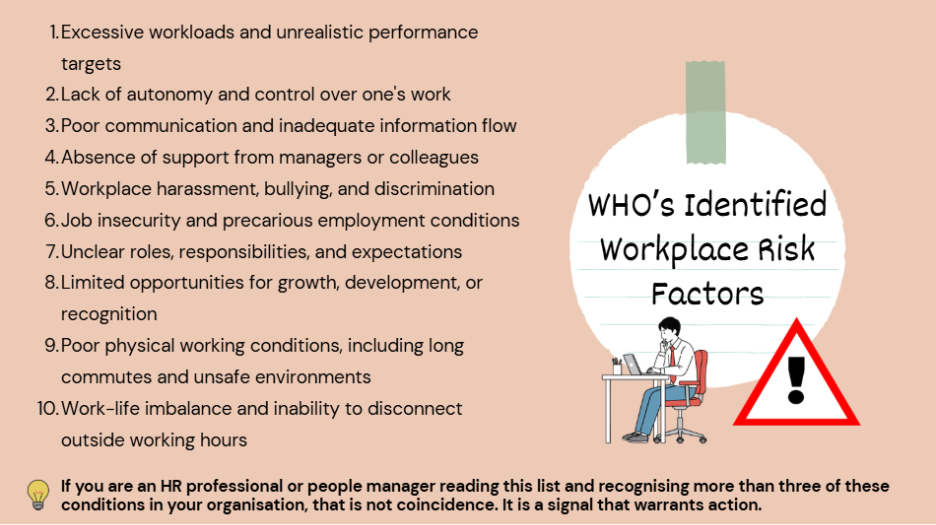
The WHO's 10 Workplace Risk Factors for Poor Mental Health
The World Health Organization has identified ten specific workplace conditions that are known to drive poor mental health outcomes. These are not theoretical. They are present, in varying combinations, in most Indian workplaces:
Signs of Mental Health Challenges in Employees
For managers and HR professionals, early identification is critical. Watching out for changes in the domains below can be a good starting point :
- Behavioural signs: withdrawal from team activities, missed deadlines, increased errors, irritability in meetings, frequent absences or lateness
- Physical signs: visible fatigue, complaints of chronic headaches, significant changes in weight or energy, declining personal hygiene
- Performance signs: difficulty concentrating, reduced quality of work, loss of initiative, trouble making decisions
💡Pro-Tip for Managers: If you notice a pattern of 2 or more of these signs persisting over 2+ weeks, do not ignore it. A 10-minute check-in conversation, framed with genuine curiosity rather than performance management, can be the difference between an employee getting support and a resignation letter landing on your desk.
How Poor Mental Health Impacts Workplace Productivity and Business
A leader may ask, "Why should a business care about this?" This section is to address all such questions. Here is the business case, because it is an overwhelming one.
- The WHO estimates that 12 billion working days are lost every year globally to depression and anxiety. Treatment of depression alone leads to a 40 to 60% reduction in absenteeism and presenteeism. That is not a soft HR metric. That is direct, measurable productivity.
- Indian employees are 60% more likely to resign due to toxic workplaces than their global counterparts, per McKinsey's 2022 data. In a market where hiring costs are rising and skilled talent is increasingly mobile, organisations cannot afford to treat mental health as optional.
- The recruitment angle is equally compelling. 60% of Indian job seekers say they consider a prospective employer's mental health environment before accepting an offer. Your organisation's approach to employee mental health is now part of your employer brand, whether you have intentionally shaped it or not.
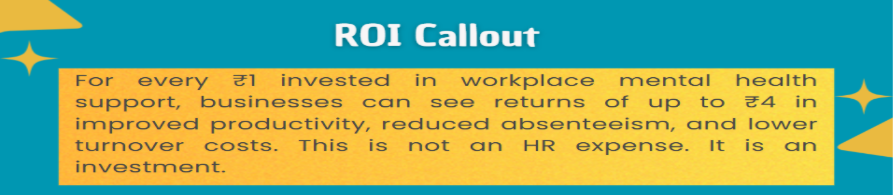
- Oxford University research found that companies with high employee well-being scores consistently outperformed benchmarks like the S&P 500 and Dow Jones. The argument is not between caring about people and caring about profit. The argument is that caring about people is the path to profit.
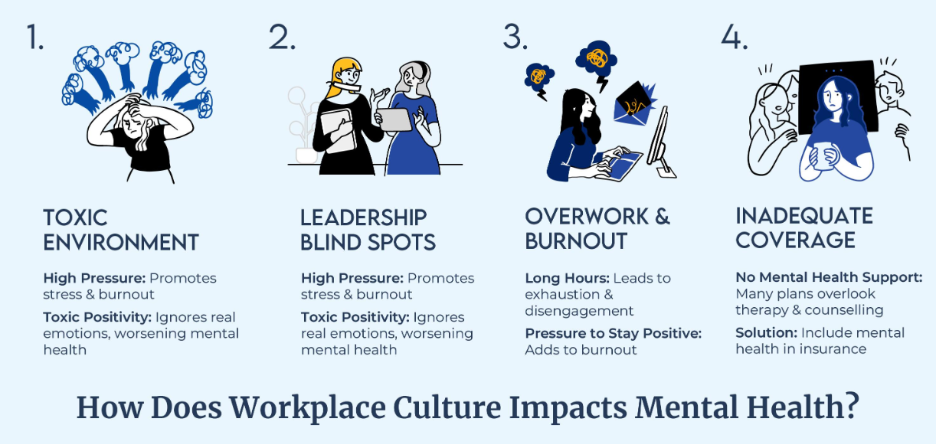
Key Causes of Poor Mental Health at the Workplace in India
Understanding why mental health deteriorates at work is the starting point for changing the conditions that drive it.
1. Toxic Workplace Behaviour
McKinsey's 2022 India data identified toxic workplace behaviour as the single biggest driver of burnout risk, ranked above workload and work-life balance concerns. Micromanagement, public humiliation, exclusion, favouritism, and a culture of fear create chronic stress that erodes psychological safety over time.
2. Excessive Workloads and Long Hours
Research consistently shows that working 45 or more hours per week significantly elevates mental health risk. In India's corporate and IT sectors, 50 to 60-hour workweeks are not unusual; they are often expected. The culture of rewarding overwork over outcomes creates a structural trap where rest leads to guilt and exhaustion becomes identity.
3. Job Insecurity
India's informal economy accounts for over 90% of the workforce, and even within the formal sector, more than 50% of salaried workers lack written contracts. Job insecurity is one of the most psychologically damaging conditions a person can face. The uncertainty of not knowing whether your livelihood is safe tomorrow is a chronic stressor that no yoga session or wellness app can fix.
4. Stigma and Cultural Barriers
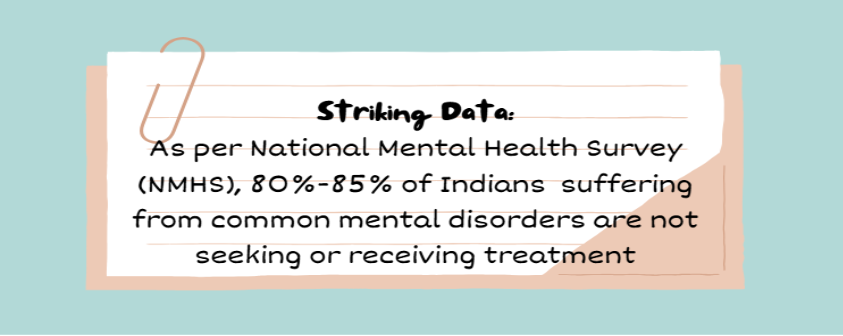
In India's predominantly collectivist culture, mental health struggles are still widely perceived as personal weakness or family shame. 80%-85% of Indians with mental health conditions do not seek or receive help. Many suffer in silence because they fear being judged, marginalised, or passed over for promotions if they are perceived as "not coping."
5. Manager Behaviour
The relationship between an employee and their immediate manager is one of the most powerful predictors of mental health outcomes at work. A manager who lacks empathy, communicates poorly, never acknowledges effort, or creates an environment of constant pressure causes direct psychological harm. Conversely, a skilled, empathetic manager is one of the most effective mental health interventions available.
6. Post-COVID Boundary Dissolution
The blurring of home and work, especially in India's IT sector, has created a new class of mental health risk. Many employees have not had a proper boundary between "work time" and "home time" since 2020. The inability to switch off, combined with the isolation of remote work, has contributed significantly to the mental health burden Indian employees carry.
7. Urban Migration and Pressure
India's National Mental Health Survey found urban mental health prevalence to be 2 to 3 times higher than in rural areas. The pressures of city life, including long commutes, competitive professional environments, social isolation, and distance from family support systems, compound whatever is already happening inside the workplace.
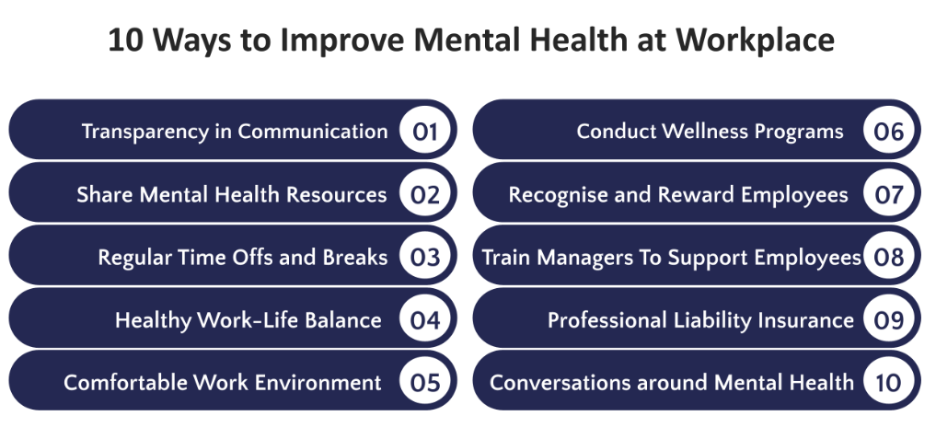
How to Improve Mental Health at the Workplace: Practical Strategies for Indian Employers
This section entails how intention becomes action. Here are seven evidence-based, India-applicable strategies that organisations can begin implementing today.
Strategy 1: Build a Formal Mental Health Policy
India does not have a specific workplace mental health mandate, meaning most organisations operate in a policy vacuum. That vacuum is an opportunity. Create a clear, written mental health policy that defines the organisation's commitment, outlines available support, and specifies anti-discrimination protections for employees managing mental health conditions. Use the Mental Healthcare Act 2017 as a baseline and build on it, based on your organisation’s mission and vision. A policy does not need to be perfect to be powerful. It first needs to exist and be visible.
💡Pro-Tip: Make your mental health policy part of onboarding, not just the employee handbook. If a new joiner hears on day one that mental health matters here, they are more likely to believe it.
Strategy 2: Launch or Upgrade Your Employee Assistance Program (EAP)
An EAP is a confidential counselling and support service that employees can access without fear of professional consequences. A well-designed EAP covers short-term psychological counselling, referral to specialists, financial stress support, and crisis intervention. Research from the Indian Journal of Psychiatry confirms that EAPs reduce absenteeism and improve productivity. Yet only 1 in 10 Indian workers currently has access to one.
For smaller organisations, a basic EAP can be set up through partnerships with platforms such as 1to1help, which also offer scalable options for companies with 50 to 500 employees.
💡Pro Tip: An EAP that no one knows about is an EAP that no one uses. Promote it actively, repeatedly, and through multiple channels, not just in the onboarding kit.
Strategy 3: Train Managers as Mental Health First Responders
Managers are not therapists, and they should not try to be. But they are often the first person an employee in distress will turn to. This is where structured, organisation-led initiatives become critical. Programmes like 1to1help’s Emotional Care Champions (ECC) build this capacity internally by training employees to act as mental health allies. Champions are equipped to recognise early signs of distress, initiate supportive and non-judgmental conversations, and guide colleagues toward professional help when needed.
This kind of peer-support ecosystem ensures that support is accessible, contextual, and embedded within the organisation
💡Pro Tip: Manager training works best when it is reinforced, not delivered once and forgotten. Schedule a 30-minute refresher every six months, and create a shared resource library where trained managers can revisit conversation frameworks, referral pathways, and self-care reminders.
Strategy 4: Actively Reduce Stigma
Stigma does not disappear on its own. It requires deliberate, top-down effort. When senior leaders speak openly about their own mental health experiences, the psychological permission this creates throughout an organisation is significant. Peer support programmes, anonymous feedback channels, and recognising "Mental Health Champions" (employees who actively support colleagues) are all effective. 1to1help's Emotional Care Champions programme is a structured version of this model, training employee volunteers to act as trained peer responders across teams.
Jindal Stainless is one Indian company that has taken this approach, launching both an EAP and a peer recognition programme specifically around mental health advocacy.
💡Pro Tip: Language matters more than most organisations realise. Simple shifts, from "he is struggling to cope" to "he is going through a difficult period and getting support," change how mental health is talked about at every level. Consider running a short internal workshop on mental health language for HR teams and senior managers.
Strategy 5: Implement Genuine Work-Life Balance Practices
66% of Indian employees have said they would take a pay cut for better work-life balance. That is not a preference; that is almost a call out for help. Flexible working hours, the right to disconnect outside business hours, protected leave policies, and visible senior leaders who actually leave on time all send a message that recovery is not just permitted but encouraged. Work-life balance cannot be a poster on a wall while the culture punishes people for logging off at 6 pm.
💡Pro Tip: Audit your meeting culture before launching any well-being initiative. If your organisation defaults to back-to-back meetings, late evening calls, and weekend pings, no amount of yoga sessions or wellness webinars will compensate. Start by protecting one meeting-free afternoon per week across teams.
Strategy 6: Leverage Digital Mental Health Tools
India has a critical shortage of mental health professionals, with approximately 0.75 psychiatrists per 100,000 people, far below the WHO minimum recommended 3 per 100,000 people. Digital platforms are not a replacement for clinical care, but they significantly expand access, especially for remote employees, those in smaller cities, or those who prefer anonymity. Platforms like 1to1help offer scalable solutions for Indian employers. The government's Tele-MANAS service (helpline: 14422) has already handled over 14.5 lakh calls across 53 cells in 36 states and union territories.
💡Pro Tip: When selecting a digital mental health platform, prioritise three non-negotiables: availability in regional languages beyond English and Hindi, a telehealth option for employees who cannot access in-person support, and clear, verified confidentiality protocols.
Strategy 7: Measure What Matters
You cannot improve what you do not measure. Standardised tools like the PHQ-9 (depression screening) and GAD-7 (anxiety screening), combined with regular anonymous pulse surveys, give organisations the data they need to act before crises emerge. For a more comprehensive population-level view that goes beyond clinical screening, an emotional risk survey maps vulnerability and resilience across your entire workforce. One of the most honest observations in Indian corporate wellness research is this: "Every employer wants evidence-based answers but does not want to generate the evidence." Start generating it. The insights will be uncomfortable. They will also be invaluable.
💡Pro Tip: Do not wait for an annual engagement survey to surface mental health concerns. Run a short, five-question anonymous pulse check every quarter, specifically focused on workload, psychological safety, and access to support. Quarterly data allows you to catch a deteriorating trend early, when an intervention is still relatively easy, rather than after it has hardened into attrition or a crisis.
Mental Health at Workplace in India: Legal Framework and Employer Obligations
India's legal architecture for workplace mental health is incomplete, but not absent. Employers who understand the existing framework are better positioned to both comply with it and go beyond it.
The Mental Healthcare Act (MHA) 2017
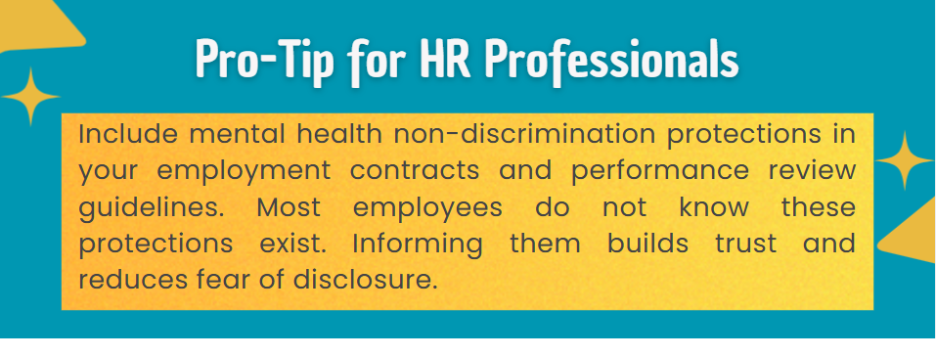
India's Mental Healthcare Act 2017 enshrines the right to mental health treatment and explicitly prohibits discrimination against individuals with mental illness, including in employment contexts. Employers cannot legally dismiss, demote, or penalise an employee solely on the basis of a mental health condition. This is not widely known, and employees are rarely informed of this right.
The POSH Act 2013
The Prevention, Protection, and Redressal of Sexual Harassment at the Workplace Act has a direct mental health dimension. Workplace harassment is one of the leading drivers of anxiety, depression, and post-traumatic stress in professional settings. Organisations that implement POSH compliance as a genuine cultural commitment, rather than a box-ticking exercise, are also reducing one of the most potent mental health risks their employees face.
Occupational Safety, Health and Working Conditions Code 2020
While this code primarily addresses physical safety, it increasingly recognises psychosocial hazards as occupational health risks. This signals a legislative direction that employers would be wise to anticipate.
The Regulatory Gap
The Asia Society's analysis of India's workplace mental health landscape concluded that the lack of specific policy regulation means individual employers play a critical role that the state has not yet assumed. In other words, the law sets a floor. Ethical and progressive organisations set their own ceiling.
International standards from the ILO and the WHO's 2022 guidelines on mental health at work provide a practical framework for Indian employers who want to lead rather than simply comply.
Mental Health at Workplace Best Practices: What Indian Companies Are Doing
The good news is that some Indian organisations are already doing this well, and their experiences offer a practical roadmap.
- Jindal Stainless launched a structured EAP alongside a "Mental Health Champs" programme that recognises employees who actively support colleagues' mental well-being. This peer recognition model works because it normalises mental health support as a collective responsibility, not just a clinical service.
- India's IT sector giants, including Infosys, TCS, and Wipro, have invested in awareness campaigns, counselling helplines, and structured EAPs. While the scale and effectiveness vary, the public commitment itself signals to employees, recruits, and investors that mental health is being taken seriously.
- Startups, which often lack the resources of large enterprises, are increasingly adopting cost-effective approaches: mental health days (additional paid leave earmarked specifically for rest and recovery), external counsellors available on a retainer basis, and peer support networks that do not require significant infrastructure. Many have also begun integrating mental health check-ins into their regular all-hands or one-on-one meeting rhythms.
India's shortage of mental health professionals makes peer support models especially relevant. No organisation can rely solely on clinical pathways. Well-trained peers, combined with digital tools and accessible EAPs, create a layered support system that reaches far more employees.
A Final Word
Mental health at workplace in India is not a luxury agenda. It is a business imperative, a legal responsibility, and above all, a human one.
The evidence is overwhelming. The costs of inaction are measurable. The solutions are available and, in many cases, affordable. What has been missing is not information or resources, but the collective willingness to treat the mental well-being of working Indians with the same seriousness we bring to quarterly targets and compliance audits.
If you are an employer, the most important thing you can do today is not launch a wellness programme. It is to honestly ask: does our workplace make people better, or does it make them unwell? And then act on the answer, even when the answer is uncomfortable.
If you are an employee reading this, know that struggling at work does not mean you are weak. It may mean your environment is more demanding than the resources at your end. Seeking support is not a failure. It is the most professional thing you can do for yourself and for the people who depend on you.
The conversation about mental health at workplace in India has finally started. The work of changing workplaces has not yet finished. That is where each of us comes in.
Ready to Build a Mentally Healthier Workplace?
If you are an employer looking to take the next step, 1to1help's Employee Assistance Programme is India's most trusted EAP, with over 25 years of experience supporting employees across more than 700 organisations nationwide. From confidential counselling and crisis support to manager training and organisational well-being assessments, 1to1help offers a comprehensive, culturally sensitive, and multilingual solution tailored to the Indian workplace.
With data from over 100,000 counselling sessions annually and outcomes that include a 53% reduction in depression symptoms and a 48% reduction in anxiety within just a few sessions, 1to1help's programmes are evidence-based, scalable, and designed to meet your employees where they are, whether they are in a metro office, working remotely, or based in a Tier 2 city.
Because the best time to invest in your employees' mental health was yesterday. The next best time is now.
FAQs
Q1: What is mental health at workplace and why is it important?
Mental health at the workplace refers to an employee's emotional, psychological, and social well-being within their professional environment. It covers how individuals cope with work-related stress, manage relationships with colleagues, and perform their day-to-day responsibilities. It is critically important because poor mental health leads directly to absenteeism, reduced productivity, higher employee turnover, and high financial costs for organisations. In India, mental health conditions are estimated to cost the economy up to $1 trillion between 2010 and 2030. A mentally healthy workplace is one that provides support, reduces stigma, and fosters psychological safety, helping employees thrive professionally and personally while driving better business outcomes.
Q2: How does the workplace affect mental health of employees in India?
The workplace can significantly affect employee mental health both positively and negatively. Positive workplaces provide job security, meaningful work, social support, and career growth, all of which protect and enhance mental well-being. However, poor working environments in India, including excessive workloads (45+ hours per week), toxic manager behaviour, job insecurity, and cultural stigma, actively harm mental health. A 2022 McKinsey survey found that at least 40% of Indian employees are at risk of burnout or depression due to workplace conditions. Unique Indian pressures such as competitive urban environments, migration, and the 'settled' career mindset further amplify these risks. Organisations that proactively address these factors see measurable improvements in employee engagement and retention.
Q3: What are employer responsibilities for employee mental health in India?
While India lacks a specific workplace mental health mandate, employers have several obligations under existing law. The Mental Healthcare Act 2017 prohibits discrimination against individuals with mental illness, including in employment contexts. The POSH Act 2013 requires employers to prevent workplace harassment, a leading driver of mental health deterioration. The Occupational Safety, Health and Working Conditions Code 2020 increasingly recognises psychosocial hazards. Beyond legal minimums, best-practice Indian employers are expected to provide safe working environments, offer access to mental health support (EAPs, counselling), train managers in mental health awareness, and create confidential reporting mechanisms. Failure to address mental health is increasingly seen as a governance and employer-brand risk.
Q4: How can I talk to my manager about mental health at work in India?
Talking about mental health at work in India can feel daunting due to cultural stigma, but it is increasingly becoming accepted, especially in progressive organisations. Start by choosing a private, low-pressure setting and a manager you trust. You do not have to disclose a diagnosis; you can frame the conversation around your workload, stress levels, or need for flexibility. Use specific, work-related language: 'I have been feeling overwhelmed with the current project volume and would like to discuss adjusting my deliverables.' Check whether your organisation has a confidential EAP or HR helpline, these are often better entry points than direct manager conversations. Remember, legally, an employer cannot penalise you for seeking mental health support.
Q5: What is an EAP and how does it help employees in India?
An Employee Assistance Programme (EAP) is a confidential counselling and support service provided by employers. EAPs typically cover short-term psychological counselling, referral to mental health professionals, support for personal challenges (financial stress, relationship issues), and crisis intervention. In India, EAPs have been shown to reduce absenteeism and improve productivity (Indian Journal of Psychiatry). However, EAP uptake remains low with only 1 in 10 Indian workers had access to EAP. Effective EAPs in the Indian context should be available in multiple languages, offer telehealth options for remote workers, and ensure complete confidentiality so employees do not fear professional consequences for using the service.
Q6: How do you know if you are experiencing workplace burnout?
Burnout is recognised by the WHO as an occupational phenomenon resulting from chronic unmanaged workplace stress. Key signs include persistent exhaustion that does not improve with rest, growing cynicism or detachment from your work and colleagues, reduced professional efficacy (feeling like nothing you do makes a difference), and physical symptoms such as chronic headaches, disrupted sleep, or digestive issues. In India's Deloitte workplace study, 55% of respondents reported emotional exhaustion or burnout. If you are consistently working 45+ hours per week, skipping meals, not exercising, and feeling unable to switch off from work, you may be at risk. Seeking support from a mental health professional or your organisation's EAP is an important first step.
Q7: What mental health resources are available for employees in India?
Indian employees have access to a growing range of mental health resources. Government initiatives include the National Tele Mental Health Programme (Tele-MANAS), accessible on 14422, which has handled over 14.5 lakh calls across 53 cells in 36 states/UTs. NIMHANS in Bengaluru and AIIMS psychiatry departments offer specialised care. In the private sector, organisations like Mpower, iCall (TISS), Vandrevala Foundation, and platforms like 1to1help, offer digital therapy and counselling. Many corporate employers offer EAPs with free confidential sessions. If you are in immediate distress, iCall helpline (9152987821) and Vandrevala Foundation (1860-2662-345) are accessible around the clock.
References
- AIHR. (n.d.). Absenteeism: Definition, causes, and how to reduce it. https://www.aihr.com/blog/absenteeism/
- Cleveland Clinic. (n.d.). Depression. https://my.clevelandclinic.org/health/diseases/9290-depression
- Deloitte. (2022, September 12). Mental health issues cost Indian firms $14 billion a year. The Hindu. https://www.thehindu.com/business/Industry/mental-health-issues-cost-indian-firms-14-bn-a-year-says-deloitte/article65866768.ece
- Directorate General Factory Advice Service & Labour Institutes. (n.d.). Occupational safety and health guidelines. https://dgfasli.gov.in/public/Admin/Cms/AllPdf/650059fbb8f1a9.98699174.pdf
- Drishti IAS. (n.d.). Informal economy in India. https://www.drishtiias.com/daily-news-analysis/informal-economy-in-india
- EmpMonitor. (n.d.). What is lost productivity? https://empmonitor.com/blog/what-is-lost-productivity/
- Express Healthcare. (2026). India faces 80–85% mental health treatment gap warns IPS. https://www.expresshealthcare.in/news/india-faces-80-85-mental-health-treatment-gap-warns-ips-ahead-of-ancips-2026/452160/
- Government of India. (2013). The Factories Act and occupational safety guidelines. https://www.indiacode.nic.in/bitstream/123456789/2104/1/A2013-14.pdf
- Government of India. (2017). Mental Healthcare Act, 2017. https://www.indiacode.nic.in/bitstream/123456789/2249/1/A2017-10.pdf
- Indeed. (n.d.). Mental health in the workplace. https://in.indeed.com/hire/c/info/mental-health-workplace
- Indian Health Bureau. (n.d.). India is facing a mental health crisis of unprecedented scale. https://www.indianhealthbureau.org/post/india-is-facing-a-mental-health-crisis-of-unprecedented-scale
- Investopedia. (n.d.). Presenteeism. https://www.investopedia.com/terms/p/presenteeism.asp
- Investopedia. (n.d.). Turnover. https://www.investopedia.com/terms/t/turnover.asp
- International Labour Organization. (2022). Psychosocial risks and mental health at work. https://www.ilo.org/sites/default/files/wcmsp5/groups/public/@ed_protect/@protrav/@safework/documents/publication/wcms_856976.pdf
- McKinsey & Company. (2023). Employee mental health and burnout in Asia: A time to act. https://www.mckinsey.com/featured-insights/future-of-asia/employee-mental-health-and-burnout-in-asia-a-time-to-act
- Ministry of Health and Family Welfare. (n.d.). Tele-MANAS. https://telemanas.mohfw.gov.in/home
- Mpower Minds. (n.d.). Mental health in the workplace. https://mpowerminds.com/blog/mental-health-in-the-workplace
- Mynd Stories. (n.d.). Indian employees have high levels of stress and burnout. https://myndstories.com/mental-health/indian-employees-have-high-levels-stress-burnout-reveals-survey
- NDTV. (n.d.). Why millennials are quitting 9 to 5 jobs. https://www.ndtv.com/lifestyle/why-millennials-are-quitting-their-9-to-5-jobs-to-live-a-slow-life-dream-11243447
- Oxford Wellbeing Research Centre. (n.d.). Stock market performance and wellbeing. https://wellbeing.hmc.ox.ac.uk/news/stock-market-performance/
- People Matters. (2023). Fostering a mental wellness-centric workplace culture. https://www.peoplematters.in/article/employee-relations/fostering-a-mental-wellness-centric-workplace-culture-39401
- Press Information Bureau. (2024). Government initiatives on mental health. https://www.pib.gov.in/PressReleasePage.aspx?PRID=2034931
- Qualtrics. (n.d.). What is an employee pulse survey? https://www.qualtrics.com/articles/employee-experience/what-is-employee-pulse-survey/
- ResearchGate. (2024). Economic impact of workplace mental health initiatives. https://www.researchgate.net/publication/384711449
- Tandfonline. (2025). Workplace mental health research study. https://www.tandfonline.com/doi/full/10.1080/23311908.2025.2485739
- Upstox. (2025). India’s workplace stress epidemic. https://upstox.com/news/trending/latest-updates/india-s-workplace-stress-epidemic-a-silent-crisis-claiming-lives-and-billions/article-177871/
- World Health Organization. (2019). Burn-out an occupational phenomenon. https://www.who.int/news/item/28-05-2019-burn-out-an-occupational-phenomenon
- World Health Organization. (2021). Long working hours increasing deaths. https://www.who.int/news/item/17-05-2021-long-working-hours-increasing-deaths-from-heart-disease-and-stroke-who-ilo
- World Health Organization. (n.d.). Mental health at work. https://www.who.int/news-room/fact-sheets/detail/mental-health-at-work
- World Health Organization. (n.d.). Global Health Observatory data repository. https://www.who.int/data/gho/data/major-themes/health-and-well-being


.svg)
.svg)
.svg)
.svg)