


.png)


.png)

Emotional Risk & Assessment
The Complete Guide to Employee Wellness Program Benefits: Boost Productivity & Reduce Costs

.png)
Written by
Aarohi Parakh,
Psychologist and Content Writer

Reviewed by
Sanjana Sivaram,
Psychologist and Clinical Content Head


Introduction
Ask any HR leader what their top priorities are for the year, and employee wellness will almost certainly be on the list. Ask the same leader whether they can quantify what their wellness programme is actually delivering, and the conversation often becomes considerably less confident.
The benefits of employee wellness programs are real, well-documented, and measurable. But they are also frequently undersold, misunderstood, or communicated in ways that fail to resonate with the finance and leadership stakeholders who control the budget decisions. The result is that programmes that are genuinely working do not get the investment they deserve, and programmes that are not working go unchallenged because no one is measuring them properly.
This guide is for HR professionals, business leaders, and anyone responsible for making the case for investing in employee wellness. It covers the full spectrum of what structured wellness programmes deliver: health and productivity benefits, financial returns, retention and recruitment advantages, cultural impact, and the mental health dimension that is increasingly central to any honest wellbeing conversation.
What Are Employee Wellness Programs and Why Do They Matter?
An employee wellness programme is a structured, employer-sponsored initiative designed to support the physical, mental, and emotional health of the workforce. That definition has evolved considerably over the past decade.
Historically, workplace wellness meant basic health insurance, perhaps a discounted gym membership. What the research and the post-pandemic reality have established is that genuine wellness is multi-dimensional. It encompasses physical health, mental health, financial well-being, social connection, and the working conditions that either support or undermine all of the above.
The CDC's workplace health guidelines define a comprehensive workplace health programme as a coordinated and comprehensive set of strategies that include programmes, policies, benefits, environmental supports, and links to the surrounding community. The shift from "fitness benefits" to "holistic wellbeing" is not semantic. It reflects a genuine change in what the evidence shows works.
The post-pandemic context matters. The pandemic accelerated burnout, eroded boundaries between work and home, and made the mental health crisis in the workforce impossible for organisations to continue treating as just a peripheral concern. According to the WHO, depression and anxiety cost the global economy USD 1 trillion annually in lost productivity, and the majority of that cost accumulates in organisations that have not yet connected the dots between employee mental health and business performance.
The organisations that invested in structured wellness during and after the pandemic are now seeing the outcomes. Those who treated it as a “nice-to-have” are measuring the cost of that position in turnover, in healthcare expenditure, and in the engagement scores of a workforce that has concluded their employer does not genuinely care about their wellbeing.
Who benefits from employee wellness programmes?
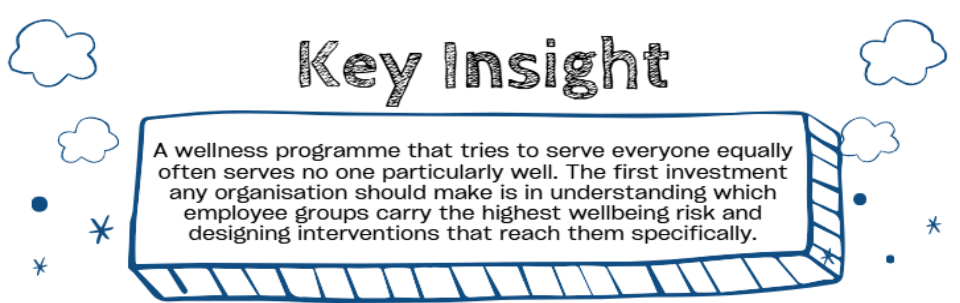
The benefits are not uniform across all employee groups, which is why the most effective programmes are those designed with specific needs in mind rather than one-size-fits-all approaches that deliver ineffective results to everyone.
Remote and hybrid workers face elevated isolation, boundary dissolution, and reduced access to informal social support. High-stress roles in sectors like technology, finance, and healthcare carry a disproportionate risk of burnout. First-generation urban earners in India face specific pressures related to family expectations and migration that standard wellness frameworks rarely address. Effective programmes are those that understand who they are serving and design accordingly.
Health and Productivity Benefits: The Direct Impact
The most immediate, measurable benefits of employee wellness programs are in the domains of health outcomes and workplace productivity. These are also where the most robust evidence base exists.
Wellness programmes reduce absenteeism. Research published in the Journal of Occupational and Environmental Medicine consistently shows that well-structured wellness programmes deliver approximately a 25% reduction in absenteeism among participating employees. Companies with strong wellness programmes see up to 28% lower sick leave usage compared to organisations without them. That is not a marginal improvement. Across a workforce of 500 employees, a 25% reduction in absenteeism translates to hundreds of recovered working days per year.
Presenteeism is the larger, more expensive problem. Absenteeism is visible: you can count the days missed. Presenteeism is invisible: employees show up but operate significantly below capacity due to unaddressed physical or mental health challenges. Research suggests that presenteeism costs organisations five to ten times more than absenteeism, because it is so much harder to detect, measure, and address.
A study published in the Journal of the American Medical Association found that lost productive work time caused by common health conditions costs American employers more than USD 225 billion annually, with a significant proportion attributable to presenteeism rather than absence. The mechanisms are direct: physical pain reduces concentration, mental health challenges impair decision-making and creativity, chronic fatigue increases error rates, and anxiety interferes with the interpersonal quality that collaborative work depends on.
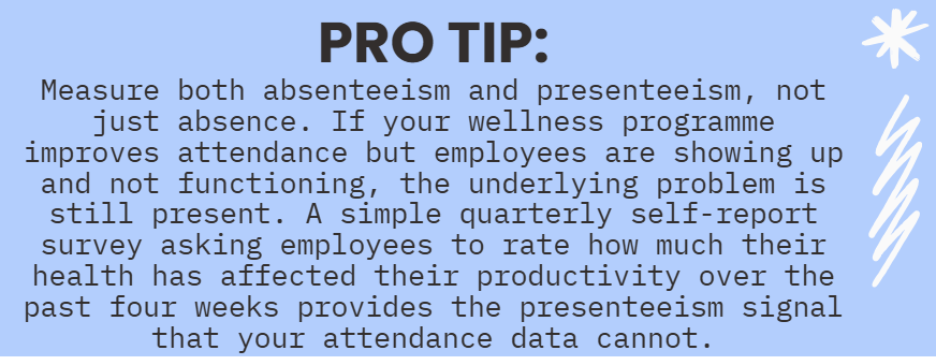
For a detailed guide to measuring absenteeism and presenteeism rates in your organisation, including calculation formulas and benchmarks, see our dedicated piece: How to Measure Employee Wellness: 7 Key Metrics and KPIs That Matter.
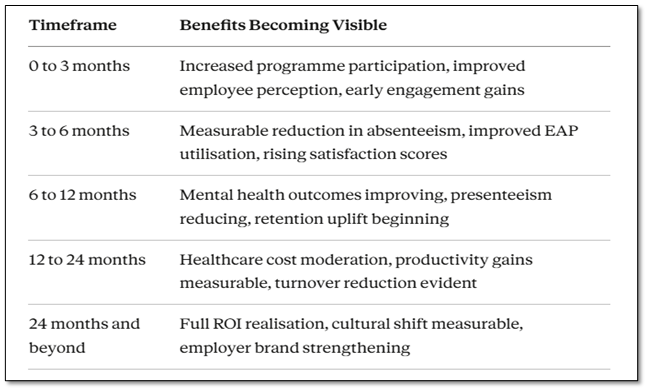
Employee Wellness Benefits Timeline
The mental health imperative. Post-pandemic, the mental health dimension of employee wellness is not a subsection of the broader conversation. For most organisations, it is the central challenge. According to Deloitte India’s 2022 report, 80% of employees in India at least one adverse mental health symptom, directly impacting productivity and attrition. A 2025 survey by Indeed India found that 72% of Indian employees report feeling burned out at some point in their current role. That number was 58% in 2022. The three-year increase of 14 percentage points is the steepest rise recorded in any major economy in the same period. For HR teams, this is not a background statistic; it defines the operating environment for every retention, engagement, and productivity initiative.
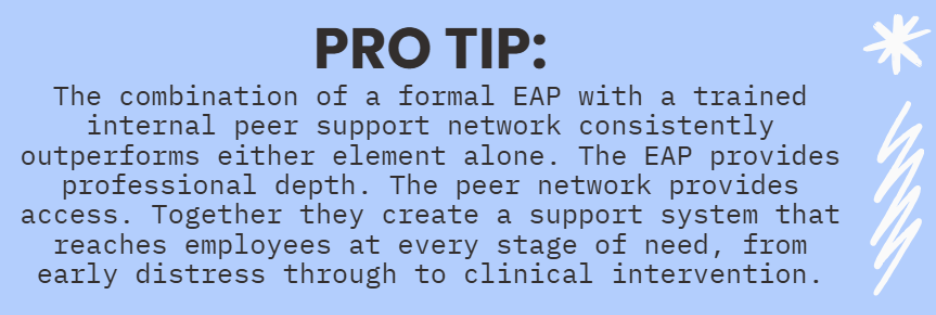
Wellness programmes that include structured mental health support, including EAPs, counselling access, peer support networks, and manager mental health sensitisation training, directly address this. The return is not just human. Employees with their mental health challenges supported return to full productivity significantly faster than those who go unsupported, and the cost is a fraction of the cost of sustained underperformance or attrition.
Financial Benefits and ROI of Wellness Programs
This is the section that moves budget conversations. The financial case for investing in employee wellness is both substantial and well-documented, though it requires honest framing to be credible.
The headline ROI figure. Across a wide body of research, studies consistently show that well-implemented employee wellness programmes return between £3 and £6 for every £1 invested. The Harvard Business Review analysis of wellness ROI found that medical costs fell by about USD 3.27 for every dollar spent on wellness programmes, while absenteeism costs fell by USD 2.73 per dollar spent. That 6:1 aggregate return, while the specific figures vary by organisation size, industry, and programme design, represents a consistently positive investment case.
Healthcare cost reduction. Preventive wellness programmes that include health risk assessments, chronic disease management, mental health support, and physical activity interventions reduce the frequency and severity of health claims over time. Research published in the American Journal of Health Promotion found that employer medical costs fall by an average of USD 3.27 for every dollar spent on wellness, while organisations with comprehensive programmes report 2 to 11% reductions in healthcare premium costs over three to five years.
The mechanism is direct: employees who engage with preventive health programmes have fewer acute health events, manage chronic conditions more effectively, and access mental health support before episodes escalate into extended absence. Each of these reduces the claims cost that feeds into group health insurance premiums.
For a detailed ROI calculation framework specific to your organisation, see our guide on How to Measure Employee Wellness, which includes ROI formulas and benchmarking data.
A simple ROI calculation framework:
Total programme cost = per-employee investment multiplied by number of employees enrolled.
Financial value generated = (reduction in absenteeism days multiplied by average daily salary cost) + (healthcare cost savings per employee multiplied by enrolled employees) + (turnover reduction value calculated as reduction in departures multiplied by average replacement cost).
ROI = (financial value generated minus total programme cost) divided by total programme cost, expressed as a percentage.
Wellness Program ROI Breakdown: Where the financial return comes from
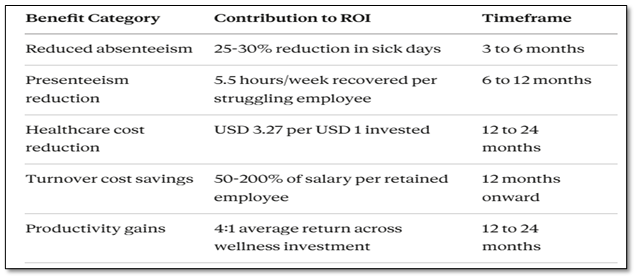
The turnover cost is where organisations most consistently undercount. Replacing a mid-level employee costs between 50% and 200% of their annual salary when recruitment, onboarding, lost productivity during the transition, and the loss of institutional knowledge are factored in. Wellness programs that improve retention by even a few percentage points generate financial returns that reduce the programme cost.

Employee Retention and Recruitment Advantages
The talent market has shifted. Wellness is no longer a differentiator in recruitment: for a growing proportion of candidates, it is a threshold requirement. And for employers facing sustained attrition challenges, wellness programmes have become one of the most practical tools available.
What candidates are telling employers. SHRM research consistently shows that health and wellness benefits rank among the top factors influencing job candidate decisions, alongside salary and career development opportunities. For Gen Z and millennial candidates specifically, who now represent the majority of the active workforce, the presence of mental health support is a hiring criterion in ways it was not for previous generations. In India's competitive talent market for technology, financial services, and professional skills, the employer that offers structured mental health support, EAP access, flexible working, and genuine wellbeing investment is signalling something to candidates about its culture that a salary figure alone cannot communicate.
Retention correlation is strong and measurable. Organisations with comprehensive wellness programmes report turnover rates that are significantly lower among employees who actively engage with those programmes. The mechanism is psychological as much as financial: employees who feel that their employer genuinely invests in their wellbeing develop a form of loyalty that is not easily swayed by a competitor with a higher salary offer. Gallup research on employee engagement and attrition consistently finds that employees who feel supported by their employer in their overall wellbeing are significantly less likely to report job-seeking behaviour, even when presented with external job opportunities. The wellbeing investment creates a psychological bond that salary alone does not.
The generational dimension matters. Gen Z employees entering the workforce in 2024 and 2025 are the most mental-health-aware generation of employees in history. They have grown up with mental health vocabulary, are significantly more likely to seek support proactively, and consistently report that they will leave employers who do not take their psychological wellbeing seriously. For organisations building their future leadership pipeline, ignoring this expectation is a strategic error with compounding consequences

Improved Company Culture and Employee Morale
The benefits of employee wellness programs extend beyond the measurable and into the qualitative dimensions that determine whether an organisation is a place people want to work.
Wellness investment signals organisational values. When an employer structures genuine, accessible, well-communicated wellbeing support, employees receive a message that shapes how they think about the organisation: this is a place that sees me as a person, not just a resource. The psychological impact of that perception on engagement, discretionary effort, and loyalty is difficult to quantify precisely but well-established in organisational psychology research.
Research from the University of Warwick found that happy employees are 12% more productive than their unhappy counterparts, and the single strongest predictor of employee happiness is that one's employer genuinely cares about one's wellbeing. Wellness programmes are the most direct way of demonstrating that care in a structured, consistent, and accessible way.
The community and belonging dimension. Wellness programmes, particularly those that include group activities, team challenges, peer support networks, and shared wellbeing goals, build the social connections that make work feel like a community rather than a transaction. For remote and hybrid employees who miss the informal social infrastructure of office life, these connections are particularly valuable.
Research from Cigna consistently identifies loneliness and social isolation as significant risk factors for both mental and physical health, and as contributors to employee disengagement and attrition. Wellness programmes that create genuine social connection address this directly.
Psychological safety as a cultural outcome. Organisations that invest in mental health support, manager training in emotional intelligence, and internal peer support networks create the conditions for psychological safety: the shared belief that one can speak up, acknowledge difficulty, and ask for help without fear of professional consequences. Psychological safety is the single strongest predictor of team performance identified in Google's Project Aristotle research, and it is built through the accumulated small acts of care and openness that a well-implemented wellness programme enables.
Specific Health Benefits by Programme Type
Not all wellness programmes deliver the same benefits, and understanding what different programme types achieve helps HR leaders design a portfolio that addresses their specific workforce's needs.
Wellness Programme Types and Their Benefits
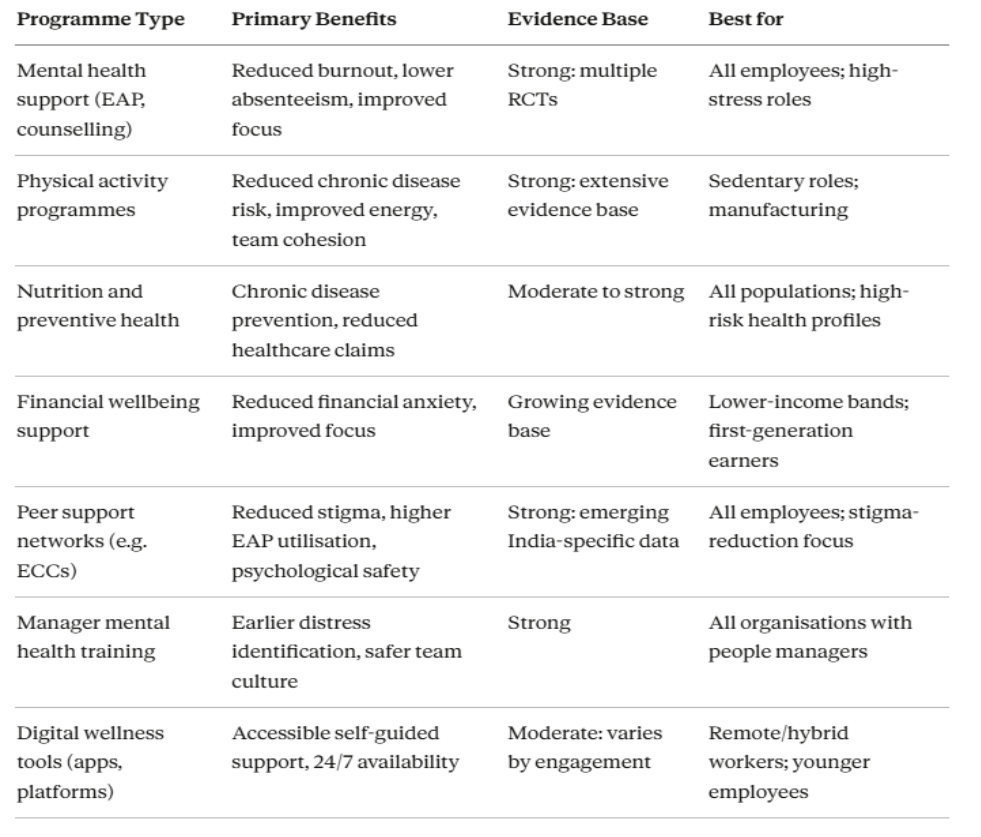
Mental Health Programmes deserve particular emphasis because they are the component most likely to be underinvested relative to need. Structured mental health support, including an EAP, counselling access, peer support networks, and manager training, addresses the condition that accounts for the largest share of both absenteeism and presenteeism in most organisations. The 1to1help State of Emotional Wellbeing Report 2025 found that structured counselling led to a 53% reduction in depression symptoms and a 48% reduction in anxiety within as few as three sessions. But knowing where to direct that support starts with measurement — and an emotional risk survey gives HR teams the cohort-level data they need to deploy wellness investment where it will have the greatest impact.
Physical Health Programmes deliver benefits that are well-documented and relatively rapid. Regular physical activity reduces absenteeism through lower rates of common illness, improves concentration and cognitive function, reduces stress hormones, and provides the social engagement that supports overall wellbeing. For desk-based and sedentary roles, even modest physical activity interventions yield measurable improvements in health and productivity.
Peer Support Programmes are an increasingly important component of comprehensive wellness infrastructure. Trained internal peer support allies, such as Emotional Care Champions, reduce the stigma that prevents employees from accessing formal support, build psychological safety at the team level, and increase EAP utilisation by providing the human, approachable first step that formal services cannot manufacture on their own.address long-term health risks that significantly drive healthcare costs and absenteeism. Interventions focused on dietary habits, preventive screenings, and early risk detection reduce the incidence of chronic conditions such as diabetes, hypertension, and obesity. These programmes are particularly valuable in high-risk populations, where early behaviour change translates into sustained cost savings and improved workforce health over time.
Financial Wellbeing Support Programmes target one of the most under-recognised drivers of workplace stress and cognitive load. Financial anxiety directly impacts concentration, decision-making, and productivity. Structured support, including financial literacy, planning assistance, and crisis guidance, reduces stress and improves employees’ ability to engage fully at work. The impact is especially pronounced among lower-income groups and first-generation earners.
Manager Mental Health Training is a critical but often overlooked lever in workplace mental health strategy. Managers are typically the first point of contact for distressed employees, yet are rarely equipped to respond effectively. Training enables early identification of distress, improves the quality of day-to-day interactions, and reduces the risk of escalation. It also strengthens psychological safety at the team level, which is a key determinant of engagement and retention.
Digital Wellness Tools (Apps and Platforms) provide scalable, always-available support that complements human-led interventions. They offer self-guided resources, tracking, and immediate access to coping strategies, making them particularly useful for remote and hybrid workforces. However, their effectiveness depends heavily on engagement, and they deliver the strongest outcomes when integrated with human support systems rather than used as standalone solutions.
Industry-Specific Wellness Benefits
The benefits of employee wellness programs vary in emphasis and priority across industries, shaped by the specific risks, cultures, and workforce profiles of different sectors.
Technology sector. India's IT and technology workforce carries some of the highest burnout rates in Asia, driven by long hours, rapid change, high performance expectations, and, in many cases, geographic relocation away from family support systems. Mental health support, flexible working arrangements, and manager wellbeing training are the highest-priority wellness investments for this sector. Sapien Labs' 2025 Mental Health Quotient data placed India's average MHQ score at 33 out of 100, significantly below the global average of 66, with technology sector employees among the most affected populations.
Healthcare. Healthcare workers, particularly those in clinical roles, carry the dual burden of physical demands and the emotional weight of patient care. Compassion fatigue, moral injury from systemic healthcare pressures, and post-COVID exhaustion have made mental health support for healthcare workers an urgent priority. Wellness programmes that include clinical supervision, peer support, and mental health-specific counselling deliver the most significant outcomes in this sector. Healthcare workers who feel supported are also more likely to remain in their roles, helping address the attrition crisis affecting India's healthcare system at every level.
Financial services. India's BFSI sector combines high-performance pressure with significant regulatory complexity, creating a working environment where stress is structural rather than episodic. Financial wellbeing support, which addresses the specific financial anxieties that employees in financial services often carry despite high salaries, can be a valuable complement to mental health and physical wellness provisions. The sector's competitive talent market means that employer brand, significantly shaped by the wellness offering, is a critical lever for retention and recruitment.
Manufacturing and operations. Physical health programmes, injury prevention, and occupational health support are foundational wellness investments for manufacturing workforces. Mental health is equally important but often less prioritised in this sector: research consistently shows that blue-collar workers experience significant mental health challenges, often with less access to support than their white-collar counterparts. Peer support programmes delivered in local languages are particularly effective for reaching this population.
A Final Word: From Benefits to Investment
The benefits of employee wellness programs are not aspirational. They are documented, they are measurable, and in most well-designed programmes, they substantially exceed the cost of delivering them.
What separates organisations that realise these benefits from those that do not is not budget. It is design, communication, leadership commitment, and measurement. A well-designed, actively communicated, properly measured wellness programme generates returns across every dimension that matters to a business: productivity, healthcare costs, turnover, culture, and talent attraction.
The organisations that will attract and retain the best talent over the next decade, that will build the most resilient cultures and perform most consistently, will be the ones that treat employee wellness not as a cost centre but as a strategic investment with measurable returns.
If you are ready to build a wellness programme that delivers these outcomes, 1to1help offers India's most comprehensive employee wellbeing infrastructure: a 24-year track record, 1.2 million counselling sessions, ISO-certified platforms, EAP services across 13+ Indian languages, Emotional Care Champion peer support training, Emotional Risk Surveys, and 1to1Maternity support programmes, all designed to work together as an integrated wellbeing system.
[Speak to a 1to1help Specialist About Building an Employee Wellness Programme That Works]
FAQs
Q1. Do wellness programmes actually work?
Yes, when they are well-designed, properly communicated, and consistently supported by leadership. The evidence base is substantial: research demonstrates consistent reductions in absenteeism, healthcare costs, and turnover among organisations with comprehensive wellness programmes. Poorly designed, inaccessible, or inadequately communicated programmes deliver limited results regardless of their budget.
Q2. How much do employee wellness programmes cost?
Costs vary significantly by programme breadth and organisation size. In India, basic EAP services typically range from ₹1,000 to ₹3,000 per employee annually, while comprehensive programmes range from ₹4,000 to ₹12,000 per employee per year. Against a replacement cost of 50% to 200% of annual salary per departing employee, even a comprehensive programme pays for itself with modest retention improvements.
Q3. What should be included in a wellness programme?
At minimum: a confidential EAP with counselling access, a clear mental health policy, and active communication about what support is available. Better practice adds physical health provisions, peer support infrastructure, manager mental health training, flexible working policies, and regular wellbeing measurement. Best practice integrates all of these into a coherent strategy with named ownership, regular leadership review, and measurement against defined baseline metrics.
Q4. How do you measure wellness programme success?
Through a combination of leading indicators (participation rates, EAP utilisation, engagement survey scores, psychological safety ratings) and lagging indicators (absenteeism rates, voluntary turnover, healthcare cost per employee, productivity metrics). The most important step is establishing baselines before programme launch. Without baselines, improvement cannot be demonstrated. For a full measurement framework including specific KPIs, formulas, and benchmarks, see our dedicated guide: How to Measure Employee Wellness: 7 Key Metrics and KPIs That Matter.
Q5. Are wellness programmes worth the investment?
Yes. The Harvard Business Review analysis of wellness ROI across multiple organisations found average returns of 6:1 when all financial benefits (healthcare savings, absenteeism reduction, turnover prevention, productivity gains) are included. The more relevant question for most organisations is not whether wellness investment delivers a positive return, but whether their current programme is designed and measured well enough to realise that return.
Q6. What is the average ROI of wellness programmes?
The Harvard Business Review cites medical cost savings of USD 3.27 per dollar spent and absenteeism savings of USD 2.73 per dollar spent. These figures vary by organisation size, industry, programme design, and measurement rigour. Programmes that include mental health support specifically tend to generate higher returns due to the disproportionate productivity impact of mental health conditions.
Q7. How do you increase wellness programme participation?
Address the three most common barriers: awareness (do employees know the programme exists and what it covers?), trust (do they believe their usage is genuinely confidential?), and accessibility (can they access support easily through channels they already use?). Leadership modelling, regular proactive communication, internal peer support networks that normalise help-seeking, and visible senior endorsement are the most consistent drivers of participation improvement.
References
- AIHR. (n.d.). Employee wellness program: A complete guide. https://www.aihr.com/blog/employee-wellness-program/
- AIHR. (n.d.). Absenteeism: Definition, causes, and solutions. https://www.aihr.com/blog/absenteeism/
- Cigna Global. (n.d.). Loneliness in the workplace. https://comms.cignaglobal.com/loneliness
- Cleveland Clinic. (n.d.). Anxiety disorders. https://my.clevelandclinic.org/health/diseases/9536-anxiety-disorders
- Centers for Disease Control and Prevention. (n.d.). Workplace health promotion model. https://www.cdc.gov/workplace-health-promotion/php/model/index.html
- Centers for Disease Control and Prevention. (n.d.). Myalgic encephalomyelitis/chronic fatigue syndrome (ME/CFS). https://www.cdc.gov/me-cfs/about/index.html
- ChangeEngine. (n.d.). Employee engagement score. https://www.changeengine.com/glossary/what-is-employee-engagement-score
- Devdoot. (2026). Employee burnout statistics in India. https://devdoot.org/blogs/leadership-culture/employee-burnout-india-statistics-2026
- Gallup. (2018). Employee burnout: Causes and cures. https://www.gallup.com/workplace/236927/employee-burnout-causes-cures.aspx
- Gallup. (2022). Advantages and challenges of hybrid work. https://www.gallup.com/workplace/398135/advantages-challenges-hybrid-work.aspx
- Goetzel, R. Z. (2014). The impact of corporate wellness programs on employee productivity. University of New Hampshire Scholars Repository. https://scholars.unh.edu/cgi/viewcontent.cgi?article=1130&context=ms_leadership
- Harvard Business Review. (2010). What’s the hard return on employee wellness programs? https://hbr.org/2010/12/whats-the-hard-return-on-employee-wellness-programs
- HiBob. (n.d.). Employee wellness program. https://www.hibob.com/hr-glossary/employee-wellness-program/
- Investopedia. (n.d.). Presenteeism. https://www.investopedia.com/terms/p/presenteeism.asp
- Investopedia. (n.d.). Employee turnover. https://www.investopedia.com/terms/t/turnover.asp
- Live Love Laugh Foundation. (n.d.). Transforming mental health in corporate India. https://cdn.thelivelovelaughfoundation.org/the_live_love_laugh/uploads/media/source/kWBIhg-Transforming-Mental-Health-in-Corporate-India.pdf
- Oxford Review. (n.d.). Holistic wellbeing: Definition and explanation. https://oxford-review.com/the-oxford-review-dei-diversity-equity-and-inclusion-dictionary/holistic-wellbeing-definition-and-explanation/
- PubMed. (2004). Workplace health promotion and employee outcomes. https://pubmed.ncbi.nlm.nih.gov/14665809/
- ResearchGate. (2016). Doing well by making well: The impact of corporate wellness programs on employee productivity. https://www.researchgate.net/publication/305430407
- Sperity Health. (n.d.). The ROI of corporate wellness programs. https://www.sperityhealth.com/blog/the-roi-of-corporate-wellness-programs
- SHRM India. (n.d.). Myth of replaceability: Preparing for loss of key employees. https://www.shrm.org/in/executive-network/insights/myth-replaceability-preparing-loss-key-employees
- SHRM India. (n.d.). Employee benefits survey. https://www.shrm.org/in/topics-tools/research/employee-benefits-survey
- Warwick Business School. (2018). Happiness and productivity. https://warwick.ac.uk/fac/soc/economics/staff/dsgroi/events/hrzone_25th_october_2018_-_happiness_and_productivity.pdf
- World Health Organization. (2022). Mental health at work. https://www.who.int/news-room/fact-sheets/detail/mental-health-at-work
- World Health Organization. (2022). Guidelines on mental health at work. https://www.who.int/publications/i/item/9789240025783
- Psychological Safety. (n.d.). Google’s Project Aristotle. https://psychsafety.com/googles-project-aristotle/
- Omnicuris. (n.d.). Indian youth mental health statistics 2025. https://www.omnicuris.com/medshots/daily_updates/indian-youth-mental-health-2025-ranking


.svg)
.svg)
.svg)
.svg)