

.png)


.png)

Work Related Concerns
Absenteeism and Presenteeism in the Workplace: A Complete HR Guide (2026)
.png)
Written by
Aarohi Parakh,
Psychologist and Content Writer

Reviewed by
Sanjana Sivaram,
Psychologist and Clinical Content Head


Introduction
Priya is a senior analyst at a mid-sized IT firm in Pune. On paper, she has not missed a single day of work in eight months. Her attendance record is spotless.
What her manager does not know is that Priya has been running on anxiety and broken sleep for most of that time. She logs in at 9, attends every meeting, and replies to every email. But the work that used to take her two hours now takes five. She rereads the same paragraph four times. She submits reports with errors she would have caught instantly six months ago. She is at her desk, and she is not really there.
Meanwhile, in the same company, her colleague Rahul has been absent nine times in the last quarter. Short absences, mostly Mondays. His manager has flagged it. HR has been asked to follow up.
Two employees. Two very different problems. But both are costing the organisation in ways that rarely show up clearly on any dashboard.
This is the reality of absenteeism and presenteeism in the workplace, and it plays out in offices, factories, hospitals, and BPO floors across India every single day.
In this guide, you'll learn the difference between absenteeism and presenteeism, their causes, organisational impact, how to measure them, and practical strategies HR leaders can implement to reduce both.
What is Absenteeism in the Workplace?
Absenteeism in the workplace refers to the habitual, unplanned, or repeated failure of an employee to report to work as scheduled, without a valid or pre-approved reason.
It is important to draw a clear line here. A single sick day, a planned medical procedure, a bereavement leave — these are not absenteeism. Absenteeism is a pattern. It is what happens when an employee is regularly missing from work in ways that are unaccounted for, unpredictable, or recurring over time. A useful working definition: if the absence is unexpected enough to disrupt planning, frequent enough to raise concern, and unexplained enough to prompt a conversation, it qualifies as a pattern worth examining.
According to the U.S. Bureau of Labor Statistics, the national absence rate rose to 3.2% in 2024 — meaning on any given day, more than 3 in every 100 scheduled workers were absent. In India, comprehensive national data is harder to come by, but studies and sector-level reporting consistently point to elevated absenteeism rates in manufacturing, healthcare, ITES, and BPO operations. The reasons range widely, from genuine illness to workload-driven burnout to systemic disengagement.
The absenteeism meaning in an HR context goes beyond tracking days missed. It asks a harder question: why is this person not showing up, and what does that tell us about their experience of work?
Types of Employee Absenteeism
Not all absences carry the same signal, and treating them as if they do leads to poor HR responses. There are three types of employee absenteeism that every manager should be able to distinguish.
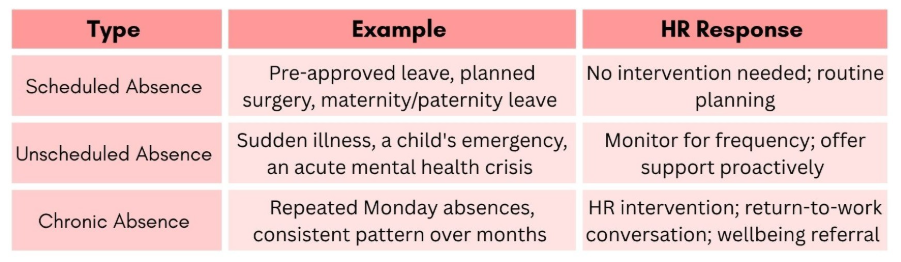
The first type is not a problem at all. The second type becomes a problem when it forms a pattern. The third type requires active management — not punishment, but structured support and an honest conversation about what is driving the behaviour.
Understanding which type you are dealing with determines every subsequent step. An employee who is chronically absent because of untreated depression needs a very different response from one who is absent because of unsafe working conditions. Both are real. Neither is resolved by a warning letter.
What is Presenteeism in the Workplace?
Presenteeism is the condition in which an employee is physically present at work but not performing at full capacity due to illness, stress, burnout, mental health challenges, or personal difficulties.
It is, in many ways, the more insidious of the two problems. Absenteeism is visible. An empty seat is hard to ignore. Presenteeism is invisible. The seat is occupied, the screen is on, and the person looks like they are working. What you cannot see is that their output has dropped by a third, their error rate has climbed, and they are operating in a state of exhaustion that, left unaddressed, will eventually produce either a breakdown or a resignation.
There are two broad types worth understanding:
Sickness presenteeism is when an employee comes to work while physically ill. They are contagious. Their concentration is compromised. They are doing the work, but they are not doing it well. In a post-COVID India, where remote work made it even easier to log in while unwell, sickness presenteeism became a defining feature of how many knowledge workers operate.
Mental presenteeism is when the body is at the desk but the mind is not. Anxiety, depression, grief, relationship stress, financial worry — these conditions do not stop at the office door. An employee managing severe anxiety may look composed in meetings but spend most of the day in a loop of intrusive thoughts. A 2022 Deloitte India survey found that 80% of Indian employees reported experiencing mental health concerns, making mental presenteeism one of the most widespread and least-acknowledged productivity issues in the country.
Research has consistently shown that presenteeism can reduce individual productivity by one-third or more. The phrase "presenteeism at work" has entered HR vocabulary precisely because organisations have started recognising that attendance figures alone do not tell the story of a workforce's health.
Examples of Presenteeism at Work
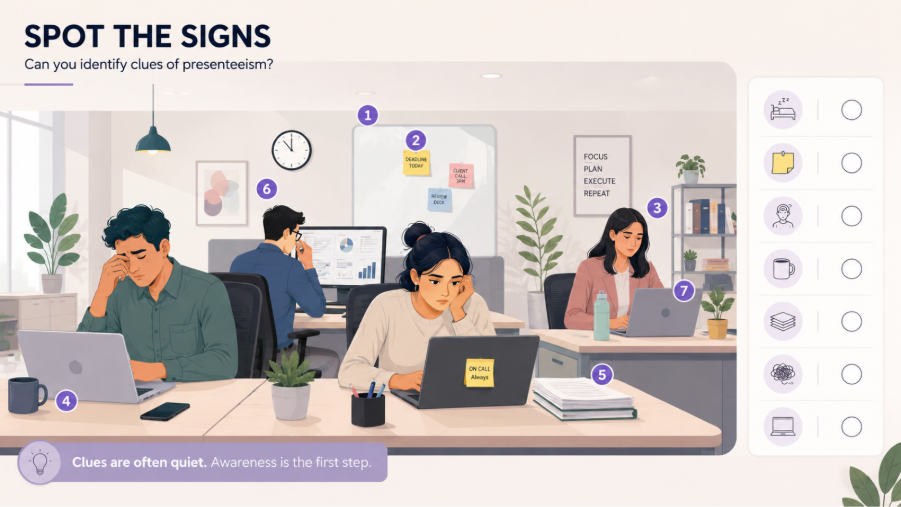
Presenteeism does not always look dramatic. It tends to be ordinary, persistent, and easy to explain away. Here are five real-world examples that reflect how it shows up in Indian workplaces:
Working through a fever to meet a deadline. An employee in Hyderabad logs in for a critical client call despite running a temperature of 102. She does not want to appear unreliable, especially not during appraisal season. She gets through the call. The follow-up email she sends contains three factual errors.
Answering emails during personal leave. A manager from Bengaluru takes two days of earned leave but responds to every message within the hour. His team appreciates his availability. His brain never actually rests. He returns to work more fatigued than when he left.
Sitting at a desk during an acute anxiety episode. An employee is present for every working hour but has spent most of the afternoon in a bathroom stall regulating her breathing before major presentations. Her manager believes she is performing well. She is surviving.
Attending meetings during bereavement. A young professional loses his father but returns to work within four days because he does not know how to ask for more time, or whether he is allowed to. He is in every meeting. He has not processed what happened.
Remote workers who are online but entirely disengaged. Perhaps the most common form of presenteeism in India's post-pandemic IT sector: the green dot is on, the responses are timely, and the work is technically submitted. But the quality is hollow, the thinking is shallow, and the person behind the screen is running on empty.
Presenteeism often costs more than absenteeism — not because the employee is absent, but because a distracted or unwell employee in a high-stakes role produces work that requires rework, creates errors that require recovery, and spreads a culture of overextension that normalises dysfunction.
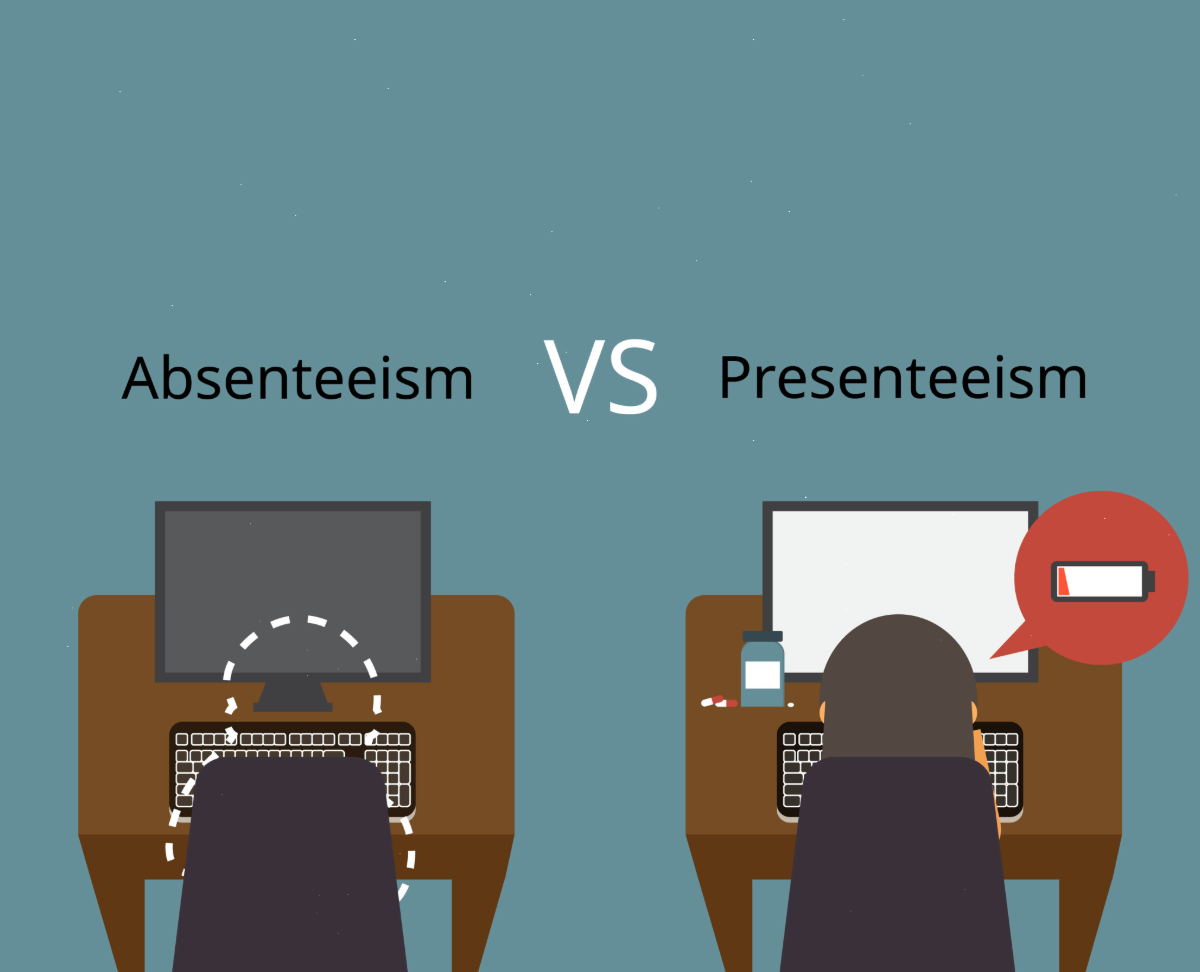
Absenteeism vs Presenteeism: Key Differences
Both absenteeism and presenteeism are symptoms of the same underlying reality: something in the employee's experience of work, health, or environment is not functioning. They are different symptoms of the same condition, and they often coexist in the same organisation.
The critical insight that HR leaders frequently miss: an organisation with very low absenteeism may have high presenteeism. Punitive attendance policies that scare employees into showing up do not improve organisational health. They shift the problem.
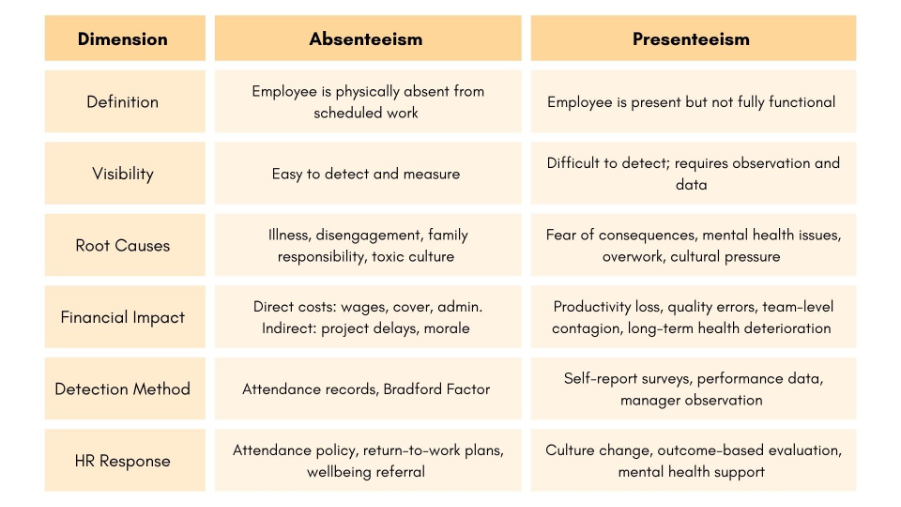
The CDC estimates that presenteeism costs US employers approximately $150 billion annually in reduced productivity, compared to roughly $225 billion from absenteeism. But researchers widely acknowledge that presenteeism costs are underreported globally — because they are harder to attribute and easier to overlook.
The absenteeism vs presenteeism question is ultimately a false choice. The goal is not to minimise one at the expense of the other. The goal is to create conditions where employees neither stay home when they should be at work, nor come to work when they should be recovering.
Common Causes of Absenteeism and Presenteeism
Many of the forces that drive both problems are shared. Understanding them at the root level is more useful than treating each absence or episode of disengagement as an individual failing.
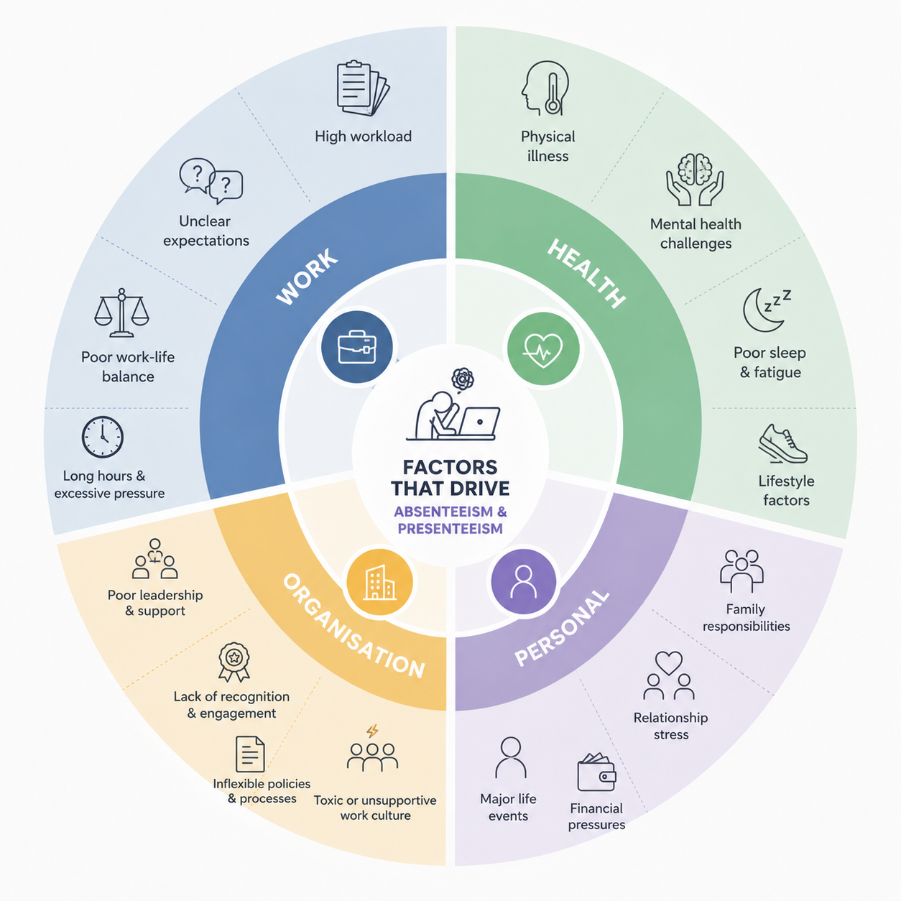
Shared Causes
Work-related stress and burnout. This is the most consistent driver in India's organised sector, particularly in IT, healthcare, and banking. Chronic overload without recovery time produces both absenteeism (the person eventually collapses) and presenteeism (the person keeps going past the point where they are effective).
Disengagement. A Gallup 2025 report found that employee disengagement cost the global economy $438 billion in 2024. Disengaged employees are more likely to call in sick and less likely to bring their full attention to work when they do show up.
Toxic or unsupportive workplace culture. Environments where mistakes are punished, where asking for help is seen as weakness, and where long hours are treated as a proxy for commitment generate both forms of the problem.
Poor management. A manager who does not notice when an employee is struggling, or who responds to struggle with pressure rather than support, is one of the most significant risk factors for both absenteeism and presenteeism.
Specific Causes of Absenteeism
Family caregiving responsibilities have increased sharply in post-COVID India, particularly for women. Physical illness, unsafe working conditions, job dissatisfaction, and substance use are also significant contributors in certain sectors and demographics.
Specific Causes of Presenteeism
Fear of job loss is the single largest driver of presenteeism in Indian corporate culture. When employees believe that taking sick leave will mark them as uncommitted, they come to work unwell. Strict punitive attendance policies, limited paid sick leave, and the cultural expectation to be seen at one's desk reinforce this behaviour.
A Deloitte India study found that mental health stigma prevents 39% of affected Indian employees from seeking help. This means a significant portion of the workforce is managing untreated mental health conditions from their desks, every day, without any formal support in place.
The Real Cost of Absenteeism and Presenteeism to Organisations
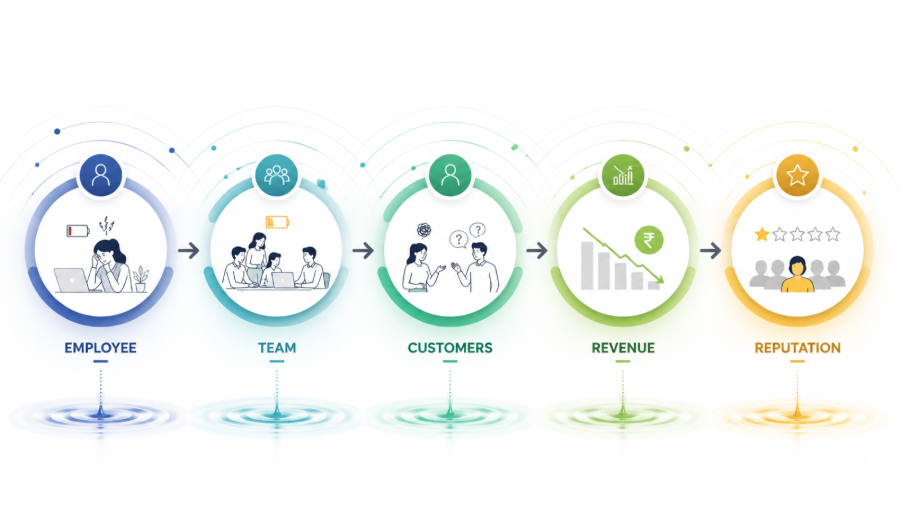
The financial case for addressing both problems is clear. The challenge is that the costs are distributed, often invisible, and easy to attribute to other causes.
The Costs of Absenteeism
Direct costs include continued salary with no corresponding output, overtime or temporary cover for absent employees, and the administrative burden of managing leave records.
Indirect costs are often larger. Projects stall. Colleagues absorb additional workload and approach burnout faster. Client relationships suffer. Team morale deteriorates when a pattern of absence is seen as tolerated or poorly managed.
The Costs of Presenteeism
An employee who is physically present but mentally depleted is not producing 70% of their usual output. They may be producing 70% of their usual volume at 40% of the usual quality, and the consequences flow downstream. A developer writing code at 60% cognitive capacity produces bugs that cost ten times more to fix than they would have cost to avoid. A consultant presenting while severely anxious misreads a client relationship in ways that take months to repair.
There is also a contagion effect that is frequently underestimated. Sickness presenteeism spreads illness through teams. Burnout modelled by senior staff becomes the behavioural norm for junior staff. A culture in which no one is seen to rest teaches everyone that rest is not safe.
According to research, presenteeism is often 10 times more expensive than absenteeism in total economic impact. The WHO estimates India's economic loss from mental health conditions at $1.03 trillion between 2012 and 2030, and a significant portion of that loss is embedded in the everyday productivity of an unwell workforce showing up to work.
Deloitte India estimates that poor mental health costs Indian employers approximately $14 billion per year through absenteeism, presenteeism, and attrition combined.
The organisations that are starting to address this systematically are seeing returns. Gallup's 2025 Exceptional Workplace Award data shows that high-engagement organisations achieve 81% lower employee absenteeism than their peers. The investment in wellbeing is not a cost centre. It is a performance strategy.
How to Measure Absenteeism and Presenteeism
What gets measured gets managed. Both absenteeism and presenteeism require a measurement framework before interventions can be designed or evaluated.
Measuring Absenteeism
Absenteeism Rate formula:
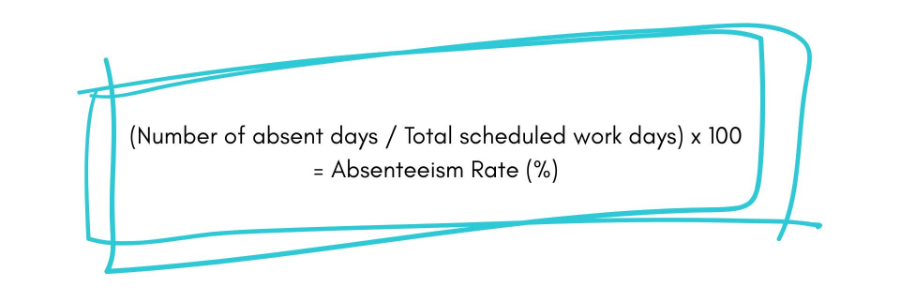
Example: A team of 10 employees with 22 scheduled working days in a month misses a combined 20 days. Absenteeism Rate = (20 / 220) x 100 = 9.09%
- Bradford Factor: S² x D = Bradford Factor Score
Where S = number of separate absence spells, and D = total days absent in a given period.
The Bradford Factor is designed to identify the disruption caused by frequent short-term absences. Three absences of one day each (S=3, D=3) produces a score of 27, while a single three-day absence (S=1, D=3) produces a score of only 3. This matters because frequent short absences are far more disruptive to team operations than a single extended absence. Bradford Factor monitoring is now standard practice in many Indian IT and BPO firms.
- Lost Time Rate: (Total days lost / Total days available) x 100
This metric gives a broader organisational view, useful for benchmarking across departments or business units.
HR teams can operationalise these metrics by integrating absenteeism data from their HRMS, conducting quarterly pulse surveys to identify wellbeing risks, reviewing manager check-in notes, and monitoring dashboards for trends across departments. Combining attendance, engagement and wellbeing data provides a more complete picture than relying on leave records alone.
Measuring Presenteeism
Presenteeism is harder to quantify, but there are validated tools:
- Stanford Presenteeism Scale (SPS-6): A self-reported six-item questionnaire asking employees to rate how much health problems have affected their concentration and productivity. Developed for use in organisational health research and widely applied in India's IT sector studies.
- WHO Health and Work Performance Questionnaire (HPQ): A longer instrument that measures both presenteeism and absenteeism and produces quantified productivity estimates.
- Pulse surveys and manager check-ins: Less formal but highly practical. A regular cadence of wellbeing-focused check-ins, combined with performance review pattern analysis, can surface presenteeism before it becomes chronic.
Most Indian SMEs do not formally measure presenteeism at all. For HR teams that begin doing so, even with simple pulse surveys, the competitive advantage is significant: you can intervene early, target support accurately, and make the business case for investment in employee wellbeing with actual data.
How to Reduce Absenteeism in the Workplace: 7 Proven Strategies
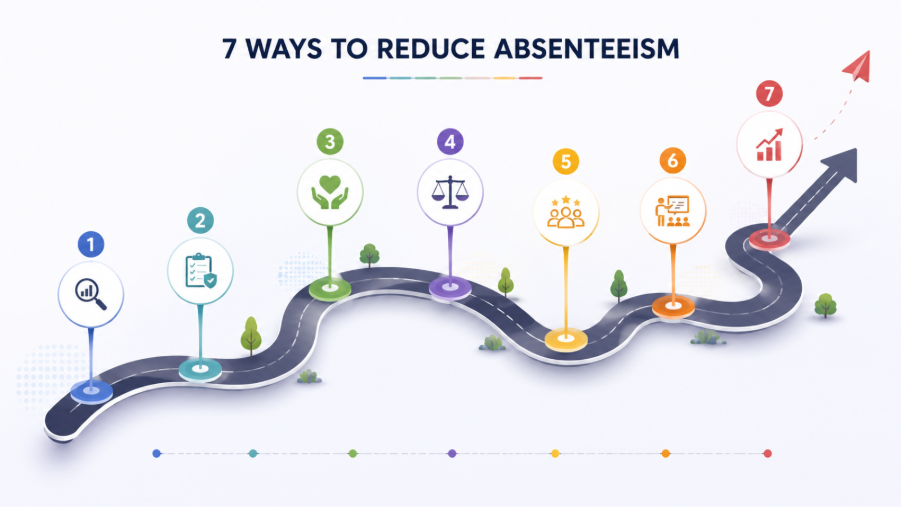
Reducing absenteeism is not about stricter attendance policies. In most Indian organisations, the existing policies are strict enough. What is needed is a set of strategies that address the underlying drivers and make it easier for employees to be genuinely present, not just technically on the register.
1. Build a Clear, Fair Attendance Policy
Employees need to understand expectations consistently and know that the policy will be applied equitably. The critical design point: avoid punitive attendance frameworks that punish any absence. These create the conditions for presenteeism, as employees come to work unwell rather than risk a warning. A good attendance policy distinguishes between the types of absence, makes the process of reporting absence easy and non-stigmatising, and builds in structured support before escalating to formal action.
2. Invest in Employee Wellbeing Programmes
Access to mental health support, counselling, and structured Employee Assistance Programmes (EAPs) has a direct and documented effect on absenteeism rates. Research from the UK government-commissioned Thriving at Work review found that every £1 invested in mental health support returns £5 through reduced absenteeism and presenteeism. In India, where access to professional mental health support remains limited for most employees, EAP access through a workplace programme can be the first time an employee has ever spoken to a qualified counsellor.
3. Introduce Flexible Work Arrangements
Post-pandemic India has made a significant shift toward hybrid and flexible working. For employees managing caregiver responsibilities, long commutes, or chronic health conditions, flexibility is not a perk. It is the difference between being able to work and not being able to work. Flexible arrangements, where feasible for the role, reduce absenteeism caused by rigid structures that do not account for how people actually live.
4. Train Managers to Have Supportive Conversations
The line manager is the most important variable in an employee's experience of work. A manager trained to notice signs of struggle, to initiate a conversation without judgment, and to facilitate a return-to-work plan with empathy can prevent a single difficult month from becoming a six-month absence. This is not a soft skill. It is a measurable capability with direct operational impact, and most Indian managers have not been trained to deploy it.
5. Monitor Absence Data and Act on Patterns Early
Bradford Factor tracking and absenteeism rate monitoring are only useful if the data is reviewed regularly and triggers a response. Many organisations collect absence data but do not act on it until absenteeism becomes severe. Building a protocol that flags patterns at 30, 60, and 90 days, and assigns a proactive wellbeing check-in at each threshold, catches problems early enough to address them constructively.
6. Improve Employee Engagement
Engaged employees feel that their work matters, that their manager sees them, and that the organisation is invested in their success. These conditions make it less likely that someone will stop showing up, and more likely that they will raise a problem before it becomes an absence.
Recognition programmes, career development conversations, and clear role expectations are not HR cosmetics. They are structural drivers of attendance.
7. Implement Phased Return-to-Work Plans
For employees returning after extended absence due to illness, surgery, or mental health crises, a phased return is significantly more effective than an immediate full-time return. A gradual re-integration, with reduced hours, adjusted responsibilities, and regular check-ins, substantially reduces the risk of re-absence. It also signals to the returning employee that the organisation is invested in their recovery, not just their output.
How to Reduce Presenteeism in the Workplace: 5 HR Best Practices
Reducing presenteeism requires a different kind of intervention from reducing absenteeism. The strategies here are cultural as much as they are structural, because presenteeism is fundamentally a behaviour driven by the norms people observe around them.
1. Reform Sick Leave Policies
If employees fear career consequences for taking sick leave, they will not take it. This is the root of most sickness presenteeism, and no amount of wellbeing messaging will fix it if the underlying policy signals otherwise. Review sick leave entitlements, make them easy to access without excessive documentation, and ensure that managers are not, formally or informally, penalising employees who use them.
2. Evaluate Performance by Outcomes, Not Hours
India's corporate sector, particularly in IT and professional services, has a strong face-time culture. Being seen at one's desk, or online, is treated as a proxy for commitment. Shifting to outcomes-based evaluation, where what matters is the quality and completion of agreed deliverables rather than the number of hours logged, removes the pressure to perform presence while mentally or physically compromised. It also produces more accurate performance data.
3. Create Psychological Safety
Psychological safety is the condition in which employees feel safe enough to speak honestly about their experience at work without fear of embarrassment or reprisal. When it exists, an employee who is struggling will say so, early enough for support to be effective. When it does not exist, they manage in silence until the situation deteriorates.
Training managers to recognise signs of presenteeism, including declining work quality, visible distraction, disengagement in meetings, and increasing errors, and to respond with curiosity rather than criticism, is the foundation of a psychologically safe team culture.
4. Provide Accessible Mental Health Resources
The MHFA India cited a return of approximately $2.86 for every $1 invested in workplace mental health programmes. This includes reduced presenteeism, reduced attrition, and lower healthcare utilisation. Making counselling available through an EAP, training Mental Health First Aiders, and running periodic wellbeing programmes are all practical steps that reduce the burden of unaddressed mental health conditions showing up as degraded work performance.
5. Lead by Example
CIPD research advisors note that presenteeism is significantly more prevalent in organisations where long hours are visibly modelled by senior leadership. If the CEO responds to emails at 11 PM and the leadership team is seen working through illness, the implicit message to every employee is that being unwell is not a reason to rest. Senior leaders who visibly take sick days, who are transparent about taking breaks, and who openly advocate for wellbeing signal that the organisation's values are not just aspirational.
Absenteeism and Presenteeism in the Indian Workplace: What HR Leaders Must Know
India has a distinct workplace culture that shapes how both absenteeism and presenteeism manifest, and understanding this context is essential for any HR strategy to be effective.
The "boss stays late" phenomenon is well-documented in South Asian workplaces. When senior staff leave the office late, junior staff feel obligated to do the same regardless of whether they have meaningful work to do after a certain hour. This is not productivity. This is performance of availability, and it is one of the most common expressions of presenteeism in Indian corporate culture.
Post-pandemic India has added a new layer of complexity. Remote presenteeism is now a significant and largely unmeasured phenomenon. Employees who are "online" but disengaged, who keep their status green while managing depression, burnout, or grief, represent a form of presenteeism that HRMS platforms cannot detect and that managers rarely have the tools or training to identify.
The IT sector deserves particular attention. Bangalore, Pune, and Hyderabad host some of the most significant concentrations of knowledge workers in the world, and academic research on this population, including a 2012 SSRN study by Prageetha G. Raju on non-work-related presenteeism in India's IT sector, has documented chronic overwork culture and its relationship to both physical and mental health outcomes.
The mental health context is stark. Mental health stigma prevents close to 39% of affected Indian employees from seeking help. In practical terms, this means that the majority of employees managing depression, anxiety, or trauma are doing so at work, without support, in conditions that are not designed to accommodate their experience.
The legal context is also shifting. The Mental Healthcare Act 2017 establishes the right to mental healthcare and places obligations on the State to provide accessible services, alongside registration and care-standard requirements for mental health treatment facilities. The Act does not impose direct obligations on employers. While the Act's workplace implications are still developing in Indian jurisprudence, forward-thinking employers are already interpreting it as a signal that employee mental health is not optional.
Organisations that formally measure presenteeism, build EAP infrastructure, train their managers, and shift from face-time to outcomes culture are gaining a genuine competitive advantage in talent retention, productivity, and employer reputation. Most of their peers are not doing any of this.
A Final Note
Priya and Rahul, the two employees we met at the beginning of this guide, are not outliers. They are archetypes. In most Indian organisations of any size, there are multiple versions of each of them, at every level of the hierarchy.
The organisations making progress on this are not the ones with the strictest attendance policies. They are the ones that have decided to treat employee wellbeing as a strategic priority, with the same seriousness they bring to financial performance or customer satisfaction. They measure what matters. They train their managers. They make help accessible before people reach a crisis point.
Every organisation measures attendance. The organisations that outperform their peers also measure wellbeing.
If you're looking to identify the drivers behind Absenteeism and presenteeism in the workplace, explore how structured wellbeing assessments and Employee Assistance Programmes from 1to1help can help you build a healthier, more productive workforce.
For organisations looking to understand their workforce's emotional health more systematically, wellbeing surveys and structured EAP programmes offer a starting point that goes beyond attendance records.
FAQs
1. What is absenteeism and presenteeism in the workplace?
Absenteeism refers to an employee's habitual failure to show up for scheduled work without a valid or pre-approved reason. Presenteeism is the opposite scenario: an employee is physically at work but is not fully productive due to illness, mental health challenges, stress, or personal issues. Both are serious productivity drains. While absenteeism is easy to spot through an empty desk, presenteeism is invisible and often costlier. A distracted or unwell employee can underperform for weeks without anyone noticing. Together, they represent two of the most significant threats to organisational performance and employee wellbeing.
2. What are the main causes of presenteeism at work?
The most common causes of presenteeism include fear of job loss or reprisal for taking sick leave, punitive attendance policies, limited paid sick leave, mental health challenges such as anxiety and depression, high workloads, and workplace cultures that value physical presence over results. In India specifically, cultural pressure to show up regardless of health, fear of being perceived as weak, and the boss-stays-late norm are major drivers.
3. Is presenteeism worse than absenteeism?
In terms of financial impact, presenteeism can be more costly. Research estimates that economic losses from presenteeism can be up to 1.5 times greater than those from absenteeism, because an unwell employee at work produces lower-quality output, makes costly errors, and may spread illness to colleagues. However, absenteeism is easier to detect and address. The key insight is that both must be managed together. Addressing one at the expense of the other creates a new problem.
4. How do you calculate the absenteeism rate?
The absenteeism rate is calculated using this formula: (Number of absent days / Total scheduled work days) x 100 = Absenteeism Rate (%). For example, if a team of 10 employees missed a combined 20 days in a month with 22 working days, the absenteeism rate = (20 / 220) x 100 = 9.09%. For a more nuanced view, organisations use the Bradford Factor (S x S x D, where S = number of separate absences and D = total days absent), which is particularly useful for identifying frequent short-term absences that disrupt operations more than a single long absence.
5. How does absenteeism affect employee productivity and morale?
Absenteeism creates a cascading effect across teams. When employees are frequently absent, their colleagues must absorb extra tasks, increasing their own risk of burnout and leading to resentment. Project timelines slip, client deliverables suffer, and team morale drops.
6. What is the difference between absenteeism and presenteeism?
The core difference is visibility. Absenteeism is when an employee is physically absent from work, which is easy to spot and measure. Presenteeism is when an employee is physically present but mentally or physically unable to perform at full capacity, which is invisible and harder to measure but equally damaging. Both stem from similar root causes such as poor wellbeing, job dissatisfaction, and toxic culture. In HR strategy, absenteeism requires attendance management and support systems, while presenteeism requires a cultural shift toward psychological safety and outcome-based performance measurement.
7. How can HR managers deal with presenteeism effectively?
Effectively addressing presenteeism requires both policy and culture changes. Start by reviewing attendance policies to ensure they do not penalise sick leave in ways that force presenteeism. Introduce Employee Assistance Programmes (EAPs) providing confidential counselling. Train managers to recognise signs of presenteeism such as declining quality, distraction, and disengagement, and initiate supportive conversations. Shift performance evaluation from hours worked to outcomes achieved, especially relevant for Indian corporate and IT workplaces. Finally, senior leaders must model healthy behaviour by visibly taking sick days, signalling that wellbeing takes priority over face time.
References
- Gallup. (2025). State of the Global Workplace Report.
- Deloitte India. (2022). Mental Health and Wellbeing in the Workplace.
- WHO. (2023). Mental Health Atlas and Economic Impact Data.
- Hemp, P. (2004). Presenteeism: At work but out of it. Harvard Business Review.
- U.S. Bureau of Labor Statistics. (2024). Absence Rate Data.
- MHFA India. Workplace Mental Health ROI Research.
- Raju, P.G. (2012). Non-Work-Related Presenteeism in India's IT Sector. SSRN.
- CIPD. Health and Wellbeing at Work Survey.
- The Mental Healthcare Act. (2017). Government of India.
- Centers for Disease Control and Prevention. Presenteeism and Absenteeism Economic Data.


.svg)
.svg)
.svg)
.svg)