

.png)


.png)

Mental Health Concerns
Panic Attacks: Symptoms, Causes & How to Stop Them — India Guide 2026

.png)
Written by
Aarohi Parakh,
Psychologist and Content Writer

Reviewed by
Sanjana Sivaram,
Psychologist and Clinical Content Head


Introduction

Rohan is a 28-year-old marketing executive living in Mumbai. His workdays are structured around deadlines, client expectations, and back-to-back meetings. One afternoon, during a routine presentation, he suddenly feels his heart racing. His chest tightens, his palms begin to sweat, and he struggles to catch his breath. Within minutes, he is convinced something is seriously wrong. He excuses himself, steps out, and waits for it to pass.
Ten minutes later, the symptoms subside. What remains is confusion, exhaustion, and a quiet fear that it could happen again.
A week later, it does.
Rohan is not experiencing a cardiac emergency. He is experiencing panic attacks.
This gap between how panic attacks feel and what they actually are is where much of the difficulty lies. For many people in India, a panic attack is first interpreted as a physical health crisis. Chest pain, breathlessness, dizziness, and a racing heart can feel so intense that individuals often seek emergency medical care before mental health is even considered.
Panic attacks are not rare, and they are not simply exaggerated stress responses. They can occur unexpectedly, feel overwhelming, and significantly interfere with daily life, especially when repeated attacks lead to fear and avoidance.
This guide explains what panic attacks are, the symptoms they involve, their causes, and how to stop them using evidence-based strategies. It also covers nocturnal panic attacks, panic disorder, treatment options available in India, including CBT and medication, and practical ways to manage panic attacks in the short and long term.
What Are Panic Attacks? Meaning & Definition
Panic attacks are sudden surges of intense fear or discomfort that reach a peak within minutes, often without an obvious trigger. They represent an acute activation of the body’s threat response system, even in the absence of real danger. For many individuals, especially during the first episode, the experience feels indistinguishable from a serious medical emergency.
According to the DSM-5-TR, a panic attack is characterised by an abrupt escalation of fear that typically peaks within minutes and includes four or more symptoms from a defined set of physical and cognitive experiences. These include palpitations or a racing heart, sweating, trembling, shortness of breath, a sensation of choking, chest pain, nausea, dizziness, chills or heat sensations, numbness or tingling, feelings of unreality or detachment, fear of losing control, and fear of dying.
Panic attacks can occur unexpectedly or in response to specific situations, and while the episode itself is temporary, the fear of experiencing another attack can become distressing enough to affect daily routines, work, travel, sleep, and social functioning.
Both DSM-5-TR and ICD-11 make an important distinction between panic attacks and panic disorder. Panic attacks refer to the episode itself and can occur in the context of various conditions such as anxiety disorders, depression, or trauma-related disorders. Panic disorder, on the other hand, is a diagnosable condition. It involves recurrent, unexpected panic attacks along with persistent concern about future attacks or significant behavioural changes such as avoidance. In ICD-11, panic disorder is classified under code 6B01.
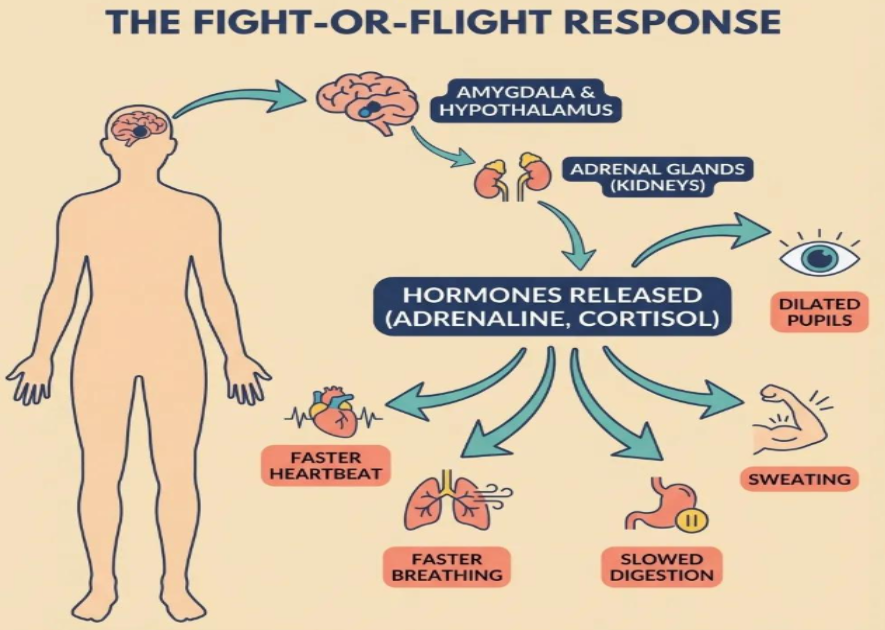
A critical clinical reassurance is that panic attacks are not medically dangerous. Although the symptoms can feel catastrophic, particularly chest tightness, breathlessness, or dizziness, they do not cause physical harm. What is occurring is a false alarm in the body’s fight or flight system, where the brain misinterprets internal sensations as a threat.
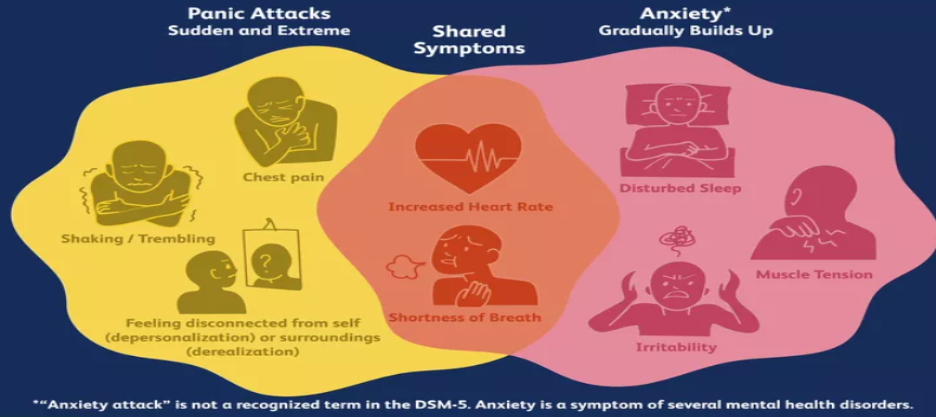
It is also important to differentiate panic attacks from anxiety. Anxiety tends to build gradually and is usually linked to identifiable stressors such as work pressure, health concerns, or interpersonal conflict. Panic attacks, in contrast, are sudden, intense, and can occur without warning, including during rest or sleep.
💡Key Insight: Around 1 in 10 people (as per NIH) will experience at least one panic attack in their lifetime, while panic disorder affects approximately 2 to 3 percent of the population. In India, these experiences are often under-recognised and frequently first present in medical settings due to their physical intensity.
💡Pro Tip: If symptoms escalate rapidly, peak within minutes, and involve multiple intense physical sensations, it is more likely to be a panic attack. Correctly identifying the episode can reduce fear and prevent the cycle from escalating further.
Panic Attack Symptoms: What Happens to Your Body
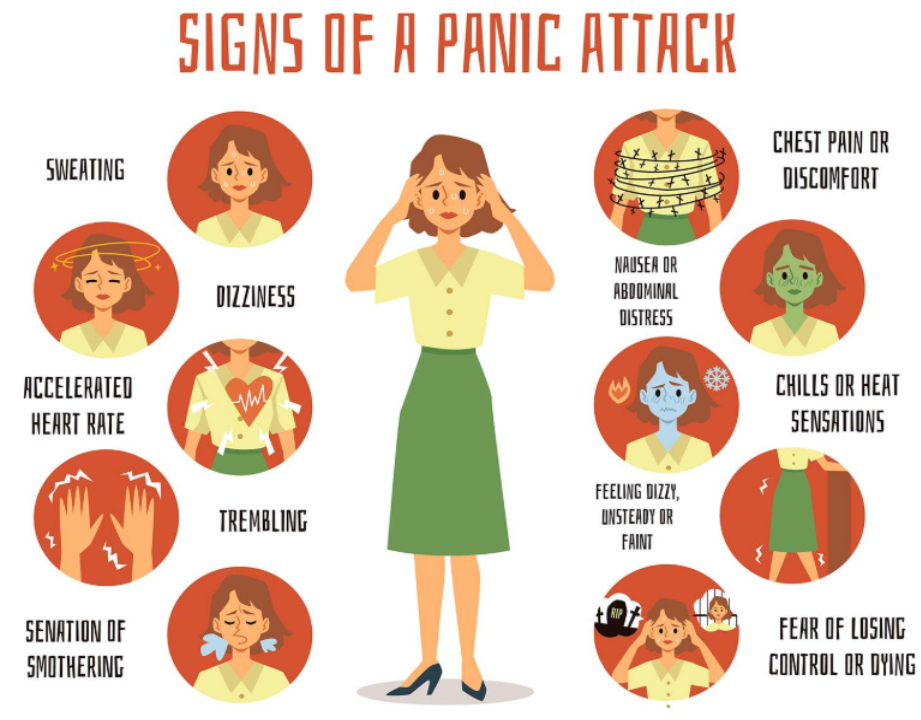
Panic attack symptoms are both physical and psychological, and they tend to occur together with sudden and overwhelming intensity. During an attack, the body enters a heightened fight-or-flight state, triggering rapid physiological changes that can feel alarming and difficult to interpret.
Physical Symptoms
Common physical symptoms include:
- Rapid or pounding heart (palpitations)
- Shortness of breath or feeling of suffocation
- Chest tightness or chest pain
- Dizziness or lightheadedness
- Trembling or shaking
- Sweating
- Nausea or abdominal discomfort
- Tingling or numbness in hands or face
These symptoms often escalate quickly, which is why many individuals interpret the experience as a heart attack. In India, panic attacks are a common reason for emergency room visits, particularly due to chest discomfort and breathlessness. A thorough medical evaluation is important, especially during the first episode, to rule out cardiac causes.
Psychological Symptoms
Alongside the physical sensations, there are strong emotional and cognitive responses. These include:
- Intense fear or terror
- Fear of losing control
- Fear of dying
- Feeling of unreality (derealisation)
- Feeling detached from oneself (depersonalisation)
These psychological symptoms often amplify the physical sensations, creating a feedback loop that increases the intensity of the attack.
Duration and After-Effects
A typical panic attack peaks within 10 minutes and resolves within 10 to 20 minutes. However, residual symptoms such as fatigue, shakiness, or lingering anxiety may continue for up to an hour. This can lead to anticipatory anxiety, where individuals begin to fear when the next attack might occur.
Types of Panic Attacks
DSM-5 classifies panic attacks into two types:
Expected panic attacks (situationally bound/linked to specific cues)
Occur in response to identifiable triggers such as presentations, crowded spaces, travel, or medical procedures. For example, someone with claustrophobia may anticipate a panic attack in an elevator or other enclosed spaces.
Unexpected panic attacks (uncued)
Occurs without any clear trigger or cause. A person may be completely relaxed before symptoms start. These types of attacks are not linked to any internal cues (fearful thoughts, feelings of dread) or external cues (specific phobias or being exposed to a frightening situation). Unexpected panic attacks are more strongly associated with panic disorder and long-term anxiety patterns.
Nocturnal Panic Attacks
Nocturnal panic attacks occur during sleep and cause sudden awakening in a state of intense fear. Although they are not a separate diagnosis, they are recognised as a symptom of panic disorder within the DSM 5-TR criteria.
Common features include:
- Sudden awakening with a racing heart
- Breathlessness or choking sensation
- Sweating and trembling
- Intense fear without a clear dream or trigger
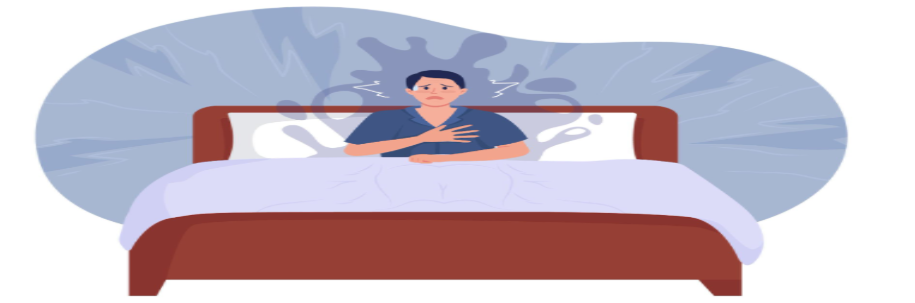
These episodes are particularly distressing because they interrupt sleep and can create fear around going to bed.
Anxiety and Panic Attacks
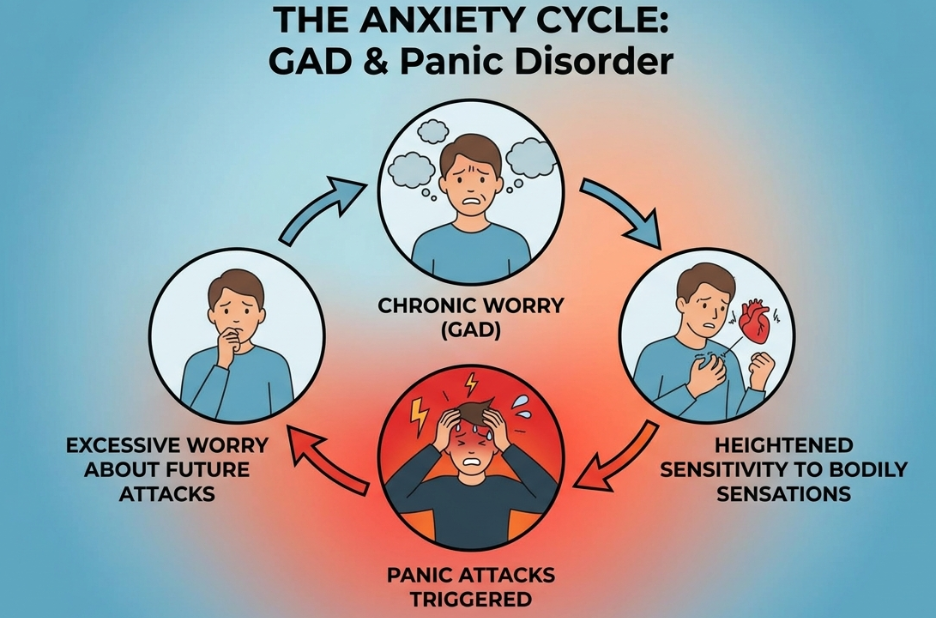
It is common for panic attacks to occur alongside other mental health conditions, particularly other anxiety-related difficulties (referred to as comorbidity). Studies reveal that up to 50% of individuals with one anxiety disorder also experience symptoms of another anxiety-related condition at the same time. (Mineka et al., 1998). Someone may experience frequent panic attacks triggered by the constant worry associated with Generalized Anxiety Disorder (GAD), creating a cycle where each disorder fuels the other. Recognizing and diagnosing both conditions allows for more comprehensive treatment planning and support.
When GAD and panic disorder occur together, they can create an “anxiety cycle”. Ongoing worry increases sensitivity to normal body sensations, which can trigger a panic attack. After the attack, the person may start worrying about when it will happen again, which keeps anxiety high and makes further attacks more likely.
💡Key Insight: The intensity of panic attack symptoms often leads individuals to seek urgent medical care. When repeated evaluations are normal, recurrent episodes are more likely to be panic-related rather than due to a primary physical illness.
💡Pro Tip: If symptoms appear suddenly, peak quickly, and resolve without medical findings, identifying them as panic attacks can reduce fear and help break the cycle.
What Causes Panic Attacks?
Panic attacks do not have a single cause. They typically develop through a combination of biological sensitivity, psychological patterns, and situational triggers. Understanding what causes panic attacks helps reduce confusion and allows for more targeted management.
Biological Factors
At a neurobiological level, panic attacks occur when the brain’s alarm system becomes overactive. The amygdala, which helps detect danger, can mistakenly signal a threat even when there is no real risk present. This activates the hypothalamus and triggers the body’s emergency stress response, leading to symptoms such as a racing heart, breathlessness, sweating, and a surge in cortisol, the body’s primary stress hormone. At the same time, the prefrontal cortex, which helps with rational thinking and emotional regulation, becomes less effective. In simple terms, the emotional “alarm centre” of the brain becomes louder than the logical part, which is why panic attacks can feel so intense, frightening, and difficult to control in the moment.
Genetic factors also play a role, with heritability estimates around 30-40 percent, meaning individuals with a family history of anxiety or panic are at higher risk.

Psychological Factors
A key mechanism in the causes of panic attacks is the interpretation of bodily sensations.
- Catastrophic misinterpretation, such as thinking “my heart is racing, I might be dying.”
- Hypervigilance to physical sensations like breathing or heartbeat
- Fear of fear itself, where the anticipation of anxiety becomes a trigger
This creates a feedback loop where normal bodily sensations are perceived as dangerous, escalating into a panic response.
Life Triggers in the Indian Context
In India, certain stressors commonly act as triggers:
- Academic pressure, including board exams and competitive entrance tests like IIT or NEET
- Workplace stress, job insecurity, or sudden job loss
- Financial strain or unexpected economic setbacks
- Relationship conflicts or family pressure
- Pressure related to marriage timelines, societal expectations, or constant questioning around settling down
- Caregiving burden and the expectation to manage household, emotional, and family responsibilities, particularly among women
- Sudden bereavement or major life changes
These stressors do not directly cause panic attacks but increase vulnerability, especially when combined with biological and psychological factors.
Substance-Related Triggers
Certain substances can precipitate or worsen panic attacks:
- High caffeine intake from coffee, tea, or energy drinks
- Stimulant medications
Among Indian students and professionals, frequent consumption of caffeine and energy drinks is a common but often overlooked contributor.
Medical Conditions That Mimic Panic
Some medical conditions can produce symptoms similar to panic attacks and should be ruled out:
- Hyperthyroidism (thyroid gland makes too much thyroid hormone)
- Cardiac arrhythmias (irregular heartbeat)
- Hypoglycemia (glucose levels lower than the standard range)
A proper medical evaluation is important, particularly during the first episode, to differentiate between physical and psychological causes.
💡Key Insight: Panic attacks are not caused by weakness or lack of control. They arise from a sensitive threat-detection system combined with learned patterns for interpreting bodily sensations.
💡Pro Tip: If you notice that panic episodes are often preceded by specific sensations such as a racing heart or breathlessness, focus on how you interpret these signals. Changing the interpretation is often the first step in breaking the panic cycle.
How to Stop a Panic Attack: In-the-Moment Techniques
When a panic attack starts, the goal is not to “stop it instantly” but to regulate your body and interrupt the escalation cycle. These techniques are evidence-based and effective in helping you handle panic attacks in the moment.
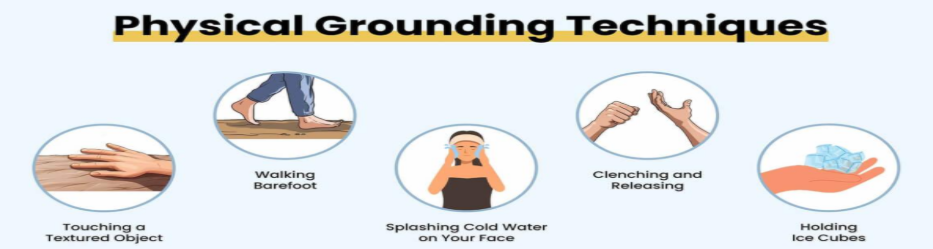
1. Ground Yourself (5-4-3-2-1 Technique)
Shift your focus from internal sensations to the external environment:
- 5 things you can see
- 4 things you can feel
- 3 things you can hear
- 2 things you can smell
- 1 thing you can taste
This reduces the intensity of panic by anchoring you in the present moment.
2. Control Your Breathing (Box Breathing)
- Inhale for 4 seconds
- Hold for 4 seconds
- Exhale for 4 seconds
- Hold for 4 seconds
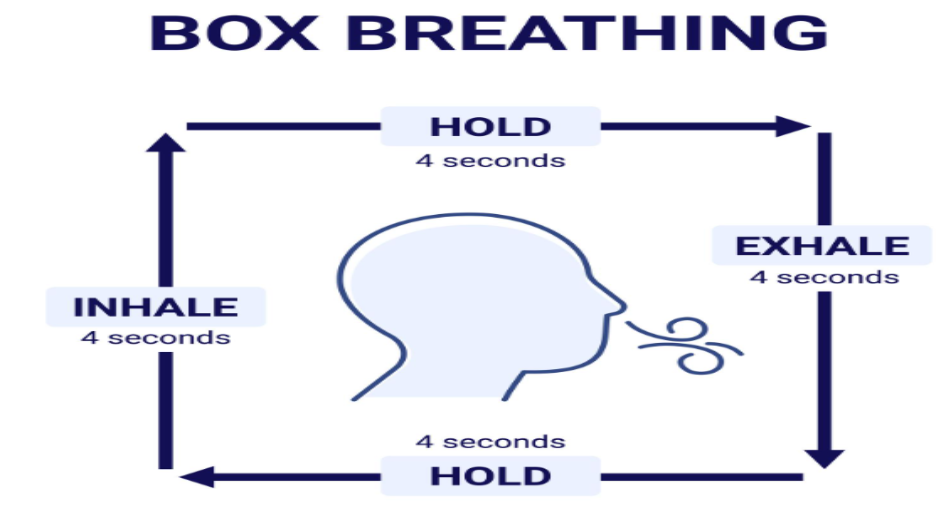
This slows down hyperventilation and activates the parasympathetic nervous system, helping your body calm down.
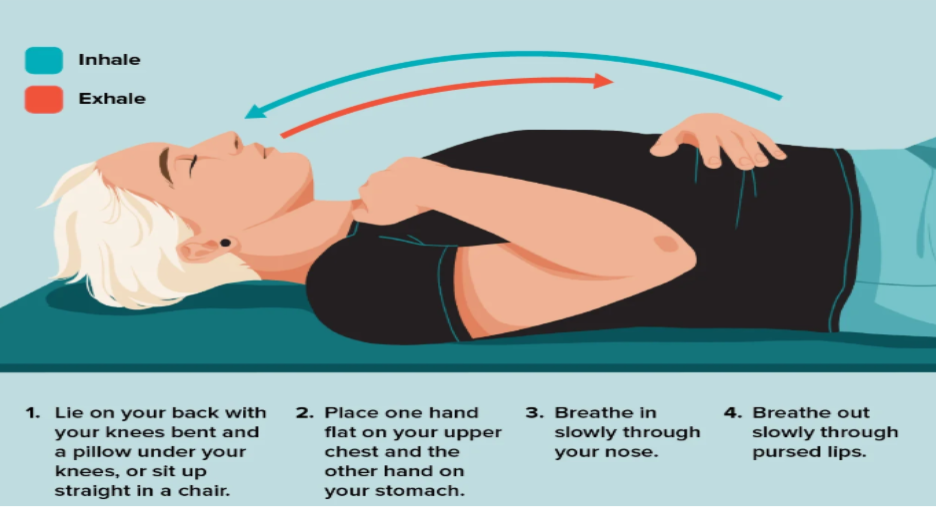
3. Use Diaphragmatic Breathing
Place one hand on your chest and one on your stomach. Focus on your stomach rising as you breathe in, not your chest. This corrects shallow breathing, which often worsens panic symptoms.
4. Cognitive Reframing
Repeat simple, factual statements to yourself:
- “This is a panic attack.”
- “It will pass.”
- “I am safe.”
This helps interrupt catastrophic thoughts like “I am dying” or “I am losing control”.
5. Stay Where You Are
It may feel natural to escape the situation, but leaving reinforces fear. Staying through the attack teaches your brain that the situation is not actually dangerous and that the symptoms are survivable.
6. Use Cold Water or Ice
Splash cold water on your face or hold an ice cube in your hand. This activates the diving reflex, which can quickly slow your heart rate and reduce physiological arousal.
💡Key Insight: Most panic attacks peak within 10 minutes and naturally reduce in intensity. These techniques do not “stop” the attack instantly but help shorten its duration and reduce its intensity.
💡Pro Tip: The effectiveness of these techniques improves with practice. Try using them even when you are calm so that they feel familiar during an actual panic episode.
How to Stop Panic Attacks Forever: Long-Term Treatment
The question “how to stop panic attacks forever” reflects a very real need for certainty and relief. Clinically, the more accurate answer is that panic attacks are highly treatable and, in many cases, can be eliminated or reduced to the point where they no longer interfere with daily life. The focus of long-term treatment is not just symptom control, but changing the underlying mechanisms that maintain panic.
1. Cognitive Behavioural Therapy (CBT): The Most Effective Treatment
CBT is the gold-standard treatment for panic disorder and directly addresses both “how to cure panic attacks” and “how to overcome panic attacks”.
It works through two key components:
- Cognitive restructuring: identifying and challenging catastrophic thoughts such as “I am having a heart attack” or “I will lose control”
- Interoceptive exposure: gradually exposing yourself to feared bodily sensations such as increased heart rate or breathlessness in a controlled way
This helps retrain the brain to interpret these sensations as safe rather than dangerous.
Evidence-Based Outcome: Research shows that 70 to 90 percent of individuals with panic disorder experience significant improvement with CBT, with many becoming panic-free over time.
2. Medication: When and What Helps
Medication is often used alongside therapy, especially when symptoms are severe or frequent.
- SSRIs (Selective Serotonin Reuptake Inhibitors): first-line treatment for long-term management
- Benzodiazepines: fast-acting medication for panic attacks, useful for short-term relief but not recommended for long-term use due to dependency risk
- TCAs (Tricyclic Antidepressants): sometimes used when SSRIs are not effective
Clinical Note: Medication helps reduce symptom intensity, but it does not address the underlying fear cycle. Combining medication with therapy leads to better long-term outcomes.
3. Lifestyle Changes That Reduce Panic Vulnerability
Baseline arousal levels in the body influence how easily panic is triggered.
Key changes include:
- Reducing caffeine and energy drink consumption
- Maintaining regular sleep cycles
- Engaging in consistent physical activity
- Structuring daily routines
These changes lower overall physiological sensitivity and reduce the likelihood of panic attacks.
4. Ayurvedic Medicine for Anxiety and Panic Attacks
In the Indian context, many individuals explore Ayurvedic options.
Commonly used interventions include:
- Ashwagandha for stress regulation
- Brahmi for calming effects
- Yoga and pranayama practices
Evidence Note: There is limited clinical evidence for Ayurveda as a primary treatment for panic disorder. However, certain herbs like Ashwagandha may help reduce baseline anxiety. These approaches are best used as complementary to evidence-based treatments like CBT, not as replacements.
5. Online Therapy and Support in India
Access to mental health support has improved significantly in India, with a mix of public, workplace-based, and private options available.
- Tele-MANAS (14416): A Government of India initiative offering free, 24/7 mental health support in multiple languages. It can serve as a first point of contact for immediate guidance and emotional support.
- Employee Assistance Programmes (EAP): Many organisations provide confidential counselling services through EAPs, such as those offered by 1to1help. These include short-term therapy, referrals, and support for managing anxiety and panic-related concerns.
- Private therapists (online and in-person): Clinical and counselling psychologists and psychiatrists across India offer evidence-based treatments such as CBT for panic attacks. Many now provide online sessions, making therapy more accessible across cities and smaller towns.
These pathways allow individuals to choose support based on accessibility, privacy, and the level of care required.
💡Key Insight: Panic attacks persist not because they are uncontrollable, but because the brain has learned to fear its own bodily sensations. Effective treatment works by reversing this learning.
💡Pro Tip: The earlier you begin structured treatment such as CBT, the easier it is to prevent panic attacks from becoming a long-term pattern. Avoid relying only on temporary fixes; focus on approaches that retrain your response to fear.
Panic Disorder: When Panic Attacks Become a Pattern
Panic attacks can occur as isolated episodes, but when they become recurrent and start influencing behaviour, they may indicate panic disorder. The distinction is important because panic disorder requires structured treatment rather than only in-the-moment management.
According to DSM-5-TR and ICD-11, panic disorder is diagnosed when a person experiences recurrent, unexpected panic attacks, followed by at least one month of persistent concern about having more attacks or significant behavioural changes aimed at avoiding them. This often includes avoiding places, situations, or activities where an attack might occur, such as trains, crowded markets, office presentations, shopping malls, or travelling alone.
Core Features of Panic Disorder
- Repeated panic attacks that occur without clear triggers
- Ongoing fear or worry about future attacks
- Behavioural changes such as avoidance of situations, travel, or social settings
Over time, this pattern can significantly restrict daily functioning.
Agoraphobia and Panic Disorder
Around 30 to 40 percent of individuals with panic disorder develop agoraphobia, a condition where people begin avoiding public spaces, crowded areas, or situations where escape may feel difficult. This can include avoiding public transport, malls, lifts, or even stepping out alone.
In the Indian context, this has become increasingly visible post-COVID, where health anxiety and reduced exposure to public environments have reinforced avoidance patterns.
Impact and Delayed Diagnosis in India
Panic disorder is frequently misdiagnosed in India, often as cardiac, respiratory, or general stress-related conditions. Many individuals undergo repeated medical tests before receiving a psychological diagnosis.
💡Key Insight: International research suggests that the average delay in diagnosis can range from 5 to 7 years, during which symptoms may worsen, and avoidance behaviors become more habitual.
When to Seek Professional Help
Consider seeking help if:
- You have experienced your first panic attack and are unsure about the cause
- You have had two or more panic attacks within a short period
- You find yourself avoiding situations due to fear of another attack
- Panic symptoms are affecting your work, travel, or social life
Early intervention significantly improves outcomes and reduces the risk of developing long-term patterns such as agoraphobia.
💡Pro Tip: If your life is starting to revolve around preventing panic attacks, it is a strong indicator that professional support is needed. Addressing the pattern early can prevent long-term restriction and improve recovery outcomes.
A Final Word
Rohan, the marketing professional we spoke about at the beginning, eventually stopped trying to “push through” his symptoms. After a third episode at work, he spoke to a counsellor through his organisation’s EAP service. For the first time, he understood what was happening in his body. The racing heart, the breathlessness, the fear, all of it had a name. More importantly, it had a pathway to recovery.
The panic attacks did not disappear overnight. But they became less frightening, less frequent, and more manageable. What once felt unpredictable and uncontrollable began to feel understandable. That shift changed everything.
Panic attacks can feel overwhelming, but they are treatable. With the right support, most people learn to manage them effectively and, in many cases, stop them altogether. The earlier you recognise the pattern and seek help, the easier it is to break the cycle.
If something in this guide feels familiar, consider reaching out. You can start with the Government of India’s Tele MANAS helpline at 14416 for free, immediate support. If your workplace offers Employee Assistance Programme services such as those provided by 1to1help, these can be a confidential and accessible first step. Depending on the severity and frequency of your symptoms, working with a trained psychologist or psychiatrist can provide structured, evidence-based treatment.
You do not have to wait for it to get worse to take it seriously.
Understanding what is happening is the first step. Acting on it is the next.
FAQs
Q1. What are panic attacks, and what causes them?
A panic attack is a sudden episode of intense fear or physical discomfort that peaks within 10 minutes. Symptoms include a racing heart, shortness of breath, chest pain, dizziness, sweating, and an overwhelming feeling of dread, often with no clear trigger. Panic attacks are caused by an overactivation of the body's fight-or-flight response. Biological factors include an overactive amygdala and heightened autonomic nervous system sensitivity. Psychological factors include a tendency to catastrophically misinterpret physical sensations ("my heart is racing — I must be dying"). Life stress, caffeine, and stimulants can trigger episodes in susceptible individuals.
Q2. Are panic attacks dangerous?
Panic attacks feel extremely dangerous; the intense physical symptoms can feel like a heart attack or the feeling that you might die. However, panic attacks are not medically dangerous. They do not cause heart attacks, strokes, or death. The physical symptoms, such as a racing heart and shortness of breath, are caused by the stress hormone adrenaline and resolve completely within 20–30 minutes without any medical treatment. That said, if you experience sudden chest pain for the first time, especially with pain radiating to your arm or jaw, it is important to rule out a cardiac event with a medical evaluation before attributing it to panic.
Q3: How do I stop a panic attack immediately?
The most effective immediate techniques are controlled breathing and grounding. For breathing, try box breathing: inhale for 4 counts, hold for 4 counts, exhale for 4 counts, and repeat 4–5 times. This directly counteracts hyperventilation and calms the nervous system. For grounding, use the 5-4-3-2-1 technique: identify 5 things you can see, 4 you can touch, 3 you can hear, 2 you can smell, and 1 you can taste. Splashing cold water on your face activates the diving reflex and rapidly slows your heart rate. Most importantly, remind yourself: "This is a panic attack. It will pass. I am safe." Staying present rather than fleeing the situation prevents the attack from worsening.
Q4. How to stop panic attacks forever?
The most effective long-term treatment for panic attacks is Cognitive Behavioural Therapy (CBT), specifically panic-focused CBT with interoceptive exposure. This involves gradually exposing yourself to the physical sensations you fear (like a racing heart from exercise) to prove to your brain that they are harmless. Studies show that 70–90% of people with panic disorder experience significant improvement with CBT. SSRIs are also effective for long-term prevention. Reducing caffeine, exercising regularly, and maintaining consistent sleep all lower your baseline arousal and reduce attack frequency. With the right treatment, many people stop having panic attacks entirely.
Q5. What are nocturnal panic attacks?
Nocturnal panic attacks are panic attacks that occur during sleep, typically in the transition between light and deep sleep (non-REM sleep). You wake up suddenly in a state of terror with the full physical symptoms of a panic attack: racing heart, shortness of breath, overwhelming fear. They are NOT caused by nightmares and are not under conscious control. Nocturnal panic attacks are common in people who also have daytime panic disorder and are associated with anxiety disorders. They can severely disrupt sleep and lead to insomnia from fear of sleeping. CBT and SSRIs are effective treatments for nocturnal panic attacks.
Q6. Is Ayurvedic medicine effective for panic attacks?
Some Ayurvedic herbs show promise for reducing baseline anxiety, which may indirectly reduce panic frequency. Ashwagandha (Withania somnifera) has the strongest clinical evidence; multiple studies show it reduces cortisol and anxiety scores. Brahmi (Bacopa monnieri) may reduce generalised anxiety. However, there is no direct clinical evidence that Ayurvedic medicine eliminates panic attacks. Ayurveda can be used as a complementary approach alongside CBT and conventional treatment, but should not replace them for panic disorder. Always inform your doctor or psychiatrist about any Ayurvedic supplements you are taking, as some may interact with medications.
Q7: When should I see a doctor for panic attacks?
You should see a doctor after your very first panic attack to rule out cardiac or thyroid causes. After a medical clearance, if you have had two or more panic attacks within a month, are constantly worried about having another one, or have started avoiding situations where you fear attacks might occur, see a mental health professional. Panic disorder is highly treatable with CBT and medication, and early treatment prevents the development of agoraphobia (avoidance of public spaces) and depression, which commonly develop if panic disorder is left untreated. In India, call Tele MANAS (14416) for guidance or find a counsellor through your workplace’s EAP. Reaching out to practicing psychologists (clinical or counselling) or psychiatrists is also an available option.
Additional Resources
- Panic Attack Information Sheet-Therapist Aid- https://www.therapistaid.com/worksheets/panic-info-sheet
- The Panic Attack Workbook- Lawrence E. Shapiro:https://www.betweensessions.com/wp-content/uploads/2017/03/The_Panic_Attack_Workbook_(PDF_VERSION)_(2-032717).pdf
- CBT for Panic Attacks Worksheets: https://missionconnectionhealthcare.com/blog/cbt-for-panic-attacks-techniques-worksheets/
References
- American Psychiatric Association. (2013). Diagnostic and statistical manual of mental disorders (5th ed., text rev.).
- Anxiety and Depression Association of America. (n.d.). Using interoceptive exposure to face your fears. https://adaa.org/learn-from-us/from-the-experts/blog-posts/consumer/5-tips-using-interoceptive-exposure-face-your
- Better Health Channel. (n.d.). Panic attack. https://www.betterhealth.vic.gov.au/health/conditionsandtreatments/panic-attack
- Cleveland Clinic. (n.d.). Amygdala. https://my.clevelandclinic.org/health/body/24894-amygdala
- Cleveland Clinic. (n.d.). Generalized anxiety disorder (GAD). https://my.clevelandclinic.org/health/diseases/23940-generalized-anxiety-disorder-gad
- Cleveland Clinic. (n.d.). Hypothalamus. https://my.clevelandclinic.org/health/body/22566-hypothalamus
- Cleveland Clinic. (n.d.). Nocturnal panic attacks. https://my.clevelandclinic.org/health/diseases/22776-nocturnal-panic-attacks
- Cleveland Clinic. (n.d.). Panic attack and panic disorder. https://my.clevelandclinic.org/health/diseases/4451-panic-attack-panic-disorder
- Cleveland Clinic. (n.d.). Tricyclic antidepressants. https://my.clevelandclinic.org/health/treatments/25146-tricyclic-antidepressants
- Find-A-Code. (n.d.). ICD-11 code for panic disorder. https://www.findacode.com/icd-11/code-56162827.html
- Healthline. (n.d.). How to stop a panic attack. https://www.healthline.com/health/how-to-stop-a-panic-attack
- Healthline. (n.d.). Panic attack vs anxiety attack. https://www.healthline.com/health/panic-attack-vs-anxiety-attack
- Mayo Clinic. (n.d.). Heart arrhythmia: Symptoms and causes. https://www.mayoclinic.org/diseases-conditions/heart-arrhythmia/symptoms-causes/syc-20350668
- Mayo Clinic. (n.d.). Hyperthyroidism: Symptoms and causes. https://www.mayoclinic.org/diseases-conditions/hyperthyroidism/symptoms-causes/syc-20373659
- Mayo Clinic. (n.d.). Hypoglycemia: Symptoms and causes. https://www.mayoclinic.org/diseases-conditions/hypoglycemia/symptoms-causes/syc-20373685
- Mayo Clinic. (n.d.). Panic attacks and panic disorder. https://www.mayoclinic.org/diseases-conditions/panic-attacks/symptoms-causes/syc-20376021
- Mayo Clinic. (n.d.). Selective serotonin reuptake inhibitors (SSRIs). https://www.mayoclinic.org/diseases-conditions/depression/in-depth/ssris/art-20044825
- Medical News Today. (n.d.). What causes panic attacks? https://www.medicalnewstoday.com/articles/321510
- Mind. (n.d.). Withdrawal effects of benzodiazepines. https://www.mind.org.uk/information-support/drugs-and-treatments/sleeping-pills-and-minor-tranquillisers/withdrawal-effects-of-benzodiazepines/
- MindWell Leeds. (n.d.). What can cause panic attacks? https://www.mindwell-leeds.org.uk/myself/exploring-your-mental-health/panic/what-can-cause-panic-attacks/
- Mineka, S., Watson, D., & Clark, L. A. (1998). Comorbidity of anxiety and unipolar mood disorders. Annual Review of Psychology, 49, 377–412. https://doi.org/10.1146/annurev.psych.49.1.377
- MSD Manuals. (n.d.). Panic attacks and panic disorder. https://www.msdmanuals.com/professional/psychiatric-disorders/anxiety-and-trauma-and-stressor-related-disorders/panic-attacks-and-panic-disorder
- National Institute of Mental Health. (n.d.). Panic disorder: When fear overwhelms. https://www.nimh.nih.gov/health/publications/panic-disorder-when-fear-overwhelms
- National Institutes of Health. (2010). Biological aspects of panic disorder. https://pmc.ncbi.nlm.nih.gov/articles/PMC3102861/
- National Institutes of Health. (2016). Pharmacological treatments for panic disorder. https://pmc.ncbi.nlm.nih.gov/articles/PMC5143159/
- Psyche. (n.d.). How to overcome fear of fear. https://psyche.co/guides/how-to-overcome-a-fear-of-fear-and-open-up-your-life
- Talk Third Space. (n.d.). Agoraphobia and panic disorder. https://www.talkthirdspace.com/blog/how-are-agoraphobia-and-panic-disorder-related
- Verywell Mind. (n.d.). Fight-or-flight response. https://www.verywellmind.com/what-is-the-fight-or-flight-response-2795194
- Verywell Mind. (n.d.). Types of panic attacks. https://www.verywellmind.com/types-of-panic-attacks-2584251


.svg)
.svg)
.svg)
.svg)