

.png)


.png)

Mental Health Concerns
Emotional Trauma: Signs, Symptoms & How to Heal — India Guide 2026
.png)
Written by
Aarohi Parakh,
Psychologist and Content Writer

Reviewed by
Sanjana Sivaram,
Psychologist and Clinical Content Head


Introduction
Sunita has not slept properly through the night in two years. She was in a road accident on NH-48 outside Bengaluru in 2023 and physically recovered within six weeks. Doctors cleared her, her family reassured her, and she returned to work. On paper, everything was normal.
But she still flinches at sudden braking, feels trapped in crowded spaces, and struggles to concentrate. Across three performance reviews, she was described as distracted. No one asked why.
What Sunita is carrying is emotional trauma. It does not always announce itself. It rarely looks dramatic from the outside. But it reshapes a person's inner world in ways that persist long after the external event is over. This guide explains what emotional trauma means, how to recognise it in adults and children, what causes it, how it affects the body, and what healing genuinely looks like in the Indian context.
What Is Emotional Trauma? Meaning and Definition
Emotional trauma meaning: emotional trauma, sometimes called psychological trauma, is the enduring mental and emotional impact of a deeply distressing or overwhelming experience that exceeds a person's ability to cope, causing feelings of helplessness and shattering their sense of safety or trust. The word trauma comes from the Greek word meaning “wound” or “damage”. Emotional trauma is precisely that: a psychological wound that, without appropriate care, does not simply heal with time.
In Hindi, emotional trauma translates as “bhāvnātmak āghāt” (भावनात्मक आघात). The term is not yet widely used in everyday Indian conversation, but the experience it describes is not culturally unfamiliar. Across India, people carry the psychological residue of domestic violence, communal riots, farm debt, sexual abuse, and sudden bereavement without ever naming it as trauma.
Emotional Trauma vs PTSD: What Is the Difference?
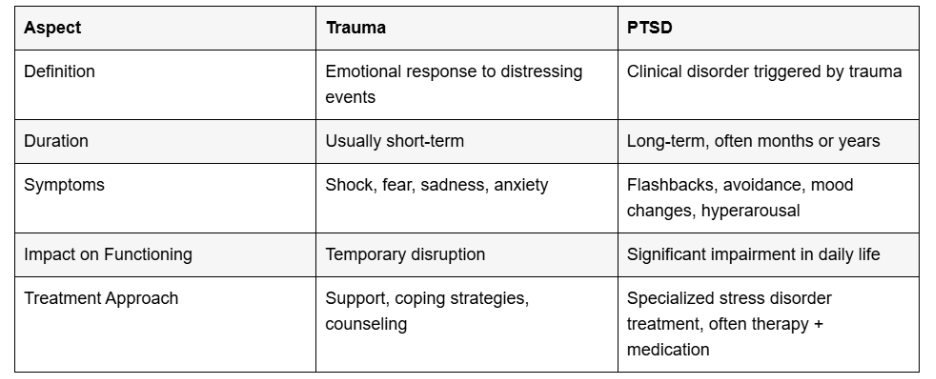
Emotional and psychological trauma are used interchangeably in both clinical and everyday language, referring to the same experience: the psychological impact of an overwhelming event. PTSD (Post-Traumatic Stress Disorder) is a specific clinical diagnosis that may develop following trauma, but not everyone who experiences trauma develops PTSD. Trauma is the experience; PTSD is one possible clinical response to it, characterised by specific symptoms (intrusive memories, avoidance, negative changes in thinking and mood, and changes in physical and emotional reactions) persisting for more than one month with significant functional impairment.
Key differences between trauma and PTSD are summarised below:
Types of Traumatic Experience
- Acute trauma: a single, distinct, overwhelming event (road accident, sexual assault, sudden bereavement, natural disaster)
- Complex trauma: repeated or prolonged traumatic experiences (ongoing domestic violence, childhood abuse, being raised in a household with addiction)
- Developmental trauma: trauma occurring during formative childhood years, which permanently shapes neurological development, attachment patterns, and emotional regulation capacity
- Intergenerational trauma: the psychological and physiological transmission of trauma across generations; particularly relevant in India, given the legacy of Partition, communal violence, and caste-based discrimination that continues to affect descendants
If you or someone you know is experiencing emotional trauma, you can explore available support and helplines in India in our detailed guide on emotional crisis support.
Signs of Emotional Trauma in Adults: How to Recognise It
Signs of emotional trauma in adults do not always look like distress. They often look like personality changes, performance problems, or physical illness. This is particularly true in India, where cultural norms around stoicism and professional composure mean that trauma symptoms are rarely disclosed voluntarily and are frequently misread.
Emotional Signs
Focus: Internal emotional experience and regulation
- Intense and unpredictable emotions, such as sudden anger, grief, or irritability
- Feeling emotionally numb or disconnected from others
- Persistent feelings of guilt, shame, sadness, or hopelessness
- Emotional reactions that feel disproportionate to the current situation
Case example: A woman who has experienced domestic conflict may appear “calm” externally but reports feeling empty, detached, or suddenly overwhelmed by anger during minor family disagreements.
Cognitive Signs
Focus: Thought Patterns and Processing
- Intrusive thoughts or distressing memories
- Flashbacks (re-experiencing aspects of the trauma)
- Difficulty concentrating, making decisions, or completing everyday tasks
- Negative core beliefs like “I am broken,” “The world is unsafe,” or “I cannot trust anyone”
- Memory gaps related to the traumatic experience
Case example: A road accident survivor may repeatedly relive the incident while commuting, avoid driving altogether, and struggle to focus at work due to intrusive thoughts.
Physical Signs
Focus: Nervous system activation and somatic symptoms
- Chronic fatigue or low energy despite adequate rest
- Sleep disturbances (insomnia, fragmented sleep, trauma-related nightmares)
- Hypervigilance (constantly feeling “on edge” or easily startled)
- Exaggerated startled response
- Somatic complaints (headaches, digestive issues, body pain)
- Muscle tension and frequent illnesses due to lowered immunity
Case example: An office worker experiencing workplace harassment may repeatedly visit doctors for migraines or stomach issues, with no clear medical cause identified.
Behavioural Signs
Focus: Observable Actions and Coping
- Social withdrawal and avoiding friends, family, or social situations
- Avoidance of places, people, or conversations that remind them of the trauma
- Engaging in risky or self-destructive behaviours
- Decline in work, academics, or daily functioning
- Increased reliance on substances (alcohol, tobacco) to cope
- Difficulty maintaining relationships, work responsibilities, or routines
Case example: A young adult who experienced bullying in college may stop attending social gatherings, miss deadlines, and increasingly rely on alcohol to manage distress.
India-Specific Presentation (Important Clinical Insight)
- While the above signs are commonly observed, in the Indian context, emotional trauma often presents differently, particularly through physical (somatic) symptoms.
- Common presentations include:
- Chronic back or body pain
- IBS-like digestive symptoms
- Persistent fatigue with no clear medical explanation
Case example: A homemaker reporting years of unexplained body pain may actually be carrying unresolved emotional trauma, but seeks help only through general physicians rather than mental health professionals.
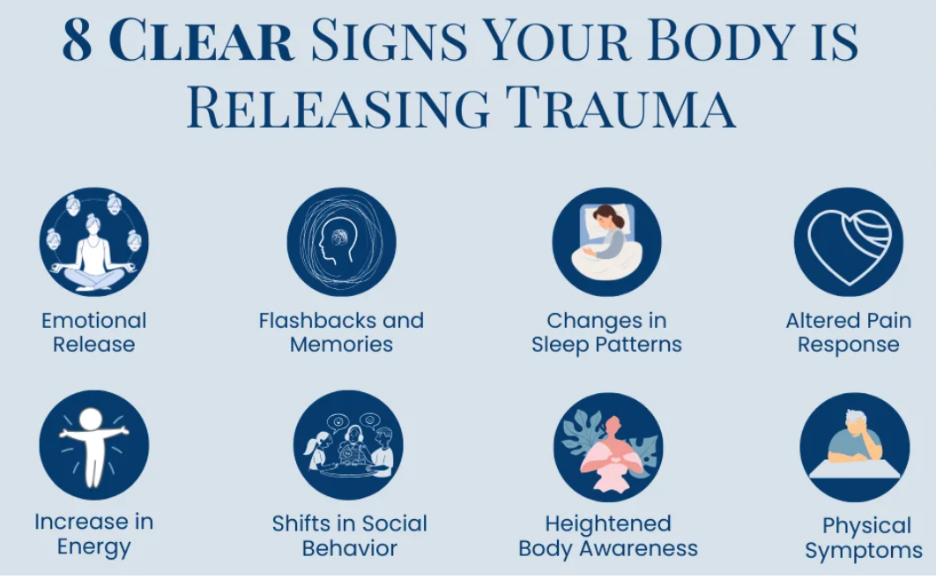
When to Seek Professional Help
While some emotional responses to distress are natural, certain signs indicate the need for structured psychological support. Seeking help early can prevent symptoms from becoming chronic or more impairing.
You should consider professional help if:
- Symptoms persist for weeks or worsen over time
- Daily functioning is affected (work, relationships, routine)
- Frequent intrusive thoughts. Flashbacks, or nightmares
- Avoidance of people, places, or reminders of the trauma
- Constant hypervigilance or inability to relax
- Persistent hopelessness, guilt, or emotional numbness
- Unexplained physical symptoms (fatigue, pain, digestive issues)
- Increasing reliance on alcohol or unhealthy coping
- Thoughts of self-harm, or feeling life is not worth living
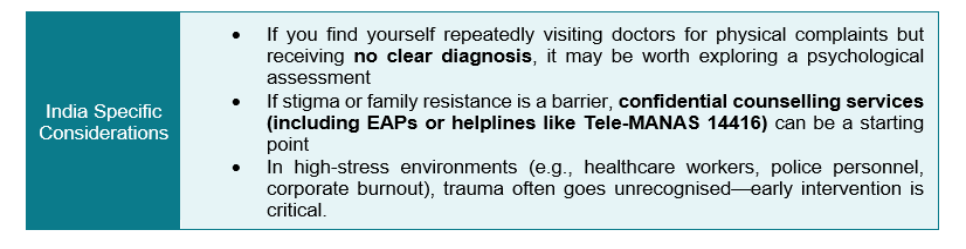
What Professional Help Looks Like
- Trauma-informed therapy (e.g., CBT, EMDR, somatic approaches)
- Counselling or psychotherapy tailored to your experience
- Psychiatric support, if symptoms like severe anxiety, depression, or sleep disturbance require medical management
Signs of Mental Trauma vs Emotional Trauma
In everyday language, “mental trauma” and “emotional trauma” are often used to mean the same thing; they describe similar signs and experiences.
Clinically, the difference is more specific:
- Trauma refers to the distressing event itself
- The psychological impact refers to the condition that may develop afterward, such as PTSD or other trauma-related disorders
In practice, whether someone calls it mental trauma or emotional trauma does not change how it is recognised or treated. The signs and treatment approaches remain the same.
Emotional Trauma Test: Validated Screening Tools
Two widely used validated tools for assessing trauma symptoms are the PCL-5 (PTSD Checklist for DSM-5) and the Trauma Screening Questionnaire (TSQ). It should be noted that these are screening tools, not diagnostic instruments. A score above the clinical threshold indicates that a professional assessment is strongly recommended, not that a formal PTSD diagnosis has been made.
💡Pro-Tip: If you are an HR professional or manager and an employee's behaviour has changed significantly since a known event (accident, loss, reported assault), do not frame your concern as a performance issue. Address it as a wellbeing check-in. Trauma responses are rarely under a person’s control. Framing them as performance problems can cause lasting damage to trust and delay professional help by months or years.
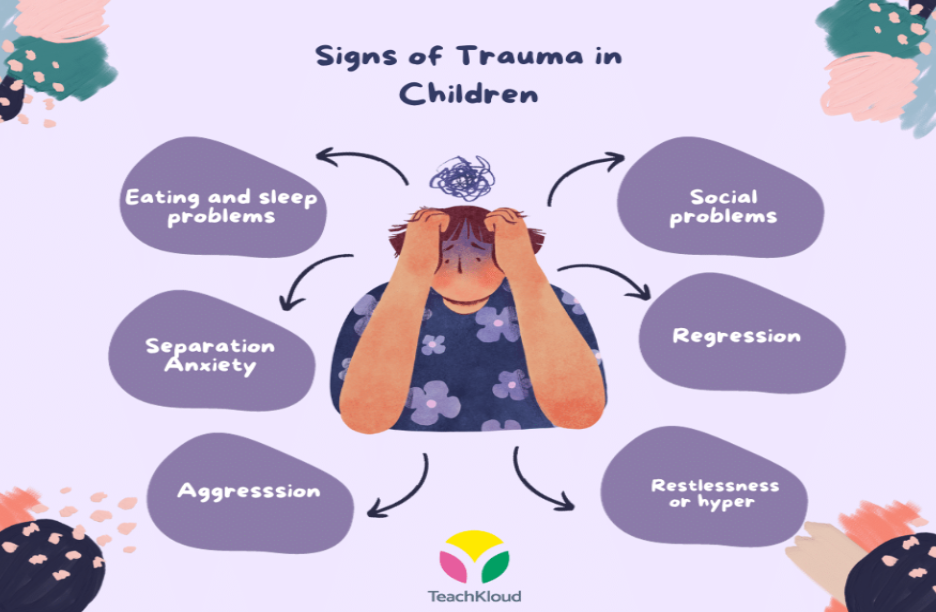
Signs of Emotional Trauma in Children in India
Signs of emotional trauma in a child vary significantly by age and are frequently misread by parents, teachers, and paediatricians as behavioural problems, academic issues, or physical illness. In India, the specific forms of childhood trauma differ in important ways from Western clinical literature, making India-specific awareness essential.
Young Children (0–5 years)
Typical Signs
- Regression (bedwetting, thumb-sucking after having outgrown it)
- Increased separation anxiety
- Sleep disturbances (night waking, difficulty falling asleep)
- Frequent tantrums or increased clinginess
Case examples
- A toddler becomes unusually clingy after witnessing domestic violence at home
- A child living in overcrowded housing shows irritability and disturbed sleep due to lack of routine and privacy
- Distress after separation from a parent who migrates for work (common in many urban–rural family setups)
School-Age Children (6–12 years)
Typical Signs
- Refusal to go to school
- Withdrawal from friends or reduced play
- New or unexplained fears
- Nightmares or sleep issues
- Physical complaints (headaches, stomach aches) without medical cause
- Drop in academic performance
Case examples
- Fear and avoidance linked to corporal punishment at school or home
- Anxiety driven by academic pressure and fear of failure
- Emotional distress after witnessing frequent parental conflict
- Repeated stomach aches before school despite normal medical reports
Adolescents (13–18 years)
Typical Signs
- Risk-taking or impulsive behaviour
- Self-harm or thoughts of self-harm
- Significant decline in academic performance
- Intense anger, mood swings, or emotional outbursts
- Social withdrawal or isolation
- Substance use as a coping mechanism
Case examples
- Severe stress linked to board exams or competitive exams like JEE/NEET
- Trauma responses following sexual abuse or unsafe environments
- Emotional distress due to online bullying or social media pressure
- Increased alcohol or tobacco use to cope with academic or family stress
How to Respond to a Child Undergoing Emotional Trauma
- Listen without judgment: create space for the child to talk without rushing to fix, dismiss, or redirect
- Maintain routines: predictability and structure are deeply calming for children having gone through trauma; consistent mealtimes, bedtimes, and school routines provide safety
- Avoid forcing disclosure: do not repeatedly ask a child to describe what happened; this can lead to re-traumatisation
- Monitor for 2-3 weeks: some stress responses resolve naturally with safety and support; persistent symptoms beyond 2-3 weeks after a distressing event warrant professional evaluation
- Seek professional help: a child psychologist with trauma training can assess and treat childhood trauma effectively; early intervention significantly improves long-term outcomes
India’s NIMHANS child and adolescent psychiatry services are among the most comprehensive in the country for paediatric trauma. For immediate guidance and referrals, families can reach out to Tele-MANAS (14416), which connects callers to trained mental health professionals across India. Parents and caregivers can also seek support through child psychologists, school counsellors, or paediatric mental health services. It is important to work with professionals who are trauma-informed and experienced in working with children, as trauma in early life often presents differently from adults and requires specialised care.
What Causes Emotional Trauma?
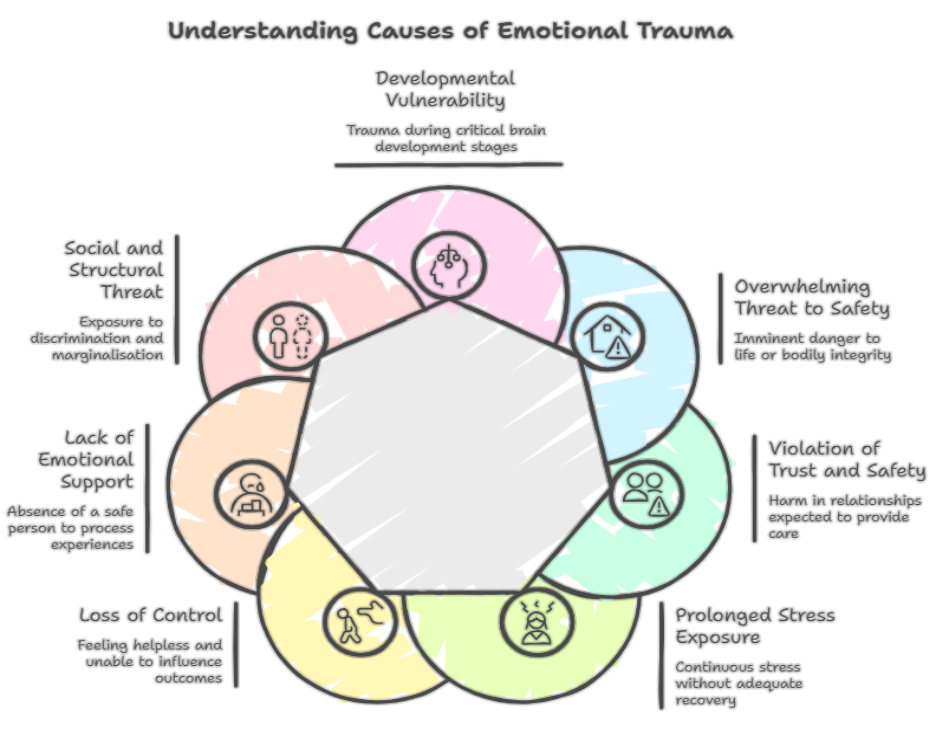
What causes emotional trauma is not always a single catastrophic event. Trauma is defined not by the event itself but by the psychological impact it has on the person experiencing it. Two people can go through the same experience and emerge with completely different outcomes, shaped by the severity of the event, the presence or absence of social support, prior trauma history, and individual neurobiological factors.
1. Overwhelming Threat to Safety
Cause: The nervous system perceives imminent danger to life or bodily integrity
- Creates intense fear and survival responses (fight, flight, freeze)
- Trauma develops when the experience cannot be processed or resolved
Example: A person involved in a severe road accident continues to feel unsafe even in routine travel situations, with their body reacting as if danger is still present.
2. Violation of Trust and Safety in Relationships
Cause: Harm occurs in relationships that are expected to provide care and protection
- Leads to disrupted attachment, mistrust, and relational insecurity
- Particularly impactful during childhood
Example: A child exposed to ongoing domestic violence or abuse within the family develops deep mistrust and emotional insecurity.
3. Prolonged or Repeated Stress Exposure
Cause: Continuous activation of the stress response without adequate recovery
- Prevents the nervous system from returning to baseline
- Leads to chronic hyperarousal, emotional dysregulation, and exhaustion
Example: Growing up in a household with ongoing financial instability or a caregiver struggling with addiction creates chronic emotional strain.
4. Loss of Control, Power, or Agency
Cause: The individual feels helpless, trapped, or unable to influence outcomes
- Strong predictor of trauma severity
- Reinforces feelings of vulnerability and fear
Example: A survivor of assault or coercion may experience lasting trauma due to the intense sense of helplessness during the event.
5. Lack of Emotional Support or Validation
Cause: Absence of a safe person or environment to process the experience
- Increases the likelihood that distress becomes internalised
- Delays or disrupts recovery
Example: A child repeatedly told to “adjust” or “be strong” instead of being heard may internalise distress, leading to unresolved trauma.
6. Social and Structural Threat
Cause: Ongoing exposure to discrimination, marginalisation, or collective insecurity
- Sustains a baseline sense of unsafety
- Reinforces chronic stress and vigilance
Example: Experiencing caste-based discrimination or gender-based violence can lead to a persistent sense of threat and psychological harm.
7. Developmental Vulnerability
Cause: Trauma occurring during critical stages of brain and emotional development
- The brain is less equipped to regulate overwhelming experiences
- Leads to long-term impacts on emotional regulation, identity, and relationships
Example: A young child experiencing neglect due to parental migration or absence may struggle with emotional regulation and relationships later in life.
💡Key Insight: Trauma is not caused by the event alone, but by the interaction between the experience, the individual’s capacity to cope, and the support available at the time.
Can Emotional Trauma Cause Thyroid Problems?
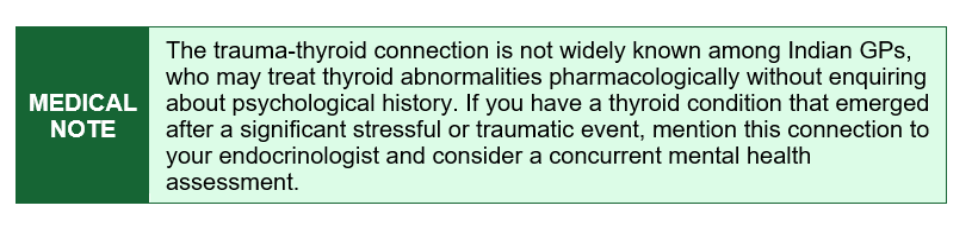
Yes. The link between emotional trauma and thyroid dysfunction is documented in peer-reviewed research. Chronic psychological stress and trauma activate the HPA (hypothalamic-pituitary-adrenal) axis, producing chronically elevated cortisol. This sustained dysregulation can trigger autoimmune responses, including Hashimoto's thyroiditis and Graves' disease, both of which involve the immune system attacking the thyroid gland. PTSD in particular is associated with significantly higher rates of thyroid autoimmunity in peer-reviewed research. Studies show significant association between traumatic stress exposure and thyroid autoimmunity. If you have experienced significant trauma and develop symptoms including unexplained fatigue, weight changes, hair loss, temperature sensitivity, or mood disturbances, ask your GP to include a thyroid function test (TFT) and thyroid antibody panel alongside any mental health assessment. Treating the underlying trauma often helps stabilise thyroid symptoms as the HPA axis regulation improves.
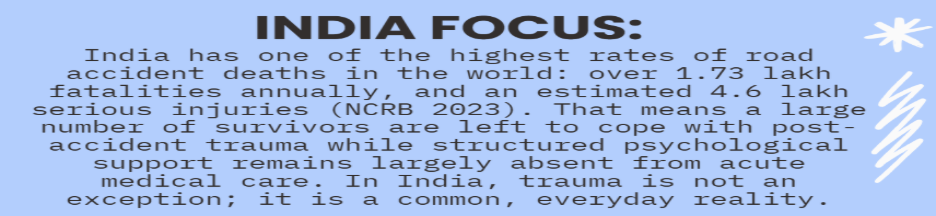
India Focus: Not everyone who experiences trauma develops long-term psychological difficulties. Protective factors such as strong social support from family and community, early access to professional help, a sense of safety and personal control, and prior experience coping with adversity can significantly reduce its impact. This also means that community-level responses are just as important as individual treatment, especially after events like communal violence, floods, or mass accidents, where collective support systems play a crucial role in recovery.
How to Recover from Emotional Trauma: Healing Approaches
Recovery from emotional trauma is possible. This is one of the most important things to say clearly, because trauma often creates the internal conviction that nothing will ever be different. That conviction is itself a symptom of trauma. Recovery is non-linear, meaning setbacks are a normal part of the process rather than evidence of failure, and there is no universal timeline.
Recovery from emotional trauma is not a single method, but a combination of evidence-based therapy, supportive conditions, and daily regulation practices. These work best when layered together.
1. Professional Treatment Approaches
These are structured, evidence-based interventions delivered by trained mental health professionals:
A. Trauma-Focused CBT (TF-CBT)
- Helps process traumatic memories and challenge distorted beliefs (e.g., “I am unsafe,” “It was my fault”)
- Builds coping skills and emotional regulation
India example: A young adult recovering from a road accident works with a therapist to gradually face driving again while reframing fear-based thoughts.
B. EMDR (Eye Movement Desensitisation and Reprocessing)
- Uses guided eye movements or bilateral stimulation to reduce the emotional intensity of traumatic memories
- Particularly effective for distressing, stuck memories
India example: A survivor of assault experiences reduced emotional distress linked to specific memories after a few structured EMDR sessions at a private clinic.
C. Somatic (Body-Based) Therapy
- Focuses on how trauma is stored in the body (tension, pain, hyperarousal)
- Includes approaches like somatic experiencing, yoga therapy, and body awareness
India example: A corporate employee with chronic neck pain and anxiety benefits from combining therapy with yoga-based relaxation practices.
D. Medication (When Needed)
- Psychiatric medications (such as Selective serotonin reuptake inhibitors/ SSRIs) can help manage symptoms like severe anxiety, depression, or sleep disturbance
- Typically used alongside therapy for best outcomes
India example: A person experiencing severe trauma-related anxiety is prescribed medication by a psychiatrist, enabling them to engage more effectively in therapy.
2. Safety and Stabilisation
Therapy alone is not sufficient if these conditions are not in place:
- Safety and stabilisation: Healing cannot begin in an environment that is still unsafe or overwhelming
- Supportive relationships: Consistent, non-judgmental support from family, friends, or community reduces isolation and improves recovery outcomes
India context: In many cases, recovery improves significantly when individuals have even one stable, supportive relationship, whether within family systems or outside them.
3. Self-Help and Daily Regulation Strategies
These are practical steps individuals can take to support recovery alongside professional care:
- Limit Exposure to Triggers
- Reduce consumption of distressing news or graphic content, especially after large-scale events
- Be mindful of social media during periods of emotional vulnerability
- Regulate the Body
- Practices like pranayama, slow breathing, and gentle movement help calm the nervous system
- Even a few minutes of slow, controlled breathing can reduce hypervigilance
- Use Structured Journalling Carefully
- Writing about experiences in a gradual, guided way can support processing
- For severe or recent trauma, journalling should ideally be done with therapist support to avoid overwhelm
- Strengthen Community and Meaning
- Connection to family, community, or spiritual practices can provide emotional grounding
- Meaning-making helps individuals integrate their experiences rather than feel defined by them
India example: Participation in family rituals or religious practices often provides a sense of stability and continuity during recovery.
💡Key Takeaway: Effective trauma recovery is not about a single technique. It depends on the right combination of therapy, safety, regulation, and support systems, tailored to the individual’s context.
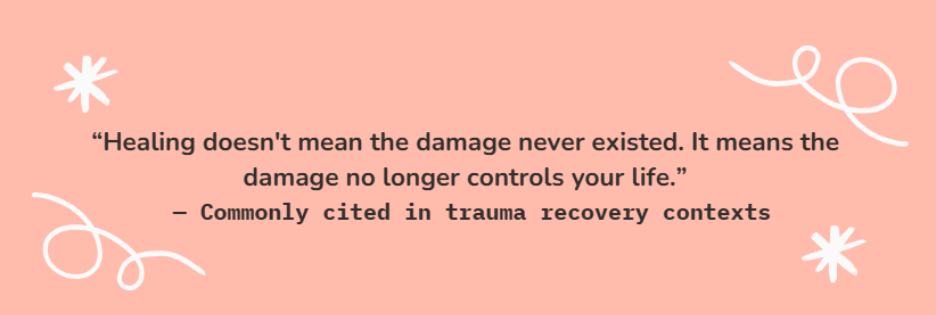
Trauma-Informed Workplace and Management
Trauma-informed workplace practice is increasingly recognised as both an ethical obligation and an organisational performance strategy. Trauma-informed management refers to a set of leadership practices that account for the reality that a significant proportion of employees carry unaddressed trauma. In India, this is not an edge case: domestic violence affects ~30% of married women (NFHS-5 data), road accident survivors in large numbers and increasing, and collective trauma from COVID-19 and communal violence is still present across the workforce.
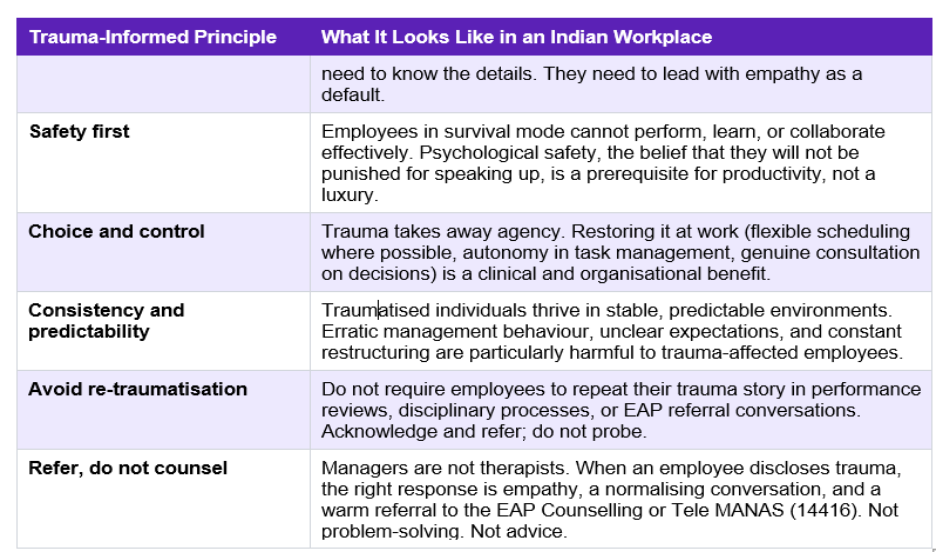
ISO 45003, the Psychological Safety at Work standard, is being adopted by progressive Indian corporates and provides a structured framework for integrating trauma-informed principles into occupational health and safety management. For further guidance on building effective mental health practices at workplace, see our resource on workplace mental health in India.
💡Pro-Tip for HR: When an employee discloses trauma, three things are important. First, thank them for trusting you, because it takes significant courage in a stigmatising culture. Second, do not ask for details. Third, make a warm referral to your EAP counselling services or Tele MANAS (14416) within 24 hours, and follow up with the employee a week later to check they have accessed support. This sequence is more protective than any policy document.
Conclusion
Sunita eventually shared her experience with a psychologist through her company’s EAP, eight months after the accident. The first thing she heard was: This is not a personality problem. It is a trauma response. And it is treatable.
She is now eight sessions into EMDR therapy. She is not fully recovered yet. But last month, she sat in a busy restaurant and did not flinch when a tray clattered.
Recovery does not erase the past. It changes how it affects you. That matters.
If you are carrying something you cannot name or have been holding on for too long, you can reach out to Tele-MANAS (14416), a free 24/7 service available in multiple Indian languages.
If you are employed, you can also consider accessing EAP (Employee Assistance Programme) counselling services, such as those offered by https://www.1to1help.com/solutions/employee-assistance-programme1to1help.
You do not have to wait until it becomes a crisis to ask for help.
FAQs
Q1. What are the signs of emotional trauma in adults?
Signs of emotional trauma in adults include persistent intrusive memories or flashbacks of the traumatic event, nightmares, emotional numbness or detachment from others, intense and unpredictable emotional reactions, hypervigilance (being constantly on edge), avoidance of trauma reminders, sleep disturbances, and difficulty concentrating. Physically, emotional trauma can cause chronic fatigue, unexplained pain, and muscle tension. In India, trauma symptoms frequently present somatically, through physical complaints rather than emotional language, due to cultural stigma around naming psychological distress. If these symptoms persist for more than one month, professional support is strongly recommended.
Q2. What is the meaning of emotional trauma?
Emotional trauma meaning: emotional trauma is the lasting psychological impact of a deeply distressing or overwhelming experience that exceeds a person's ability to cope. In Hindi: भावनात्मक आघात (bhāvnātmak āghāt). Trauma can result from a single event (road accident, sexual assault) or from repeated exposure (ongoing domestic violence, childhood abuse). Not everyone who experiences a traumatic event develops lasting psychological injury: the impact depends on severity, available social support, and individual resilience. Emotional and psychological trauma are used interchangeably and describe the same experience.
Q3. Can emotional trauma cause thyroid problems?
Yes. Chronic stress and emotional trauma dysregulate the HPA (hypothalamic-pituitary-adrenal) axis, chronically elevating cortisol levels. This dysregulation can trigger autoimmune thyroid conditions including Hashimoto's thyroiditis and Graves' disease. PTSD is associated with significantly higher rates of thyroid autoimmunity. If you have experienced significant trauma and develop symptoms such as unexplained fatigue, weight changes, hair loss, temperature sensitivity, or mood disturbances, ask your GP to include a thyroid function test alongside a mental health assessment. Addressing the underlying emotional trauma often helps stabilise thyroid symptoms as HPA axis function improves.
Q4. How to recover from emotional trauma?
Recovery from emotional trauma is possible with appropriate support. The most evidence-based therapies are Trauma-Focused CBT (TF-CBT) and EMDR (Eye Movement Desensitisation and Reprocessing), both of which directly process traumatic memories and reduce their emotional charge. Somatic therapies, including yoga therapy, address trauma stored in the body. Self-care steps include establishing safety, maintaining social connections, nervous system regulation through breathwork, and reducing exposure to trauma triggers. In India, contact your EAP service provider for counselling services (if you are an employee) or call Tele MANAS (14416) for trauma-informed professional support. Recovery is non-linear; setbacks are normal parts of the process, not evidence of failure.
Q5. What is a trauma-informed workplace?
A trauma-informed workplace recognises that many employees carry invisible trauma from domestic violence, accidents, bereavement, or abuse, and integrates this understanding into culture and management practices. Practically, this means creating psychological safety, giving employees agency and choice, maintaining predictable management behaviour, responding to disclosed trauma with empathy rather than discipline, and referring to EAPs or Tele MANAS (14416) when needed. In India, trauma-informed management is increasingly relevant given high rates of domestic violence, road accident trauma, and collective post-COVID stress across the workforce.
Q6. What are the signs of emotional trauma in a child?
Signs of emotional trauma in a child vary by age. Young children (0-5) may regress to earlier developmental behaviours and show intense separation anxiety. School-age children (6-12) may have nightmares, school refusal, new fears, and physical complaints without medical cause. Teenagers may become angry, withdrawn, or engage in risky behaviour with a sharp academic decline. In India, childhood trauma sources include physical punishment, witnessing domestic violence, and academic pressure-induced fear of failure. If a child shows these signs for more than 2-3 weeks after a distressing event, consult a child psychologist. Early intervention significantly improves long-term outcomes.
Q7. Is emotional trauma the same as PTSD?
Emotional trauma and PTSD are related but not identical. Trauma refers to the overwhelming experience itself: the event or series of events that exceeds a person's capacity to cope. PTSD is a specific clinical diagnosis that may develop following trauma, characterised by flashbacks, avoidance, hypervigilance, and negative cognitions persisting for more than one month with significant functional impairment. Many people experience emotional trauma and recover naturally with support. When symptoms persist or worsen, PTSD-specific treatment, including EMDR and Trauma-Focused CBT, is highly effective and increasingly available in India.
Related Articles You May Find helpful
References
- Altius Group. (n.d.). Emotional trauma: 5 strategies to help you heal. https://altius.au/news-and-research/emotional-trauma-5-strategies-to-help-you-heal
- Alter Behavioral Health. (n.d.). Understanding the difference between PTSD and trauma. https://alterbehavioralhealth.com/blog/understanding-the-difference-between-ptsd-and-trauma/
- American Addiction Centers. (n.d.). Coping mechanisms. https://americanaddictioncenters.org/sobriety-guide/coping-mechanism
- American Psychological Association. (n.d.). Collective trauma toolkit. https://www.apa.org/about/governance/president/grief-toolkit/collective-trauma.pdf
- Britannica. (n.d.). Natural disaster. https://www.britannica.com/science/natural-disaster
- BYU ScholarsArchive. (n.d.). [Research publication]. https://scholarsarchive.byu.edu/cgi/viewcontent.cgi?article=6118&context=facpub
- Centre for Addiction and Mental Health (CAMH). (n.d.). What is developmental trauma (ACEs)? https://www.camh.ca/en/science-and-research/institutes-and-centres/cundill-centre-for-child-and-youth-depression/childhood-trauma-toolkit/developmental-trauma-aces/what-is-developmental-trauma-aces
- Cleveland Clinic. (n.d.). Cognitive behavioral therapy (CBT). https://my.clevelandclinic.org/health/treatments/21208-cognitive-behavioral-therapy-cbt
- Cleveland Clinic. (n.d.). EMDR therapy. https://my.clevelandclinic.org/health/treatments/22641-emdr-therapy
- Cleveland Clinic. (n.d.). Hypothalamic-pituitary-adrenal (HPA) axis. https://my.clevelandclinic.org/health/body/hypothalamic-pituitary-adrenal-hpa-axis
- Cleveland Clinic. (n.d.). Irritable bowel syndrome (IBS). https://my.clevelandclinic.org/health/diseases/4342-irritable-bowel-syndrome-ibs
- Cleveland Clinic. (n.d.). Self-harm. https://my.clevelandclinic.org/health/diseases/12201-self-harm
- Cleveland Clinic. (n.d.). Sleep disorders. https://my.clevelandclinic.org/health/diseases/11429-sleep-disorders
- Cleveland Clinic. (n.d.). Cortisol. https://my.clevelandclinic.org/health/articles/22187-cortisol
- Complex Trauma. (n.d.). What is complex trauma? https://www.complextrauma.org/complex-trauma/complex-trauma-what-is-it-and-how-does-it-affect-people/
- Daily Stoic. (n.d.). What is Stoicism? https://dailystoic.com/what-is-stoicism-a-definition-3-stoic-exercises-to-get-you-started/
- DNV. (n.d.). ISO 45003 psychological health and safety at work. https://www.dnv.in/services/iso-45003-psychological-health-and-safety-at-work-204058/
- Espresa. (n.d.). Trauma-informed management. https://www.espresa.com/blog/trauma-informed-management/
- Harvard Health Publishing. (n.d.). Managing intrusive thoughts. https://www.health.harvard.edu/mind-and-mood/managing-intrusive-thoughts
- Harvard Health Publishing. (2023). What is somatic therapy? https://www.health.harvard.edu/blog/what-is-somatic-therapy-202307072951
- Healthline. (n.d.). Trauma-related disorders. https://www.healthline.com/health/mental-health/trauma-related-disorders#types
- Healthline. (n.d.). Unusual or strange behavior. https://www.healthline.com/health/behavior-unusual-or-strange
- HelpGuide.org. (n.d.). Coping with emotional and psychological trauma. https://www.helpguide.org/mental-health/ptsd-trauma/coping-with-emotional-and-psychological-trauma
- HelpGuide.org. (n.d.). Bereavement and grieving. https://www.helpguide.org/mental-health/grief/bereavement-grieving-the-death-of-a-loved-one
- International Society for Traumatic Stress Studies (ISTSS). (n.d.). Trauma screening tools. https://ovc.ojp.gov/sites/g/files/xyckuh226/files/media/document/os_trauma_screening-508.pdf
- Journal of Men’s Health. (2026). Domestic violence: Are women safe now? https://journals.lww.com/jomh/fulltext/2026/01000/domestic_violence___are_women_safe_now__a.4.aspx
- Lyra Health. (n.d.). Signs of emotional trauma in adults. https://www.lyrahealth.com/blog/signs-emotional-trauma-in-adults/
- Mayo Clinic. (n.d.). Depression. https://www.mayoclinic.org/diseases-conditions/depression/symptoms-causes/syc-20356007
- Mayo Clinic. (n.d.). Post-traumatic stress disorder (PTSD). https://www.mayoclinic.org/diseases-conditions/post-traumatic-stress-disorder/symptoms-causes/syc-20355967
- Mayo Clinic. (n.d.). Child abuse. https://www.mayoclinic.org/diseases-conditions/child-abuse/symptoms-causes/syc-20370864
- Mayo Clinic. (n.d.). Separation anxiety disorder. https://www.mayoclinic.org/diseases-conditions/separation-anxiety-disorder/symptoms-causes/syc-20377455
- Mayo Clinic. (n.d.). SSRIs. https://www.mayoclinic.org/diseases-conditions/depression/in-depth/ssris/art-20044825
- Medical News Today. (n.d.). Trauma. https://www.medicalnewstoday.com/articles/trauma
- Medical News Today. (n.d.). Psychotherapy vs therapy. https://www.medicalnewstoday.com/articles/psychotherapy-vs-therapy
- National Institute of Mental Health and Neurosciences (NIMHANS). (n.d.). Child and adolescent psychiatry services. https://www.nimhans.ac.in/departments/child-adolescent-psychiatry
- National Center for PTSD. (n.d.). PCL-5 assessment tool. https://www.ptsd.va.gov/professional/assessment/documents/PCL5_Standard_form.pdf
- Psychology Today. (n.d.). Regression. https://www.psychologytoday.com/us/basics/regression
- Psychology with Compassion. (n.d.). Understanding emotional trauma. https://www.psychologywithcompassion.com.au/blog/understanding-emotional-trauma-its-impact-and-how-it-affects-daily-life
- Rape Crisis England & Wales. (n.d.). What is sexual assault? https://rapecrisis.org.uk/get-informed/types-of-sexual-violence/what-is-sexual-assault/
- Tele-MANAS. (n.d.). National tele mental health programme. https://telemanas.mohfw.gov.in/home
- The American Lung Association. (n.d.). Breathing exercises. https://www.lung.org/lung-health-diseases/wellness/breathing-exercises
- The United Nations. (n.d.). What is domestic abuse? https://www.un.org/en/coronavirus/what-is-domestic-abuse
- Verywell Mind. (n.d.). Attachment styles. https://www.verywellmind.com/attachment-styles-2795344
- Verywell Mind. (n.d.). Emotional numbing. https://www.verywellmind.com/emotional-numbing-symptoms-2797372
- Verywell Mind. (n.d.). Intergenerational trauma. https://www.verywellmind.com/what-is-integenerational-trauma-5211898
- WebMD. (n.d.). Fight, flight, freeze, fawn. https://www.webmd.com/mental-health/what-does-fight-flight-freeze-fawn-mean
- WebMD. (n.d.). Pranayama. https://www.webmd.com/balance/what-is-pranayama
- World Health Organization. (n.d.). Corporal punishment and health. https://www.who.int/news-room/fact-sheets/detail/corporal-punishment-and-health


.svg)
.svg)
.svg)
.svg)