


.png)


.png)

Personal Growth & Well Being
3 Great Positive Thinking Techniques That Will Transform Your Life

.png)
Written by
Aarohi Parakh,
Psychologist and Content Writer

Reviewed by
Sanjana Sivaram,
Psychologist and Clinical Content Head


Introduction
Most of us have been told to "think positively" at some point in our lives, often when we least felt like it. And if that advice ever landed with a hollow thud, you were probably picking up on something real: cheerful encouragement alone rarely shifts deeply ingrained thought patterns.
The good news is that positive thinking, practised the right way, is considerably more interesting and more effective than the phrase suggests. It is not about pretending everything is fine. It is a set of practical, research-informed techniques that can help people develop more constructive ways of responding to challenges, setbacks, and uncertainty.
This guide covers the 3 great positive thinking techniques that form the foundation of the practice, plus 4 more science-informed methods, daily exercises, real-life examples, and specific applications for the Indian workplace. Whether you are dealing with performance anxiety, a difficult manager, or simply a mind that defaults to the negative, there is something practical here for you.
What is Positive Thinking?
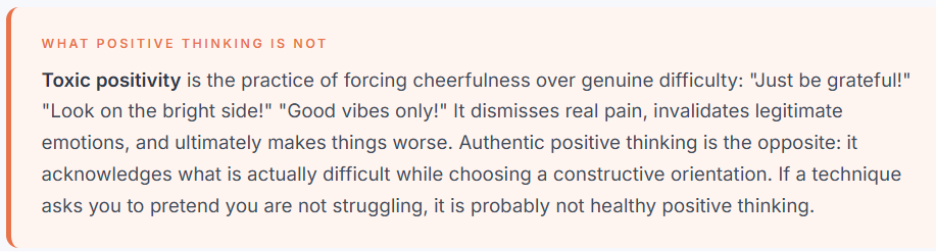
Positive thinking is the practice of deliberately focusing on constructive, optimistic interpretations of situations. It does not mean ignoring difficulty or suppressing difficult emotions. Rather, it means approaching challenges with a solution-oriented mindset: acknowledging what is hard while actively seeking opportunities, growth, or a realistic path forward.
A more precise definition might be: positive thinking is the intentional practice of directing mental attention towards what is possible, what is working, and what can be learned, especially in moments where the brain would otherwise default to threat-focused, self-critical, or catastrophising patterns.
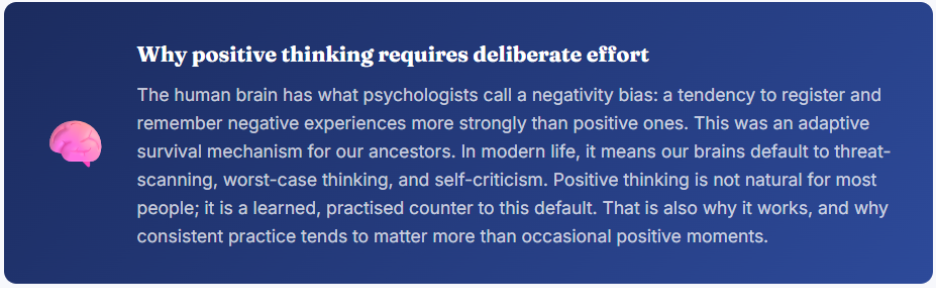
There is now meaningful evidence that consistent positive thinking may contribute to measurable changes in brain functioning over time. Research in neuroplasticity suggests that thought patterns, repeated over time, strengthen the neural pathways associated with them. Negative thinking, practised habitually, appears to make negative patterns more automatic. Positive thinking, practised consistently, can gradually shift those defaults. This is the core mechanism that makes the techniques in this guide more than motivational advice; they work through measurable neurological processes.
The term positive mindset captures this broader orientation: a way of relating to experience that makes positive thinking more natural over time. It is not a permanent emotional state but a trained tendency to notice what is useful, what is possible, and what is worth appreciating, even when things are genuinely difficult.
Positive thinking is helpful when it increases flexibility, perspective, and hope. However, it becomes unhelpful when it turns into emotional suppression, denial, or pressure to “stay positive” at all times. Healthy positivity makes room for difficult emotions while still allowing space for resilience and possibility.
Benefits of Positive Thinking: What the Research Suggests
Before exploring the techniques themselves, it is worth understanding why positive thinking matters enough to practise intentionally. The research base is more substantial than many people realise.
Mental health benefits
Research consistently associates positive thinking with reduced anxiety and depression symptoms, greater emotional resilience, and better stress regulation. Barbara Fredrickson's Broaden-and-Build theory suggests positive emotions expand awareness and build long-term psychological resources over time.
People who regularly experience positive emotions often find it easier to recover from setbacks and adapt to changing circumstances. Rather than eliminating difficult emotions, positive thinking helps create a broader emotional repertoire, making it easier to cope with challenges without becoming overwhelmed by them. Over time, this can strengthen confidence, optimism, and the belief that problems are manageable, even when they cannot be immediately solved.
Physical health benefits
Positive thinking appears to be associated with lower cortisol levels, better immune function, and reduced cardiovascular risk. Harvard research links positive outlook to longer life expectancy and better recovery outcomes.
Researchers believe this relationship is partly explained by the body's stress response. Chronic stress can contribute to inflammation, sleep disturbances, and a range of health concerns. Individuals with a more positive outlook often engage in healthier behaviours such as regular exercise, better sleep habits, and proactive healthcare, creating a positive cycle that supports overall wellbeing. While positive thinking is not a substitute for medical care, it can be an important factor in maintaining physical health.
Workplace benefits
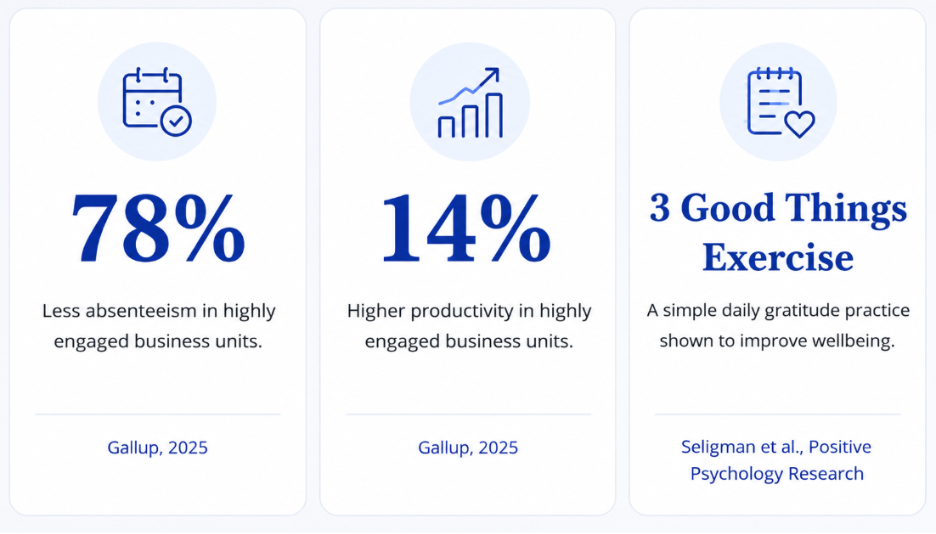
Positive thinking supports clearer problem-solving, stronger collaboration, higher productivity, and better conflict resolution. Gallup research shows employees with higher wellbeing are 78% less likely to be absent.
In professional settings, a positive mindset can improve cognitive flexibility, allowing people to generate creative solutions and adapt more effectively to change. Employees who approach challenges constructively are often better able to manage pressure, maintain motivation, and build stronger working relationships. Positive thinking also contributes to psychological safety within teams, encouraging open communication, learning, and innovation. These benefits can have a meaningful impact on both individual performance and organisational outcomes.
Relationship benefits
A positive mindset tends to make people more generous in their interpretations of others' behaviour, more patient in conflict, and more able to offer and receive support. Positive emotions appear to broaden interpersonal awareness and build social resources over time.
Relationships naturally involve misunderstandings and disagreements. Positive thinkers are not immune to these challenges, but they are often more likely to approach them with curiosity rather than defensiveness. This can lead to better communication, greater empathy, and more effective conflict resolution. Over time, these patterns help build trust, strengthen emotional bonds, and create relationships that are more resilient during periods of stress or uncertainty.
- Recommended Reading: Mental Health in India: A Complete Guide to Understanding, Managing & Improving Your Mental Well-Being
Positive Thinking Techniques: 7 Science-Backed Methods
The following positive thinking techniques are drawn from cognitive behavioural therapy, positive psychology, sports science, and mindfulness research. Each has a distinct mechanism and a specific type of situation in which it tends to work best. You do not need to practise all seven; finding two or three that feel genuinely useful and building a consistent habit with those is more likely to produce lasting change than sampling widely.
Technique 1: Cognitive Reframing (Reframing Negative Thoughts)
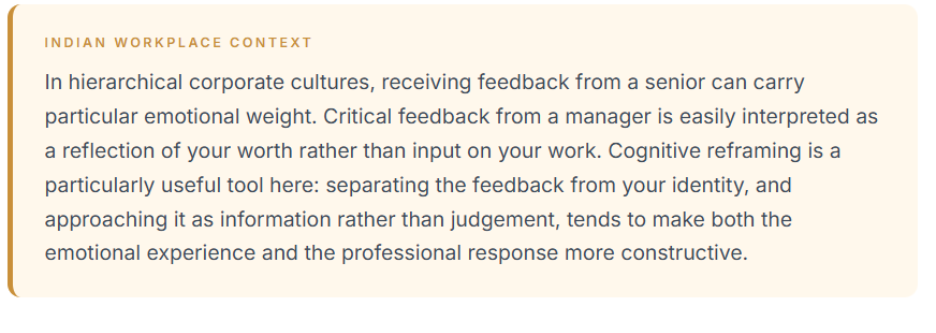
Cognitive reframing is the process of consciously examining and changing how you interpret a situation, shifting from an automatic negative interpretation to a more balanced and realistic one. It is a core technique in Cognitive Behavioural Therapy (CBT), developed by psychiatrist Dr. Aaron Beck, and is grounded in the idea that thoughts, not situations, drive emotions and behaviour.
When something difficult happens, our minds often generate an immediate interpretation: "I failed." "That person dislikes me." "This is hopeless." Reframing does not ask you to pretend these thoughts are not there. It asks you to examine them more carefully.
- Identify the negative thought
Notice what you are actually thinking, not just what you are feeling. "My manager's feedback means I am not good enough" is a thought. Write it down.
- Examine the evidence
Ask: what evidence supports this thought? What evidence contradicts it? Is there another way to interpret what happened? Would I judge a friend this harshly?
- Find a balanced alternative
Replace the original thought with something more accurate and constructive. "My manager gave me specific feedback I can use to improve" is both honest and more helpful.
Technique 2: Gratitude Practice
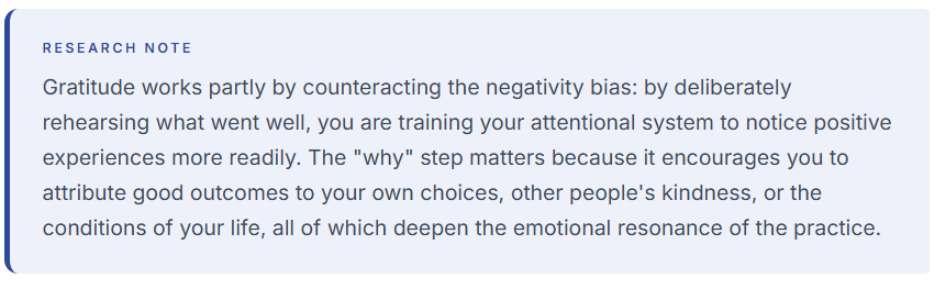
Gratitude practice involves regularly and deliberately acknowledging what you are thankful for. It sounds deceptively simple, but the neurological and psychological evidence behind it is quite substantial. Practising gratitude encourages people to pay greater attention to positive experiences, supportive relationships, and personal strengths. Research suggests that regular gratitude practice is associated with increased positive emotions, improved wellbeing, and a greater tendency to notice and appreciate positive aspects of daily life.
The Berkeley Greater Good Science Center's "Three Good Things" exercise is one of the most well-researched gratitude interventions available. The practice is straightforward: each evening, write down three things that went well during the day and, crucially, why they happened. Research has shown this practice can produce measurable increases in wellbeing after consistent use.
Practical ways to build a gratitude practice:
- keep a dedicated gratitude journal and write in it each evening;
- keep a gratitude jar where you add a handwritten note each time something good happens; or
- write a letter of appreciation to someone who has mattered to you.
Even a brief, mindful pause during the day to notice something positive can be a genuine form of gratitude practice if it is done with attention rather than in passing.
Technique 3: Visualisation
Visualisation involves creating a vivid mental image of a desired outcome, engaging as many senses as possible. It is widely used in sports psychology: research on mental rehearsal suggests that vividly imagining a physical action activates many of the same neural pathways as actually performing it. Olympic athletes, professional musicians, and surgeons all use structured visualisation to prepare for high-stakes performance.
A basic visualisation practice:
Find a quiet space, close your eyes, and spend five to ten minutes imagining your desired outcome in specific, sensory detail.
Where are you? What does it feel like? What can you hear? What are you saying or doing?
The more concrete and emotionally engaging the imagery, the more likely it is to activate the relevant neural circuits and align your thinking and behaviour with the outcome you are working towards.
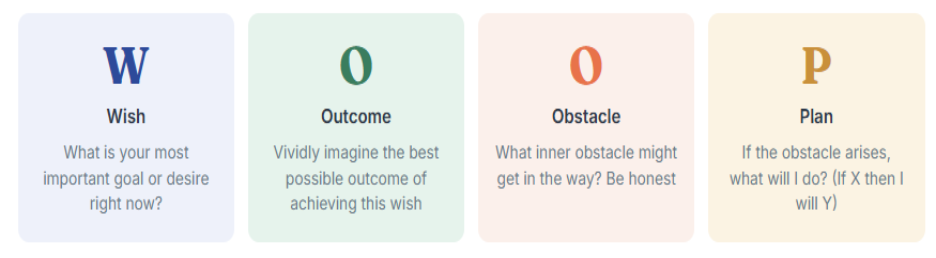
Note of caution: Visualisation tends to work best when paired with realistic planning and obstacle identification, rather than wishful thinking alone.
One particularly interesting development in visualisation research is the WOOP method, developed by psychologist Gabriele Oettingen. Rather than only visualising the desired outcome, WOOP pairs it with honest reflection on the current reality, which research suggests increases motivation and follow-through compared to positive visualisation alone.
- Recommended Resource: WOOP Method Worksheet
Technique 4: Positive Self-Talk and Affirmations
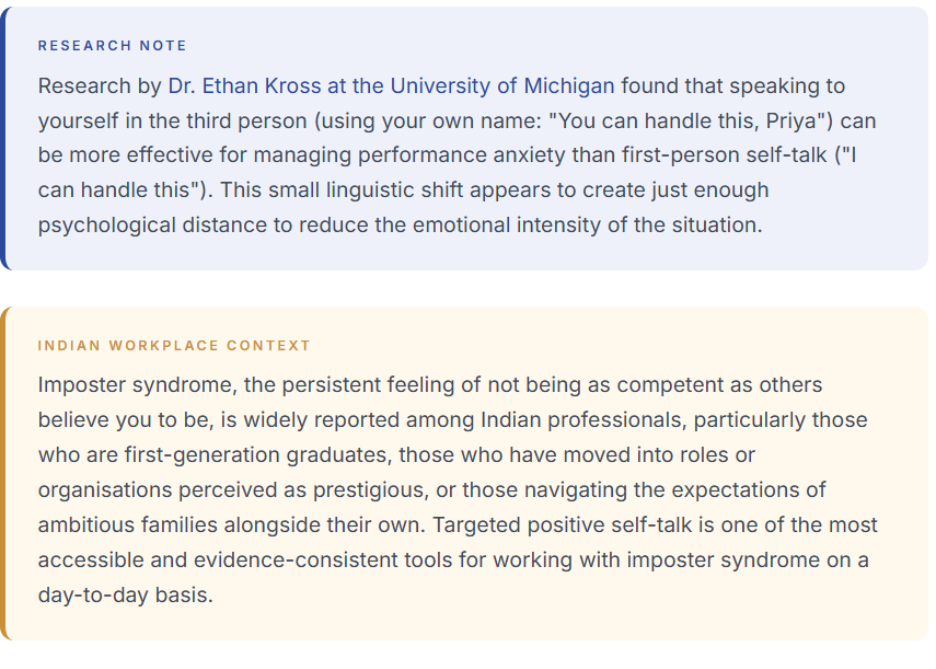
Positive self-talk is the internal dialogue that shapes how you perceive yourself and your situation. Research consistently shows that chronic negative self-talk is strongly associated with anxiety and depression, while more balanced, constructive internal language appears to support both emotional wellbeing and performance. Most people are significantly harsher towards themselves in their internal monologue than they would ever be towards a friend facing the same situation.
It is useful to distinguish between self-talk and positive affirmations. Self-talk is the ongoing, often unconscious internal monologue. Affirmations are deliberate, intentional positive statements used to counteract specific negative patterns. Both can be worked with consciously.
A practical approach: identify your most common negative self-talk pattern (for many people in demanding workplaces it is some version of "I am not good enough" or "I am going to be found out"). Construct a specific, believable counter-statement: "I am learning and growing with every challenge I face" or "I bring real value to this team." Repeat it consistently, particularly at moments when the negative pattern typically arises.
Note of Caution: The statement we choose for our affirmation, should feel believable and grounded. Overly positive statements that feel false may trigger resistance rather than confidence.
Technique 5: Mindfulness and Present-Moment Awareness
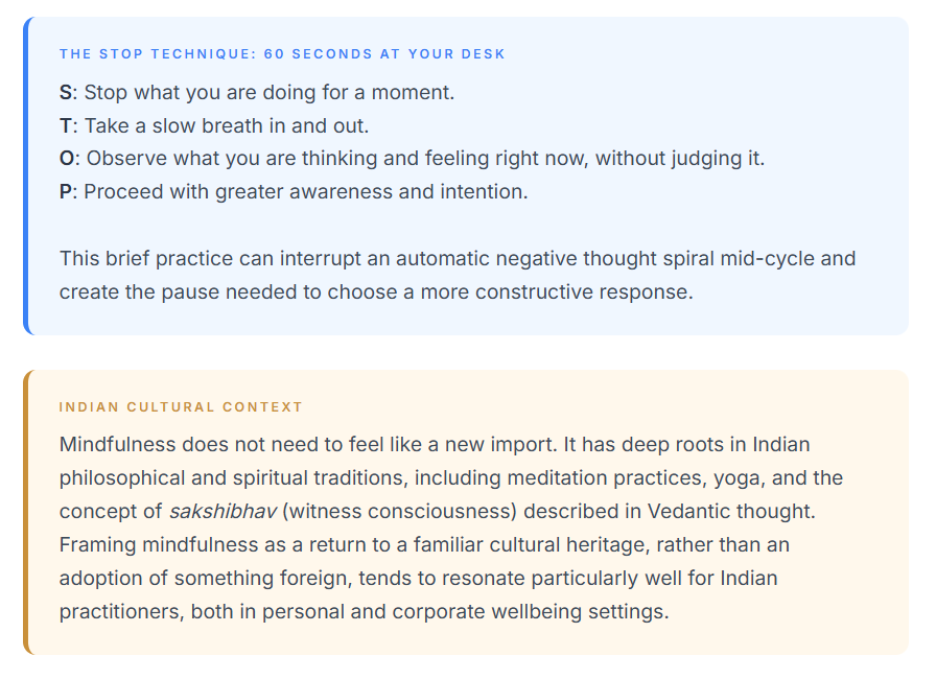
Mindfulness is the practice of observing your thoughts and feelings with curiosity and without immediately judging or acting on them. In the context of positive thinking, mindfulness serves a foundational role: you cannot reframe a thought you have not first noticed. It is the prerequisite skill that makes all other techniques more effective.
Neurologically, mindfulness practice appears to reduce reactivity in the amygdala (the brain's threat-detection centre) and strengthen the prefrontal cortex (the region associated with rational thinking, perspective-taking, and deliberate choice). This creates more space between a triggering event and your response, which is precisely the space in which positive thinking becomes possible.
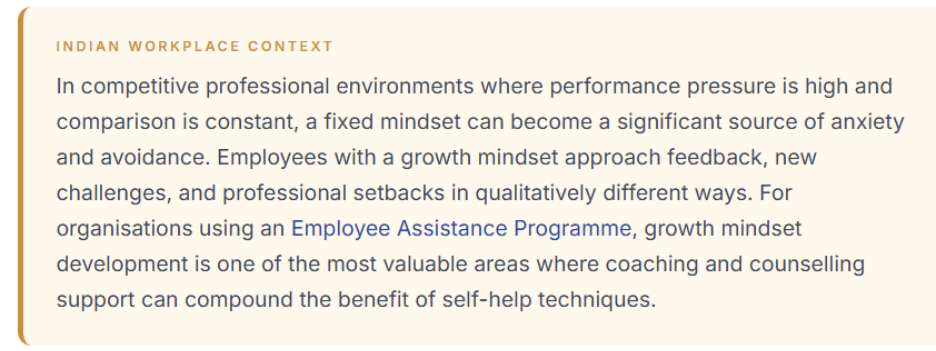
Technique 6: Growth Mindset
Psychologist Carol Dweck's research on mindset identified a fundamental difference in how people relate to their own abilities. A fixed mindset holds that intelligence and talent are largely innate: you either have them or you do not. A growth mindset holds that abilities can be developed through effort, learning, and persistence. People with a growth mindset often show greater persistence and willingness to learn from setbacks.
The growth mindset is essentially the cognitive scaffolding that makes positive thinking sustainable. Without it, a setback can feel like evidence of permanent limitation. With it, the same setback becomes information: something to learn from and try differently next time. This is why developing a growth mindset is one of the most foundational positive thinking techniques available.
The practical application is largely linguistic. When you notice fixed-mindset language arising, try replacing it with growth-mindset alternatives:
- "I failed at this" becomes "I have not figured this out yet"
- "This is too hard for me" becomes "This will take more practice than I expected"
- "I am not a confident person" becomes "I am building confidence through experience"
- "They are just better than me" becomes "I can learn from how they approach this"
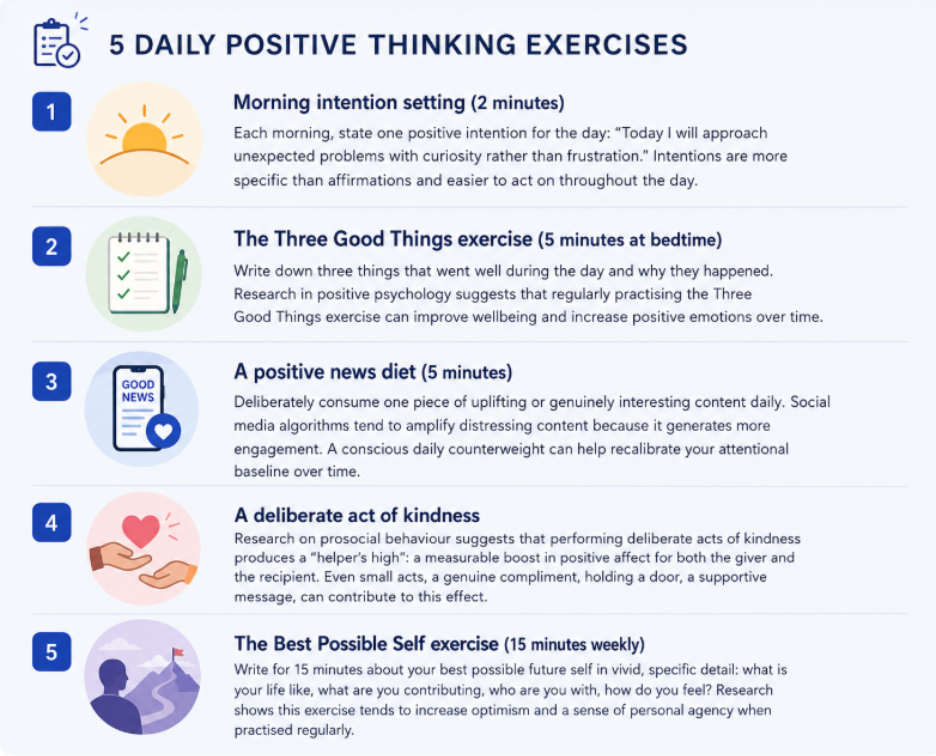
Technique 7: Positive Thinking Exercises You Can Do Daily
Positive thinking is built through small, repeated actions rather than large, occasional interventions. The following five exercises can each be completed in five to fifteen minutes and are well-supported by research on wellbeing and cognitive change. Starting with one and building a genuine habit tends to be more useful than attempting all five at once.
What is a Positive Attitude? 3 Real-Life Examples
Applying positive thinking techniques looks different in practice depending on the situation. These three examples show how the techniques above translate into concrete changes in how people experience and respond to everyday challenges. Each example is designed to feel recognisable rather than aspirational.
Case Example 1: De-personalising criticism
Anjali receives pointed feedback in a team review meeting. Her first instinct is to feel embarrassed and withdraw: "I clearly do not belong here." Using cognitive reframing, she pauses and asks what the feedback actually said versus what she interpreted. The feedback was about a specific deliverable, not about her competence or belonging. She adjusts her internal narrative: "I need to revisit the methodology on that report. That is useful to know." The same situation; a genuinely different emotional and behavioural response.
Case Example 2: Embracing self-compassion
Rahul misses a deadline for the first time in two years and spends the evening in a spiral of self-criticism. Applying self-compassion, as described by researcher Kristin Neff, involves three distinct moves: mindfulness (noticing the self-critical thought without being swept away by it), common humanity (recognising that everyone experiences failure and this does not make him uniquely flawed), and self-kindness (responding to himself with the same care he would offer a colleague in the same situation). The self-criticism does not disappear, but it loses its totalising quality. He plans how to address the missed deadline and moves forward more effectively than he would have in a prolonged shame spiral.
Case Example 3: Changes in outlook and perspective
Meera has been passed over for promotion and is struggling with bitterness. Rather than catastrophising ("This company does not value me, my career is stalled, I should give up"), she tries to hold the situation differently. She asks for a development conversation with her manager to understand what the decision-makers were looking for. She reframes the situation as information about what the next step requires, rather than a verdict on her worth. Over the following months, she uses the growth mindset techniques above to develop specific skills she had identified as gaps. The shift in perspective does not remove the disappointment, but it changes what she does with it.
How Positive Thinking Helps You at Work
The benefits of a positive mental attitude at work extend well beyond morale. Research consistently suggests that positive thinking shapes professional performance in concrete, measurable ways.
- Opens doors: a positive orientation makes people more likely to pursue stretch opportunities, speak up in meetings, and take the kinds of visible risks that tend to lead to career progression
- Supports focus and productivity: positive emotions appear to broaden attentional scope and cognitive flexibility, which supports better focus on complex tasks and more effective prioritisation
- Fuels creativity: Fredrickson's Broaden-and-Build theory specifically proposes that positive emotions widen the range of thoughts and actions a person considers, which is the foundation of creative thinking
- Improves conflict resolution: a positive mindset makes people more inclined to interpret others' difficult behaviour charitably and approach disagreements as problems to solve rather than battles to win
In many Indian corporate environments, imposter syndrome, hierarchy-driven self-doubt, and performance anxiety exist alongside genuine professional pressure and family expectations around achievement. Positive thinking in this context is not about cheerful denial of those pressures. It is about building the internal resources to navigate them without letting them systematically undermine your performance, your relationships, or your wellbeing. For employees where persistent negative thinking is affecting daily functioning, professional counselling support through an Employee Assistance Programme (EAP) can make a significant difference.
Positive Thinking Tips for the Workplace
The techniques above build the foundations; these nine practical tips help integrate positive thinking into the texture of a working day.
1. Surround yourself with positivity where you can
Your environment shapes your thinking more than most people realise. The people you spend the most time with, the content you consume, and the physical spaces you work in all contribute to your default mental state. Small deliberate choices, a few minutes of inspiring content, a working environment with natural light, even a brief phone call with an encouraging friend, can have a cumulative effect.
2. Commit to continuous learning
Approaching your role with genuine curiosity and a commitment to growth keeps you engaged and forward-facing. When you are learning, stagnation and cynicism have less room to take hold. Even one skill developed each quarter can shift how you relate to your work.
3. Celebrate small wins
The completion of a difficult task, a productive meeting, or a problem handled well all deserve brief acknowledgment. Most people move straight from one challenge to the next without pausing to register what they managed. This patterns the brain to focus on the gap (what is not done) rather than the progress (what has been achieved).
4. Practise positive self-talk consciously at work
Notice the internal commentary running during stressful moments at work. When you notice harsh self-judgement or catastrophising, pause and ask: what is the most balanced, constructive interpretation of this situation? Use the language of growth: "not yet" rather than "never", "learning" rather than "failing".
5. Set a positive intention before difficult interactions
Before a challenging meeting, a difficult conversation, or a presentation that makes you nervous, spend two minutes setting an intention: "I will listen before responding" or "I will approach this with curiosity rather than defensiveness." Research on implementation intentions suggests this kind of pre-commitment significantly improves behavioural follow-through.
6. Use mindfulness check-ins during the day
You do not need to meditate for 30 minutes to benefit from mindfulness at work. The STOP technique (described in Technique 5 above) takes 60 seconds and can interrupt a negative thought spiral before it takes hold. Even three mindful breaths before clicking into a stressful email thread can shift your response quality.
7. Protect your work-life balance
Chronic overwork depletes the cognitive and emotional resources that positive thinking requires. Protecting recovery time is not self-indulgence; it is the precondition for sustained mental resilience. Boundaries around working hours, genuine disconnection during holidays, and regular physical activity all support the psychological foundation that makes positive thinking more than an effort of will.
- Recommended Reading: Work-Life Balance in India: Meaning, Benefits & Real Strategies That Work
8. Help create a positive environment for your team
Positive thinking is partly individual and partly cultural. If you are in a position to influence team culture, even informally, small actions matter: recognising colleagues' contributions, approaching problems collaboratively rather than attributing blame, and modelling constructive responses to setbacks can shift the ambient emotional tone of a team over time.
9. Seek support when you need it
Persistent negative thinking that does not respond to self-help efforts is not a character flaw or a sign that you are not trying hard enough. It is a signal that something deeper may be worth exploring with professional support. Accessing counselling or an Employee Assistance Programme is a practical, evidence-consistent step, not an admission of failure.
Conclusion
The 3 great positive thinking techniques at the heart of this guide, cognitive reframing, gratitude practice, and visualisation, have been in clinical and coaching use for decades because they genuinely appear to produce measurable shifts in how people experience themselves and their circumstances. The four additional techniques covered here, positive self-talk, mindfulness, growth mindset, and daily exercises, extend and reinforce those foundations in different ways and for different situations.
What tends to matter most is not which specific technique you choose, but whether you commit to practising it consistently enough for the brain to internalise new patterns. One technique practised daily for two months is considerably more likely to create lasting change than seven techniques sampled once each.
If you find that negative thinking patterns persist despite your best efforts, that is not a sign that the techniques are wrong for you, but it may be a signal that the patterns have roots that benefit from professional support. At 1to1help, our Employee Assistance Programme provides confidential access to trained psychologists and counsellors who can tailor these techniques to your specific situation and help you address what underlies persistent negative thinking patterns.

FAQs
Q1. What are the 3 great positive thinking techniques?
The 3 great positive thinking techniques are: (1) Cognitive reframing, a CBT-based process of identifying automatic negative thoughts, examining the evidence for and against them, and replacing them with more balanced, realistic alternatives; (2) Gratitude practice, the regular acknowledgment of what you are thankful for through journalling, letters, or daily mindful moments, which appears to shift attentional patterns towards positive experience over time; and (3) Visualisation, the practice of creating vivid mental images of desired outcomes to align thinking and behaviour with your goals. Alongside these, positive self-talk, mindfulness, developing a growth mindset, and daily positive thinking exercises are valuable complementary methods that tend to build a more resilient and optimistic default mental state over time.
Q2. What is positive thinking, and why does it matter?
Positive thinking is the intentional practice of directing mental attention towards constructive, optimistic interpretations of situations. It does not mean ignoring difficulties or forcing cheerfulness. Research consistently suggests it may improve mental health, reduce anxiety, lower cortisol, enhance problem-solving, and support physical health outcomes. Importantly, positive thinking is distinct from toxic positivity, which is forced cheerfulness that dismisses genuine emotions and tends to make things worse. Authentic positive thinking acknowledges what is difficult while deliberately choosing to look for opportunities and realistic paths forward. It is a learnable skill rather than a personality trait, and it tends to strengthen with consistent, deliberate practice.
Q3. How do I stop negative thoughts and think more positively?
Stopping negative thoughts often begins with noticing them: mindfulness is the foundational skill here. Once you have identified a negative thought pattern, apply cognitive reframing: ask whether the thought is factually accurate, what evidence supports or contradicts it, and what a more balanced perspective might look like. Replace habitual negative self-talk with specific, believable positive affirmations. Practise the "Three Good Things" exercise daily, writing down three things that went well and why. Over time, these practices appear to rewire neural pathways through neuroplasticity, making positive thinking more automatic. If persistent negative thoughts are significantly affecting daily life or work, professional counseling support can provide personaliSed, evidence-based help.
Q4. Can positive thinking help with anxiety and stress at work?
Research suggests yes, when practised consistently. Cognitive reframing can help interrupt the catastrophising cycle that is common in high-pressure work environments. Mindfulness appears to reduce the amygdala's threat response, which lowers cortisol and creates more space for rational thinking. Positive self-talk can help counteract imposter syndrome and performance anxiety. Gratitude practice shifts attention from stressors to resources. For employees dealing with significant workplace anxiety, these self-help techniques tend to work best alongside professional support through an Employee Assistance Programme (EAP), which provides confidential, accessible counselling in a workplace context.
Q5. How long does it take for positive thinking to work?
Positive thinking is not an overnight transformation; it is a skill built through consistent practice over time. Many people notice subtle shifts in their default thought patterns within two to four weeks of daily practice. Research on the "Three Good Things" exercise shows measurable wellbeing increases after consistent use. Neuroplasticity research confirms that sustained positive thinking practice appears to produce structural changes in the brain over months of regular effort. The key tends to be consistency rather than intensity: five minutes of daily practice for 60 days is generally more effective than one hour occasionally. If you are not noticing change after several weeks, adjusting the specific techniques or seeking guidance from a counsellor can help identify what might work better for your specific situation.
References
- Beck Institute. (n.d.). Understanding cognitive behavior therapy (CBT). https://beckinstitute.org/about/understanding-cbt/
- BetterUp Visualisation Guide: https://www.betterup.com/blog/visualization
- Cleveland Clinic. (2024). Positive thinking: Benefits and how to practice it. https://health.clevelandclinic.org/positive-thinking
- Fredrickson, B. L. (2001). The role of positive emotions in positive psychology: The broaden-and-build theory of positive emotions. American Psychologist, 56(3), 218–226. https://doi.org/10.1037/0003-066X.56.3.218
- Gallup. (2025). Right culture, not employee satisfaction. https://www.gallup.com/workplace/236366/right-culture-not-employee-satisfaction.aspx
- Greater Good in Action. (n.d.). Three good things. Greater Good Science Center, University of California, Berkeley. https://ggia.berkeley.edu/practice/three_good_things
- Harvard Health Publishing. (2024). Positive psychology: Harnessing the power of happiness, mindfulness, and inner strength. https://www.health.harvard.edu/mind-and-mood/positive-psychology-harnessing-the-power-of-happiness-mindfulness-and-inner-strength
- Kross, E., Bruehlman-Senecal, E., Park, J., Burson, A., Dougherty, A., Shablack, H., Bremner, R., Moser, J., & Ayduk, O. (2014). Self-talk as a regulatory mechanism: How you do it matters. Journal of Personality and Social Psychology, 106(2), 304–324. https://doi.org/10.1037/a0035173
- Mayo Clinic Staff. (2024). Positive thinking: Stop negative self-talk to reduce stress. Mayo Clinic. https://www.mayoclinic.org/healthy-lifestyle/stress-management/in-depth/positive-thinking/art-20043950
- Neff, K. (n.d.). What is self-compassion? Center for Mindful Self-Compassion. https://self-compassion.org/what-is-self-compassion/
- Positive Psychology: https://positivepsychology.com/broaden-build-theory/
- Positive Thinking Exercises: https://positivepsychology.com/positive-thinking-exercises/
- Seligman, M. E. P., Steen, T. A., Park, N., & Peterson, C. (2005). Positive psychology progress: Empirical validation of interventions. American Psychologist, 60(5), 410–421. https://doi.org/10.1037/0003-066X.60.5.410
- Verywell Mind. (2024). Benefits of positive thinking and optimism. https://www.verywellmind.com/benefits-of-positive-thinking-2794767
- WOOP Goal Visualisation Method: https://woopmylife.org/


.svg)
.svg)
.svg)
.svg)