


.png)


.png)

Mental Health Concerns
Grief and Loss: Meaning, Stages, Coping Strategies & When to Seek Help in India

.png)
Written by
Aarohi Parakh,
Psychologist and Content Writer

Reviewed by
Sanjana Sivaram,
Psychologist and Clinical Content Head


Introduction
When Meera lost her mother, the house did not just become quieter. It became unfamiliar.
The morning tea was still made at the same time. The television still played in the background. Relatives visited, offered condolences, and gradually returned to their own routines. Within a few weeks, even Meera’s workplace expected her to resume normal functioning.
But nothing about her inner world felt normal.
She would forget why she opened her laptop. She would pause mid-conversation because something reminded her of her mother. Some days she felt intense sadness. Other days, she felt strangely numb. For a few days, she even felt moments of calm, followed by guilt for not feeling sad enough.
This is what grief often looks like. It is not always dramatic or visible. It is quiet, layered, and deeply personal.
In India, grief is both supported and silenced. Supported through rituals, family presence, and community gatherings. Silenced through expectations to be strong, move on quickly, and not “burden others”.
This blog explores grief and loss in depth, not just as a psychological concept but as a lived experience within Indian families, workplaces, and cultural systems.
What Is Grief? Meaning, Definition, and Types of Loss
Understanding the meaning of grief and loss begins with recognising that grief is the natural emotional response to losing something or someone significant. While most people associate grief with death, in psychology, grief extends to any meaningful loss, including the end of a relationship, loss of a job, changes in health or chronic illness, identity crisis, or major life transitions. Simply put, wherever there is attachment, there is the potential for grief.
In loss and grief in psychology, grief is studied within the field of bereavement research. The work of theorists such as Elisabeth Kubler-Ross, J. William Worden, and Margaret Stroebe along with Henk Schut has helped shape how we understand grief today. Modern perspectives view grief not as a problem to be solved but as an adaptive process through which individuals gradually adjust to a changed reality.
Types of Loss Relevant to India
In the Indian context, grief is often associated with bereavement, yet several other forms of loss are equally impactful and frequently overlooked. These losses are often harder to process because they lack social recognition.
- Death of a loved one: The most recognised and socially supported form of grief
Example: After losing her father, Neha found herself surrounded by relatives during the initial mourning period. Yet, once everyone left, she struggled with everyday moments such as eating meals alone or not having someone to call for advice. The support reduced over time, but her grief did not.
- Miscarriage and pregnancy loss: Often minimised or silenced, despite deep emotional impact
Example: Aarti experienced a miscarriage in her second trimester. While she was physically recovering, people around her said things like “you are young, you can try again.” What went unnoticed was her attachment to the child she had already begun to imagine a future with.
- Job loss: Especially relevant post COVID, affecting identity and financial security
Example: Rohan, who worked in a startup, lost his job during layoffs. Beyond financial stress, he struggled with a loss of identity. Work had structured his day, his purpose, and his sense of self. Without it, he felt directionless and increasingly withdrawn.
- Relationship loss: Divorce, separation, or breakups, often accompanied by stigma
Example: After her divorce, Shalini moved back to her parents’ home. While she was coping with emotional pain, she also faced subtle social judgement from extended family. Her grief was not just about the relationship but also about the life she had imagined.
- Loss of health: Chronic illness or disability changing independence and lifestyle
Example: After being diagnosed with a chronic autoimmune condition, Sameer had to give up sports and reduce his workload. He was grieving not just his health, but also his previous version of life and independence.
- Loss of homeland or culture: Migration leading to disconnection from culture, language, identity, and belonging
Example: Priya moved from a small town to Mumbai for work. While the move was a growth opportunity, she often felt a quiet sense of loss, missing familiar food, language, and community. This kind of grief often goes unrecognised because it is seen as a “positive change.”
- Loss of identity: Retirement, empty nest syndrome, or role transitions
Example: After retiring from a 30-year career, Mr. Iyer initially enjoyed the break. Over time, he began to feel a loss of purpose. His daily structure and social interactions had changed, leading to feelings of emptiness he had not anticipated.
- Ambiguous loss: No clear closure, such as a loved one with dementia or estrangement
Example: Kavita’s mother was diagnosed with dementia. While she was physically present, she no longer recognised Kavita. This created a confusing form of grief where her mother was there, yet Kavita couldn’t recognize her anymore, making closure difficult.
India’s cultural diversity plays a significant role in shaping how grief is experienced and expressed. Mourning practices differ across Hindu, Muslim, Sikh, Christian, and tribal communities, each offering distinct rituals and structures that help individuals process loss. At the same time, these cultural frameworks may also influence how openly grief is expressed and how long it is considered acceptable to grieve.
The 5 Stages of Grief: Understanding Kubler-Ross Model
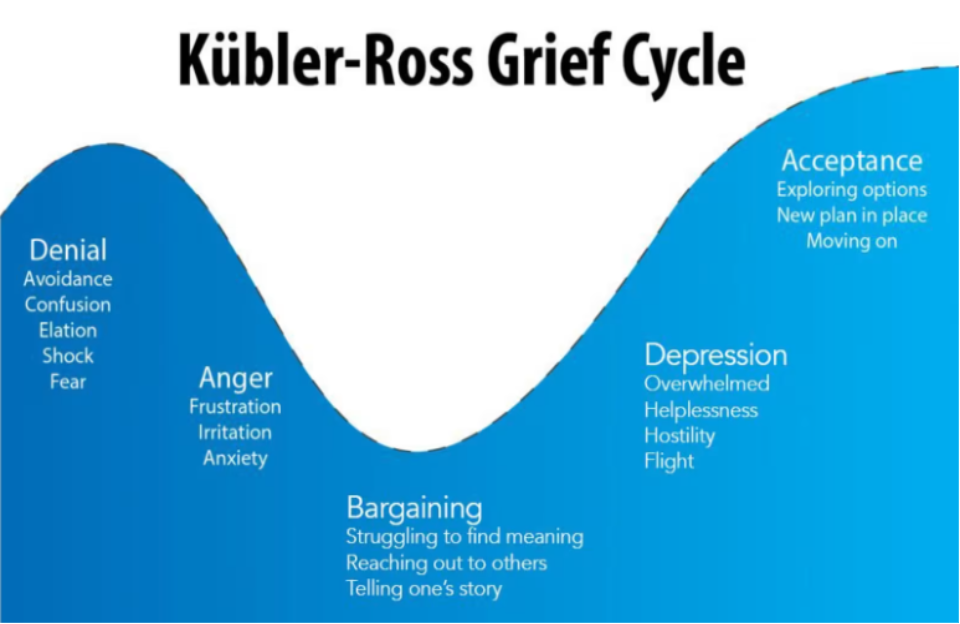
The stages of grief and loss provide a helpful framework to understand how people respond to loss, though they do not capture every individual experience. The stages were first described by Dr. Elisabeth Kübler-Ross in her book On Death and Dying. The model includes five core emotional responses, often remembered as DABDA.
The 5 Stages Explained with Indian Context
- Denial: Difficulty accepting the reality of the loss. It is not the same as a lack of understanding; it is a defense mechanism that protects us from sudden emotional shock.
Example: After losing a parent, a person may continue dialling their number or expecting them to return home, especially in the initial days after rituals are completed
- Anger: Frustration or resentment directed at people, situations, or even faith. It is a normal part of the grieving process, even if it may feel hurtful to others. It is often an expression of deeper grief and can show up in different ways.
Example: Feeling angry at doctors, family members, or questioning “why this happened to me/us” after a sudden medical loss
- Bargaining: Replaying situations with “what if” thoughts (often not based on logic) or making promises to a higher power. During this stage, a person tries to make deals or compromises to ease their pain or change the outcome.
Example: Thinking “if we had taken them to another hospital earlier, things could have been different”
- Depression: Deep sadness, withdrawal, and emotional heaviness. While the earlier stages of grief help to protect from the emotional pain, often these feelings (hopelessness, guilt, sadness) are inevitable at this stage.
Example: Losing interest in daily activities, avoiding social interactions, or struggling to find motivation after the mourning period ends
- Acceptance: A gradual ability to come to terms with the reality of the loss. Individuals stop resisting grief and start focusing on memories and meaning, gradually moving forward.
Example: Returning to routines, engaging with life again, while still holding memories of the person
💡Important to Note: The stages of grief and loss are not linear. People may:
- Experience stages in any order
- Skip certain stages
- Move back and forth between emotions
Disclaimer: This framework was originally created for people facing terminal illness and not grief, and that it’s not a fixed or universal process. Grief is not a checklist or a process to be completed. It is an ongoing adjustment.
An Alternative: Worden’s Tasks of Mourning
Psychologist J. William Worden provided a more practical framework of four tasks that help us understand how people navigate through grief. The sequence of tasks is not in any specific order, and individuals can go back and forth over time.
- Accept the reality of the loss: Integrating the reality of the loss means “taking it in” with your whole being.
- Work through the pain of grief: Instead of suppressing what you are going through, express it emotionally, cognitively, physically, and spiritually.
- Adjust to life without the person: Adjustments are external (new skills and responsibilities), internal (adapting to a new identity), and spiritual (purpose and meaning of life).
- Maintain a connection while continuing life: Balance between remembering the person/what you have lost and living a full life.
This model is often useful in therapy and workplace contexts where individuals look for actionable ways to cope.
When Grief Becomes Complicated
Most people going through grief experience sadness, numbness, guilt, and anger. Over time, the intensity of these feelings usually lessens, allowing them to accept the loss and move forward.
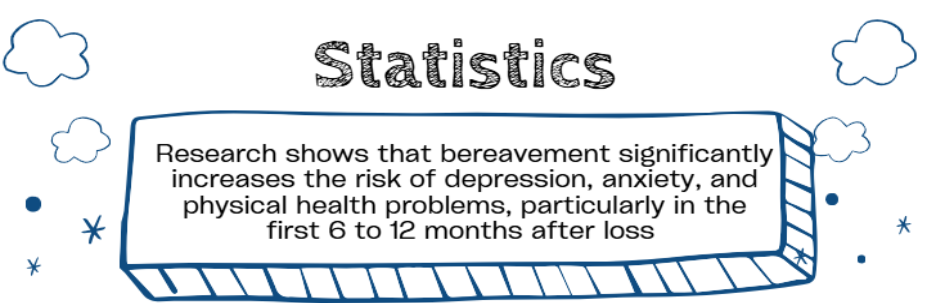
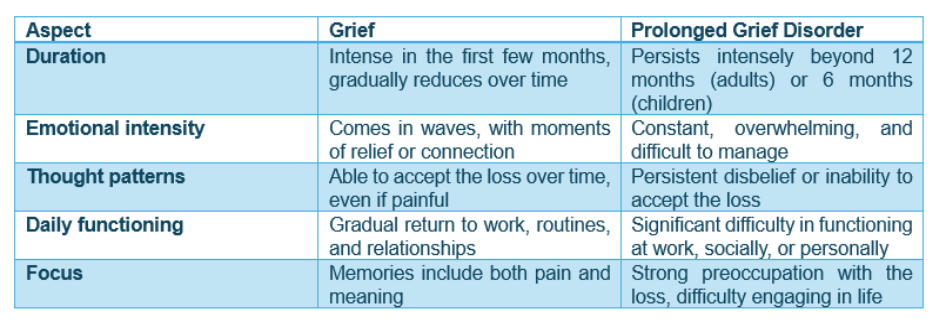
However, in some cases, grief can become prolonged and overwhelming. If intense grief continues to significantly affect daily functioning and does not improve beyond 12 months in adults or 6 months in the case of children, it may indicate complicated grief or prolonged grief disorder and require professional support.
Note for Academic Use: This structured explanation of the stages of grief and loss can serve as a clear reference framework for presentations or teaching material.
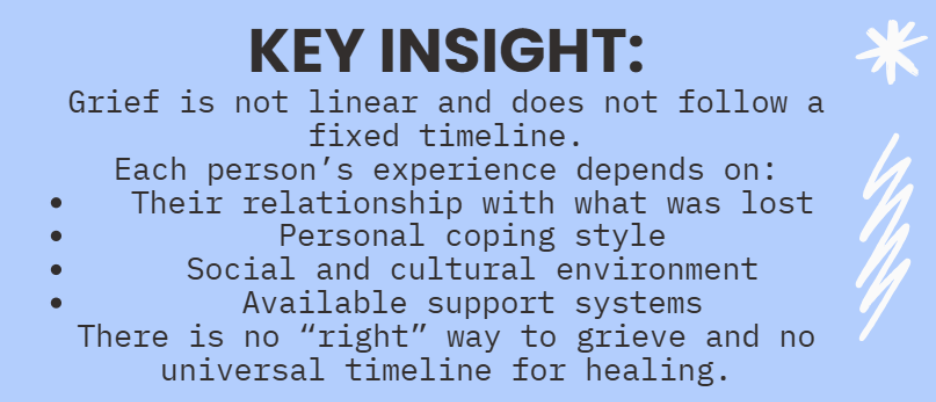
💡Key Insight: Grief does not follow fixed stages. It moves, shifts, and revisits. Understanding this reduces the pressure to “grieve correctly.”
How Grief Manifests: Emotional, Physical, and Behavioural Signs
The signs and symptoms of grief and loss can show up in many ways. Grief is not just an emotional experience. It also affects the body, thoughts, and behaviour. Understanding these patterns can help normalise what often feels confusing or overwhelming.
Emotional Signs
Grief often brings a mix of emotions, sometimes all at once:
- Sadness and deep longing
- Anger or irritability
- Guilt or regret about things said or unsaid
- Anxiety or restlessness
- Loneliness and a sense of emptiness
- Relief in certain situations, such as after prolonged illness
These emotions may come in waves, triggered by memories, places, or dates.
Physical Signs
Grief is also felt in the body, as a somatic experience.
- Fatigue or low energy
- Sleep disturbances, including insomnia or oversleeping
- Changes in appetite
- Weakened immunity or frequent illness
- Body aches, heaviness, or chest tightness
This is because the stress response activated during grief impacts physical health as well.
Cognitive Signs
Grief can affect how you think and process information:
- Difficulty concentrating
- Forgetfulness
- Constant preoccupation with the person or loss
- Replaying memories or “what if” thoughts
- A sense that the person is still present in some way
It is important to note that these experiences are common and do not mean something is wrong.
Behavioural Signs
Grief may also change daily behaviour:
- Withdrawing from social interactions
- Crying unexpectedly
- Visiting meaningful places or holding onto belongings
- Dreaming about the person
- Avoiding reminders of the loss
- Or, in contrast, actively seeking reminders
India-Specific Context
Cultural expectations shape how grief is expressed:
- Men are often expected to remain strong and composed
- Women may express grief openly initially, but are expected to resume roles quickly
- Children’s grief is often overlooked, not understood, or dismissed
These expectations can sometimes prevent healthy emotional processing.
Grief vs Depression
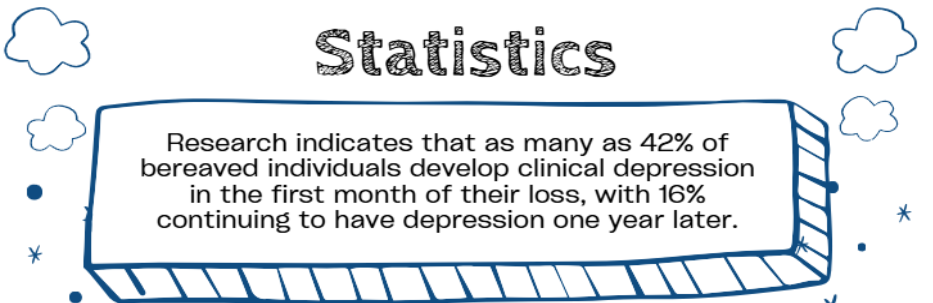
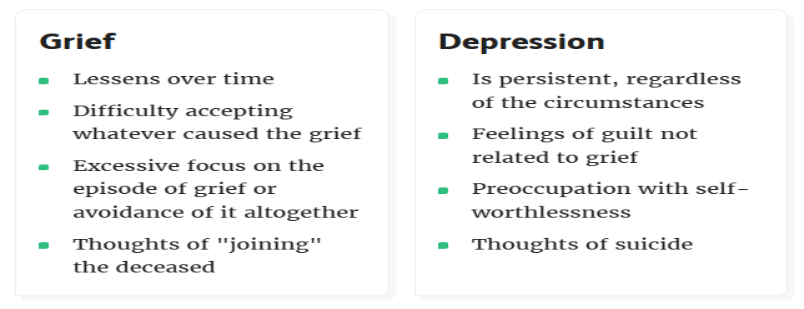
Grief and depression may both involve deep sadness, but they differ significantly in their nature and treatment. Understanding these differences is important for seeking the right help and support.
- Grief tends to come in waves and is linked to specific thoughts or memories
- Depression involves a more constant and pervasive low mood
It should be noted that both grief and depression can co-exist. Prolonged periods of grief can trigger a depressive episode.
Grief in the Workplace: The Invisible Layer
Grief does not stay at home. It shows up at work, often in ways that are misunderstood or overlooked.
Case example:
After losing his wife, Amit returned to work within a week. He was attending meetings and responding to emails, but his focus had dropped. He began missing deadlines, avoiding conversations, and taking frequent sick leave. Over time, his performance declined, and he began considering resignation, not due to a lack of ability but to a lack of support.
How grief impacts work outcomes
Grief directly affects key workplace metrics:
- Absenteeism: Increased sick leave and unplanned time off
- Presenteeism: Being physically present but mentally disengaged
- Productivity loss: Slower work, more errors, reduced output
- Attrition risk: Higher likelihood of disengagement or quitting
Research highlights the scale of this impact:
- Employees experiencing grief can lose up to 30 percent of productivity in the months following a loss
- Studies show that presenteeism often costs organisations more than absenteeism, especially in emotionally distressed employees
The gap in Indian workplaces
- Limited bereavement leave policies
- Lack of manager training on grief support
- Pressure to “bounce back” quickly
- Emotional support that is informal or inconsistent
This often leaves employees managing grief alone while trying to perform.
What actually helps
- Acknowledging the loss with empathy
- Offering flexibility in workload and timelines
- Checking in consistently, not just once
- Creating psychological safety within teams
Role of EAP counselling
Structured support can significantly reduce this gap.
Employee Assistance Programme (EAP) services, such as 1to1help provide:
- Confidential counselling for grief and emotional distress
- Support for managing work during difficult periods
- Guidance for managers on supporting employees
When to Seek Professional Help
Grief is a natural process, but sometimes it can become overwhelming or difficult to manage alone. Seeking support means you are recognising that you need additional help during a difficult time.
Consider reaching out for professional support if you notice:
- Grief is intense and not easing over time
- Daily functioning is affected, including work, sleep, or self-care (6 months or more)
- Persistent feelings of hopelessness, emptiness, or numbness
- Difficulty accepting the loss even after several months
- Increased use of alcohol or substances to cope
- Withdrawal from relationships and social life
- Thoughts of self-harm or not wanting to continue life. In such a scenario, contacting Tele MANAS, emergency services, or someone trusted can be of help.
It is also important to seek help if grief is affecting your ability to function at work, such as difficulty concentrating, frequent absenteeism, or feeling emotionally overwhelmed during routine tasks.
If you or someone you know is struggling with grief and loss, help is available:
- Access confidential counselling through EAP providers such as 1to1help (check with your HR on enrolled EAP services)
- For immediate support, contact Tele MANAS 14416 (free, 24/7, multiple Indian languages)
- Private therapists in major cities and online platforms
💡Key Insight: You do not have to wait for grief to become overwhelming to seek help. Early support can make the process of coping more manageable and less isolating.
Recommended Reading:
- Emotional Crisis: What It Is, What to Do & How to Get Help in India
- Emotional Trauma: Signs, Symptoms & How to Heal — India Guide 2026
- Mental Health at Workplace in India: A Complete Guide for Employers & Employees (2026)
- Employee Counselling: Meaning, Types, Process, Benefits and Importance in HRM (2026)
- Mental Health in India: A Complete Guide to Understanding, Managing & Improving Your Mental Well-Being
Coping with Grief and Loss: What Helps
Coping with grief and loss is not about “moving on” or forgetting. It is about learning how to live with the loss while slowly rebuilding a sense of stability. There is no single right way to cope, but certain approaches can make this process more manageable.
1. Allow Yourself to Grieve
One of the most important steps in coping with grief and loss is giving yourself permission to feel. In many Indian families, there is pressure to “be strong” or return to normal quickly. Suppressing emotions may seem helpful in the short term, but it often delays healing.
Grief needs to be acknowledged, not avoided.
2. Lean on Social Support
Talking to people you trust can reduce the sense of isolation that often comes with grief. This could include friends, family members, or even colleagues.
In the Indian context, communal mourning practices such as antim sanskar, teeja, and chautha play an important psychological role. They provide:
- A shared space to express grief
- Emotional validation
- A sense of continuity and closure
Even after these rituals end, staying connected to supportive people remains important.
3. Maintain Basic Structure and Routine
Grief can disrupt daily life, making even simple tasks feel difficult. Maintaining a basic routine can help create stability.
Focus on small, manageable actions:
- Eating regular meals
- Maintaining a sleep schedule
- Engaging in light daily activity
You do not need to feel motivated. Consistency matters more than intensity.
4. Memorisation
Staying connected to what or who you have lost can be comforting. This is known as continuing bonds and is a healthy part of grief.
You might try:
- Writing about the person or your memories
- Creating a memory box
- Lighting a diya or observing anniversaries
- Visiting meaningful places
These rituals help integrate the loss into your life.
5. Physical Activity
Physical movement can support emotional recovery. Gentle activities such as walking or yoga can:
- Reduce stress and anxiety
- Improve sleep
- Support emotional regulation
Even short, regular movement can make a difference.
6. Seek Professional Support
If grief feels overwhelming or persists over time, professional support can help you process emotions safely and at your own pace. Reaching out to Tele MANAS helpline 14416 or accessing EAP counselling services can be a starting point.
7. Join Grief Support Groups
Support groups are becoming more common in Indian cities and can be particularly helpful for shared experiences such as:
- Pregnancy or infant loss
- Suicide bereavement
- Pet loss
Being with others who understand your experience can reduce feelings of isolation.
To find a list of support groups in India to help you navigate grief, click here.
When a Wave of Grief Hits Suddenly
Grief often comes in waves, sometimes without warning. This can happen at work, in public, or during routine moments.
In those moments, you can try:
- Pause and breathe: Slow, deep breathing can help regulate your body
- Ground yourself: Notice 5 things you can see, 4 you can touch, 3 you can hear, 2 you can smell, and 1 you can taste
- Take a short break: Step away if possible, even for a few minutes
- Use a small anchor: A message, photo, or object that feels comforting
The goal is not to stop the feeling, but to help yourself move through it safely.
Managing Grief Triggers During the Workday
Grief can be triggered by emails, conversations, dates, or even routine tasks.
Helpful strategies include:
- Breaking tasks into smaller steps
- Taking short, intentional pauses during the day
- Letting a trusted colleague or manager know you may need flexibility
- Avoiding self-criticism on difficult days
Grief affects concentration and energy. Adjusting expectations during this time is not a weakness, it is a realistic response.
💡Key Insight: Coping with grief and loss is not about doing everything perfectly. It is about taking small, consistent steps while allowing yourself the space to heal.
Disclaimer: While self-help strategies can support grief, therapy offers more structured support when things feel overwhelming

Grief Therapy and Counselling in India
Searching for grief and loss therapy or counselling in India often comes from a place of feeling stuck, overwhelmed, or unsure how to cope. While grief is a natural process, therapy can provide structured support when emotions feel difficult to manage alone.
What Grief Therapy Looks Like
Most grief and loss counselling in India is offered through outpatient therapy, either in-person or online. Unlike what some people expect when searching for grief and loss rehabs or treatment centres, residential programmes specifically for grief are rare in India.
Instead, support typically includes:
- One-on-one therapy sessions
- Regular emotional processing and guidance
- Support in rebuilding daily functioning
- Integration of grief into ongoing life
This format allows individuals to continue their daily routines while receiving professional support.
Evidence-Based Approaches Used in Therapy
Different therapeutic approaches are used depending on individual needs, the nature of the loss, and how grief is affecting daily functioning. In the Indian context, these approaches are often adapted to align with cultural beliefs, family systems, and lived realities.
- Complicated Grief Treatment (CGT)
This approach is used when grief remains intense and does not ease over time. It combines elements of cognitive and emotional processing to help individuals gradually accept the loss while re-engaging with life. The focus is on working through avoided emotions and rebuilding routines.
Example: After losing her spouse, Sunita found herself unable to enter certain rooms in her home or engage in social activities even a year later. In therapy, she slowly began revisiting these avoided spaces, talking about her loss, and reintroducing small daily routines, helping her reconnect with life while still holding on to her memories.
- Grief-focused Cognitive Behavioural Therapy (CBT)
This approach helps identify and change unhelpful thought patterns that can intensify grief. It focuses on reducing avoidance, managing overwhelming emotions, and building coping strategies.
Example: Rahul kept thinking, “I could have prevented this,” after his father’s death. This thought led to guilt and withdrawal. Through therapy, he learned to examine these thoughts, understand their emotional impact, and gradually shift towards more balanced perspectives, reducing his guilt and emotional distress.
- Meaning-Making Therapy
This approach helps individuals make sense of their loss and rebuild a sense of purpose. It is especially relevant when the loss disrupts one’s identity or worldview.
Example: After losing her child, Meera struggled to find meaning in her life. In therapy, she began exploring ways to honour her child’s memory through small acts, such as volunteering and creating rituals. Over time, this helped her reconnect with a sense of purpose without diminishing her grief.
- Narrative Therapy
This approach focuses on storytelling and reframes the narrative. It allows individuals to express, organise, and reshape their experience of loss in a way that feels meaningful and less overwhelming.
Example: Arjun found it difficult to talk about his brother’s sudden death. In therapy, he began sharing stories about their relationship, from childhood memories to recent moments. This helped him move from focusing only on the loss to also recognising the bond they shared.
These approaches do not remove grief, but they help individuals process it, reduce distress, and gradually adapt to life after loss.
Quotes on Grief and Loss
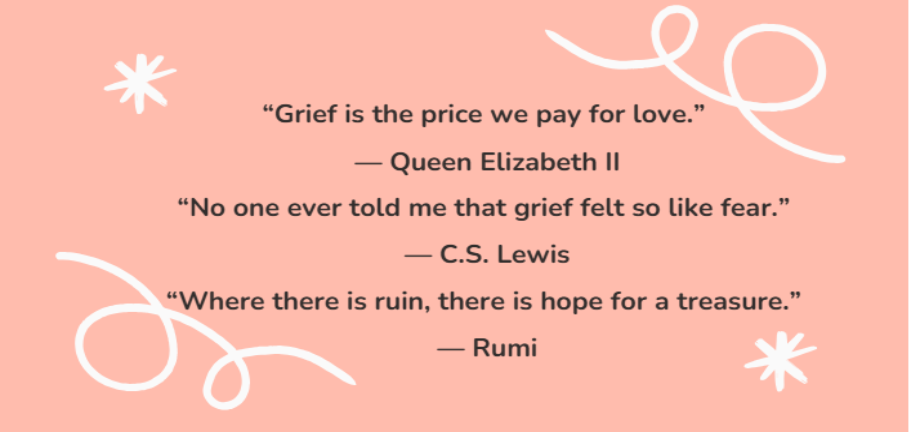
Grief is deeply personal, yet universally understood. In Indian philosophical thought, grief is often seen as part of life’s impermanence, reminding us of both attachment and meaning. These reflections often resonate:
Grief in the Indian Cultural Context
Grief in India is deeply shaped by cultural, religious, and social practices. These mourning traditions influence how people experience loss and the kind of support they receive.
Role of Rituals in Grief
Across Indian communities, mourning rituals provide structure during a time of emotional chaos.
- Hindu traditions
Practices such as the 13-day mourning period (shraddh) and annual pind daan rituals create a structured grieving process. These rituals help individuals gradually accept the loss, express emotions within a social framework, and maintain a continuing bond with the deceased.
- Muslim traditions
Mourning typically lasts three days, with prayers and community gatherings. This collective approach allows grief to be shared, reducing isolation and acting as a buffer against prolonged or complicated grief.
- Sikh, Christian, and tribal traditions
While practices vary, they commonly involve prayer, community presence, and remembrance. Across cultures, the core function remains similar: providing emotional support and a sense of closure.
Disenfranchised and Stigmatised Grief
Not all grief is openly acknowledged in India.
Some forms of loss are often minimised or silenced:
- Miscarriage or pregnancy loss, often dismissed with “you can have another child”
- Suicide bereavement, sometimes concealed due to stigma
- LGBTQ relationship loss, which may not be recognised by families
- Pet loss, often seen as less significant
This is known as disenfranchised grief, where the loss is not socially validated. When grief is not acknowledged, it can become harder to process.
Changing Social Structures
India’s shift from joint families to nuclear households has changed how grief is experienced.
- Traditional systems offered shared mourning and collective support
- Urban living often leads to isolation during grief
- People may return to routines quickly without adequate emotional processing
As a result, many individuals in urban India navigate grief with limited support.
💡Key Insight: Cultural rituals can support healing, but when grief is unrecognised or unsupported, it often becomes more complex and harder to cope with.
Conclusion
Meera, from our opening, chose to seek support over time. In therapy, she engaged in meaning-making work, reflecting on her relationship with her mother and finding small ways to stay connected, such as cooking her mother's recipes and writing down memories. Her grief did not disappear, but it became something she could carry with more ease.
This is often what healing looks like. Not moving on, but learning to live with the loss.
If you are grieving, your experience may look different, and that is okay. There is no right way or timeline.
If it feels overwhelming, you can reach out to Tele MANAS (14416) for immediate support, or access EAP counselling services such as 1to1help for a confidential space to process your experience.
You do not have to go through this alone.
FAQs
Q1. What is grief and loss?
Grief is the natural emotional, physical, and psychological response to loss of any kind. Loss and grief are deeply intertwined; every significant loss (death, divorce, job, health, or major life change) can trigger a grief response. In psychology, grief is understood as an adaptive process of adjusting to life after loss, not a problem to be fixed. Grief is universal but expressed differently across cultures. In India, mourning practices vary widely across Hindu, Muslim, Sikh, and Christian communities, all of which provide important social structures for processing loss. There is no "right" way to grieve, and no fixed timeline for recovery.
Q2. What are the stages of grief?
The most well-known grief framework is Elisabeth Kubler-Ross's 5 stages: Denial (difficulty accepting the loss), Anger (at the person, at oneself, at God, at life), Bargaining (what-if and if-only thoughts), Depression (deep sadness and withdrawal), and Acceptance (finding a way to live with the loss). However, these stages are not linear; people may experience them in any order, skip stages, or return to earlier stages. An alternative model, Worden's Tasks of Mourning, suggests four tasks: accepting the reality of loss, processing the pain, adjusting to a new reality, and finding a way to maintain a connection with what was lost.
Q3. How long does grief last?
There is no fixed timeline for grief. Most people experience the most intense grief in the first 3–6 months after a significant loss, with gradual easing over the following year. Grief naturally resurfaces around anniversaries, birthdays, and holidays. Prolonged Grief Disorder (complicated grief) is diagnosed when intense grief significantly impairs functioning beyond 12 months. In India, cultural expectations often pressure people to "move on" faster than is emotionally healthy. It is important to resist this pressure and allow yourself adequate time to grieve. If grief is severely impacting your daily life functioning after 6 months or more, professional support is recommended.
Q4. When should I seek grief counselling?
Consider seeking grief counselling or therapy when: grief has significantly impaired your work, relationships, or self-care for more than 6 months; you are using alcohol or substances to cope with grief; you are having thoughts of self-harm or suicide; you feel completely unable to accept the loss; or you are experiencing prolonged depression, extreme anxiety, or dissociation. In India, grief therapy is available through Tele MANAS at 14416, EAP counselling services (if you are working in an organisation that has EAP services), and private therapists.
Q5. Is it normal to feel angry when grieving?
Yes, anger is one of the most common and least talked-about emotions in grief. You may feel angry at the person who died for leaving you, at doctors who could not save them, at God or the universe, at yourself for things left unsaid, or at others who seem untouched by the loss. In India, expressing anger during bereavement is often socially discouraged, particularly for women and for the primary mourner. But suppressed grief and anger can emerge as depression, irritability, or physical symptoms. Anger in grief is normal, valid, and an important part of the grieving process. A grief counsellor can help you express and process it safely.
Additional Resources
- Grief Roller Coaster- Metaphor for Grief (Therapist Aid) : https://www.therapistaid.com/worksheets/grief-roller-coaster
- Grief Myths- Therapist Aid : https://www.therapistaid.com/worksheets/grief-myths
- Coping Tools Worksheet- The Loss Foundation : https://thelossfoundation.org/wp-content/uploads/2025/11/Fre-PDF-Coping-Tools-Grief-Worksheet.pdf
- Treasured Memories Worksheet- The Loss Foundation : https://thelossfoundation.org/wp-content/uploads/2025/11/Free-Grief-Worksheet-Treasured-Memories.pdf
- The Wheel of Self-Care- The Loss Foundation : https://thelossfoundation.org/wp-content/uploads/2025/11/Self-Care-in-Grief-Free-PDF.pdf
References
- Asian Indian Funeral Service. (n.d.). Antim sanskar: Final rites and farewell traditions. https://www.asianindianfuneralservice.com/blog/blog/antim-sanskar-final-rites-a-sacred-journey-of-farewell-and-liberation
- Better Health Victoria. (n.d.). Empty nest syndrome. https://www.betterhealth.vic.gov.au/health/healthyliving/empty-nest-syndrome
- BetterUp. (n.d.). Identity crisis: What it is and how to navigate it. https://www.betterup.com/blog/identity-crisis
- BetterUp. (n.d.). Ways to manage major life transitions. https://mywellbeing.com/therapy-101/8-ways-to-manage-major-life-transitions
- Britannica. (n.d.). Elisabeth Kübler-Ross. https://www.britannica.com/biography/Elisabeth-Kubler-Ross
- Child Bereavement UK. (n.d.). Grief theory FAQs. https://www.childbereavementuk.org/faqs/grief-theory-3
- Cleveland Clinic. (n.d.). Depression. https://my.clevelandclinic.org/health/diseases/9290-depression
- Cleveland Clinic. (n.d.). Dementia. https://my.clevelandclinic.org/health/diseases/9170-dementia
- Cleveland Clinic. (n.d.). Grief. https://my.clevelandclinic.org/health/diseases/24787-grief
- Cleveland Clinic. (n.d.). Sleep disorders. https://my.clevelandclinic.org/health/diseases/11429-sleep-disorders
- Cleveland Clinic. (n.d.). Substance use disorder. https://my.clevelandclinic.org/health/diseases/16652-drug-addiction-substance-use-disorder-sud
- Cleveland Clinic. (n.d.). Self-harm. https://my.clevelandclinic.org/health/diseases/12201-self-harm
- Griefline. (n.d.). Relationship loss and grief. https://griefline.org.au/resources/relationship-loss/
- Harvard Health Publishing. (n.d.). The 5 stages of grief. https://www.health.harvard.edu/mind-and-mood/5-stages-of-grief-coping-with-the-loss-of-a-loved-one
- Healthdirect Australia. (n.d.). Grief and loss. https://www.healthdirect.gov.au/grief-loss
- Healthline. (n.d.). Grief after chronic illness diagnosis. https://www.healthline.com/health/chronic-illness/stages-of-grief-new-medical-diagnosis
- HelpGuide. (n.d.). Coping with grief and loss. https://www.helpguide.org/mental-health/grief/coping-with-grief-and-loss
- HelpGuide. (n.d.). Job loss and unemployment stress. https://www.helpguide.org/mental-health/stress/job-loss-and-unemployment-stress
- Hopkins Medicine. (n.d.). Grief and loss. https://www.hopkinsmedicine.org/health/caregiving/grief-and-loss
- iFeel Online. (n.d.). Absenteeism and presenteeism. https://ifeelonline.com/occupational-health/absenteeism-and-presenteeism/
- International Journal of Indian Psychology. (2025). Grief-related research in Indian populations. https://ijip.in/wp-content/uploads/2025/05/18.01.226.20251302.pdf
- Mayo Clinic. (n.d.). Complicated grief. https://www.mayoclinic.org/diseases-conditions/complicated-grief/symptoms-causes/syc-20360374
- Mental Health Foundation. (n.d.). Meaning-making in grief. https://www.mentalhealth.org.uk/explore-mental-health/blogs/meaning-making-living-and-thriving-through-grief
- MyWellbeing. (n.d.). Life transitions and mental health. https://mywellbeing.com/therapy-101/8-ways-to-manage-major-life-transitions
- National Institutes of Health. (2019). Grief and bereavement research. https://pmc.ncbi.nlm.nih.gov/articles/PMC6844541/
- National Institutes of Health. (2022). Mental health and workplace outcomes. https://pmc.ncbi.nlm.nih.gov/articles/PMC9517808/
- National Institutes of Health. (n.d.). Bereavement and mental health. https://pmc.ncbi.nlm.nih.gov/articles/PMC3384444/
- Our House Grief Support Center. (n.d.). Four tasks of mourning. https://www.ourhouse-grief.org/grief-pages/grieving-adults/four-tasks-of-mourning/
- Positive Psychology. (n.d.). Grief counselling approaches. https://positivepsychology.com/grief-counseling/
- Positive Reset. (n.d.). Narrative therapy for grief. https://positivereseteatontown.com/narrative-therapy-for-grief-grief-and-loss-therapy/
- Psychiatry Advisor. (n.d.). Grief-focused CBT effectiveness. https://www.psychiatryadvisor.com/news/grief-focused-cbt-in-group-and-individual-settings-beneficial-for-older-adults-with-bereavement/
- Psychology Today. (n.d.). Guilt. https://www.psychologytoday.com/us/basics/guilt
- Psychology Today. (n.d.). Loneliness. https://www.psychologytoday.com/us/basics/loneliness
- Psychology Today. (2024). Understanding estrangement. https://www.psychologytoday.com/us/blog/forces-of-nature/202410/estranged-means-different-things-to-different-people
- Shapes of Grief. (n.d.). Margaret Stroebe and grief research. https://shapesofgrief.com/contributors/dr-margaret-stroebe/
- Tele-MANAS. (n.d.). Tele Mental Health Assistance and Networking Across States. https://telemanas.mohfw.gov.in/home
- Times of India. (n.d.). Funeral traditions in India. https://timesofindia.indiatimes.com/life-style/travel/things-to-do/after-death-5-unique-and-unheard-funeral-traditions-in-india-that-will-leave-you-fascinated/articleshow/124151251.cms
- UW Retirees Association. (n.d.). Psychological journey of retirement. https://retirees.uw.edu/resources/retirement-transitions/the-retirement-process-a-psychological-and-emotional-journey/
- Verywell Mind. (n.d.). Emotional numbing. https://www.verywellmind.com/emotional-numbing-symptoms-2797372
- Verywell Mind. (n.d.). Grief vs depression. https://www.verywellmind.com/grief-and-depression-1067237
- Verywell Mind. (n.d.). Hopelessness and coping. https://www.verywellmind.com/9-things-to-do-if-you-feel-hopeless-5081877
- What’s Your Grief. (n.d.). Dual process model of grief. https://whatsyourgrief.com/dual-process-model-of-grief/


.svg)
.svg)
.svg)
.svg)