


.png)


.png)

Personal Growth & Well Being
How to Stay Fit: 12 Science-Backed Ways to Build Lasting Physical Health
.jpg)
.png)
Written by
Aarohi Parakh,
Psychologist and Content Writer

Reviewed by
Sanjana Sivaram,
Psychologist and Clinical Content Head


Introduction: Why Staying Fit Is About More Than the Body
When people think about how to stay fit, they often picture weight loss, toned muscles, or reaching a particular number on the weighing scale. While these can be meaningful goals for some people, physical fitness is much broader than appearance. It reflects how well your body functions, how much energy you have throughout the day, and how effectively you recover from both physical and emotional demands.
Research increasingly suggests that physical and mental wellbeing are deeply interconnected. Regular movement not only strengthens the heart and muscles. It may also improve mood, reduce stress, support better sleep, and enhance concentration. Likewise, ongoing stress, anxiety, or poor sleep can make it harder to exercise consistently, eat nourishing foods, or maintain healthy routines.
This relationship is often described as bidirectional. Looking after your body can positively influence your mental wellbeing, while caring for your mental health may make it easier to build sustainable fitness habits.
If you have ever wondered how to stay fit and healthy for the long term, the answer is unlikely to lie in quick fixes or intense workout challenges. Sustainable physical health is usually built through small, consistent habits that work together over time.
In this guide, we'll explore 12 science-backed ways to stay fit by focusing on five essential pillars:
- Regular movement and exercise
- Balanced nutrition
- Hydration
- Quality sleep
- Effective stress management
Rather than simply telling you what to do, we'll also explain why each habit matters, helping you make informed choices that support both your physical and mental wellbeing.
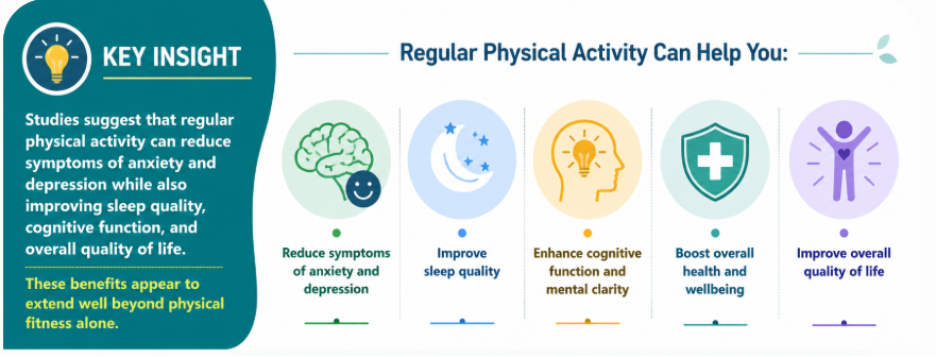
Why Physical Fitness Matters Beyond the Scale
For many people, fitness goals revolve around losing weight. However, the number on the scale tells only a small part of the story. Someone can improve their cardiovascular health, build strength, sleep better, and feel more energetic, even if their weight changes very little.
Understanding why staying fit matters can make it easier to stay motivated, especially when progress feels slow.
Physical Fitness Supports Heart and Metabolic Health
Regular physical activity strengthens the heart, improves circulation, and helps regulate blood pressure and blood sugar levels. According to the World Health Organization, adults who stay physically active have a lower risk of developing heart disease, stroke, type 2 diabetes, and several cancers.
Even moderate activities such as brisk walking, cycling, dancing, or swimming can contribute towards these health benefits when performed consistently.
Exercise Helps Keep Your Brain Healthy
Movement benefits the brain just as much as the body.
Exercise may increase the production of Brain-Derived Neurotrophic Factor (BDNF), a protein that supports learning, memory, and the growth of new neural connections. Researchers have linked regular physical activity with improved attention, faster information processing, and a lower risk of cognitive decline as we age.
This is one reason why many people notice that they think more clearly after a walk or workout.
Fitness and Mental Health are Closely Connected
One of the most valuable benefits of physical fitness is its impact on emotional wellbeing.
Regular exercise encourages the release of endorphins and influences neurotransmitters such as serotonin and dopamine, which play important roles in mood regulation. Physical activity may also help lower cortisol, the body's primary stress hormone, making it easier to manage everyday pressures.
At the same time, improved fitness often increases confidence and self-efficacy, the belief that you can successfully achieve goals. This positive cycle can make other healthy habits feel more achievable, too.
For organisations like 1to1help that offer counselling support to clients, this connection is especially important. Physical fitness is not viewed simply as exercise or weight management. It is considered one part of a holistic approach to overall wellbeing.
How Much Exercise Do You Actually Need?
One of the biggest misconceptions about fitness is that you need to exercise for hours every day.
WHO recommendations for adults have been highlighted below:
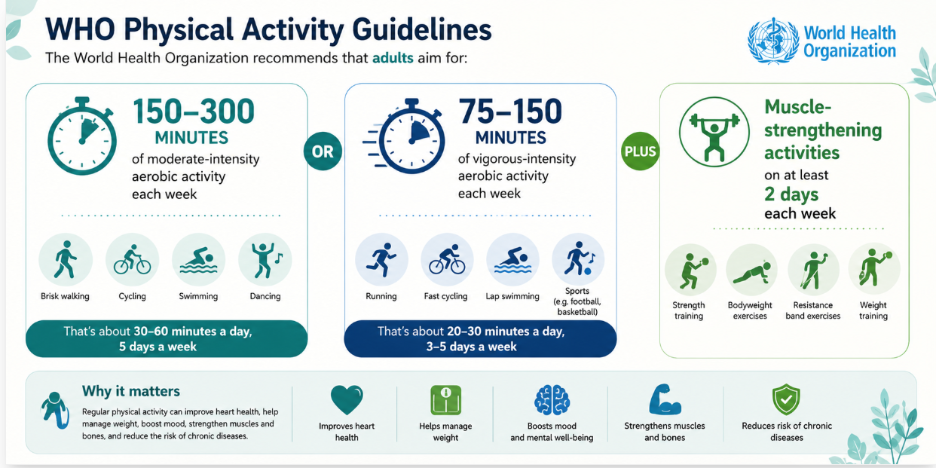
This works out to around 30 minutes of moderate activity on five days a week, which many people can build towards gradually.
The good news is that every movement counts. Taking the stairs, walking to nearby shops, stretching between meetings, or playing with children all contribute to a more active lifestyle.
Rather than aiming for perfection, it may be more helpful to focus on consistency. Small actions repeated regularly often have a greater long-term impact than occasional bursts of intense effort.
The 12 Ways to Stay Fit: A Structured Guide
If you're wondering how to stay fit and healthy, there isn't a single habit that delivers lasting results. Sustainable fitness is usually built through a combination of consistent movement, nourishing food, quality sleep, good hydration, and effective stress management.
The following 12 science-backed ways to stay fit are organised into five key pillars of physical health. Rather than focusing on quick fixes, these strategies aim to help you build habits that are realistic, enjoyable, and easier to maintain over time.
Movement & Exercise
Regular movement forms the foundation of physical fitness. It supports heart health, strengthens muscles and bones, improves mood, enhances sleep, and helps maintain a healthy weight. The good news is that you don't need to become a marathon runner or spend hours at the gym to experience these benefits. Small, consistent actions often make the biggest difference.
Tip 1: Move More Throughout the Day
One of the simplest ways to stay fit is to reduce the time you spend sitting.
Many people believe that exercising for an hour each day is enough. However, research suggests that prolonged sitting may still increase the risk of cardiovascular disease, type 2 diabetes, and premature mortality, even among people who exercise regularly. Research suggests that extended periods of sedentary behaviour are independently associated with poorer health outcomes.
If you work at a desk, try breaking up long periods of sitting with short movement breaks. Even standing, stretching, or walking for two to three minutes every hour can help improve circulation and reduce metabolic strain.
Simple ways to move more include:
- Taking the stairs instead of the lift
- Walking while answering phone calls
- Parking slightly farther from your destination
- Stretching between meetings
- Setting a reminder to stand up every 50 to 60 minutes
These small bursts of activity may seem insignificant on their own, but they can add up over the course of a day.
💡Pro Tip: Pair movement with existing habits. Walk while listening to podcasts, pace during work calls, or stretch while waiting for your morning tea to brew. Habit stacking often makes new routines easier to maintain.
Tip 2: Build a Consistent Exercise Routine
If you're searching for fitness tips for beginners, remember that consistency matters far more than intensity.
Many people start with ambitious workout plans that become difficult to maintain. Instead, choose activities you genuinely enjoy and gradually build from there.
A balanced fitness routine generally includes three types of exercise:
Cardiovascular exercise: Activities such as brisk walking, cycling, swimming, jogging, or dancing strengthen the heart and lungs while improving endurance.
Strength training: Exercises using body weight, resistance bands, dumbbells, or gym equipment help build muscle, improve bone health, and increase metabolic efficiency.
Flexibility and mobility: Yoga, Pilates, stretching, and mobility exercises improve range of motion, reduce stiffness, and may lower the risk of injury.
If you're just beginning, you don't need to master all three immediately.
A realistic starting point could be:
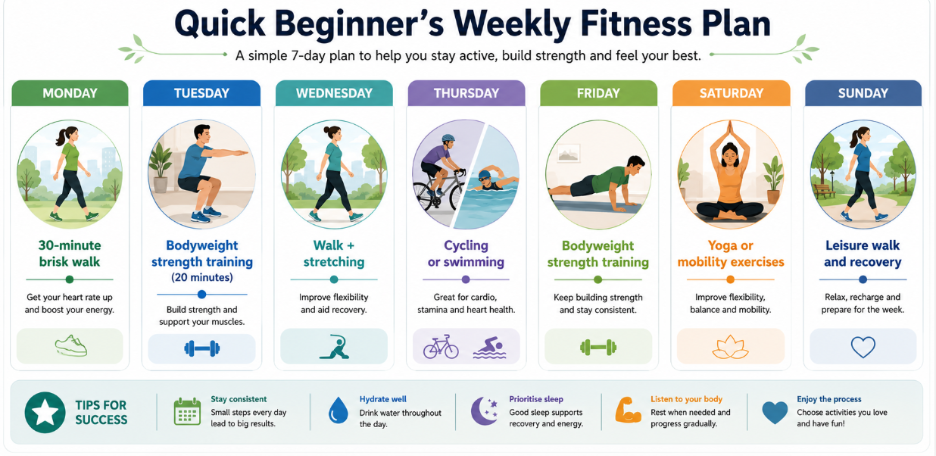
- A 20 to 30-minute brisk walk five days a week
- One or two beginner strength sessions each week
- Five to ten minutes of stretching after exercise
Building gradually gives your body time to adapt while making the routine easier to sustain over the long term.
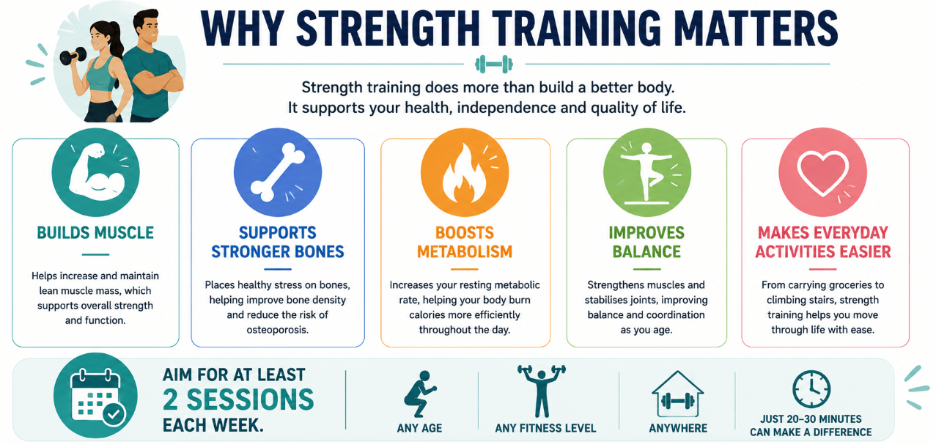
Tip 3: Prioritise Strength Training
When people think about fitness, cardio often gets most of the attention. Yet strength training is just as important, especially as we grow older.
From around the age of 30, adults naturally begin to lose muscle mass if they do not regularly challenge their muscles. This gradual decline can affect balance, metabolism, bone strength, and everyday function.
Resistance training helps slow this process while improving posture, supporting healthy joints, and making daily activities feel easier.
You don't need an expensive gym membership to get started.
Some beginner-friendly options include:
- Squats
- Lunges
- Push-ups against a wall
- Glute bridges
- Resistance band exercises
- Planks
Aim for two to three strength-training sessions each week, allowing your muscles time to recover between workouts.
For those wondering how to be physically fit at home, bodyweight exercises are an excellent place to begin because they require little or no equipment.
💡Did You Know? Research from McMaster University suggests that maintaining muscle mass is strongly associated with healthy ageing, mobility, and long-term independence.
Tip 4: Aim for 8,000 to 10,000 Steps Each Day
Walking remains one of the most accessible ways to improve physical health.
It requires no specialised equipment, suits most fitness levels, and can easily fit into daily routines. Whether you walk during your lunch break, after dinner, or while commuting, these minutes contribute to your overall activity level.
Recent research published in JAMA Network Open found that adults who averaged about 8,000 steps per day had a significantly lower risk of premature death compared with those who walked about 4,000 steps per day.
Rather than worrying about reaching exactly 10,000 steps, it may be more helpful to focus on gradually increasing your usual activity level. Even moving from 3,000 to 6,000 daily steps can provide meaningful health benefits.
If you work from home, consider:
- Taking walking breaks between meetings
- Walking while speaking on the phone
- Using nearby shops instead of driving
- Choosing stairs whenever possible
- Going for a short walk after meals
Walking is also one of the easiest ways to stay fit at home if outdoor space is limited. Walking indoors, climbing stairs, or following guided walking workouts can all help you stay active.
Note: While many people use 8,000–10,000 steps as a useful benchmark, depending on your baseline activity, one can aim lower and still reap benefits.
💡Key Takeaway
You don't have to exercise perfectly to become healthier.
The most effective fitness routine is often the one you can continue for months and years, rather than days or weeks. Start where you are, progress gradually, and focus on building habits that fit naturally into your lifestyle.
Small, consistent actions performed regularly are far more likely to support lasting physical health than occasional bursts of intense effort.
Nutrition
When people think about how to stay fit and healthy, exercise often takes centre stage. Yet what you eat plays an equally important role in supporting energy, recovery, immunity, and long-term health.
A healthy diet doesn't have to be restrictive or complicated. Instead of chasing the latest food trends, focus on eating a variety of nutrient-rich foods that nourish your body consistently. Small, sustainable changes are often easier to maintain and may have a greater impact over time than drastic dietary overhauls.
Tip 5: Fill Your Plate with a Rainbow of Fruits and Vegetables
One of the simplest physical fitness tips is to eat a wide variety of colourful fruits and vegetables every day.
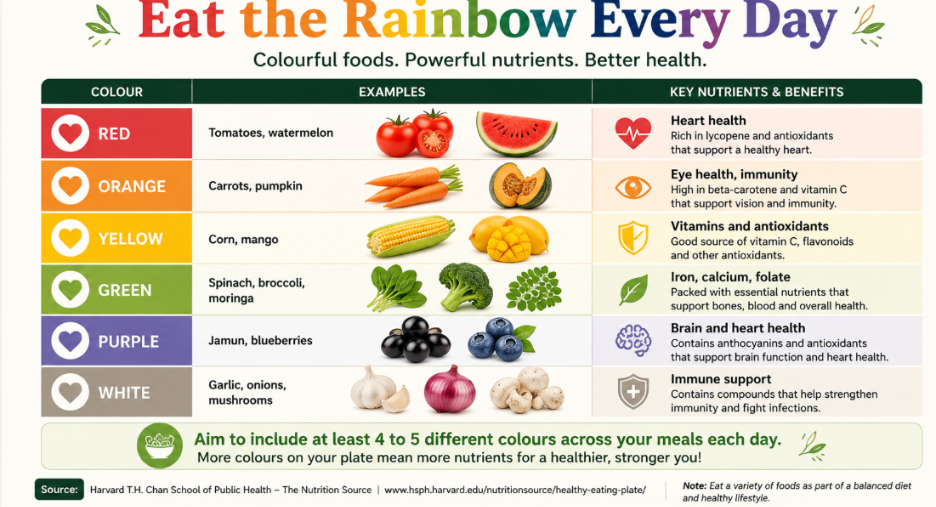
Different colours indicate different plant compounds, known as phytochemicals, which may help protect the body in unique ways. For example:
- Red foods such as tomatoes and watermelon contain lycopene, an antioxidant linked with heart health.
- Orange and yellow foods like carrots, pumpkin, and mangoes are rich in beta-carotene, which supports eye health and immunity.
- Green vegetables such as spinach, broccoli, fenugreek leaves, and moringa provide iron, folate, calcium, and vitamin K.
- Blue and purple foods like jamun, blueberries, and purple cabbage contain anthocyanins, which may support brain and heart health.
- White foods such as garlic, onions, and mushrooms contain compounds that may contribute to immune function.
Eating a variety of plant foods also increases your intake of fibre, which supports digestive health, helps regulate blood sugar levels, and keeps you feeling fuller for longer.
For many people in India, nutrient-dense foods are already part of traditional meals. Seasonal fruits, leafy greens, lentils, turmeric, amla, and drumstick (moringa) are all excellent additions to a balanced diet.
Rather than aiming for perfection, try asking yourself one simple question at each meal:
"Can I add one more colour to my plate?"
That small shift may naturally increase the variety of nutrients you consume.
Tip 6: Choose Whole Foods More Often and Cut Back on Ultra-Processed Foods
Staying physically fit isn't only about adding healthy foods. It is also about being mindful of the foods you eat most frequently.
Ultra-processed foods are industrially manufactured products that often contain added sugars, refined starches, unhealthy fats, flavour enhancers, preservatives, and artificial ingredients. Common examples include sugary breakfast cereals, packaged snacks, soft drinks, instant noodles, processed meats, and confectionery.
These foods are designed to be convenient and highly palatable, but regularly eating large amounts of them has been associated with a higher risk of obesity, cardiovascular disease, type 2 diabetes, and other chronic health conditions.
A large 2023 BMJ review found that higher consumption of ultra-processed foods was associated with poorer cardiometabolic health and increased mortality risk.
This doesn't mean you need to eliminate them completely. Instead, think about making gradual swaps where possible.
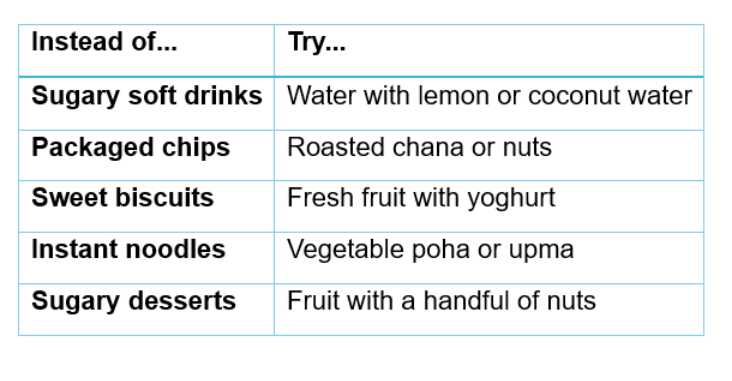
Another simple habit worth considering is replacing one sugary beverage each day with lower sugar alternatives such as unsweetened green tea, buttermilk, or lemon water.
Green tea contains naturally occurring antioxidants called catechins, which may support heart health and reduce inflammation when consumed as part of an overall healthy lifestyle. While green tea alone won't transform your fitness, it can be a healthier alternative to sugar-sweetened beverages for many people.
The goal isn't to label foods as "good" or "bad". Instead, aim to make nutrient-rich choices most of the time while leaving room for flexibility and enjoyment.
💡Pro Tip: Try following the 80:20 approach. If around 80% of your meals are based on whole, minimally processed foods, there's usually room to enjoy favourite treats without guilt or strict food rules.
Tip 7: Fuel Your Body Before and After Exercise
Food provides the energy your body needs to move, recover, and become stronger.
Whether you're going for a brisk walk, attending a yoga class, or completing a strength workout, eating at the right time may help improve both performance and recovery.
Before exercise
If you're exercising for longer than 45 to 60 minutes, a light snack containing carbohydrates about 30 to 60 minutes beforehand may provide readily available energy.
Some easy options include:
- A banana
- Wholegrain toast with peanut butter
- Oats
- A handful of raisins
- Fruit with yoghurt
After exercise
Following strength training or more intense physical activity, protein helps repair and rebuild muscle tissue.
Research suggests that consuming approximately 20-30 grams of protein after resistance exercise supports muscle protein synthesis.
Good protein sources include:
- Eggs
- Greek yoghurt
- Paneer
- Lentils and dals
- Tofu
- Milk
- Chicken or fish
Hydration also forms part of recovery. Even mild dehydration may affect concentration, physical performance, and mood, making it harder to stay consistent with your fitness routine.
You don't need expensive supplements to support your workouts. For most people, a balanced diet that includes enough protein, whole grains, fruits, vegetables, and healthy fats provides everything needed to recover well.
💡Key Takeaway
Healthy eating isn't about chasing perfection or following restrictive diets.
Instead, focus on building meals around colourful plant foods, choosing whole foods more often, limiting ultra-processed foods where possible, and fuelling your body appropriately before and after movement.
Combined with regular physical activity, these small nutrition habits can help support lasting physical health, sustained energy, and overall wellbeing.
Hydration
You can exercise regularly and eat a balanced diet, but if you're not drinking enough water, your body may struggle to perform at its best.
Hydration plays a vital role in almost every function of the body. Water helps regulate body temperature, transports nutrients, lubricates joints, supports digestion, and enables muscles to function efficiently. Even mild dehydration can affect physical performance, concentration, and mood, making it harder to stay active and maintain healthy habits.
Tip 8: Hydrate Strategically Throughout the Day
One of the easiest ways to stay fit and healthy is to make hydration a daily priority rather than something you think about only after exercise.
While individual water requirements vary depending on age, activity levels, climate, and health conditions, many adults benefit from aiming for around 2 to 3 litres of fluids each day. If you exercise regularly, spend time outdoors in hot weather, or sweat heavily, you may need more.
Rather than drinking large amounts all at once, try sipping water consistently throughout the day.
Simple habits that can help include:
- Starting your morning with a glass of water
- Carrying a reusable water bottle
- Drinking water before meals
- Replacing sugary drinks with water more often
- Increasing fluid intake during hot weather or after exercise
A simple way to monitor your hydration is by checking the colour of your urine. Pale yellow generally indicates good hydration, while darker urine may suggest that you need more fluids.
Is Coconut Water a Good Choice?
For many people, especially in tropical countries like India, coconut water can be a refreshing option after exercise.
It naturally contains electrolytes such as potassium, sodium, and magnesium, which help replace minerals lost through sweat. While it isn't necessary for everyday hydration, it can be a useful alternative after moderate physical activity or during particularly hot weather.
Water, however, should still remain your primary source of hydration.
Research published in the Journal of Nutrition also suggests that even mild dehydration may affect mood, attention, and short-term memory, highlighting that hydration benefits both physical and mental performance.
💡Pro Tip: If you often forget to drink water, pair it with existing habits. For example, drink a glass of water after every meal, before every tea or coffee break, or whenever you return to your desk.
Sleep
When people think about how to stay fit, they usually focus on exercise and healthy eating. But there's another habit that often gets overlooked: getting enough sleep.
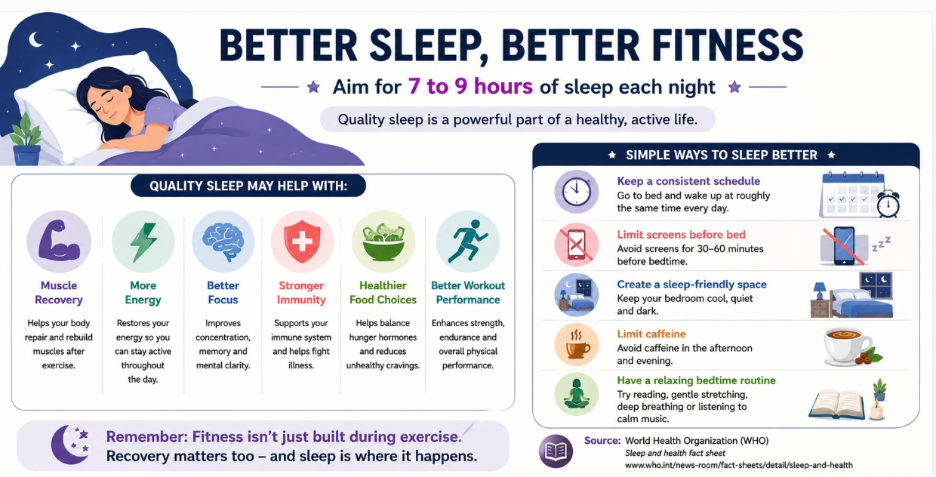
Sleep is when your body gets the chance to recover. It helps repair muscles after physical activity, restores energy levels, supports your immune system, and prepares you for the next day. If you're exercising regularly but not sleeping well, your body may not recover as effectively.
Poor sleep can also affect your daily choices. You might feel too tired to exercise, crave sugary or high-calorie foods, or find it harder to stay motivated. Over time, these small changes can make it more difficult to maintain healthy habits.
Most adults benefit from 7 to 9 hours of sleep each night. While everyone's needs are slightly different, aiming for a consistent sleep schedule can make a noticeable difference to both your physical and mental wellbeing.
Note: Sleep also plays a major role in emotional regulation, decision-making, and impulse control. Poor sleep can make stress feel more intense and healthy choices harder to sustain.
Simple Ways to Sleep Better
Good sleep often starts with a few small habits.
- Go to bed and wake up at roughly the same time each day.
- Avoid screens for 30 to 60 minutes before bedtime.
- Keep your bedroom cool, quiet, and dark.
- Limit caffeine later in the day.
- Create a relaxing bedtime routine, such as reading, stretching, or practising deep breathing.
You don't need to change everything overnight. Even improving one or two of these habits may help you feel more rested and ready to stay active.
💡Quick Fact: Adults who regularly get enough quality sleep often find it easier to stay active, recover after exercise, and maintain healthy eating habits.
Stress Management
Staying physically fit isn't just about exercise and nutrition. Your stress levels can also influence how consistently you're able to look after your health.
Tip 10: Manage Stress Before It Manages You
When you're under chronic stress, your body releases more cortisol, a hormone that can interfere with sleep, increase cravings for calorie-dense foods, and leave you feeling too drained to exercise. Managing stress is therefore an important part of staying physically fit.
Simple habits such as mindfulness, journalling, spending time in nature, regular physical activity, and staying connected with loved ones may help reduce stress and support your overall wellbeing.
💡Pro Tip: Even 10 minutes of deep breathing, meditation, or a short walk can help you reset during a busy day.
Tip 11: Focus on Consistency, Not Perfection
One missed workout or an unhealthy meal doesn't undo your progress. What matters is getting back to your routine.
Instead of setting unrealistic goals, start small. A 10-minute walk, a short home workout, or choosing a balanced meal are all meaningful steps. Building habits that fit into your everyday life is often more sustainable than aiming for perfection.
Tip 12: Recognise When Your Mental Health Needs Attention
If you've been finding it unusually difficult to exercise, eat well, or maintain healthy routines despite wanting to, it may be worth considering whether stress, anxiety, or low mood are getting in the way.
Looking after your emotional wellbeing can make it easier to care for your physical health too.
If stress or emotional challenges are making it difficult to prioritise your wellbeing, speaking with a mental health professional can help. At 1to1help, our counsellors work with individuals to address the emotional barriers that may be affecting healthy habits, helping them build a foundation for lasting wellbeing.
How to Stay Fit at Home — Practical Strategies for Busy Indians
You don't need a gym membership or expensive equipment to stay active. If you're wondering how to stay fit at home, the key is to make movement part of your everyday routine.
Start with simple exercises that use your own body weight, such as squats, lunges, push-ups, planks, or step-ups. Combined with brisk walking, climbing stairs, or a short yoga session, these can provide a well-rounded workout. Resistance bands are another affordable option that can add variety and help build strength.
If you're new to exercise, begin with 20 to 30 minutes of activity, three to five days a week, and gradually increase the intensity as your fitness improves.
Healthy eating at home also plays an important role. Meal prepping, keeping fresh fruit within easy reach, and stocking your kitchen with nutritious snacks can make healthier choices feel more convenient.
If you spend long hours working from home, try adding micro-movements to your day. Stand up every hour, stretch for a few minutes, take walking calls, or do a quick set of bodyweight exercises between meetings. These small bursts of movement can add up over time.
Remember, staying fit at home isn't about having the perfect workout plan. It's about building simple habits that fit your lifestyle and that you can stick with consistently.
💡Quick Tip: Schedule your workouts in your calendar just like any other important appointment. Treating movement as part of your daily routine can make it easier to stay consistent.
Conclusion: Fitness Is a Daily Practice, Not a Destination
Learning how to stay fit isn't about following the perfect workout or diet. Lasting physical health is built through small, consistent choices, whether it's moving your body, eating nourishing foods, staying hydrated, getting enough sleep, or taking time to manage stress.
Remember, physical and mental wellbeing are closely connected. Sometimes, the biggest barrier to building healthy habits isn't knowing what to do, but finding the motivation and emotional energy to keep going.
If stress, anxiety, or low mood are making it difficult to prioritise your health, you don't have to navigate it alone. At 1to1help, our counsellors can help you address the emotional barriers that may be affecting your wellbeing, so you can build healthier habits that last. Every small step counts, and it's never too late to start.
FAQs
Q1. How many days a week should I exercise to stay fit?
To stay fit, aim for at least 150 minutes of moderate-intensity exercise each week, as recommended by the World Health Organization. This can be 30 minutes on five days a week. Include strength training at least twice a week. If you're a beginner, start with three days of walking and gradually build your routine. Consistency matters more than exercising every day.
Q2. What is the easiest way to get physically fit?
Walking is one of the easiest and most effective ways to get physically fit. Aim for around 8,000 steps a day, eat a balanced diet rich in fruits and vegetables, stay hydrated, and get 7 to 9 hours of sleep. These simple habits can improve your fitness without requiring a gym or expensive equipment.
Q3. How do I stay fit without going to the gym?
You can stay fit at home by doing bodyweight exercises such as squats, lunges, push-ups, and planks. Walking, climbing stairs, yoga, and resistance band workouts are also effective. The key is to stay active consistently rather than relying on gym equipment.
Q4. How does stress affect physical fitness?
Chronic stress can make it harder to stay physically fit by affecting sleep, increasing cravings, reducing motivation, and slowing recovery after exercise. Managing stress through regular movement, mindfulness, adequate sleep, and relaxation can support both your physical and mental wellbeing.
Q5. How much water should I drink to stay fit?
Most adults should aim to drink around 2 to 3 litres of water each day, increasing their intake during exercise or hot weather. Staying well hydrated supports energy levels, exercise performance, and recovery. Coconut water can also be a refreshing option after physical activity to help replace electrolytes.
References
- Biswas, A., Oh, P. I., Faulkner, G. E., Bajaj, R. R., Silver, M. A., Mitchell, M. S., & Alter, D. A. (2015). Sedentary time and its association with risk for disease incidence, mortality, and hospitalization in adults: A systematic review and meta-analysis. Annals of Internal Medicine, 162(2), 123-132. https://pubmed.ncbi.nlm.nih.gov/25599350/
- British Medical Journal. (2024). Ultra-processed food exposure and adverse health outcomes: Umbrella review of epidemiological meta-analyses. https://www.bmj.com/content/384/bmj-2023-077310
- Cleveland Clinic. (2022). Endorphins: What they are and how to boost them. https://my.clevelandclinic.org/health/body/23040-endorphins
- Cleveland Clinic. (2022). Cortisol: What it is, function, symptoms and levels. https://my.clevelandclinic.org/health/articles/22187-cortisol
- Harvard Health Publishing. (2020, July 7). Exercising to relax. Harvard Medical School. https://www.health.harvard.edu/healthy-aging-and-longevity/exercising-to-relax
- Kvam, S., Kleppe, C. L., Nordhus, I. H., & Hovland, A. (2016). Exercise as a treatment for depression: A meta-analysis. Journal of Affective Disorders, 202, 67-86. https://www.researchgate.net/publication/303439366_Exercise_as_a_treatment_for_depression_A_meta-analysis
- McMaster University. (2025). Healthspan versus lifespan: The vital role of muscle in successful aging. https://news.mcmaster.ca/analysis-healthspan-versus-lifespan-the-vital-role-of-muscle-in-successful-aging/
- Mindful. (n.d.). Getting started with mindfulness meditation. https://www.mindful.org/meditation/mindfulness-getting-started/
- National Health Service. (2024). Exercise. https://www.nhs.uk/live-well/exercise/
- National Institutes of Health. (2023). Number of steps per day may be more important than step intensity. https://www.nih.gov/news-events/nih-research-matters/number-steps-day-more-important-step-intensity
- PositivePsychology.com. (2023). The benefits of journaling for mental health. https://positivepsychology.com/benefits-of-journaling/
- World Health Organization. (2024). Physical activity. https://www.who.int/news-room/fact-sheets/detail/physical-activity
- Youngstedt, S. D. (2005). Effects of exercise on sleep. Clinics in Sports Medicine, 24(2), 355-365. https://pmc.ncbi.nlm.nih.gov/articles/PMC4140795/


.svg)
.svg)
.svg)
.svg)