


.png)


.png)

Mental Health Concerns
Your Support System: What It Is, Why It Matters, and How to Be There for the People in Yours
.jpg)
.png)
Written by
Aarohi Parakh,
Psychologist and Content Writer

Reviewed by
Sanjana Sivaram,
Psychologist and Clinical Content Head


It Wasn't the Work That Overwhelmed Mohana. It Was Carrying Everything Alone.
When Mohana returned to work after her maternity leave, she knew it would take time to settle back into a routine. What she did not expect was how quickly everything would feel overwhelming.
At work, she was catching up on new projects and unfamiliar processes. At home, she was adjusting to life with a young baby while managing household responsibilities. Between office deadlines and sleepless nights, she constantly felt as though she was falling behind.
Eventually, she admitted to her husband and mother how exhausted she felt.
They immediately stepped in to share childcare responsibilities and arranged for household help, giving her the space to focus on finding her rhythm again. Her colleagues patiently helped her navigate workplace changes, while a close friend regularly checked in, reminding Mohana to take breaks, eat well and be kinder to herself. During one conversation, her friend gently pointed out that Mohana had once been the person supporting others through difficult times.
Gradually, life did not become easier, but it became more manageable because Mohana no longer felt she had to face it alone.
Many of us experience moments like these. Whether it is adjusting to parenthood, moving to a new city, coping with illness, grieving a loss, or simply navigating everyday stress, loneliness, or periods of uncertainty, having people who listen, encourage, and stand beside us can make a meaningful difference.
That is the value of a support system.
In this guide, we'll explore what a support system is, why it matters for mental health, the different forms it can take, and practical ways to strengthen the relationships that help us navigate life's challenges together.
What Is a Support System?
A support system is a network of people who provide emotional, practical, informational or motivational support throughout different stages of life. This network may include family, friends, partners, colleagues, neighbours, mentors or mental health professionals. Together, these relationships can foster a sense of connection, belonging and security.
A strong support system is not defined by the size of your social circle but by the quality of your relationships. A few trusted people who consistently listen, encourage and show up when you need them can be far more valuable than a large network of acquaintances. Support systems can evolve throughout life. Relationships naturally change over time, and it's normal for different people to play different roles at different stages.
Researchers have identified four broad types of social support that help people cope with life's challenges: emotional, informational, practical (instrumental) and esteem (sometimes called appraisal) support. These categories are widely recognised in social support research.
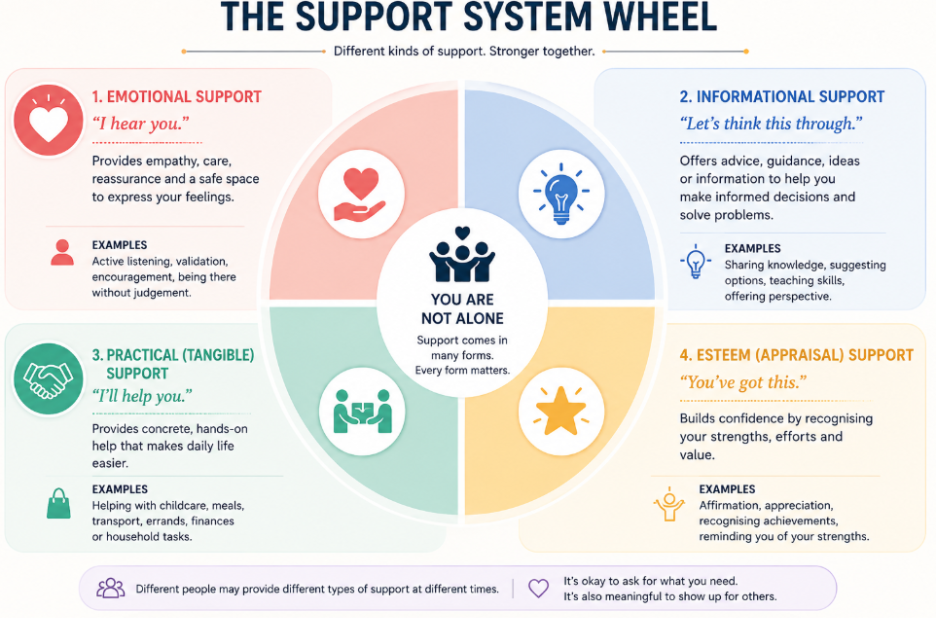
Looking back at Mohana's experience, each of these played an important role. Her family eased responsibilities at home through practical support, her colleagues guided her through workplace changes, and her friend offered both emotional reassurance and encouragement. Together, they reminded her that no single person has to meet all our needs.
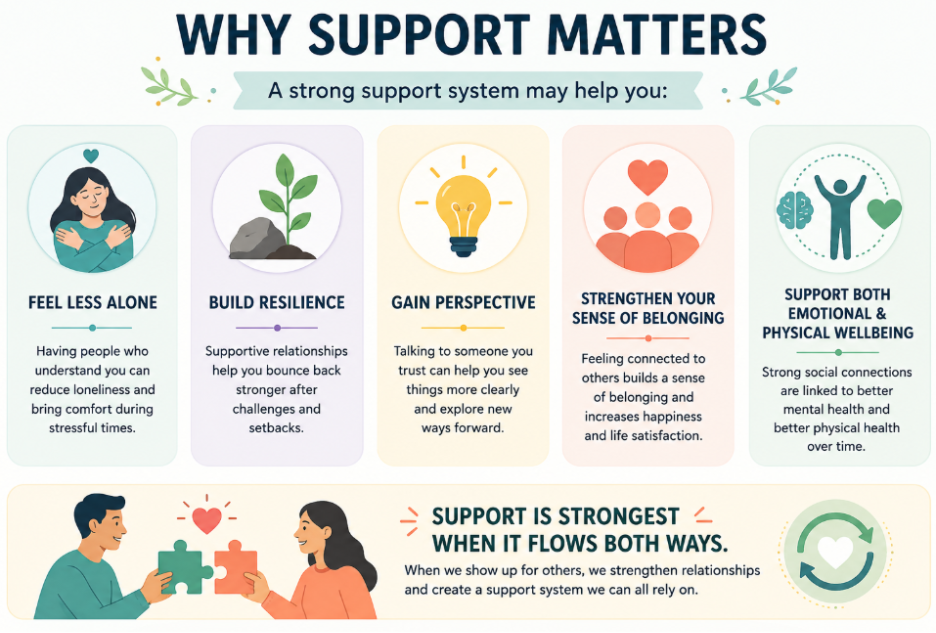
Research suggests that people with supportive relationships often experience greater resilience, lower perceived stress and better overall wellbeing. While a support system cannot remove life's challenges, it can make them feel more manageable.
💡Key Takeaway: A healthy support system is not about finding someone who solves every problem. It is about having people who stand beside you while you find your way through them.
Why Having a Strong Support System Matters for Mental Health
We often think about support during moments of emotional crisis. Yet the importance of a support system in mental health extends far beyond these situations. Supportive relationships shape how we cope with everyday stress, adapt to change and recover from setbacks.
When we share our thoughts with someone we trust, difficult emotions often become easier to process. A conversation with a friend may offer perspective after a stressful day, while a partner's reassurance can ease self-doubt before an important decision. Even knowing that someone is there to listen can create a greater sense of emotional security.
Research consistently shows that supportive relationships are associated with better psychological wellbeing, lower perceived stress and greater resilience. Rather than removing life's challenges, they help people feel less alone while navigating them. Studies also suggest that strong social connections may contribute to better physical health by supporting healthier stress responses and overall wellbeing.
In India, support has traditionally come from close-knit families and communities. Grandparents helping with childcare, neighbours stepping in during emergencies and relatives celebrating milestones together have long been part of everyday life. However, urbanisation, migration, nuclear families and demanding work schedules mean many people now live farther from these traditional networks. As a result, building and maintaining meaningful relationships has become more intentional than ever. Different people often prefer different types of support, and those preferences may change depending on the situation.
Importantly, support is not only something we receive. Research suggests that offering kindness, listening without judgement and being there for others can also strengthen our own sense of purpose, belonging and wellbeing. Healthy support systems grow stronger when people both give and receive care.
Understanding why support systems matter helps us appreciate the relationships that sustain us and encourages us to become a source of strength for others as well.
The Four Types of Support Your Network Can Offer
Think back to Mohana's story. No single person solved all her problems. Instead, different people supported her in different ways. Her family eased responsibilities at home, her colleagues helped her navigate workplace changes, and her friend offered reassurance when she needed it most.
This highlights an important truth about a healthy support system: different situations call for different kinds of support. Understanding these can help you recognise what someone may need and respond more thoughtfully.
1. Emotional Support
Emotional support involves listening with empathy, showing compassion and helping someone feel heard without judgement. Sometimes, simply saying, "I'm here for you," can be more comforting than trying to solve the problem.
2. Informational Support
There are times when people need guidance as much as they need empathy. Informational support is about sharing relevant advice, guidance or resources to help someone make informed decisions. Before offering suggestions, it can help to ask, "Would you like me to listen, or would it help to think through some ideas together?"
3. Practical (Tangible) Support
Practical support involves easing someone's everyday responsibilities. This could include helping with meals, childcare, transport or household tasks during stressful periods. Mohana experienced this when her family stepped in to share responsibilities at home, giving her the space to adjust to life after maternity leave.
4. Esteem (Appraisal) Support
Esteem support helps someone reconnect with their strengths by recognising their efforts, abilities and progress. Mohana's friend did this by reminding her of the compassion and resilience she had shown others in the past.
No single person needs to provide every type of support. The strongest support systems bring together different people who contribute in different ways, depending on what is needed at the time.
💡Pro Tip:
Instead of guessing what someone needs, ask:
"What's likely to be most helpful right now? Someone to listen, someone to brainstorm with, or someone to help with practical things?"
8 Ways to Be There for Your Support System
Supporting someone does not require having all the right answers. More often, it involves showing up consistently, paying attention to what they need and reminding them that they do not have to face life's challenges alone.
Here are eight meaningful ways to strengthen the relationships that strengthen you.
1. Listen to Understand, Not to Respond
One of the most valuable ways to support someone emotionally is to truly listen.
Active listening is different from simply hearing someone's words. It means giving them your full attention, maintaining an open and non-judgemental attitude and resisting the urge to interrupt or prepare your response while they are speaking.
Counsellors often use principles such as the SOLER approach to communicate presence through body language:
- Sit facing the person.
- Open your posture.
- Lean in slightly to show interest.
- Establish comfortable eye contact.
- Remain relaxed and attentive.
You do not need to remember the acronym every time. Simply putting your phone away, making eye contact and allowing moments of silence can help someone feel genuinely heard.
Reflective statements can also show that you are trying to understand their experience. For example, you might say:
- "It sounds like you've been carrying a lot on your own."
- "That must have been really disappointing for you."
- "It seems like you're feeling overwhelmed right now."
Remember: Listening does not mean agreeing with everything someone says. It means creating space for them to express themselves safely.
2. Don't Rush to Fix Everything
When someone we care about is struggling, our first instinct is often to make the pain disappear.
Although this comes from a place of care, immediately offering advice may sometimes leave the other person feeling unheard.
Instead of assuming they want solutions, try asking:
"Would you like me to listen, or would it help if we explored some ideas together?"
This gives the person more control over the conversation while reducing the pressure to "fix" their emotions.
Being present may not always change the situation, but it can change how alone someone feels while going through it.
3. Show Care Through Small, Consistent Actions
Support is often found in ordinary moments rather than grand gestures.
A quick message asking "How are you doing today?", dropping off a home-cooked meal, remembering an important doctor's appointment or simply checking in after a difficult week may communicate care more effectively than occasional dramatic acts of kindness.
This is particularly relevant when supporting someone going through a hard time. People often receive a great deal of support immediately after a crisis, but as life moves on for everyone else, they may continue to struggle quietly.
Consistency often matters more than intensity.
4. Offer Comfort Through Appropriate Physical Affection
For many people, physical touch can provide reassurance and a sense of safety. A warm hug, holding someone's hand or placing a comforting hand on their shoulder may help communicate care when words feel inadequate.
Research suggests that safe, welcome physical touch can stimulate the release of oxytocin, sometimes referred to as the "bonding hormone", while helping reduce stress responses in the body.
However, comfort looks different for everyone.
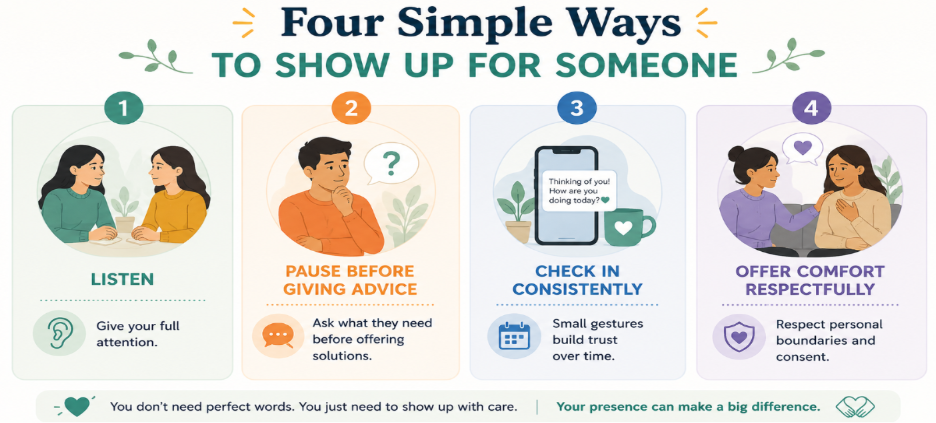
Always be mindful of personal boundaries, cultural norms and consent. If someone is not comfortable with physical affection, your presence, attention and words may be just as meaningful.
5. Share the Load in Practical Ways
Supporting someone does not always require finding the right words. Sometimes, practical help can make the biggest difference. Everyday tasks such as cooking a meal, picking up groceries, helping with childcare or driving someone to an appointment may ease their mental and emotional burden during difficult times.
Rather than saying, "Let me know if you need anything," try offering something specific, such as, "I'm heading to the supermarket this evening. Can I pick up anything for you?" Concrete offers are often easier to accept because they remove the pressure of having to ask for help. Small acts of practical support remind people that they do not have to carry everything on their own.
6. Stand Up for Them When It Matters
Being supportive also means standing by someone when they are being treated unfairly or feeling left out. This could involve acknowledging a colleague's contribution in a meeting, speaking up against insensitive remarks or simply checking in with a friend after a difficult social situation.
Advocacy does not always mean confronting others. Often, it is about helping someone feel seen, respected and valued. At the same time, be mindful of their preferences. Before stepping in, ask if they would like your support. Standing beside someone, rather than taking over, can help them feel empowered while knowing they are not alone.
7. Check In Consistently Over Time
Many people receive plenty of support immediately after a crisis, but as weeks pass, the messages and visits often become less frequent. Yet, healing and adjustment usually continue long after everyone else has moved on.
A simple message such as, "I've been thinking about you. How have you been this week?" can mean more than you realise. Whether someone is grieving, recovering from illness or navigating a stressful period, consistent check-ins show that your care has not faded with time. Often, it is these small, repeated gestures that strengthen relationships the most.
8. Encourage Professional Help When Needed
Friends and family play an important role in a support system, but there may be times when someone needs more help than loved ones alone can provide. If a person appears to be struggling for a prolonged period or their mental health is significantly affecting their daily life, gently encouraging them to seek professional support can be an act of care.
You could say, "I've noticed you've been having a difficult time lately. Would you consider speaking to a counsellor? I'm happy to help you find someone if that would be useful." Seeking professional support is not a sign of weakness. It is one more way of ensuring that someone receives the care they deserve.
How to Build and Strengthen Your Own Support System
Many people assume that a support system is something you either have or you don't. In reality, supportive relationships are built over time through trust, communication and shared experiences. Like any meaningful relationship, they require care and consistency.
Here are some practical ways to build a support system and strengthen the relationships you already have.
1. Recognise the Support You Already Have
Before looking for new connections, take a moment to reflect on the people already in your life. Different people often meet different needs. One friend may be your biggest cheerleader, while another offers practical advice. A family member may provide comfort, while a colleague helps you navigate workplace challenges.
Understanding who you can turn to for different kinds of support helps you appreciate your existing network and identify any gaps.
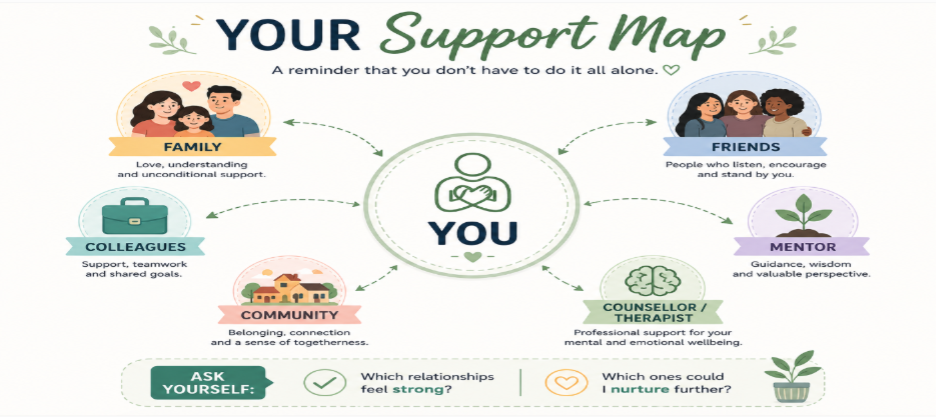
Reflection Activity: Your Support Map
Place your name in the centre of a page and draw circles around it for the people in your life, such as family, friends, colleagues, mentors, neighbours or mental health professionals.
Then ask yourself:
- Who helps me feel emotionally supported?
- Who offers practical help when I need it? Who gives honest advice?
- Is there an area where I could use more support?
2. Communicate Your Needs
People often want to help but may not know how. Rather than expecting others to guess what you need, try being clear and specific.
For example, instead of saying, "I'm stressed," you might say, "I'd really appreciate someone to listen today," or "Could you help me with this task?" Open communication makes it easier for others to support you in ways that are genuinely helpful.
3. Invest in Relationships Before You Need Them
Support systems are strengthened through everyday moments, not just during times of crisis. Regular conversations, celebrating milestones, checking in with loved ones and expressing appreciation all help build trust over time.
Relationships are much easier to lean on when they have been nurtured consistently.
4. Expand Your Circle Intentionally
If your current network feels limited, consider exploring opportunities to meet new people. Joining a hobby group, volunteering, attending community events, participating in professional networks or connecting with local interest groups can help create meaningful relationships over time.
For people living away from family, these communities often become an important source of belonging and support.
5. Remember That Support Is a Two-Way Relationship
Healthy support systems are built on reciprocity. While it is important to ask for help when you need it, offering encouragement, celebrating others' successes and showing up during difficult times strengthens relationships and builds trust.
Support is not about keeping score. It is about creating relationships where people feel comfortable giving and receiving care.
6. Know When Professional Support Can Help
Friends and family are an important part of your support system, but they may not always have the expertise to help with every situation. If you are experiencing persistent stress, anxiety, relationship difficulties, or emotional distress, speaking with a 1to1help psychologist or counsellor can provide additional support and perspective.
Seeking professional help is not a last resort. It can be one part of a healthy, well-rounded support system.
Maintaining Your Own Wellbeing While Supporting Others
Being there for someone you care about can be deeply meaningful, but it can also be emotionally demanding. When you are constantly supporting others without taking care of yourself, you may begin to experience emotional exhaustion or what is often referred to as compassion fatigue.
Looking after your own wellbeing is not selfish. It helps you continue showing up for others in a sustainable way.
Set healthy boundaries by recognising what you can realistically offer. It is okay to say, "I care about you, but I don't have the emotional capacity to talk right now. Can we speak later?" Being honest about your limits is often healthier than pushing yourself until you feel overwhelmed.
Remember that you are a source of support, not the only source of support. Encourage others to lean on different people in their network and seek professional help when appropriate.
This is especially important in the workplace. A strong support system at work includes supportive colleagues, managers, Employee Assistance Programmes (EAPs) and mental health professionals who can share the responsibility of care. Organisations can strengthen this culture further by creating a decentralised network of trained peer supporters. 1to1help's Emotional Care Champions (ECC) programme equips employees to provide proactive, approachable and accessible emotional support, ensuring help is available where people need it most, across the organisation.
💡Self-care Reminder
You cannot pour from an empty cup. Taking care of your own mental health allows you to continue being a compassionate and dependable support person for others.
If supporting someone is beginning to affect your own wellbeing, reaching out to a counsellor can help you process your experiences, set healthy boundaries and continue offering support without neglecting yourself.
Support Is One of the Greatest Gifts We Can Give and Receive
When Mohana looked back on one of the most overwhelming periods of her life, it wasn't the deadlines she remembered most. It was the people who helped her through them.
Her husband and mother quietly shared responsibilities at home. Her colleagues helped her find her footing at work. Her friend reminded her to pause, care for herself and remember the strength she had shown others in the past.
None of these gestures solved every challenge she was facing. Together, however, they reminded her that she did not have to face those challenges alone.
That is the essence of a strong support system.
It is built through everyday conversations, thoughtful actions and relationships where people feel safe to ask for help as well as offer it. It grows when we listen without judgement, show up consistently and recognise that support is rarely a one-way exchange.
As life changes, so too will your support system. Some people may become closer, others may move away, and new relationships may emerge. What matters is continuing to nurture the connections that help you feel understood, valued and supported, while also being willing to offer that same care to others.
Because sometimes the most meaningful thing we can say is not, "I know exactly what to do."
It is simply,
"You don't have to go through this alone."
When You Need Additional Support
There may be times when the support of family and friends is not enough, and that's okay. Reaching out to a mental health professional can provide additional guidance, coping strategies and a safe space to work through life's challenges.
Whether you are navigating stress, anxiety, relationship concerns, burnout or a major life transition, 1to1help's experienced counsellors are here to support you. If your organisation partners with 1to1help, you may also have access to confidential counselling and wellbeing services through your Employee Assistance Programme (EAP) or Online Counselling.
FAQs
Q1. What does it really mean to have a support system?
A support system is a network of people you can rely on for emotional, practical, informational or encouraging support. This may include family, friends, colleagues, mentors or mental health professionals. A strong support system is less about the number of people you know and more about having trusted relationships where you feel heard, valued and supported.
Q2. How do I ask for help without feeling like a burden?
Many people worry that asking for help will inconvenience others, but most people appreciate knowing how they can support someone they care about. Instead of apologising for needing help, try being honest and specific about what would be useful. Remember that healthy relationships involve both giving and receiving support.
Q3. Can a therapist or counsellor be part of my support system?
Yes. Mental health professionals can be an important part of a healthy support system. While family and friends provide care based on personal relationships, counsellors offer evidence-based guidance, emotional support and a safe, confidential space to work through challenges. Seeking professional support is a proactive step towards looking after your mental wellbeing.
Q4. What should I say to someone who is going through a difficult time?
You don't need to have the perfect words. Simple statements such as "I'm here for you," "That sounds really difficult," or "Would you like to talk about it?" can be comforting. Avoid dismissing their feelings or rushing to offer solutions unless they ask for advice.
Q5. How can I support a friend or family member who is struggling with their mental health?
Start by listening without judgement and checking in regularly. Encourage them to share how they are feeling, respect their boundaries and offer practical help where appropriate. If you are concerned about their wellbeing or they seem to be struggling over a prolonged period, gently encourage them to seek professional support while continuing to reassure them that they are not alone.
Q6. Why is a support system important during recovery from illness, trauma or major life changes?
Recovery often involves emotional, physical and practical challenges. A supportive network can help reduce feelings of isolation, share everyday responsibilities and provide encouragement during setbacks. While recovery looks different for everyone, having people who consistently show up can make the journey feel more manageable.
Q7. What is the difference between a support system and a support group?
A support system refers to the people already present in your life, such as family, friends, colleagues or mentors. A support group, on the other hand, is a structured community of people with shared experiences who come together to give and receive support. Both can play valuable roles in promoting mental wellbeing.
References
- House, J. S. (1981). Work Stress and Social Support. Addison-Wesley.
- Cohen, S., & Wills, T. A. (1985). Stress, Social Support, and the Buffering Hypothesis. Psychological Bulletin, 98(2), 310-357. https://psycnet.apa.org/record/1986-13085-001
- Holt-Lunstad, J., Smith, T. B., & Layton, J. B. (2010). Social Relationships and Mortality Risk: A Meta-analytic Review. PLOS Medicine, 7(7). https://journals.plos.org/plosmedicine/article?id=10.1371/journal.pmed.1000316
- University at Buffalo School of Social Work. Developing Your Support System. https://socialwork.buffalo.edu/resources/self-care-starter-kit/developing-your-support-system.html
- American Psychological Association. The Importance of Social Support for Well-being. https://www.apa.org/topics/social-support
- National Center for Biotechnology Information (NCBI). Social Support. https://www.ncbi.nlm.nih.gov/books/NBK585650/
- Medical News Today. How to Show Emotional Support. https://www.medicalnewstoday.com/articles/emotional-support


.svg)
.svg)
.svg)
.svg)