


.png)


.png)

Personal Growth & Well Being
Body Composition: What It Is, Why It Matters, and How to Improve It

.png)
Written by
Aarohi Parakh,
Psychologist and Content Writer

Reviewed by
Sanjana Sivaram,
Psychologist and Clinical Content Head


Introduction: Why the Number on the Scale Doesn't Tell the Whole Story
For many people, stepping on a weighing scale can feel like receiving a report card for the day. A lower number may bring relief, while a higher one can affect mood or confidence. Yet body weight, by itself, tells only part of the story.
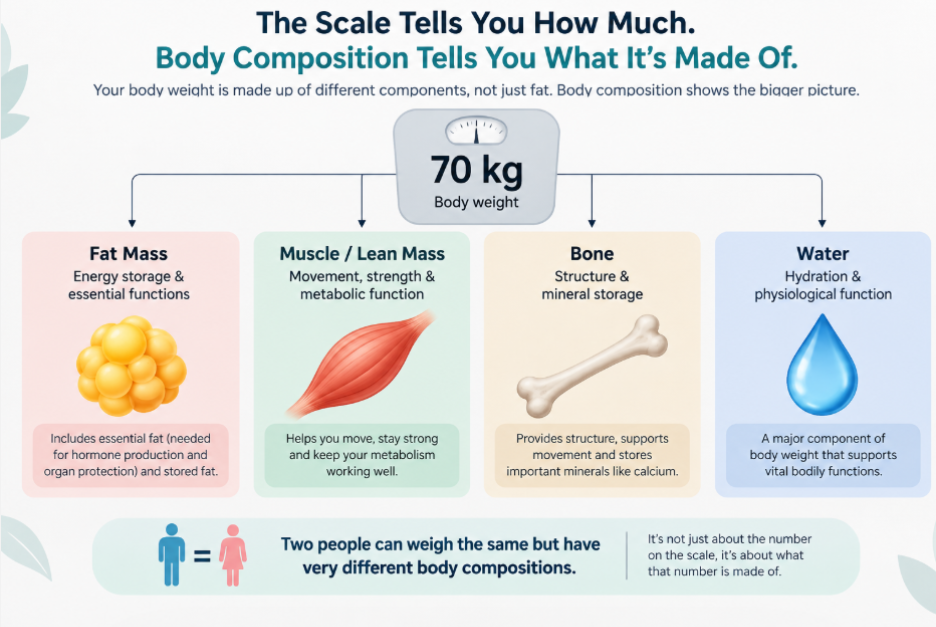
Two people can weigh exactly the same but have very different amounts of muscle, fat, bone, and water. Someone who weighs more may have a greater proportion of muscle, while someone who weighs less may have comparatively less muscle and more body fat. This is one reason why body composition matters more than body weight alone.
So, what is body composition? In simple terms, it describes what your body weight is made up of. It can provide information about fat mass, lean mass, muscle, bone, and body water. Among these measures, body fat percentage can offer a more useful picture of fat mass than weight alone.
This does not mean that the weighing scale is useless. Weight, waist circumference, blood pressure, blood tests, fitness, and other health indicators can all provide useful information. Body composition simply adds another layer of context.
This guide explains what body composition means, its main components, how a body composition test works, what body fat percentage ranges can and cannot tell you, and how sustainable habits can improve body composition. It also considers something often left out of fitness conversations: what happens when tracking body metrics starts affecting how a person feels about their body.
💡Key Insight: A body composition measurement can tell you something about your body. It does not tell you your worth, your overall health, or how you should feel about yourself.
This is for educational purposes only and does not substitute for any professional medical advice
What Is Body Composition? A Clear Definition
Body composition refers to the proportional breakdown of the body into fat mass and fat-free mass, also called lean mass. Fat-free mass includes muscle, bone, body water, and organs, among other tissues.
The simplest way to understand body composition is to imagine two broad compartments:
Fat mass + fat-free mass = total body weight
More detailed models can divide the body further. A four-component model, for example, considers fat mass, bone mineral content, total body water, and residual protein or dry fat-free tissue. These models are mainly used in research and specialised assessments. For everyday health and fitness discussions, the two-component model is usually easier to understand and sufficient for many purposes.
Body composition vs BMI
This is also where body composition differs from BMI, or Body Mass Index.
BMI uses only two pieces of information: height and weight. It is calculated by dividing weight in kilograms by height in metres squared. Because it does not distinguish between fat and muscle, it can sometimes give an incomplete picture at an individual level.
For example, a person who does considerable resistance training may have a relatively high BMI because of greater muscle mass. Conversely, someone with relatively little muscle and a higher proportion of body fat may fall within a conventional BMI range.
This does not mean BMI is not a useful indicator. It remains a practical screening measure and can be useful when interpreted alongside other information. However, it may not tell the whole story about an individual's body composition.
For a more detailed explanation, see 1to1help's guide to understanding the difference between BMI and body composition.
💡Pro-tip: Think of BMI as a broad screening measure and body composition as a more detailed snapshot. Neither should be treated as a complete health verdict on its own.
The Five Components of Body Composition
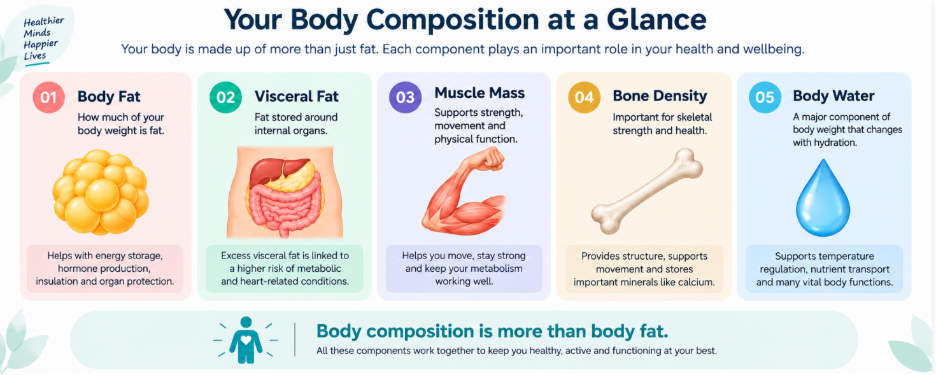
Body composition is not simply about how much fat a person has. Several components contribute to the picture, and each tells us something different.
1. Body Fat Percentage
Body fat percentage refers to the proportion of total body weight that consists of fat.
Some body fat is essential. Fat supports several important functions, including hormone production, energy storage, insulation, and protection of organs. Too little body fat can also be problematic, especially when sustained over time.
The American Council on Exercise uses the following broad reference categories:
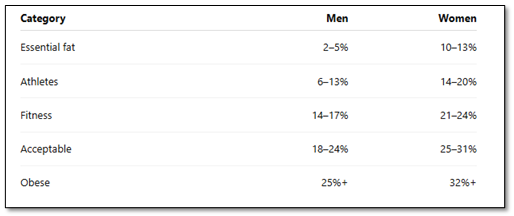
These categories are reference ranges, not personal targets. They should not be interpreted as precise medical cut-offs or as a recommendation to aim for the lowest possible percentage. The categories also do not fully account for age, ethnicity, hormonal status, health conditions, training history, or how the measurement was obtained.
For readers who want to understand the source behind these commonly used categories, the American Council on Exercise body fat percentage categories provide a useful reference.
Very low body fat can be associated with inadequate energy availability and hormonal or reproductive disturbances, particularly in women. Therefore, a lower number is not automatically a healthier number.
It is also worth remembering that body fat percentage is only one component of body composition. Two people with the same body fat percentage could still have different amounts of muscle mass, bone mass, and total body weight.
2. Visceral Fat
Not all body fat is stored in the same place.
Visceral fat is fat stored around internal abdominal organs. This differs from subcutaneous fat, which sits under the skin and is the type you can usually pinch.
Excess visceral fat is associated with metabolic dysfunction, insulin resistance, and cardiovascular risk. Research also suggests that regular exercise can help reduce visceral adipose tissue.
Importantly, visceral fat cannot be judged reliably simply by looking in the mirror. A person can appear relatively slim while still carrying excess abdominal or visceral fat. Conversely, visible abdominal fat does not necessarily mean that all of it is visceral fat.
However, visible abdominal fat often contributes to an increased waist circumference and waist-to-hip (W/H) ratio, both of which are associated with higher cardiometabolic risk. Therefore, visible abdominal fat can serve as a practical clinical indicator of risk, even though it does not accurately distinguish between subcutaneous and visceral fat.
Reducing excess visceral fat generally involves the same broad foundations that support overall health:
- Regular physical activity
- A nutritionally adequate eating pattern
- Appropriate energy balance
- Adequate sleep
No reliable way exists to selectively "burn" visceral fat through one particular exercise or food. A consistent overall approach is more likely to help.
3. Muscle Mass
Muscle is part of fat-free mass and plays an important role in movement, strength, physical independence, and metabolic health.
Muscle tissue also contributes to resting energy expenditure. However, it is worth avoiding the common idea that gaining a small amount of muscle will dramatically transform metabolism. The effect is real, but usually more modest than social media claims suggest.
Muscle mass naturally tends to decline with age, particularly when resistance training and adequate nutrition are lacking. Maintaining strength and muscle can therefore become increasingly important across adulthood.
Resistance training is one of the most effective ways to stimulate muscle growth and preserve lean mass. Protein intake also supports muscle protein synthesis. Research suggests that around 1.6 g of protein per kg of body weight per day is often sufficient for maximising gains in fat-free mass in healthy adults undertaking resistance training, although individual requirements can vary.
For general health, the World Health Organization recommends muscle-strengthening activities involving major muscle groups on at least two days per week for adults.
4. Bone Density
Bones are living tissue, not simply a structural framework holding the body together.
Bone mineral density generally reaches its peak in early adulthood and can gradually decline with age. Weight-bearing activity and resistance training can support bone health, while adequate calcium, vitamin D, and protein provide important nutritional support.
For people living in India, vitamin D deserves particular attention. Research has consistently reported a high prevalence of low vitamin D levels in Indian populations, although estimates vary considerably depending on the population studied and the definition used. Some reviews have reported prevalence estimates of around 80 to 90% in the studies they examined.
That does not mean everyone in India is vitamin D deficient. Individual status can vary considerably, and testing may be appropriate when clinically indicated.
5. Body Water
Water is another major component of the human body.
Total body water commonly accounts for roughly half to two-thirds of adult body weight, although the proportion varies with age, sex, body composition, and hydration status. Muscle contains considerably more water than adipose tissue, which is one reason people with greater lean mass may show higher body water percentages on certain body composition devices.
Hydration supports numerous physiological processes, including temperature regulation, cardiovascular function, kidney function and physical performance.
However, body water can also change from day to day. Salt intake, carbohydrate intake, exercise, menstruation, alcohol, illness, and simply how much fluid a person has consumed can influence hydration. This is particularly important when interpreting readings from a home body composition scale.
💡Key insight: Day-to-day fluctuations in body water can make body composition readings move even when your underlying fat and muscle mass have barely changed.
How to Measure Your Body Composition: Methods Compared
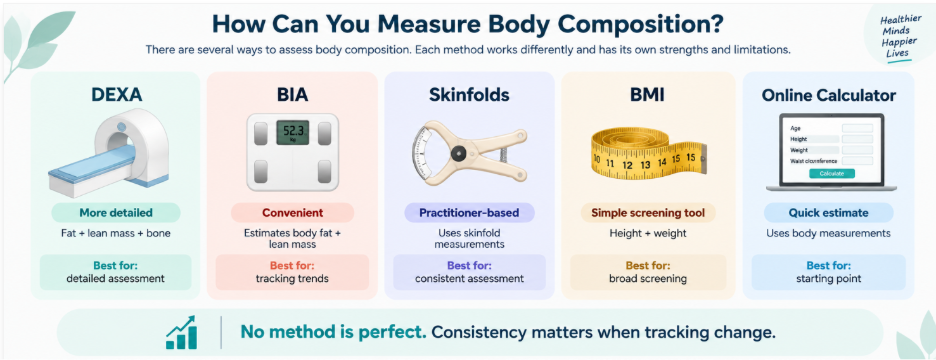
If you search for a body composition test, you will find several options. They do not all measure the body in the same way, and their results should not necessarily be treated as interchangeable.
DEXA scan
Dual-energy X-ray absorptiometry, commonly called DEXA or DXA, uses low-dose X-rays to estimate bone mineral content, fat mass, and lean mass. It can also provide regional information, such as how these tissues are distributed across different parts of the body.
DEXA is often used as a reference method in clinical and research settings, although it still has measurement limitations.
It generally requires access to a clinical or specialised facility and is more expensive than home-based methods.
Best suited for: people who want a detailed assessment or need body composition information as part of a broader clinical, nutritional or fitness programme.
Bioelectrical Impedance Analysis
Bioelectrical Impedance Analysis, or BIA, is the technology used by many smart scales and body composition monitors.
The device passes a very small electrical current through the body and uses the resulting impedance, along with variables such as height, weight, and sex, to estimate body composition.
BIA is convenient and relatively affordable, but its readings can be influenced by hydration, food intake, exercise, temperature, time of day and the device's prediction equation. Different devices can also produce different estimates for the same person.
This makes BIA potentially more useful for tracking trends under consistent conditions than treating a single reading as an exact measurement.
Skinfold calipers
Skinfold testing involves measuring the thickness of subcutaneous fat at specific points on the body.
When performed by someone properly trained and using an appropriate equation, skinfold assessment can provide a useful estimate of body fat. The quality of the result depends heavily on technique and the formula being used.
Best suited for: people working with a trained fitness professional or practitioner who can perform the measurements consistently.
BMI
BMI is simple, inexpensive, and widely available. It can be calculated using height and weight alone.
Its limitation is equally simple: it cannot tell whether a person's weight comes primarily from muscle, fat, bone or other tissues.
For that reason, BMI can be useful as one screening measure, but body composition may provide more individualised information.
Body composition calculators
An online body composition calculator may estimate body fat percentage using information such as age, sex, height, weight and waist measurements.
Methods such as the US Navy equation or Jackson-Pollock skinfold equations can provide estimates without specialised equipment. However, they remain estimates rather than direct measurements.
A calculator can be a useful starting point, particularly when someone wants a broad indication before investing in a formal assessment. It should not be used to make medical decisions on its own.
Which body composition test is best?
There is no single method that is perfect for every person.
If precision is important, a clinical assessment such as DEXA may be appropriate. If affordability and convenience matter more, BIA can be useful for monitoring trends. Skinfold testing can work well when performed consistently by a trained practitioner.
The key is to avoid comparing results from completely different methods as though they were identical.
💡Pro-tip: If you use a BIA scale, measure under similar conditions each time, ideally at a similar time of day and before food or exercise. Look at the trend over several weeks rather than reacting to one reading.
How to Improve Your Body Composition
Improving body composition usually means changing the relationship between fat mass and lean mass. For some people, that may mean gradually reducing excess body fat. For others, it may mean gaining muscle. For beginners and people returning to training after a break, it may be possible to experience both changes at the same time. This is often called body recomposition.
There is no single ideal body composition for everyone. Genetics, age, sex, health status, activity levels and lifestyle all play a role.
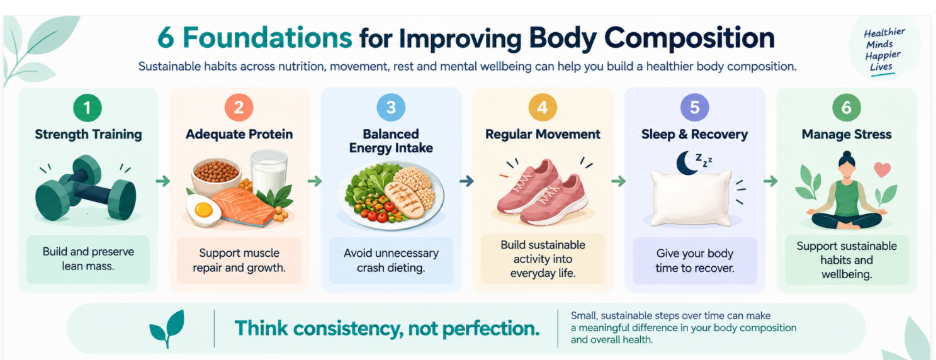
1. Prioritise strength training
Resistance training can help build or preserve muscle while also supporting changes in body fat.
A practical starting point could be two sessions per week, gradually progressing towards more frequent training if recovery and lifestyle allow. Bodyweight exercises, resistance bands, free weights, and machines can all be useful.
The emphasis does not necessarily need to be on exhausting workouts. Progressive overload, where the body is gradually exposed to a greater training challenge, is more relevant to long-term strength development.
2. Eat enough protein
Protein provides the amino acids required for muscle repair and growth.
Good options in an Indian diet can include:
- Dal and other pulses
- Chickpeas and beans
- Paneer
- Tofu
- Eggs
- Fish
- Chicken
- Greek yoghurt and other dairy products
Research on protein intake and resistance training suggests that around 1.6 g/kg/day is often enough to support gains in fat-free mass for people undertaking resistance training, although requirements can differ according to age, training status, energy intake and health. There is therefore little reason for most people to assume that more protein is always better.
3. Manage energy intake without crash dieting
If reducing body fat is the goal, some degree of sustained energy deficit is generally required. In simple terms, this means consuming less energy than the body uses over time.
However, aggressive restriction is not necessarily the best approach.
Very restrictive diets can be difficult to sustain and may increase the risk of losing lean mass along with fat. A moderate, personalised approach that includes sufficient protein, nutrient-dense foods and resistance training may be easier to maintain.
The goal does not need to be rapid weight loss. Body composition can improve even when changes on the scale are relatively modest.
4. Move regularly
Strength training matters, but so does general physical activity.
The WHO recommends that adults aim for 150 to 300 minutes of moderate-intensity aerobic activity per week, or 75 to 150 minutes of vigorous activity, alongside muscle-strengthening activities on at least two days each week. That could include walking, cycling, swimming, dancing, jogging or a sport you actually enjoy.
For many people, a realistic routine is more valuable than an impressive one that lasts three weeks.
For more ideas, see 1to1help's guide to building sustainable fitness habits alongside body composition improvement.
5. Treat sleep as part of the plan
Sleep is sometimes treated as an optional extra when people focus on diet and exercise. It may be more useful to think of it as part of the recovery process.
Adults generally benefit from around seven to nine hours of sleep, although individual needs vary. Research has also found that experimentally restricting sleep can increase energy intake and, in one controlled study, was associated with increases in abdominal and visceral fat.
Better sleep does not automatically produce a better body composition, but consistently poor sleep can make healthy eating, exercise and recovery harder.
If sleep has become difficult, 1to1help's guide on how sleep quality affects body composition offers practical strategies.
6. Manage stress
Stress does not simply "cause weight gain". The relationship is more complicated and can differ considerably between people.
However, prolonged stress can influence sleep, appetite, eating behaviour, physical activity and recovery. These indirect effects can make body composition goals harder to maintain. Research has explored associations between psychological stress, sleep, appetite, physical activity and abdominal obesity, although the relationship is not straightforward.
Stress management therefore does not need to be treated as a separate wellness activity. It can simply mean creating a more manageable lifestyle.
Walking after work, spending time with friends, breathing exercises, hobbies, adequate rest and professional support can all have a place.
A gentler approach: If improving body composition requires you to think about food, exercise, and your appearance every waking hour, it may be worth reassessing the approach. Health goals should ideally support life rather than take it over.
Body Composition and Mental Health: The 1to1help Perspective
Knowing your body composition can be useful. For some people, having objective information makes it easier to understand their health, choose realistic goals, and notice changes that weight alone might miss.
But numbers can also become emotionally loaded.
A person may begin by weighing themselves once a week and gradually move towards weighing several times a day. A body fat percentage that changes by one decimal point can suddenly determine whether they feel successful. Meals may become something to earn or compensate for. Social plans may be cancelled because a workout was missed.
At that point, the measurement may no longer be serving the person.
Daily weighing or frequent body composition testing may be particularly difficult for people who have experienced disordered eating, body dysmorphia or significant health anxiety. Signs that tracking may be becoming unhelpful can include:
- Thinking about body measurements for much of the day
- Feeling distressed when the number changes unexpectedly
- Changing eating behaviour drastically in response to a reading
- Exercising to compensate for food
- Avoiding social situations because of concerns about appearance
- Repeatedly checking mirrors, measurements or photographs
- Feeling that self-worth depends on reaching a particular number
Body image and body composition are also not the same thing.
A person can fall within a conventionally desirable body fat range and still feel deeply uncomfortable with their body. Another person may have a body composition they want to change while still having a respectful, accepting relationship with their body.
A healthy relationship with the body does not require giving up health goals. It may simply involve holding those goals with more flexibility.
If tracking your body composition is becoming a source of anxiety, obsessive thinking, or is influencing your relationship with food in ways that worry you, a 1to1help counsellor can help. Body image, self-esteem, health-related anxiety, and changing relationships with the body can be explored in confidential counselling.
Speak to a 1to1help counsellor about body image
1to1help provides confidential online counselling with trained counsellors, including support in multiple Indian languages.
Conclusion: Know Your Numbers, But Know Their Limits
Body composition can provide a more detailed picture than body weight alone. Looking at fat mass, lean mass, muscle, visceral fat, and other components can help you set health and fitness goals more effectively.
At the same time, these numbers are estimates, not verdicts.
A body composition measurement tells you something about where your body is at a particular point in time. It does not determine your health completely, and it certainly does not determine your value as a person.
Use the information to guide decisions about movement, nutrition, recovery, and healthcare where appropriate. If the numbers start driving anxiety, restriction, or self-criticism, that is useful information too.
If tracking your health metrics is creating stress or affecting your relationship with your body, 1to1help's counsellors can support you with body image, health anxiety and the psychological side of physical wellbeing. With 25 years of experience and confidential counselling available in multiple Indian languages, support can begin from wherever you are.
For organisations, 1to1help's EAP programme can also provide employees with confidential mental health support as part of a broader workplace wellbeing approach. This can be particularly relevant when concerns around health, body image, stress or self-care begin affecting everyday functioning and work.
Your body is something to care for, not a score to achieve.
FAQs
Q1. What is a good body composition for my age?
There is no single ideal body composition for a particular age. Body fat ranges can vary by age, sex, and measurement method, so a percentage should be interpreted alongside muscle mass, waist circumference, fitness, and overall health.
Q2. What is the difference between body composition and BMI?
BMI uses height and weight but cannot distinguish between muscle and fat. Body composition provides more detail by looking at measures such as fat mass and lean mass, making it a useful additional measure when assessing health and fitness.
Q3. How do I measure my body composition at home?
A BIA smart scale can estimate body fat, muscle mass and body water, while tape-measure-based calculators provide a simpler estimate. For more meaningful tracking, take measurements under similar conditions and avoid treating a single reading as definitive, as hydration can affect BIA results.
Q4. How long does it take to change body composition?
There is no universal timeline. Consistent resistance training, adequate protein, regular movement, appropriate energy intake, and recovery can support gradual changes, which may become noticeable over several months.
Rather than focusing only on weight, it can help to track indicators such as strength, waist circumference, fitness, and how clothes fit.
Q5. What is a healthy body fat percentage for Indians?
There is no universally accepted body fat percentage cut-off specifically for Indian adults. South Asian populations can experience metabolic risk at lower BMI levels, which is why body fat percentage is best considered alongside waist circumference, blood pressure, glucose, lipids, and other health factors.
Common reference ranges, such as those from ACE, can provide general context but should not automatically be treated as personalised targets.
For Indian readers: Instead of asking, “What is the lowest body fat percentage I can reach?”, consider asking, “What combination of body fat, muscle, fitness and metabolic health supports my wellbeing?”
References
- Alimoradi, Z., Golboni, F., Griffiths, M. D., Broström, A., Lin, C.-Y., & Pakpour, A. H. (2020). Weight-related stigma and psychological distress: A systematic review and meta-analysis. Clinical Nutrition, 39(7), 2001–2013. https://doi.org/10.1016/j.clnu.2019.10.016
- Anderberg, I., Kemps, E., & Prichard, I. (2025). The link between the use of diet and fitness monitoring apps, body image and disordered eating symptomology: A systematic review. Body Image, 52, 101836. https://doi.org/10.1016/j.bodyim.2024.101836
- Komiya, S. (1991). Methods for the assessment of human body composition: Skinfold thickness and bioelectrical impedance measurements. The Annals of Physiological Anthropology, 10(1), 3–17. https://doi.org/10.2114/ahs1983.10.3
- Marra, M., Sammarco, R., De Lorenzo, A., Iellamo, F., Siervo, M., Pietrobelli, A., Donini, L. M., Santarpia, L., Cataldi, M., Pasanisi, F., & Contaldo, F. (2019). Assessment of body composition in health and disease using bioelectrical impedance analysis (BIA) and dual energy X-ray absorptiometry (DXA): A critical overview. Contrast Media & Molecular Imaging, 2019, 3548284. https://doi.org/10.1155/2019/3548284
- Messina, C., Albano, D., Gitto, S., Tofanelli, L., Bazzocchi, A., Ulivieri, F. M., Guglielmi, G., & Sconfienza, L. M. (2020). Body composition with dual energy X-ray absorptiometry: From basics to new tools. Quantitative Imaging in Medicine and Surgery, 10(8), 1687–1698. https://doi.org/10.21037/qims.2020.03.02
- Morton, R. W., Murphy, K. T., McKellar, S. R., Schoenfeld, B. J., Henselmans, M., Helms, E., Aragon, A. A., Devries, M. C., Banfield, L., Krieger, J. W., & Phillips, S. M. (2018). A systematic review, meta-analysis and meta-regression of the effect of protein supplementation on resistance training-induced gains in muscle mass and strength in healthy adults. British Journal of Sports Medicine, 52(6), 376–384. https://doi.org/10.1136/bjsports-2017-097608
- Prado, C. M., Gonzalez, M. C., Norman, K., Barazzoni, R., Cederholm, T., Compher, C., Jensen, G. L., Abe, T., Gonzalez Barbosa-Silva, T., Bosy-Westphal, A., Carmichael, O. T., Earthman, C. P., Evans, W. J., Fields, D. A., Genton, L., Hu, H. H., Kara, M., Miles-Chan, J. L., Mourtzakis, M., Muller, M. J., Orsso, C. E., Perkisas, S., Sardinha, L. B., Shepherd, J. A., Siervo, M., Strauss, B. J. G., Yamada, Y., Zhu, S., & Heymsfield, S. B. (2025). Methodological standards for body composition: An expert-endorsed guide for research and clinical applications: Levels, models, and terminology. The American Journal of Clinical Nutrition, 122(2), 384–391. https://doi.org/10.1016/j.ajcnut.2025.05.022
- Prado, C. M., Gonzalez, M. C., Norman, K., Orsso, C. E., Barazzoni, R., Cederholm, T., Compher, C., Jensen, G. L., Abe, T., Gonzalez Barbosa-Silva, T., Bennett, J. P., Carmichael, O. T., Earthman, C. P., Evans, W. J., Fields, D. A., Genton, L., Hu, H. H., Kara, M., Miles-Chan, J. L., Mourtzakis, M., Paris, M. T., Perkisas, S., Sardinha, L. B., Shepherd, J. A., Siervo, M., Strauss, B. J. G., Yamada, Y., Zhu, S., & Heymsfield, S. B. (2026). Methodological standards for body composition assessment: An expert-endorsed guide for research and clinical applications: Bioimpedance, dual-energy X-ray absorptiometry, computerized tomography, and ultrasound methods. The American Journal of Clinical Nutrition, 123(5), 101283. https://doi.org/10.1016/j.ajcnut.2026.101283
- Roth, A. M., Gruber, J. R., Reif, A., Schultze, M., & Matura, S. (2024). Exploring weight-related self-monitoring as a potential risk factor for eating disorder symptoms in adults: A systematic review and meta-analysis. Appetite, 202, 107610. https://doi.org/10.1016/j.appet.2024.107610
- Sharma, S., et al. (2009). Consensus statement for diagnosis of obesity, abdominal obesity and the metabolic syndrome for Asian Indians and recommendations for physical activity, medical and surgical management. Journal of Association of Physicians of India. https://pubmed.ncbi.nlm.nih.gov/19582986/
- St-Onge, M.-P., Tasali, E., & the Sleep Restriction and Obesity study investigators. (2022). Effects of experimental sleep restriction on energy intake, energy expenditure, and visceral obesity. Journal of the American College of Cardiology, 79(14), 1254–1265. https://doi.org/10.1016/j.jacc.2022.01.054
- World Health Organization. (2020). WHO guidelines on physical activity and sedentary behaviour. https://www.who.int/publications/i/item/9789240015128
- World Health Organization. (2025). Obesity and overweight. https://www.who.int/news-room/fact-sheets/detail/obesity-and-overweight


.svg)
.svg)
.svg)
.svg)