Counselling helpline for employees of partner organisations


Counselling helpline for employees of partner organisations


Counselling helpline for employees of partner organisations
Counselling helpline for employees of partner organisations


Mental health concerns affect millions of people in India, yet many continue to struggle without receiving professional support. According to the National Mental Health Survey of India (2015–16) conducted by the National Institute of Mental Health and Neurosciences (NIMHANS), nearly one in seven Indians was living with a mental health condition, and approximately one in five people may require mental health support at some point during their lifetime. The same survey also reported an estimated treatment gap of 70 to 92 percent, meaning that a large proportion of people who could benefit from professional care never receive it. These findings were reiterated by the Ministry of Health and Family Welfare in a February 2025 government update, highlighting the continuing relevance of the issue.
Several barriers contribute to this gap, including stigma, limited access to qualified mental health professionals, busy schedules, and the cost of regular in-person therapy. These challenges can be even greater for people living outside major cities or balancing work, family and other responsibilities.
This is where online counselling has transformed access to mental healthcare. Instead of travelling to a clinic, individuals can connect with a qualified counsellor from the privacy of their home or another comfortable space. The flexibility of online therapy in India makes it easier to seek timely support while reducing the practical challenges of travel, scheduling and location.
The COVID-19 pandemic accelerated the acceptance of virtual mental healthcare, and initiatives such as the Government of India's Tele-MANAS (14416) have further strengthened access to remote mental health support. Today, online counselling is no longer viewed simply as an alternative to face-to-face therapy. For many people, it has become the preferred way to access professional mental healthcare.
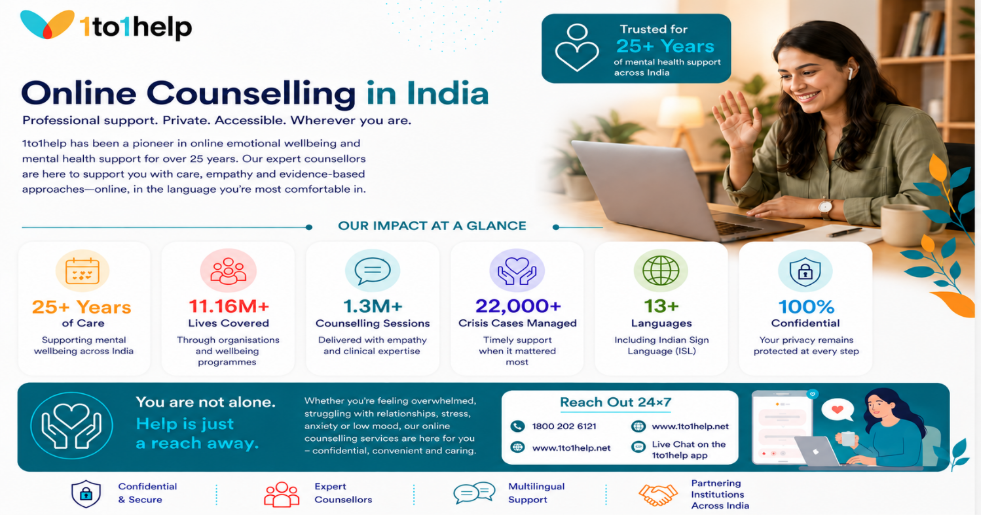
For more than 25 years, 1to1help has been making mental healthcare more accessible through technology-enabled counselling services. With 1.3 million+ counselling sessions, 22,000+ crisis interventions, 13+ languages (including Indian Sign Language), and a counselling methodology validated by NIMHANS, 1to1help continues to provide confidential, evidence-based support to individuals and organisations across India.
Whether someone is looking for support through their online counselling services or through an Employee Assistance Programme (EAP) offered by their organisation, the aim remains the same: to make professional mental healthcare easier to access, confidential, and responsive to individual needs.
If you have never spoken to a mental health professional before, it is natural to wonder what online counselling involves and whether it is the same as therapy. Although the terms are often used interchangeably, they are not always identical.
Online counselling is a professional mental health service delivered remotely through secure telephone or video calls. It provides a confidential, structured space where you can discuss your thoughts, emotions, relationships or life challenges with a trained mental health professional.
Rather than giving advice or telling you what to do, a counsellor works collaboratively with you to understand your experiences, identify unhelpful patterns, develop healthier coping strategies and work towards meaningful personal goals. Like face-to-face counselling, online sessions are guided by professional ethics, confidentiality and evidence-based psychological approaches.
One reason online counselling in India has become increasingly popular is the flexibility it offers. Different formats allow people to choose the option that feels most comfortable and practical for their circumstances.
Telephone counselling remains one of the most accessible forms of support. It requires only a phone connection, making it suitable even where internet access may be unreliable.
Some people also find it easier to open up when they are not on camera, particularly when discussing sensitive topics.
Often best suited for:
Video sessions most closely resemble traditional face-to-face counselling. Seeing facial expressions and body language can sometimes strengthen communication and help build rapport.
Many people choose video counselling because it provides the familiarity of an in-person conversation while still allowing them to attend from home.
Often best suited for:
Some platforms also offer chat-based support, where communication happens through written messages rather than spoken conversation.
While this format can feel less intimidating for people who find verbal communication difficult, it is generally used more for supportive conversations or coaching than for structured psychological interventions.
This is one of the most common questions people ask.
In everyday conversation, online counselling and online therapy are often used interchangeably, and there is considerable overlap between them.
Generally speaking, counselling tends to focus on helping people manage current concerns such as stress, relationship difficulties, grief, workplace challenges, or life transitions. Therapy, or psychotherapy, may involve exploring deeper emotional patterns, unresolved trauma, long-standing behavioural difficulties, or more complex mental health conditions over a longer period.
The distinction is not always rigid. Many qualified psychologists provide both counselling and psychotherapy, depending on an individual's needs.
At 1to1help, counselling is provided within the scope of its services. If an individual requires longer-term therapy, an appropriate external referral is made to help them access continued support.
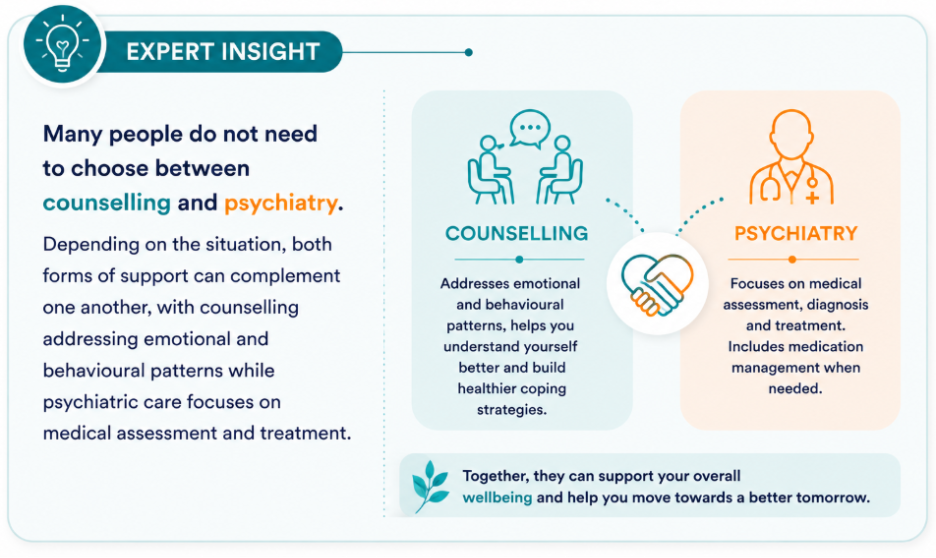
It is also helpful to understand the difference between a counsellor, psychologist, and psychiatrist.
A psychiatrist is a medical doctor who can diagnose mental health conditions, prescribe medication and manage medical treatment.
A psychologist or counsellor uses evidence-based psychological approaches to help people understand emotions, behaviours, relationships and coping strategies but does not prescribe medication.
For many concerns such as stress, anxiety, burnout, relationship difficulties, grief, or mild to moderate depression, counselling may be an appropriate first step. If medication or specialist psychiatric care appears necessary, a counsellor may recommend referral to a psychiatrist as part of a collaborative treatment plan.
Recommended Reading:
What Really Happens in Counselling? A Step-by-Step Guide for First-Time Clients in India
All You Need to Know About Counselling: Meaning, Process and Types of Counselling
Employee Counselling: Meaning, Types, Process, Benefits and Importance in HRM (2026)
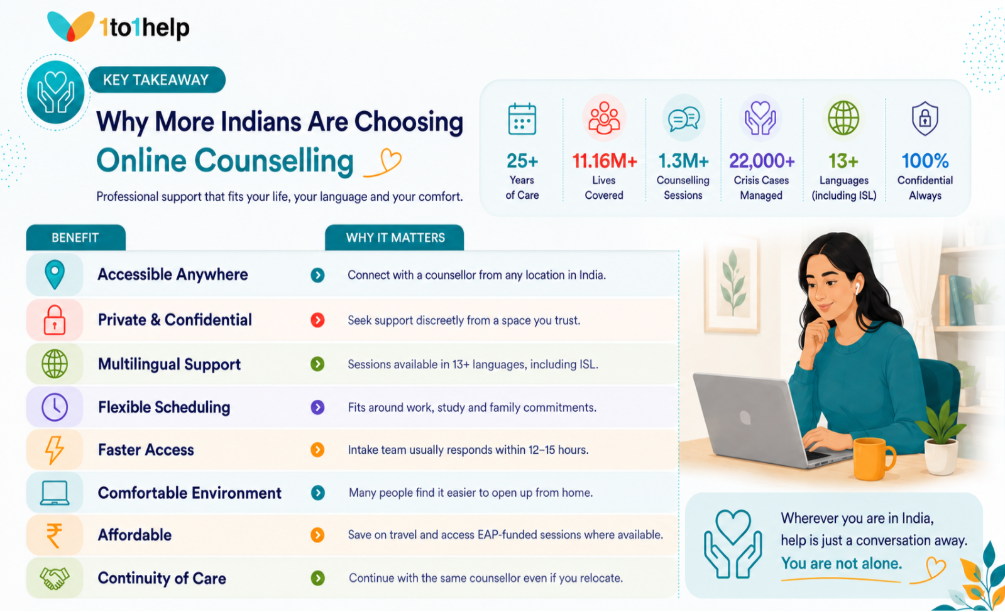
Choosing to seek mental health support is a deeply personal decision. For many people, the biggest challenge is not recognising they need help, but finding support that is accessible, confidential, affordable and practical. Online counselling combines the expertise of qualified mental health professionals with the convenience of technology, making it easier to prioritise emotional wellbeing without disrupting everyday life.
One of the greatest advantages of online counselling is that geography no longer determines access to quality mental healthcare. Whether you live in a metro city, a Tier 2 or Tier 3 town, or relocate frequently for work or study, you can connect with a qualified counsellor without travelling long distances. This also makes it easier to continue with the same counsellor even if your location changes.
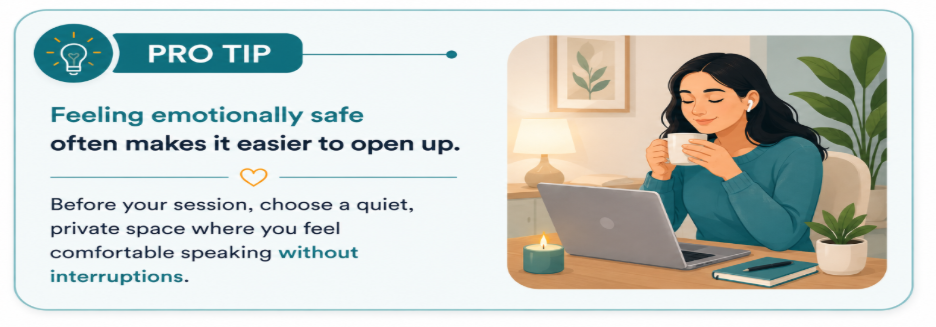
Many people hesitate to seek counselling because they worry about being judged. Online counselling offers greater privacy by allowing sessions from a space where you feel comfortable, without visiting a clinic or waiting room. Professional counselling services also follow strict ethical standards to protect your confidentiality.
Expressing emotions often feels easier in your preferred language.
1to1help offers counselling in 13+ languages, including Hindi, Kannada, Tamil, Telugu, Marathi, Bengali, Punjabi and Indian Sign Language (ISL), making professional support more accessible while recognising the cultural contexts that shape people's experiences.
Busy work schedules, family responsibilities and commuting often make regular appointments difficult. Online counselling removes much of this logistical burden by allowing sessions to be scheduled at convenient times, making it easier to attend consistently.
Waiting weeks for an appointment can delay support when you need it most.
At 1to1Online Counselling, the intake team generally contacts individuals within 12 to 15 hours of receiving an enquiry before matching them with a suitable counsellor based on their needs, language preference and availability.
Research suggests that some people feel more comfortable discussing personal concerns during online sessions than in face-to-face settings. Being in a familiar environment can create a greater sense of emotional safety, although the most effective format is ultimately the one that helps you engage openly and consistently.
Online counselling can reduce indirect costs such as travel, parking and time away from work. At 1to1help, sessions begin at ₹2,000, while employees of partner organisations may be able to access counselling through their Employee Assistance Programme (EAP) at no direct cost, depending on their employer's policy.
Life rarely stands still. Moving cities, changing jobs or relocating abroad does not have to interrupt your counselling journey. Online counselling makes it easier to continue working with the same counsellor, providing continuity and support during periods of significant change.
One of the most common questions people ask is whether their concern is "serious enough" for counselling.
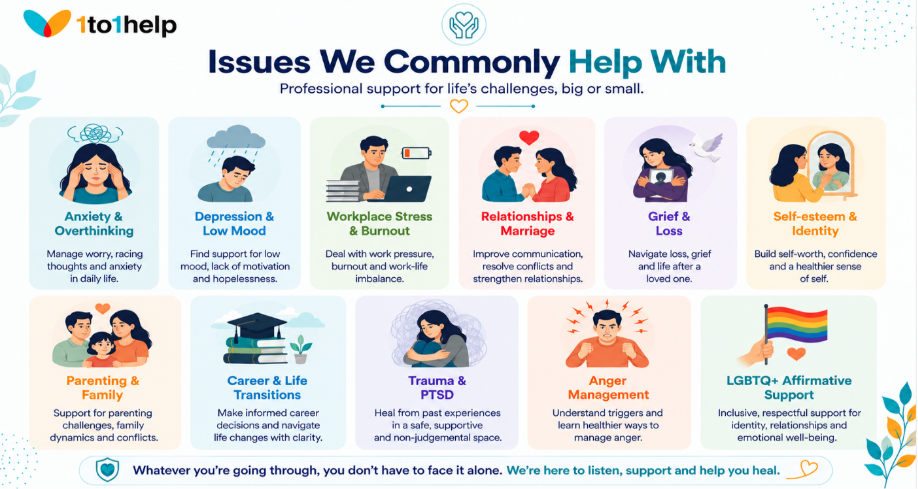
In reality, online mental health counselling is not reserved only for people experiencing a mental health condition or emotional crisis. Many individuals seek support to better understand themselves, improve relationships, navigate life transitions, or develop healthier ways of coping with everyday challenges. Below are some of the most common concerns that online counselling in India can help address.
Feeling worried from time to time is a normal part of life. However, when anxiety becomes persistent, overwhelming, or begins affecting your work, sleep, relationships, or physical health, professional support may help.
Online counselling for anxiety commonly supports people experiencing:
Counsellors may use evidence-based approaches such as Cognitive Behavioural Therapy (CBT), mindfulness techniques, and emotional regulation strategies to help individuals better understand and manage anxious thought patterns.
Depression looks different for everyone. Some people experience ongoing sadness, while others notice reduced motivation, fatigue, irritability, hopelessness, changes in sleep, or loss of interest in activities they once enjoyed.
Online counselling for depression focuses on understanding these experiences within the context of a person's life. Depending on individual needs, counsellors may use approaches such as CBT or Interpersonal Therapy to help people identify unhelpful thought patterns, strengthen coping skills, and gradually reconnect with meaningful activities. Research suggests that online CBT can be as effective as face-to-face CBT for many people experiencing mild to moderate depression.
Increasing workloads, long hours, blurred work-life boundaries, and organisational change have made workplace stress one of the most common reasons people seek counselling.
Support may include:
For employees of 1to1help's partner organisations, counselling may also be available through their Employee Assistance Programme (EAP).
Healthy relationships require communication, trust and mutual understanding, but every relationship experiences challenges from time to time.
Online counselling can support individuals and couples navigating:
Depending on the situation, counselling may involve individual sessions or couples counselling.
Grief is not limited to losing a loved one. People may also grieve the end of a relationship, job loss, infertility, retirement, declining health, or major life changes. Counselling provides a compassionate, non-judgemental space to process these experiences at your own pace, recognising that there is no single "right" way to grieve.
Persistent low self-esteem, imposter syndrome, people-pleasing, difficulty setting boundaries, or uncertainty about one's identity can affect emotional wellbeing and relationships. Counselling helps individuals develop greater self-awareness, challenge unhelpful beliefs, and build healthier patterns of thinking and relating to themselves.
Family life can be rewarding, but it can also bring emotional demands. Online counselling may support parents and caregivers experiencing:
Periods of change often bring uncertainty. Whether you are starting university, changing careers, relocating, becoming a parent, retiring, or adjusting to a new phase of life, counselling provides structured support to help you navigate uncertainty with greater clarity and confidence.
People process trauma differently. Trauma-informed online counselling can help individuals work through the emotional effects of difficult or distressing experiences using evidence-based approaches delivered at a pace that feels safe. For individuals experiencing severe or complex trauma, a counsellor may recommend additional specialist or in-person support where appropriate.
Anger itself is not a problem. It is a normal human emotion. However, when anger begins affecting relationships, work, or daily functioning, counselling can help identify underlying triggers, improve emotional regulation, and develop healthier ways of responding to challenging situations.
Everyone deserves access to mental healthcare that is respectful, inclusive, and affirming. 1to1help provides confidential support for LGBTQIA+ individuals navigating identity, relationships, family acceptance, workplace experiences, and emotional wellbeing in a safe, non-judgemental environment.
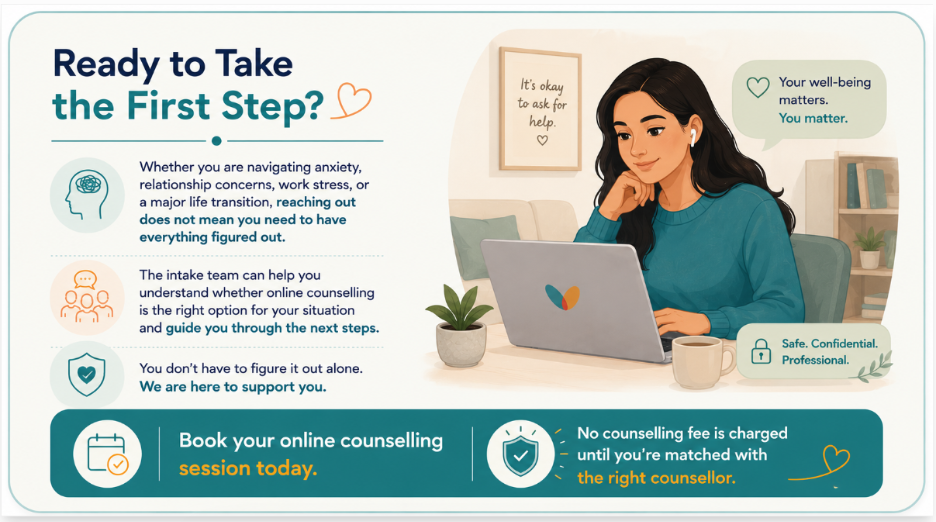
One of the most common questions people have before booking their first online counselling session is, "What actually happens after I reach out?"
It is completely natural to feel unsure, especially if you have never spoken to a counsellor before. Understanding the process beforehand can make taking the first step feel much less overwhelming.
At 1to1help, the journey is designed to be straightforward, confidential, and centred around your individual needs. Rather than assigning a counsellor immediately through an automated system, the process begins with understanding your concerns so that you can be matched with someone who is best suited to support you.
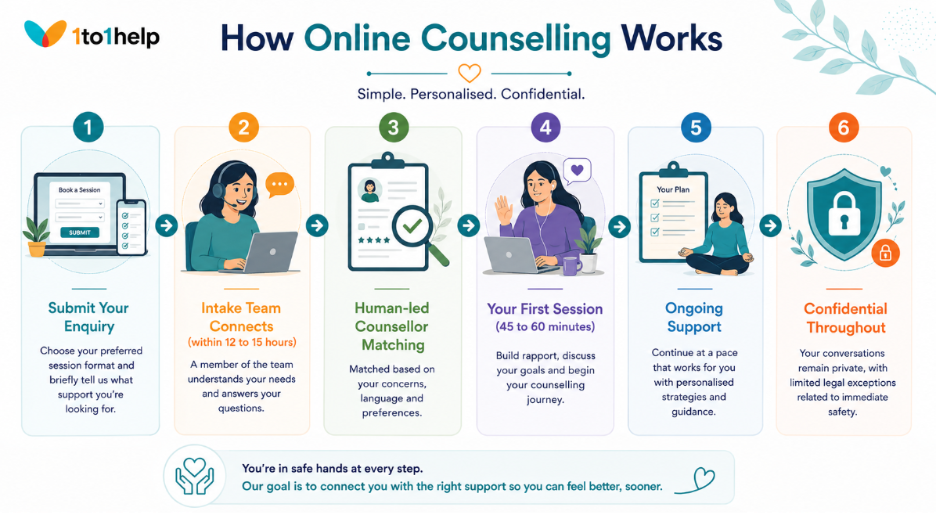
The process begins by completing a short enquiry form on the 1to1help Online Counselling page.
During this step, you can share basic information such as:
The form is intentionally brief. You are not expected to explain everything at this stage.
Remember: You only need to share enough information to help the intake team understand how they can best support you.
Once your enquiry has been received, a member of the 1to1help intake team typically contacts you within 12 to 15 hours.
This is not a counselling session. Instead, the intake conversation focuses on understanding:
The aim is to understand your situation well enough to recommend an appropriate counsellor rather than assigning one randomly.
Finding the right therapeutic fit is one of the most important predictors of a positive counselling experience.
Rather than using only an automated algorithm, 1to1help uses a human-led matching process that considers several factors, including:
This personalised approach increases the likelihood of building a comfortable and productive therapeutic relationship from the very beginning.
Another reassuring aspect of the process is that no counselling fee is charged until you have been matched with a suitable counsellor and are ready to proceed.
Your first online counselling session usually lasts 45 to 60 minutes.
Many people worry about saying the "right" thing during their first appointment. In reality, there is no perfect way to begin. The first session is primarily about getting to know each other.
Your counsellor may explore:
There is no expectation that you share everything immediately.
Building trust takes time, and you remain in control of what you choose to discuss.
Your first counselling session is not about having all the answers. It is about beginning a conversation in a safe, confidential space where you can explore your experiences at your own pace.
Counselling is not one-size-fits-all. The number of sessions someone may benefit from depends on several factors, including the nature of the concern, personal goals, and how they respond to the counselling process.
For some people, a few focused sessions may be enough to work through a specific issue. Others may choose to continue for longer-term personal growth or support through ongoing life challenges.
Between sessions, your counsellor may suggest:
These activities are collaborative suggestions rather than compulsory homework, helping you apply insights from counselling to everyday life.
Confidentiality forms the foundation of professional counselling. Everything you discuss during your sessions remains confidential and is not shared with your employer, family members, or any third party without your knowledge and consent.
The only exception is when there is an immediate and serious risk of harm to yourself or someone else. In these situations, mental health professionals have an ethical and legal responsibility to take appropriate steps to protect safety.
If you are accessing counselling through your organisation's Employee Assistance Programme (EAP), your employer does not receive details of your conversations. Employers receive only anonymised, aggregated reports that help them understand overall programme utilisation rather than information about individual employees.
Many people imagine counselling as simply talking about problems. While conversation is certainly an important part of the process, effective online psychological counselling is guided by evidence-based therapeutic approaches that have been researched and refined over many years.
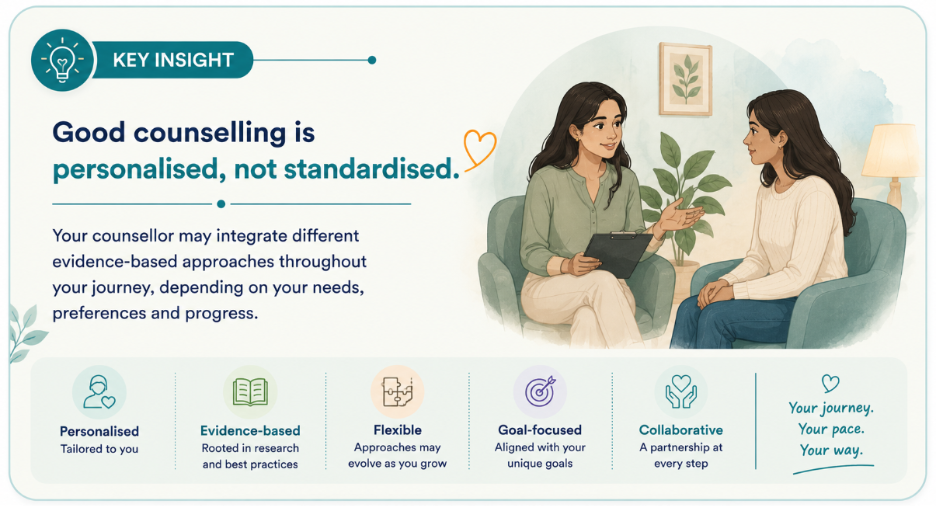
Your counsellor is unlikely to begin a session by explaining psychological models or clinical terminology. Instead, they will tailor their approach to your concerns, goals, personality, and comfort level. In many cases, counsellors draw from more than one therapeutic approach rather than relying on a single method.
Here are some of the most commonly used approaches in online mental health counselling.
Cognitive Behavioural Therapy, commonly known as CBT, is one of the most widely researched psychological approaches in the world.
CBT is based on the understanding that thoughts, emotions and behaviours influence one another. By recognising unhelpful thinking patterns and replacing them with more balanced perspectives, people can often improve how they feel and respond to challenging situations.
Research suggests that online CBT can be as effective as face-to-face CBT for many people experiencing anxiety and depression.
Mindfulness-based therapies encourage individuals to become more aware of their thoughts, emotions and physical sensations without immediately reacting to them. Rather than trying to eliminate difficult feelings, mindfulness helps people notice them with greater awareness and self-compassion.
Because mindfulness shares similarities with practices such as meditation and yoga, many people in India find these techniques familiar and easier to integrate into everyday life.
Acceptance and Commitment Therapy focuses less on eliminating uncomfortable thoughts and more on changing our relationship with them. Instead of struggling against every difficult emotion, ACT encourages people to acknowledge their experiences while continuing to move towards what matters most to them.
Relationships play an important role in emotional wellbeing. Interpersonal Therapy focuses on improving communication, strengthening relationships and navigating significant life changes that may contribute to emotional distress.
Rather than concentrating primarily on problems, Solution-Focused Brief Therapy encourages people to identify strengths, existing resources and achievable next steps.
This approach is particularly useful when someone has a clear goal they would like to work towards, such as improving confidence, making a career decision or managing a specific workplace challenge.
Sometimes, recurring emotional difficulties are connected to experiences or relationship patterns that developed much earlier in life. Psychodynamic approaches explore these deeper patterns with curiosity, helping people understand how past experiences may continue to influence present emotions, relationships and behaviours.
This approach is often chosen for longer-term therapeutic work.
People who have experienced trauma may benefit from approaches specifically designed to support recovery while prioritising emotional safety. Depending on your needs and the counsellor's expertise, this may include:
Where more specialised or in-person support appears appropriate, your counsellor will discuss suitable referral options with you.
No single therapeutic approach works for everyone. An experienced counsellor considers your goals, personality, cultural context and presenting concerns before deciding which techniques may be most helpful. As counselling progresses, the approach may also evolve based on your experiences and feedback.
The focus is not on fitting you into a particular therapy model, but on finding an approach that supports meaningful and sustainable change.
Choosing between online counselling and in-person therapy is not about deciding which one is "better". It is about finding the format that best suits your needs, lifestyle, comfort level, and the type of support you are seeking.
Over the past few years, research has consistently shown that for many common mental health concerns, including anxiety, depression, stress, grief, and relationship challenges, online therapy in India can be just as effective as face-to-face therapy when delivered by a qualified mental health professional. That said, each format has its own strengths. Understanding these differences can help you make a more informed decision.
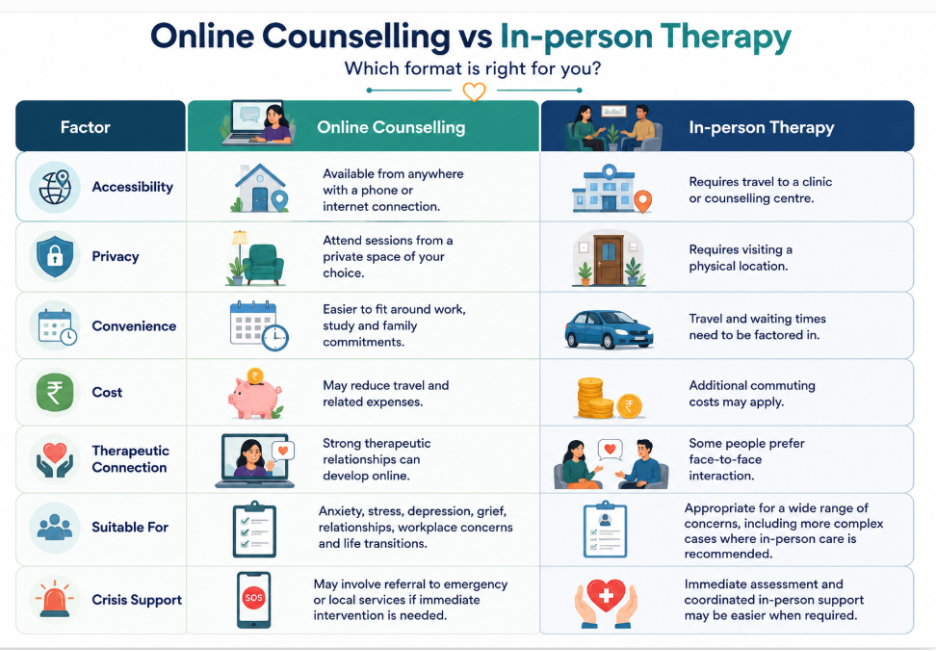
For many people, online counselling offers the flexibility and accessibility needed to seek help earlier rather than delaying support.
The convenience of online counselling can also make it easier to attend sessions consistently, which is an important part of the counselling process.
Although online counselling is suitable for many situations, there are circumstances where face-to-face care may be recommended.
If your needs change over time, your counsellor may also recommend transitioning to in-person support or working alongside a psychiatrist or other healthcare professional.
For many concerns, there is no single "correct" format.
both online and in-person counselling may offer meaningful support when provided by an appropriately qualified professional.
The decision often comes down to practical considerations such as convenience, accessibility, and personal preference.
Mental health support does not always have to remain in one format. Some people begin with online counselling in India because it is easier to access and later choose to attend face-to-face sessions. Others may alternate between online and in-person appointments depending on travel, work commitments, or changing life circumstances.
The important thing is not the format itself, but receiving timely, consistent support that meets your needs.
Choosing the right online counsellor is about more than finding the first available appointment. Along with professional qualifications, factors such as experience, communication style, language and therapeutic fit can all influence your counselling experience. Taking a little time to evaluate these factors can help you build a stronger therapeutic relationship and get the most out of counselling.
Mental health professionals in India have different qualifications depending on the type of support they provide. Many counsellors and psychologists hold a Master's degree in Counselling, Clinical or Applied Psychology, while Clinical Psychologists have specialised training and are registered with the Rehabilitation Council of India (RCI). If you are seeking support for severe or complex mental health conditions, an RCI-registered Clinical Psychologist or Psychiatrist may be more appropriate.
Counsellors often specialise in particular areas, such as anxiety, depression, workplace stress, relationship concerns, grief, trauma or parenting. Choosing someone with experience relevant to your concerns can help ensure the support you receive is tailored to your needs.
You are more likely to express yourself openly when you can communicate in the language you are most comfortable with. Cultural understanding can also make conversations more relatable, particularly when discussing family expectations, workplace pressures or relationship dynamics. At 1to1help, counselling is available in 13+ languages, including Indian Sign Language (ISL).
Different counsellors may use evidence-based approaches such as Cognitive Behavioural Therapy (CBT), Acceptance and Commitment Therapy (ACT), mindfulness-based therapies or Interpersonal Therapy. You do not need to understand every therapy model, but it can be helpful to ask how your counsellor typically works and whether they adapt their approach to individual needs.
The first session is an opportunity to decide whether you feel comfortable with your counsellor. Ask yourself:
Research consistently shows that the quality of the therapeutic relationship is one of the strongest predictors of positive counselling outcomes.
Before booking a session, it is worth checking for a few warning signs. Be cautious if a platform:
A trustworthy counselling service should be transparent about its professionals, processes and ethical standards, helping you make an informed decision before you begin.
Rather than assigning counsellors through an automated system alone, 1to1help uses a human-led matching process that considers your concerns, language preference, goals and availability before recommending a counsellor. This personalised approach helps create a stronger therapeutic fit from the outset and ensures you are matched with a professional best suited to support your needs.
Cost is often one of the first questions people consider before beginning counselling. While pricing varies across providers, understanding what is included and the support options available can help you make an informed decision.

Key points:
If your employer partners with 1to1help through an Employee Assistance Programme (EAP), you may be eligible to receive counselling sessions without paying directly.
To check eligibility, you can:
The number of sessions available depends on your organisation's EAP policy.
While fees vary, online counselling services in India broadly fall into three categories:

Rather than choosing solely on price, it can be helpful to consider factors such as counsellor qualifications, confidentiality, language options, matching processes, and continuity of care.
If cost is currently a barrier, several organisations provide free or subsidised support:
These services can be valuable for immediate guidance or crisis support. For ongoing counselling with the same professional over multiple sessions, structured paid services are often more appropriate.
Many employees are unaware that they may already have access to online counselling through their workplace at no direct cost. If your organisation offers an Employee Assistance Programme (EAP), professional counselling may already be part of your employee wellbeing benefits.
An EAP is an employer-funded wellbeing programme that provides employees with confidential professional support for personal and work-related challenges. Organisations partner with providers such as 1to1help to offer services including online counselling, emotional wellbeing support and crisis intervention.
Employees of 1to1help's 1,000+ partner organisations across India may be eligible to access counselling through their employer. Depending on your organisation's policy, immediate family members may also be covered.
The counselling experience is the same, but the funding is different.
With EAP counselling:
Employers receive only anonymised, aggregate reports about programme usage. Individual counselling conversations, notes and personal information are never shared.
Despite being widely available, EAP counselling is often underused because many employees:
Seeking support early can help address concerns such as stress, anxiety, burnout, relationship difficulties or life transitions before they begin affecting your wellbeing or work. Through ongoing awareness initiatives, 1to1help aims to reduce stigma and encourage employees to access support whenever they need it.
Many people wonder whether they are "struggling enough" to seek counselling. The truth is, you do not have to wait until you're in crisis. Seeking support early can help you better understand your thoughts, emotions and behaviours before they begin to significantly affect your daily life.
You may benefit from online counselling if you:
Whether you are looking for online counselling for anxiety, online counselling for depression, or support during a difficult transition, reaching out early can make recovery easier.
Online counselling is appropriate for many emotional and mental health concerns. However, if you are:
seek urgent professional help immediately rather than waiting for a routine counselling appointment.
You can contact Tele-MANAS (14416) for immediate support.
Many people take time to decide whether counselling is right for them, hoping that things may improve on their own. However, reaching out for support when challenges begin to affect everyday life can offer an opportunity to understand what is happening, explore coping strategies, and work towards positive change at a pace that feels comfortable.
Seeking support early is not a sign that your struggles are "serious enough". It is a proactive step towards protecting your mental wellbeing, building healthier coping skills, and preventing challenges from becoming overwhelming.
💡Key Takeaway: You do not need to reach a breaking point before asking for help. The earlier you seek support, the easier it can be to understand challenges and develop effective coping strategies.
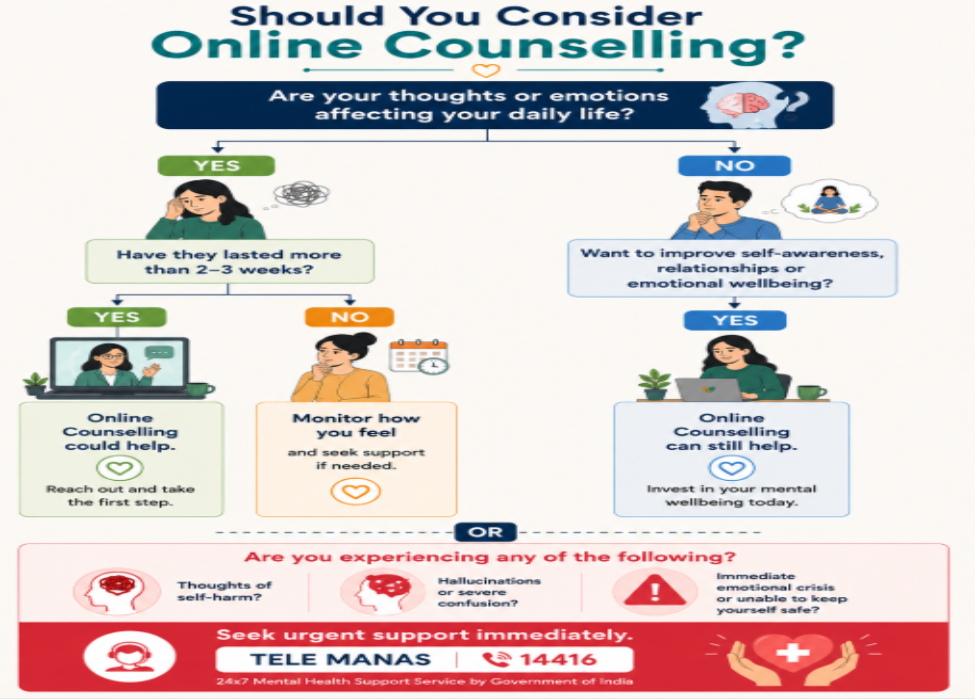
Online counselling is not designed for one particular type of person or problem. Whether you are managing workplace stress, navigating a life transition or looking for emotional support, online mental health counselling can provide personalised care that fits your circumstances.
High workloads, long hours, burnout and career transitions can take a toll on emotional wellbeing. Online counselling offers flexible appointments that fit around busy schedules. If your employer provides an Employee Assistance Programme (EAP), you may also be eligible for counselling at no direct cost.
Academic pressure, exam anxiety, friendships, identity and career uncertainty are common concerns. Online counselling allows students to access professional support from the privacy of their home, making help more accessible during important life transitions.
Relationship challenges can arise at any stage, from communication difficulties and conflict to adjusting to marriage or rebuilding trust. Online sessions allow partners to attend together from the same location or separately when needed.
Parenting brings new responsibilities and emotional adjustments. Counselling can support parents dealing with stress, changing family dynamics, postpartum emotional challenges or balancing work and caregiving.
Retirement, grief, loneliness and health-related changes can affect emotional wellbeing. Telephone and video counselling provide convenient access to professional support without the need to travel.
Affirmative counselling provides a safe, non-judgemental space to explore identity, relationships, family acceptance and workplace experiences. Working with a counsellor who understands these unique challenges can make a meaningful difference.
Employees from 1to1help's 1,000+ partner organisations may be able to access confidential counselling through their Employee Assistance Programme, making professional support easier and more affordable.
Although awareness around mental health is growing, several misconceptions still prevent people from seeking support. Let's separate myth from reality.
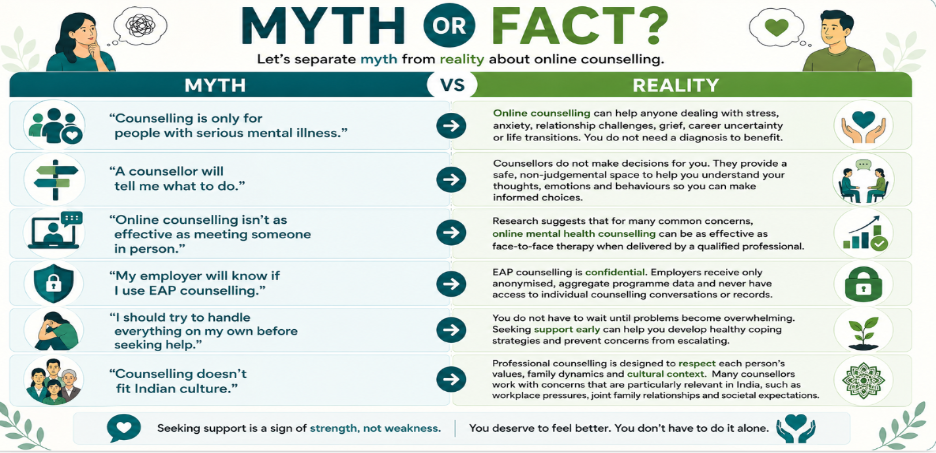
Seeking support is not a sign of weakness or failure. Whether you are facing a specific challenge or simply want to better understand yourself, counselling provides a structured, evidence-based space to build resilience, improve relationships and support your overall wellbeing.
Looking after your mental health is not about waiting until life feels overwhelming. Whether you are dealing with stress, anxiety, relationship challenges, grief or a major life transition, seeking support early can help you better understand yourself, build healthier coping strategies and improve your overall wellbeing.
Online counselling has made professional mental healthcare more accessible than ever, allowing you to connect with qualified mental health professionals from wherever you feel most comfortable. The most important step is simply deciding to begin.