


.png)


.png)

Personal Growth & Well Being
Fitness Tips That Actually Work: An Expert-Backed Guide for Indians (2026)
.jpg)
.png)
Written by
Aarohi Parakh,
Psychologist and Content Writer

Reviewed by
Sanjana Sivaram,
Psychologist and Clinical Content Head


Introduction
Getting fit can feel surprisingly complicated. One day, it is 10,000 steps. The next, it is strength training, intermittent fasting or a high-intensity workout that promises dramatic results in a few weeks. With so much advice competing for attention, it can be difficult to know what is genuinely worth following.
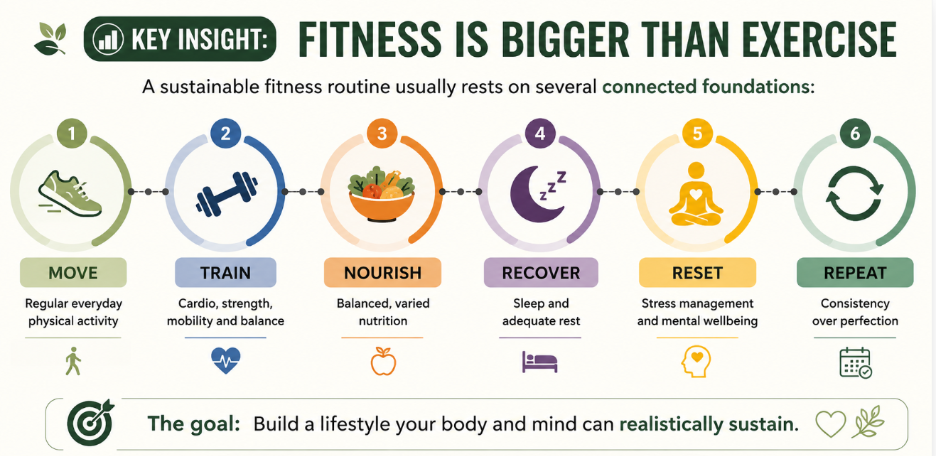
The fitness tips that actually work are usually less about quick fixes and more about habits that fit into real life. That means moving regularly, building strength gradually, eating well, getting enough sleep, and looking after your emotional wellbeing too.
Whether you are exercising for the first time or trying again after falling out of a routine, this guide brings together practical, evidence-backed fitness advice designed with Indian lifestyles in mind.
What Does “Fitness That Actually Works” Really Mean?
If you have started a fitness routine before, stayed committed for a few weeks and then gradually stopped, you are far from alone. Fitness plans often become difficult to sustain when they demand dramatic changes, set unrealistic standards or simply do not fit around work, family, commutes and everyday responsibilities.
Fitness itself is also much broader than gym workouts or weight loss. It includes cardiovascular health, strength, mobility and endurance, alongside habits that support sleep, nutrition and mental wellbeing. The World Health Organization recommends that adults aim for at least 150 minutes of moderate-intensity physical activity each week, while also recognising that some activity is better than none.
For everyday Indians, fitness tips that actually work are therefore likely to be those that can adapt to real routines. A brisk walk, yoga, strength exercises at home or playing a sport can all count. From a holistic wellness perspective, physical and mental health also support one another. The aim is not to follow a “perfect” plan, but to build healthier habits that feel realistic enough to continue.
10 Fitness Tips That Actually Work: Expert Recommendations
There is no single workout, diet or routine that suits everyone. Effective fitness tends to come from combining evidence-based principles with habits that suit your health, preferences, schedule and starting point.
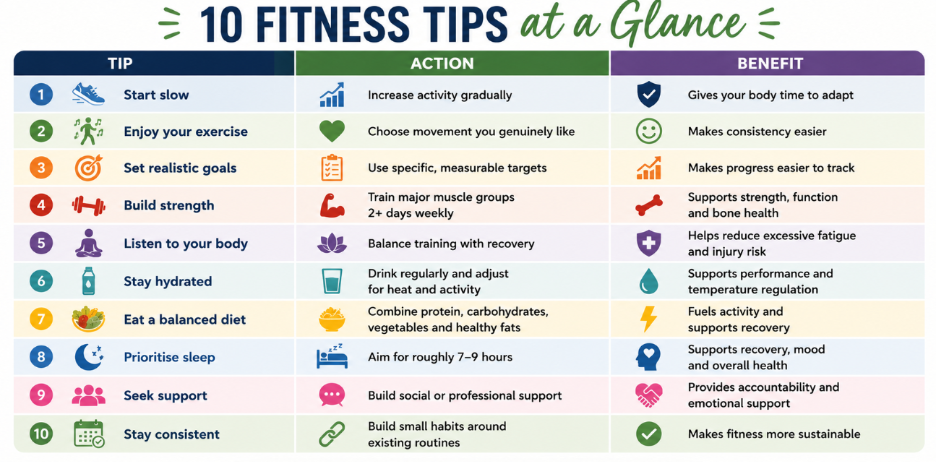
Here are 10 science-backed fitness tips for Indians that can help make exercise and healthy living more practical and sustainable.
Tip 1: Start Slow and Build Gradually
One of the most useful fitness tips for beginners in India is to resist doing too much, too soon.
If you have not exercised regularly, begin with a manageable amount of activity and gradually increase the duration, frequency, or difficulty. For example, you might start with a 15-minute walk and build towards 30 minutes over several weeks.
The same principle applies to strength training. Progressive overload means gradually increasing the challenge placed on your muscles as your body adapts. This might involve adding a few repetitions, using slightly more resistance or progressing to a more challenging exercise.
Sudden increases in training load may raise the likelihood of pain, excessive fatigue or injury, particularly when the body has not had time to adapt.
💡 PRO TIP: Change one thing at a time. Increase duration, frequency or intensity gradually rather than trying to increase all three together.
Tip 2: Choose Exercise You Actually Enjoy
The best workout is not necessarily the hardest one. It is often the one you are willing to return to.
If running feels miserable, you do not have to force yourself to become a runner. Yoga, swimming, cycling, dancing, Zumba, badminton, cricket or brisk walking can all help you become more active.
Enjoyment matters because exercise is easier to sustain when it feels rewarding rather than like punishment. Research on physical activity adherence consistently suggests that positive experiences and enjoyment can support continued participation.
Indian lifestyles also offer plenty of accessible options. A morning walk in a nearby park, a weekend cricket game, a yoga session at home or dancing to your favourite playlist all count as movement.
Instead of asking, “Which workout gives the fastest results?”, try asking:
“Which form of movement can I realistically see myself doing three months from now?”
That question may lead to a much more sustainable answer.
Tip 3: Set Goals You Can Measure and Reach
Goals such as “I want to get fit” or “I need to exercise more” sound positive, but they can be difficult to act on because they do not tell you exactly what to do.
A simple SMART goal can make the next step clearer. SMART goals are Specific, Measurable, Achievable, Relevant and Time-bound.
Instead of:
“I will exercise every day.”
Try:
“I will walk for 30 minutes, five days a week, for the next four weeks.”
This gives you a defined action and a realistic period in which to test the habit.
For beginners learning how to start exercising regularly, it may also help to focus on behaviour rather than immediate outcomes. You cannot fully control how quickly your weight, body shape or stamina changes, but you can track whether you completed your planned walks or workouts.
Small, achievable goals can create visible progress, which may make it easier to keep going.
Tip 4: Make Strength Training Part of Your Routine
Strength training is not only for bodybuilders or people who want large muscles. It can support muscle strength, bone health, physical function and the ability to manage everyday tasks as we age.
Adults are generally advised to include muscle-strengthening activities involving major muscle groups on at least two days per week.
And you do not necessarily need a gym.
Useful strength training tips for beginners include starting with bodyweight movements such as:
- Squats or chair squats
- Wall or modified push-ups
- Glute bridges
- Lunges or supported split squats
- Planks or other beginner-friendly core exercises
Resistance bands, dumbbells or even appropriately used household items can add resistance as you progress.
Muscle tissue is metabolically active, so maintaining muscle also contributes to overall energy expenditure. However, strength training is valuable well beyond calorie burning. Feeling stronger can make everyday activities, from climbing stairs to carrying groceries, easier.
Focus on learning good technique first. Resistance can be increased gradually as your strength and confidence improve.
Tip 5: Listen to Your Body and Know When to Rest
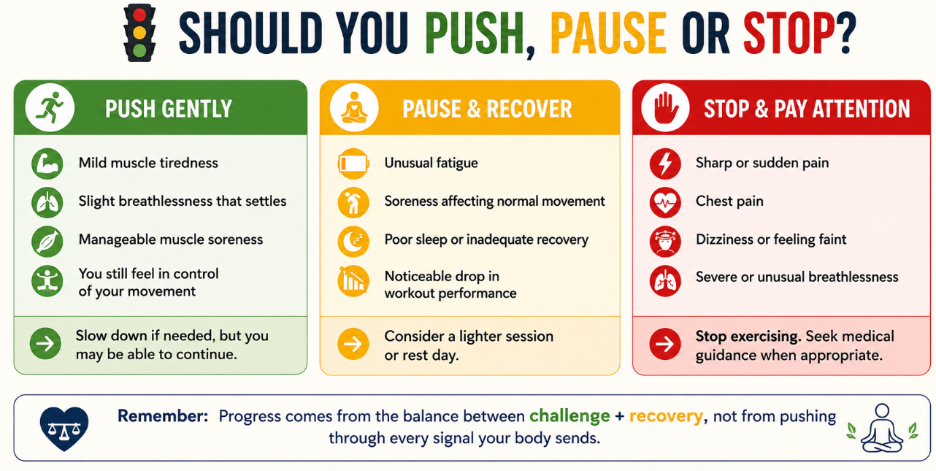
Some muscle soreness after starting a new workout or increasing intensity can be normal. Sharp pain, persistent joint pain, dizziness or exhaustion that does not improve with rest is different and should not simply be pushed through.
Repeatedly training without enough recovery may also contribute to persistent fatigue, declining performance, sleep disturbances or mood changes. These can sometimes signal that the body is struggling to recover from the demands being placed on it.
Rest is part of training, not time wasted away from it. Allowing recovery between demanding sessions gives muscles and other tissues time to adapt.
If pain is severe, persistent or accompanied by unusual symptoms, consider stopping the activity and seeking appropriate medical advice rather than trying to “work through” it.
Tip 6: Stay Hydrated, Especially in India’s Climate
Hydration supports temperature regulation, circulation and physical performance. Your needs can vary depending on body size, activity levels, diet, health and climate, so a rigid “eight glasses for everyone” rule may not be appropriate.
India’s hot and often humid conditions can increase fluid loss through sweat, particularly during outdoor exercise. Drink regularly through the day and pay extra attention before, during and after longer or more strenuous workouts.
Water is usually sufficient for everyday hydration. During prolonged, intense activity or heavy sweating, fluids containing electrolytes may sometimes be useful.
A simple cue is urine colour. Pale yellow generally suggests adequate hydration, while consistently dark urine may indicate that you need more fluids.
Tip 7: Balance Your Diet and Exercise
Exercise and nutrition work together. Restrictive diets, skipping meals or cutting out entire food groups are not usually necessary for building a healthier lifestyle.
Instead, aim for meals that combine carbohydrates for energy, protein for muscle repair and maintenance, healthy fats, vegetables or fruit, and adequate fibre.
A familiar Indian meal can already provide this balance. For example:
Roti or rice + dal, rajma, chana, paneer, eggs, fish or chicken + sabzi + curd or another suitable accompaniment.
Rather than labelling rice, roti or other carbohydrates as “bad”, consider portions and the overall balance of the meal. Protein needs may also increase with regular exercise, particularly strength training, although individual requirements vary.
The most practical diet and exercise tips in India are often those that work with familiar foods rather than demanding an entirely different way of eating.
🥗 PRO TIP: BUILD, DON’T BAN
Instead of asking, “What should I cut out?”, ask:
What protein can I add?
Where can I add vegetables or fruit?
Is the portion appropriate for my needs?
A balanced eating pattern is generally easier to sustain than a long list of forbidden foods.
Tip 8: Make Sleep Part of Your Fitness Plan
You can train regularly and eat well, but consistently poor sleep may still affect how you feel, recover and perform.
Most adults generally need around 7 to 9 hours of sleep per night, although individual needs vary. Sleep supports muscle recovery, cognitive function, mood and the hormonal processes involved in appetite and metabolism.
Poor sleep may also influence hormones linked with hunger, satiety and stress. Cortisol, one of the body’s key stress hormones, can be affected when sleep is repeatedly disrupted. This does not mean that one late night automatically causes weight gain, but chronic sleep disruption may make appetite regulation, recovery and healthy routines more difficult.
Try to keep sleep and wake times reasonably consistent and create a wind-down routine that helps your body shift towards rest.
Tip 9: Seek Support Instead of Doing Everything Alone
Fitness does not have to be a solo project.
A walking partner, friend, family member, trainer or supportive online community can provide accountability and make movement more enjoyable. Even a simple WhatsApp check-in with a friend can help you follow through on plans.
Support can also extend beyond exercise itself. Stress, low mood, burnout or emotional difficulties may affect sleep, eating patterns, energy and the motivation to stay active.
If these challenges are making it difficult to care for your wellbeing, speaking with a 1to1help counsellor through an employee assistance programme or online counselling service may help you understand the barriers and build more realistic strategies.
Sometimes, the support you need to stay physically healthy begins with taking care of what is happening mentally and emotionally.
Tip 10: Focus on Consistency, Not Perfection
Motivation naturally fluctuates. Some days you may feel eager to exercise; on others, the sofa will seem far more appealing.
That is why effective fitness motivation tips tend to focus less on “feeling motivated” and more on making the desired behaviour easier to repeat.
One useful strategy is habit stacking, where you attach a new behaviour to something already established:
After I finish my morning tea → I will stretch for five minutes.
After I shut my laptop → I will go for a 20-minute walk.
This reflects a broader principle popularised through behaviour-change approaches such as BJ Fogg’s Tiny Habits: starting with small, achievable behaviours can make habits easier to establish.
And if you miss a workout? Resume when you can.
The fitness tips that actually work are not the ones you follow perfectly for two weeks. They are the ones flexible enough to return to after a busy day, holiday, illness or break.
Bonus: How Much Exercise Do You Actually Need Per Week?
You do not need to exercise intensely every day to support your health.
The World Health Organization recommends that adults aim for 150–300 minutes of moderate-intensity aerobic activity per week, or 75–150 minutes of vigorous-intensity activity, or an equivalent combination. Muscle-strengthening activities involving major muscle groups are also recommended on at least two days each week.
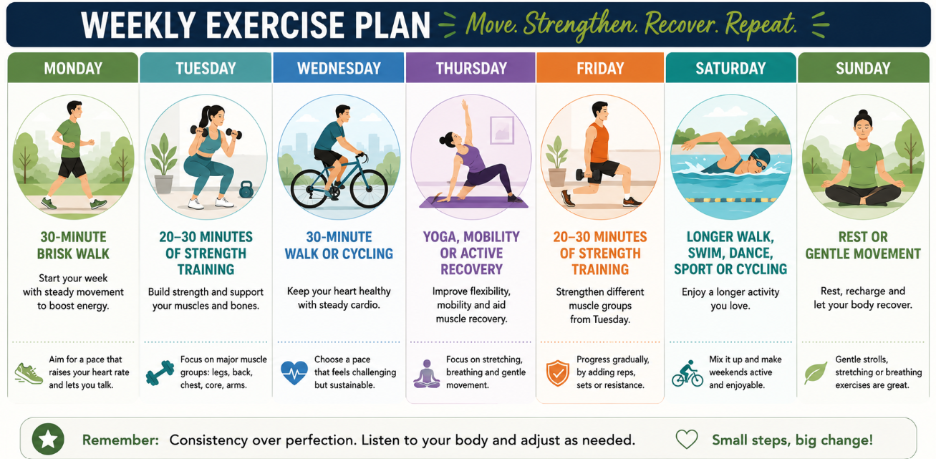
For a working professional, that could look like:
Note: This is only an example, not a prescription. Beginners can start with less and build gradually. Older adults may also benefit from including balance-focused activities, while mobility and flexibility work can complement aerobic and strength training at any age.
The aim is to create a weekly rhythm that combines movement, strength and recovery without making fitness feel like another full-time job.
Common Fitness Mistakes to Avoid
Sometimes, progress is not about doing more. It is about spotting habits that may be making fitness harder to sustain.
If you are starting or restarting your fitness journey, ask yourself: Are you doing any of these?
1. Doing Too Much, Too Soon
Starting with intense daily workouts when your body is not used to regular exercise may leave you excessively sore, exhausted or more vulnerable to injury.
Try instead: Start at a manageable level and gradually increase the duration, frequency or intensity as your body adapts.
2. Skipping Rest and Recovery
Rest days are not “lost” training days. Exercise challenges your muscles, while recovery gives the body time to repair and adapt.
Try instead: Alternate harder sessions with lighter activity or recovery days. Persistent fatigue, declining performance or soreness that does not settle may be signs that you need more recovery.
3. Exercising but Ignoring Nutrition
A workout cannot fully compensate for an eating pattern that consistently fails to meet your nutritional needs. At the same time, overly restrictive diets can leave you low on energy and make healthy habits harder to sustain.
Try instead: Pair regular movement with balanced meals containing protein, carbohydrates, vegetables or fruit, healthy fats and adequate fluids.
4. Comparing Your Progress with Someone Else’s
Social media can make it seem as though everyone else is getting fitter, leaner or stronger faster than you.
But bodies respond differently depending on factors such as genetics, age, health, sleep, nutrition and training history.
One of the more useful fitness motivation tips is to compare your progress with your own starting point. Are you stronger? Walking further? Sleeping better? Feeling more energetic? These changes matter too.
5. Skipping the Warm-Up
Going straight from sitting at a desk to an intense workout may not give your body enough time to prepare for the activity ahead.
Try instead: Begin with a few minutes of gentle, activity-specific movement and gradually build intensity. Before a run, for example, you might start with walking and progress to an easy jog.
6. Doing Only Cardio
Walking, running and cycling can be excellent forms of aerobic activity, but fitness involves more than cardio alone.
Resistance training supports muscle strength, bone health and everyday physical function. This becomes increasingly important with age and can be particularly valuable for women, who face an increased risk of bone loss later in life.
Try instead: Aim for a balanced routine that includes aerobic activity alongside strength training at least twice a week.
7. Copying a Plan That Does Not Fit Your Life
A routine designed around someone else’s schedule, fitness level, food preferences or environment may not work for you.
This is especially relevant when following generic online plans that do not account for Indian realities such as long commutes, hot and humid weather, familiar food patterns or limited access to gyms and outdoor spaces.
Try instead: Adapt the principles, not necessarily the exact plan. A home workout, yoga session or brisk evening walk can be just as valid if it helps you stay active consistently.
8. Ignoring Your Mental Wellbeing
Stress, low mood and burnout can affect sleep, appetite, energy and the motivation to exercise. Treating missed workouts simply as a “discipline problem” may overlook what is actually getting in the way.
Try instead: Notice how you are feeling as well as how you are performing. On difficult days, a gentle walk or shorter session may be more helpful than forcing an intense workout.
Fitness becomes more sustainable when it supports your overall wellbeing rather than becoming another source of pressure.
Recommended Reading:
- How to Stay Fit: 12 Science-Backed Ways to Build Lasting Physical Health
- 15 Must Try Stress Relief Activities To Help You Relax
How Fitness and Mental Health Are Connected
The mental health and fitness connection works in both directions. How you feel can influence your motivation to move, while regular movement may support how you feel, think and cope with everyday stress.
Physical activity is associated with improvements in mood, sleep and overall wellbeing, and may help reduce symptoms of anxiety and depression. Exercise can influence several processes involved in mental wellbeing, including stress regulation and brain chemicals linked with mood. It can also offer something equally practical: time away from screens, a sense of accomplishment, social connection and a healthy way to release built-up tension.
The evidence is increasingly strong. A 2024 systematic review and meta-analysis published in The BMJ, covering 218 studies and more than 14,000 participants, found that exercise was an effective intervention for depression. Walking or jogging, yoga and strength training were among the forms of exercise associated with meaningful reductions in depressive symptoms.
This connection may be particularly relevant in everyday working life. Long hours at a desk, lengthy commutes, irregular routines and workplace stress can make both movement and mental self-care easier to neglect. On a difficult day, however, even a short walk, gentle yoga session or a few minutes of movement can be a manageable starting point.
Exercise, however, is not a substitute for mental healthcare when someone is struggling with persistent anxiety, depression, burnout or significant emotional distress.
Just as physical fitness may benefit from the right plan and support, mental fitness sometimes does too. If stress or emotional difficulties are affecting your sleep, motivation, eating habits or ability to care for yourself, speaking with a qualified counsellor at 1to1help through an employee assistance programme (EAP) or online counselling service can offer additional support.
Looking after your mind and body does not need to be two separate goals. Sustainable wellbeing often comes from giving both the attention they need.
Building a Fitness Routine That Works for Your Indian Lifestyle
A daily fitness routine for Indians does not need an hour at the gym. If work, commuting, or family responsibilities leave little time, even 20–30 minutes of planned movement can be a practical starting point.
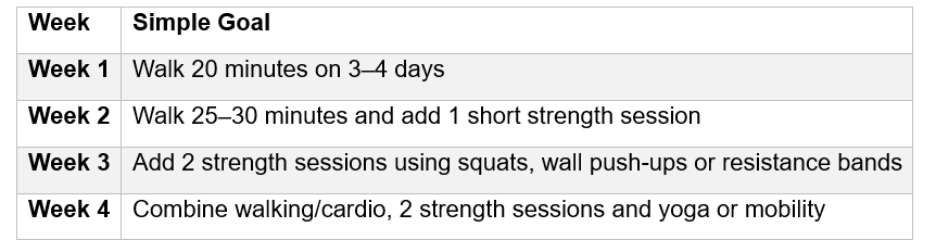
No gym? Home workouts, yoga and walking can all form part of an effective routine. During workdays, take the stairs when practical, stretch between long periods of sitting or fit in a short lunchtime walk. Track simple markers such as workouts completed, walking time or strength gains through an app, journal or even a WhatsApp accountability group. Start with what fits your life, then build gradually.
Final Thoughts
The fitness tips that actually work are rarely about perfection. They are about finding realistic ways to move, eat, rest and recover that you can return to consistently.
Start where you are, progress at your own pace and remember that physical and mental wellbeing often go hand in hand. If stress, low mood or emotional challenges are making healthy routines harder to maintain, professional support can help.
1to1help offers confidential counselling and wellbeing support to help individuals build healthier, more sustainable lives, one step at a time.
FAQs
Q1. How do I start a fitness routine if I have never exercised before?
Start small with walking, yoga or simple bodyweight exercises for 10–20 minutes. Gradually increase your activity as your fitness improves. The most useful fitness tips that actually work begin with consistency rather than intensity.
Q2. How many days a week should I work out as a beginner?
Three to four active days can be a manageable starting point, depending on your health and fitness level. Over time, work towards recommended activity levels while including strength training and adequate recovery.
Q3. Can regular exercise really improve my mental health?
Regular physical activity may support mood, sleep and stress management and can help reduce symptoms of anxiety and depression. However, exercise should complement, rather than replace, professional mental healthcare when it is needed.
Q4. What are the best fitness tips for weight loss in India?
Sustainable weight management usually involves regular physical activity, strength training, balanced nutrition, adequate sleep, and consistency. Avoid extreme diets or workouts promising rapid results. Changes that fit your lifestyle are generally easier to maintain.
Q5. How do I stay motivated to keep exercising regularly?
Do not rely on motivation alone. Choose activities you enjoy, set achievable goals, schedule movement into your routine, and track small wins. Having an exercise partner can also provide useful accountability.
Q6. Is it safe to exercise every single day?
Daily movement can be healthy, but every day does not need to involve intense exercise. Mix harder workouts with walking, mobility, yoga, or rest depending on how your body feels and recovers.
Q7. What should I eat before and after a workout?
Before exercise, a light, carbohydrate-rich option such as fruit or toast may provide energy. Afterward, combine protein and carbohydrates, such as curd with fruit, eggs with toast, or a balanced Indian meal, to support recovery.
References
- Anytime Fitness India. (n.d.). 7 effective fitness tips for beginners. Anytime Fitness India
- Atlassian. (n.d.). How to write SMART goals. Atlassian
- Cleveland Clinic. (n.d.). Aerobic exercise. Cleveland Clinic: Aerobic Exercise
- Cleveland Clinic. (n.d.). Cortisol. Cleveland Clinic: Cortisol
- Cleveland Clinic. (n.d.). Progressive overload: What it is, examples and tips. Cleveland Clinic: Progressive Overload
- Coutinho, L. (n.d.). Indian strength training exercises. Luke Coutinho
- Fogg, B. J. (n.d.). Tiny Habits. Tiny Habits
- Harvard Health Publishing. (n.d.). HIIT workouts for older adults: A guide to safe and effective high-intensity interval training. Harvard Medical School. Harvard Health Publishing
- HealthKart. (n.d.). How to workout at home. HealthKart
- Healthline. (n.d.). Intermittent fasting 101: The ultimate beginner’s guide. Healthline
- Mahindru, A., Patil, P., & Agrawal, V. (2023). Role of physical activity on mental health and well-being: A review. Cureus, 15(1), e33475. PubMed Central article
- Mayo Clinic. (n.d.). Urine color: Symptoms and causes. Mayo Clinic
- National Health Service. (n.d.). Exercise. NHS
- National Institute of Neurological Disorders and Stroke. (n.d.). Brain basics: Understanding sleep. National Institutes of Health. NINDS: Understanding Sleep
- Noetel, M., Sanders, T., Gallardo-Gómez, D., Taylor, P., Del Pozo Cruz, B., van den Hoek, D., Smith, J. J., Mahoney, J., Spathis, J., Moresi, M., Pagano, R., Pagano, L., Vasconcellos, R., Arnott, H., Varley, B., Parker, P., Biddle, S., & Lonsdale, C. (2024). Effect of exercise for depression: Systematic review and network meta-analysis of randomised controlled trials. BMJ, 384, e075847. BMJ study
- Teixeira, D. S., Rodrigues, F., Cid, L., & Monteiro, D. (2022). Enjoyment as a predictor of exercise habit, intention to continue exercising, and exercise frequency: The intensity traits discrepancy moderation role. Frontiers in Psychology, 13, 780059. PubMed Central article
- World Health Organization. (2024). Physical activity. WHO Physical Activity Fact Sheet


.svg)
.svg)
.svg)
.svg)