



Workplace Wellbeing & Support
Debunking Common Myths About Workplace Mental Health: 10 Myths Indian Employers Still Believe

Written by
Aarohi Parakh,
Psychologist and Content Writer

Reviewed by
Sanjana Sivaram,
Psychologist and Clinical Content Head


Introduction
Mental health myths continue to influence how organisations approach employee wellbeing. From the belief that mental health is a personal matter to the assumption that people experiencing psychological difficulties cannot perform well, these misconceptions can make it harder for employees to seek support.
In Indian workplaces, the hesitation may be particularly pronounced. Employees may worry about being judged by colleagues, losing career opportunities, or being seen as less capable. Employers, meanwhile, may view mental health support as an additional benefit rather than part of creating a healthy working environment.
Understanding these mental health myths and facts can help organisations move beyond awareness campaigns towards meaningful support. This article examines ten common misconceptions, explains what the evidence suggests, and explores practical steps Indian employers can take to build more supportive workplaces.
Why Mental Health Myths Persist at Work
Why do myths about mental health still exist in Indian workplaces, even as conversations around employee wellbeing become more common?
One reason is the continued stigma surrounding psychological difficulties. Mental health concerns are sometimes viewed as personal shortcomings rather than experiences influenced by biological, psychological, and social factors. There is also a tendency to separate professional and personal lives, with the expectation that employees should leave their concerns outside the workplace.
However, the two are often closely connected. Workload, job insecurity, difficult relationships with colleagues, limited autonomy, and unclear expectations can all influence psychological wellbeing. Similarly, personal difficulties may affect concentration, energy and engagement at work.
In India, employees may also hesitate to seek support because they are concerned about how colleagues, managers or family members might perceive them. Distress may be described as tiredness, headaches, sleep difficulties or a lack of motivation rather than being recognised as a possible mental health concern.
These misconceptions can have several consequences:
- Delayed help-seeking: Employees may wait until their difficulties begin affecting everyday functioning before considering professional support.
- Missed warning signs: Managers may interpret withdrawal, irritability or changes in performance as a lack of commitment.
- Limited organisational investment: Leadership teams may prioritise visible wellness activities without addressing underlying workplace stressors.
- Reduced psychological safety: Employees may avoid raising concerns if they are unsure how their managers will respond.
The 1to1help guide to workplace mental health in India explores these concerns in greater detail.
The following ten myths examine where these assumptions come from, what the evidence suggests, and what organisations could do differently.
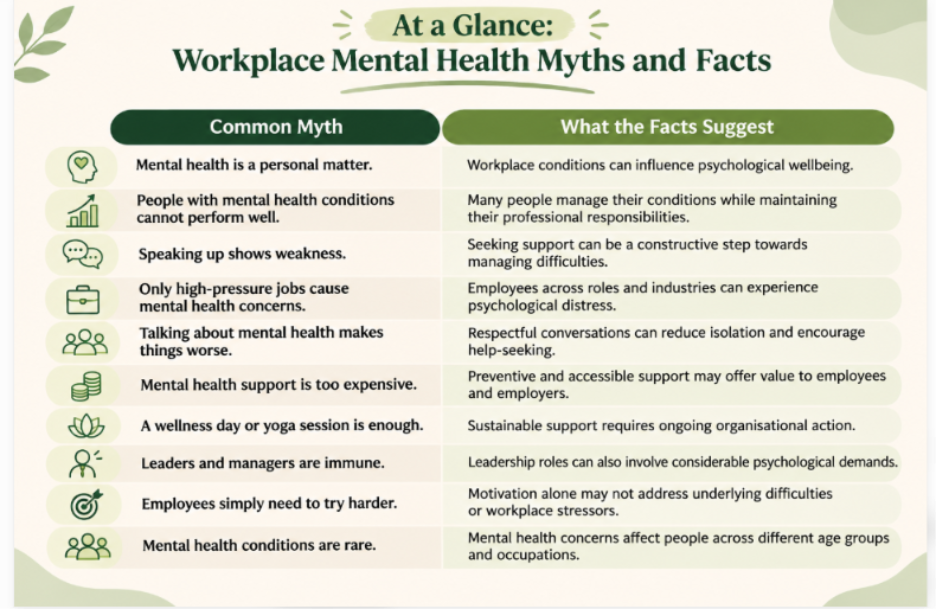
10 Common Myths About Workplace Mental Health (and the Facts)
Understanding mental health myths and facts requires looking beyond general awareness. Each misconception needs to be examined in the context of everyday workplace experiences, organisational practices and the support available to employees.
Myth 1: Mental Health Is a Personal Matter, Not a Workplace Issue
Fact: Although mental health is personal, workplace conditions can influence psychological wellbeing.
Several factors can shape an employee's mental health, including workload, working hours, job security, management practices, and relationships with colleagues. For instance, consistently unclear expectations or limited control over work may contribute to prolonged stress, even when an employee is otherwise comfortable with their role.
The World Health Organization (WHO) identifies excessive workloads, discrimination, low job control and job insecurity as workplace risks to mental health. Its mental health at work fact sheet also highlights the importance of organisational action in preventing psychological risks.
What to do: Review workplace practices alongside individual wellbeing initiatives. Employers may not be responsible for every personal difficulty an employee experiences, but they can address avoidable workplace stressors and make appropriate support accessible.
Myth 2: People With Mental Health Conditions Cannot Perform Well at Work
Fact: A mental health condition does not automatically determine someone's professional ability or potential.
People experiencing anxiety, depression, and other mental health conditions may continue to perform effectively, manage responsibilities, and contribute meaningfully to their teams. Their experiences can vary depending on the nature of the condition, its severity, available treatment and the support they receive.
For example, an employee experiencing anxiety may perform well in a structured role but find unpredictable deadlines particularly difficult. Clear priorities, reasonable flexibility and access to counselling may help them manage these demands.
The WHO recommends workplace measures that support people living with mental health conditions, including reasonable adjustments and appropriate return-to-work arrangements.
What to do: Evaluate employees on their work and role requirements rather than assumptions about a diagnosis. Where appropriate, consider reasonable adjustments, flexible arrangements and confidential professional support.
Myth 3: Employees Who Speak Up About Mental Health Are Weak or Attention-Seeking
Fact: Speaking about psychological difficulties may reflect self-awareness and a willingness to seek support.
In workplaces where employees are expected to appear consistently confident and capable, acknowledging emotional difficulties can feel uncomfortable. Some may worry that disclosing stress, anxiety, or burnout could affect their performance reviews, promotions, or relationships with colleagues.
However, asking for help does not necessarily indicate an inability to manage responsibilities. It may simply mean that an employee has recognised a difficulty and wants to address it before it begins affecting other areas of life.
For managers, the response to such disclosures matters. Dismissing concerns or questioning someone's commitment may reinforce the very stigma that prevents others from speaking up.
What to do: Encourage respectful, confidential conversations. Managers should listen without judgement, avoid making assumptions, and explain the support options available without pressuring employees to disclose personal details.
Myth 4: Only People in High-Pressure Jobs Experience Mental Health Difficulties
Fact: Mental health concerns can affect employees across industries, seniority levels, and job roles.
High-pressure environments such as banking, healthcare, consulting, and technology may involve demanding schedules, performance targets, and long working hours. However, psychological distress is not limited to these professions.
An employee working in an administrative role may experience stress because of repetitive tasks, limited autonomy or a lack of recognition. Someone in a customer-facing position may find frequent difficult interactions emotionally draining. Even roles with relatively predictable workloads can involve uncertainty, isolation or strained workplace relationships.
The WHO recognises that several aspects of the working environment, including discrimination, poor support and job insecurity, can affect mental health.
What to do: Avoid restricting workplace mental health initiatives to employees in visibly demanding roles. Assess psychosocial risks across departments, job levels and employment arrangements so that support reaches people who may otherwise be overlooked.
Myth 5: Talking About Mental Health at Work Makes Things Worse
Fact: Respectful conversations about mental health may help employees feel less isolated and more comfortable seeking support.
There is a common concern that discussing anxiety, depression, or emotional difficulties at work might make people dwell on their problems. However, avoiding the subject altogether can leave employees feeling that their experiences are unwelcome or inappropriate to discuss.
The distinction lies in how the conversation takes place. Pressuring someone to disclose personal information, making assumptions about their condition, or sharing private details can cause harm. A supportive conversation, on the other hand, can create an opportunity to listen and guide someone towards appropriate help.
What to do: Encourage managers to check in without being intrusive. Simple questions such as "How have things been going for you lately?" can open a conversation without pressuring the employee to share more than they want to.
Myth 6: Mental Health Support Is Too Expensive for Organisations
Fact: The cost of mental health support needs to be considered alongside the potential costs of untreated difficulties.
For some employers, introducing an Employee Assistance Programme (EAP), providing counselling or investing in manager training may initially appear expensive. However, these services can be scaled according to organisational size and employee needs.
Research published in JAMA Network Open in 2022 examined an employer-sponsored mental health programme involving 1,132 employees across 66 employers in the United States. Participants reported improvements in depression and anxiety symptoms, and the study found a positive return on investment across salary groups.
These findings are encouraging, although outcomes may vary across organisations, populations and programme designs.
What to do: Assess the cost of support against potential expenses associated with absenteeism, presenteeism, employee turnover and reduced productivity. Begin with accessible interventions and measure their use and outcomes over time.
Myth 7: A Wellness Day or Yoga Session Is Enough to Support Employee Mental Health
Fact: One-off wellness activities may be helpful, but they cannot replace sustained organisational support.
Wellness days, meditation sessions, yoga classes and stress management workshops can introduce employees to useful coping strategies. They may also encourage conversations around wellbeing. However, their impact could remain limited if employees return to excessive workloads, unclear expectations or unsupportive management practices.
For example, organising a stress management session may have limited value if employees continue to work late every evening because of unrealistic deadlines.
The WHO's guidelines on mental health at work recommend organisational interventions alongside individual-level support. This means looking at how work is structured, rather than placing the responsibility for wellbeing entirely on employees.
What to do: Treat wellness activities as one part of a wider workplace mental health strategy. Combine them with manager training, confidential counselling, workload reviews and regular opportunities for employees to share feedback.
Myth 8: Leaders and Managers Are Immune to Mental Health Difficulties
Fact: Leadership positions do not make people immune to stress, anxiety, burnout or other mental health concerns.
Managers and senior leaders may be expected to remain composed, make difficult decisions, and support their teams even during uncertain periods. The pressure to appear confident and capable can sometimes make it harder for them to acknowledge their own difficulties.
For instance, a senior manager managing organisational restructuring may be dealing with uncertainty, competing expectations and concerns about their team's future. Despite having decision-making authority, they may still need emotional support.
When leaders feel unable to speak openly about their wellbeing, they may unintentionally reinforce the belief that acknowledging difficulties is unprofessional.
What to do: Make mental health support available across all levels of the organisation. Leadership wellbeing should be included in workplace policies, manager development, and access to confidential counselling.
Myth 9: Employees Just Need to Try Harder to Overcome Mental Health Difficulties
Fact: Motivation and personal effort may help, but they are not always sufficient to address psychological difficulties.
Employees experiencing prolonged stress, anxiety, or depression may find it harder to concentrate, make decisions, maintain energy, or complete tasks. Telling someone to be more positive or work harder may overlook the reasons behind these difficulties.
Consider an employee struggling to meet deadlines. The immediate assumption may be that they need better time management. However, the underlying issue could involve an unmanageable workload, inadequate support, sleep difficulties, or a mental health concern that needs professional attention.
Encouraging personal responsibility is reasonable, but it should not become a way of overlooking organisational or clinical factors.
What to do: Explore whether workload, role expectations or workplace relationships are contributing to the difficulty. Where appropriate, encourage the employee to access professional support rather than relying solely on motivational advice.
Myth 10: Mental Health Conditions Are Rare and Affect Only a Small Group of People
Fact: Mental health conditions are more common than many workplace assumptions suggest.
The WHO estimates that around 16% of working-age adults globally were living with a mental disorder in 2023. This is a global estimate, not an India-specific workplace prevalence figure, but it illustrates why mental health should not be treated as an unusual concern affecting only a small section of the workforce.
Employees may also experience periods of psychological distress without having a diagnosed mental health condition. Work-related stress, grief, relationship difficulties, financial concerns and major life transitions can affect emotional wellbeing at different stages of life.
Assuming that mental health concerns are rare may therefore prevent organisations from recognising the range of support employees could need.
What to do: Make mental health awareness and access to support relevant to the entire workforce. Avoid singling out employees based on assumptions about who may or may not experience difficulties.
Mental Health Myths in Indian Workplaces: Stigma, Job Security and Family Pressure
Although conversations around mental health have become more visible in India, employees may still find it difficult to discuss their experiences openly at work. The reasons are often connected to workplace culture, family expectations and concerns about professional consequences.
Three barriers deserve particular attention.
1. Fear of judgement and career consequences
Employees may worry that disclosing a mental health concern could influence how their managers perceive their capabilities. Some may fear being overlooked for promotions, receiving less challenging assignments or being considered unreliable.
Even when an organisation has an EAP or counselling programme, employees may hesitate to use it if confidentiality arrangements are unclear. The concern is not always whether support exists, but whether accessing it could have consequences.
2. Family expectations and social perceptions
In some families, psychological difficulties may still be viewed as something that should be managed privately. Employees may hear suggestions to remain positive, stay occupied or avoid discussing personal problems outside the family.
These attitudes can influence whether someone considers counselling or feels comfortable acknowledging that they are struggling. For employees who are already balancing professional responsibilities with family expectations, seeking help may feel like an additional hurdle.
3. Limited manager training
Managers are often the first people to notice changes in an employee's behaviour or performance. However, without appropriate training, they may struggle to distinguish between a temporary performance concern and signs that someone could be experiencing distress.
They may also be unsure how to initiate a conversation, maintain confidentiality or refer an employee to professional support.
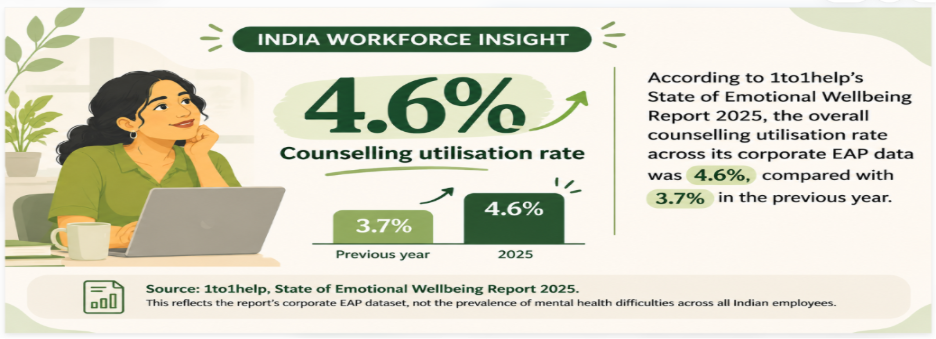
The relatively low utilisation figure raises a useful question for employers: are employees aware of the support available, do they trust its confidentiality, and can they access it without feeling judged?
One practical response could be to provide anonymous, multilingual access to counselling and mental health resources. Organisations could also communicate clearly about what information is shared with employers, what remains confidential, and how employees can seek support.
Building mental health awareness in the workplace may require more than occasional campaigns. It calls for consistent communication, trained managers, and a culture where employees can ask for help without feeling that their professional identity is at risk.
How to Improve Mental Health in the Workplace: Replacing Myths with Action
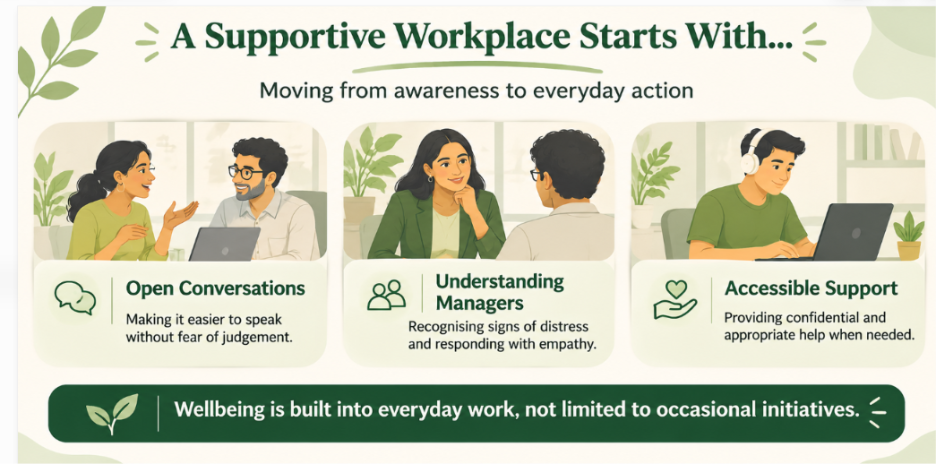
Moving beyond workplace mental health myths requires organisations to translate awareness into everyday practices. While counselling and wellness initiatives can offer valuable support, a sustainable approach also needs to consider how work is organised, how managers respond to employees, and whether people feel safe asking for help.
The following five actions can help HR teams build a more supportive environment.
1. Encourage Leadership Commitment and Open Conversations
Workplace mental health initiatives are more likely to gain acceptance when leaders treat them as an organisational priority rather than an HR-led activity.
Senior leaders can help set the tone by communicating openly about wellbeing, acknowledging workplace pressures and supporting employees who seek help. This does not require leaders to share personal experiences if they are uncomfortable doing so.
What matters is consistency between what an organisation communicates and what employees experience. A company that promotes work-life balance but regularly rewards excessive working hours may find it difficult to build trust.
2. Train Managers to Recognise and Respond to Distress
Managers are often well placed to notice changes in employee behaviour, engagement or performance. However, recognising that someone may be struggling does not automatically mean knowing how to respond.
Workplace mental health training can help managers understand common signs of distress, initiate supportive conversations, listen without judgement and identify appropriate referral options.
Mental health first aid training can be particularly useful in this context. It equips participants with the skills to recognise possible signs of mental health difficulties, offer initial support and guide individuals towards appropriate professional help.
It is not a substitute for clinical assessment or counselling, and managers should not be expected to act as therapists.
Related reading: The Complete Guide to Workplace Mental Health Training.
3. Provide Confidential Counselling Through an EAP
An Employee Assistance Programme can provide employees with access to confidential counselling and other forms of wellbeing support.
However, simply introducing an EAP may not be sufficient. Employees need to understand how the programme works, whether their conversations remain confidential and what information, if any, is shared with the employer.
Organisations could consider offering multiple access options, including telephone, video and in-person counselling, along with language choices where possible.
The programme should also have clear procedures for identifying and escalating situations that require urgent professional intervention.
4. Review Workload, Role Clarity and Workplace Relationships
Individual coping strategies may help employees manage everyday stress, but they cannot always compensate for an unhealthy working environment.
HR teams could conduct a basic psychosocial risk review covering five areas:
- Workload: Are deadlines, targets and working hours manageable?
- Control: Do employees have reasonable autonomy over how they complete their work?
- Support: Can employees approach managers or colleagues when they need assistance?
- Role clarity: Are responsibilities, expectations and reporting structures clearly communicated?
- Relationships: Are workplace interactions respectful, and are bullying or conflict addressed appropriately?
The findings can help organisations identify patterns rather than treating every instance of employee distress as an individual problem.
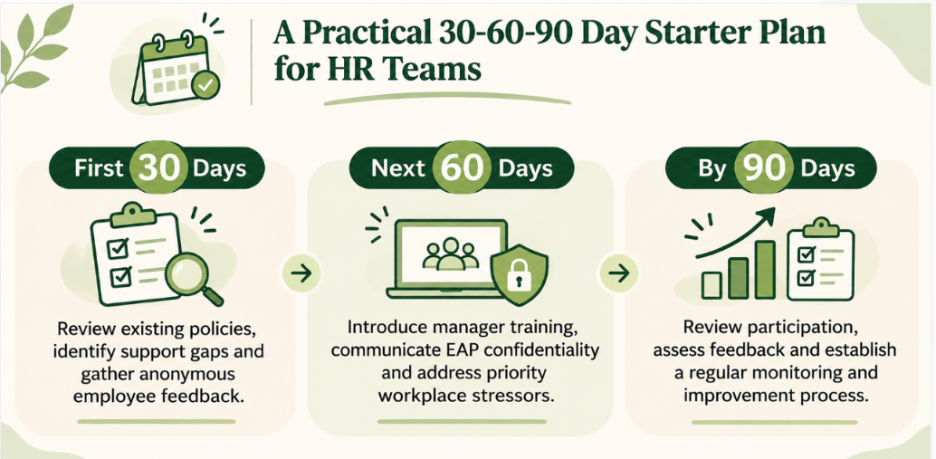
5. Measure Progress and Review Support Regularly
Mental health initiatives need regular evaluation to understand whether they are reaching employees and addressing their needs.
HR teams could use anonymous pulse surveys, EAP utilisation data, training feedback and trends in absenteeism and attrition. These measures should be interpreted together rather than relying on a single indicator.
For instance, an increase in counselling utilisation could suggest that employees are becoming more comfortable accessing support. However, it should also be considered alongside employee feedback and changes in workplace conditions.
💡Pro tip for HR teams: Avoid measuring success only by the number of wellness sessions conducted. Consider whether employees know where to seek help, trust the confidentiality of the support available, and feel comfortable raising concerns with their managers.
The importance of mental health in workplace settings becomes clearer when organisations recognise that employee wellbeing is influenced by both individual experiences and the environment in which people work.
For further guidance, see 1to1help's article on psychological safety in the workplace.
Best Practices for Talking About Mental Health at Work
Even organisations with well-designed workplace mental health programmes may struggle to create an environment where employees feel comfortable using them. The language used by managers, leaders and colleagues can make a difference.
Here are some practical ways to encourage conversations without making employees feel uncomfortable or singled out.
- Use neutral, respectful language: Avoid labels such as "unstable", "weak" or "attention-seeking". Focus on observable changes and the support someone may need rather than speculating about a diagnosis.
- Make conversations voluntary: Employees should be able to decide how much they wish to share. Managers can express concern without asking intrusive questions about personal circumstances.
- Encourage visible leadership: Leaders who are comfortable discussing their own experiences of stress or seeking support may help reduce the perception that mental health concerns are a sign of professional weakness. Personal disclosure should remain a choice.
- Make check-ins a regular practice: Short, informal conversations about workload, priorities and wellbeing may be more useful than relying entirely on annual wellness events.
- Communicate confidentiality clearly: HR teams should explain how counselling services work, what information remains private and the circumstances in which confidentiality may need to be limited for safety reasons.
- Provide different ways to access support: Some employees may prefer speaking to a counsellor directly, while others may first explore self-guided resources or attend a mental health awareness session.
A psychologically safe workplace does not require everyone to discuss their emotions openly. It means employees can raise concerns, ask questions or seek support without expecting humiliation or unfair treatment.
For practical guidance on encouraging supportive conversations, organisations can also explore 1to1help's Basics of Being a Mental Health Ally webinar
Moving Beyond Mental Health Myths: Building Workplaces Where People Feel Supported
Debunking mental health myths is a starting point, but creating a supportive workplace requires consistent action. Employees may feel more comfortable seeking help when they know their concerns will be taken seriously and their privacy respected.
For Indian employers, this means moving beyond one-off wellness activities towards a sustained approach that includes leadership commitment, manager training, confidential counselling and healthier working practices.
At 1to1help, organisations can access structured Employee Assistance Programme (EAP) that support employee wellbeing through professional counselling, workplace mental health initiatives and resources for managers.
For individuals seeking support, 1to1Online Counselling offers access to professional mental health support, helping them navigate personal and emotional concerns at their own pace.
Explore 1to1help's EAP solutions for your organisation or 1to1Online Counselling for personal support.
FAQs
Q1. What are the most common myths about mental health at work?
Common myths include the belief that mental health is a personal matter, that people with mental health conditions cannot perform well, and that speaking up shows weakness. In reality, workplace conditions can influence mental health, and employees across roles and industries may experience psychological difficulties.
Q2. Is mental health really an employer's responsibility?
Employers influence several factors affecting workplace wellbeing, including workload, working hours, management practices and job security. While they cannot take responsibility for every personal difficulty, they can create supportive working conditions and provide access to confidential professional support.
Q3. Does talking about mental health at work make it worse?
No. Respectful conversations can reduce isolation and encourage employees to seek help. Managers should listen without judgement, avoid intrusive questions, respect confidentiality and guide employees towards appropriate support when needed.
Q4. Can employees with mental health conditions perform well at work?
Yes. Many people manage mental health conditions while continuing to perform effectively. Access to counselling, reasonable adjustments, flexible working arrangements and clear expectations may help employees manage their responsibilities.
Q5. How much does it cost to support employee mental health?
Costs vary depending on the organisation and the support offered. EAPs, manager training and awareness initiatives can be scaled to organisational needs. Employers should also consider potential costs associated with absenteeism, presenteeism and employee turnover when evaluating their investment.
Q6. What is mental health first aid, and do managers need it?
Mental health first aid training helps participants recognise signs of distress, offer initial support and guide individuals towards professional help. It does not qualify managers to diagnose or provide therapy. It can, however, help them respond more confidently and appropriately.
Q7. How can HR measure whether mental health myths are changing in an organisation?
HR teams can use anonymous employee surveys, EAP utilisation data, training feedback and employee wellbeing indicators. Regular reviews can help assess whether employees feel comfortable discussing mental health, trust available support and know how to access it.
References
1. Bondar, J., Babich Morrow, C., Gueorguieva, R., Brown, M., Hawrilenko, M., Krystal, J. H., Corlett, P. R., & Chekroud, A. M. (2022). Clinical and financial outcomes associated with a workplace mental health program before and during the COVID-19 pandemic. JAMA Network Open, 5(6), e2216349. https://doi.org/10.1001/jamanetworkopen.2022.16349
2. Directorate General of Health Services, Ministry of Health and Family Welfare, Government of India. (n.d.). National Mental Health Programme. https://www.dghs.mohfw.gov.in/national-mental-health-programme.php
3. 1to1help. (2026). State of Emotional Wellbeing Report 2025: Indian workforce. https://www.1to1help.com/whitepapers-guides/state-of-emotional-wellbeing-report-2025-indian-workforce
4. World Health Organization. (2022a). Guidelines on mental health at work. https://www.who.int/publications/i/item/9789240053052
5. World Health Organization. (2022b). Mental health at work: Policy brief. https://www.who.int/publications/i/item/9789240057944
6. World Health Organization. (2026). Mental health at work. https://www.who.int/news-room/fact-sheets/detail/mental-health-at-work