




Abuse & Safety
Effects of Pornography on Mental Health, Relationships, and Well-Being in India


Written by
Aarohi Parakh,
Psychologist and Content Writer

Reviewed by
Sanjana Sivaram,
Psychologist and Clinical Content Head


Understanding Pornography and Its Prevalence in India

The effects of pornography on mental health, relationships, and overall well-being have become an increasingly relevant subject as digital access continues to shape how people explore sexuality. With smartphones, affordable internet, and greater access to online platforms, pornography is now easier to access privately, including among younger internet users.
For some adults, viewing pornography may be an occasional part of their sexual lives without significantly affecting their daily functioning. For others, however, it may gradually become a habit that feels difficult to regulate, influences their expectations of intimacy, or becomes a way of coping with uncomfortable emotions.
Understanding this distinction is particularly relevant in India, where conversations about sex and sexuality can still be difficult within families, educational institutions and social settings. Although attitudes are gradually changing, many young people grow up with limited opportunities to discuss sexual health, consent, relationships and sexual curiosity openly. Consequently, online content may sometimes become an informal source of information about sex, even though pornography is primarily produced for entertainment rather than education.
Indian research has begun exploring pornography consumption and its possible psychological and behavioural associations. A community-based study conducted by researchers affiliated with NIMHANS, published in the National Medical Journal of India in 2019 surveyed 2,525 adults aged 18–40 in an urban locality in Bengaluru. Approximately 8.3% of participants acknowledged pornography use, while 0.2% screened positive for problematic or addictive use. Although these findings offer an insight into pornography consumption within the surveyed community, they should not be interpreted as national prevalence estimates for India.
More recently, a 2025 study published in BJPsych Open examined 589 individuals who had sought treatment for compulsive sexual behaviour, with problematic pornography use as their primary concern. About 63.5% of participants were under 30, with a mean age of 28.98 years. While these findings provide insights into the concerns experienced by younger treatment-seeking individuals, they do not indicate how common problematic pornography use is among young adults in India.
Together, these studies highlight the need for further research into pornography consumption, its potential psychological associations, and the experiences of individuals seeking professional support in India.
It is also useful to distinguish between pornography consumption and compulsive pornography use. Watching pornography does not automatically indicate addiction or a mental health condition. The frequency of consumption alone may not tell the complete story. An individual's ability to regulate the behaviour, its emotional significance, and its impact on everyday life are equally relevant.
This article explores the documented psychological, relational and behavioural effects of pornography, including its potential influence on mental health, self-esteem, intimacy and adolescent development. It also discusses how to recognise problematic patterns and where individuals in India may seek appropriate support.
Effects of Pornography on Mental Health
The effects of porn on mental health in India are receiving increasing research attention. While pornography consumption does not automatically lead to psychological difficulties, some studies have identified associations between problematic use and concerns such as anxiety, depression, stress and emotional distress.
For individuals who experience difficulty regulating their consumption, pornography may gradually become connected with emotional coping, mood regulation and self-perception. Understanding these patterns can help identify when a behaviour may be affecting psychological well-being.
Depression and Anxiety
For some individuals, pornography may become a way of managing uncomfortable emotions. Someone experiencing work-related stress, loneliness, relationship difficulties, or anxiety might turn to sexually explicit content for temporary distraction or gratification.
The immediate experience may provide a brief sense of relief. However, the emotional concern that prompted the behaviour may remain unresolved.
For instance, an individual experiencing loneliness may turn to pornography whenever they feel disconnected from others. Over time, they may begin relying on this behaviour to manage similar feelings rather than exploring the underlying need for emotional connection.
This does not mean that pornography directly causes depression or anxiety. The relationship may work in different directions. Psychological distress may contribute to increased consumption, while problematic patterns of use may sometimes add to existing emotional difficulties.
Some individuals may also experience guilt, frustration, or anxiety after viewing pornography, particularly when their behaviour conflicts with their personal values or when they feel unable to regulate it.
A possible pattern to understand has been illustrated below:
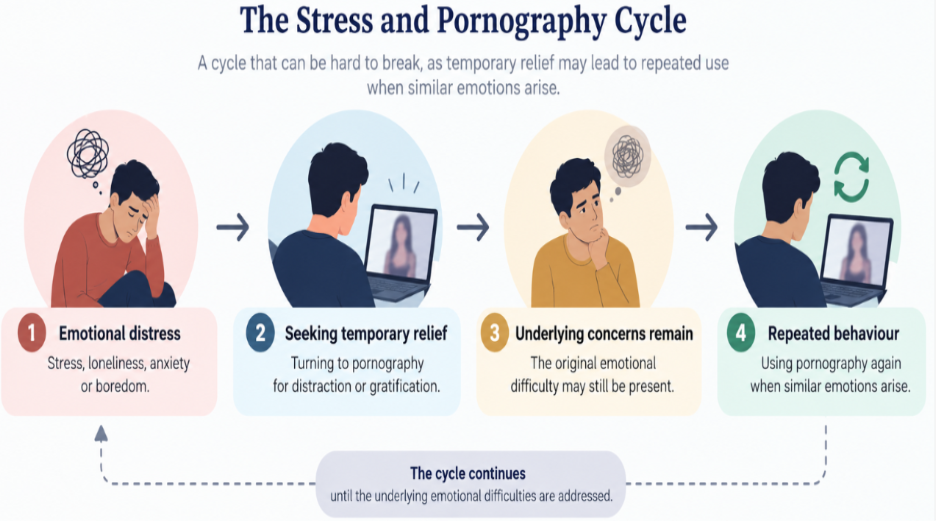
Note: This is an illustrative behavioural pattern, not a universal experience.
Recognising this cycle can help individuals look beyond the behaviour itself. It may be useful to explore what emotional need pornography is meeting and whether other coping strategies could offer more sustainable support.
Guilt and Shame
Guilt and shame can influence how individuals experience pornography consumption, particularly in social environments where discussions about sexuality remain restricted.
For example, someone who has grown up in a family where sexual curiosity is discouraged may feel uncomfortable or guilty after viewing pornography. If their consumption is discovered, the response may involve criticism, humiliation or punishment rather than an opportunity for an open conversation.
It is helpful to understand the difference between guilt and shame.
Guilt is generally associated with an action. An individual might feel guilty because their behaviour conflicts with a personal value or an agreement made with their partner.
Shame, on the other hand, can become a judgement about the self. Instead of thinking, "I am uncomfortable with this behaviour", the individual may begin thinking, "There is something wrong with me."
When these feelings become persistent, they may contribute to secrecy, low self-esteem, emotional distress, and reluctance to seek help.
A more supportive approach involves understanding the behaviour, examining personal values and identifying whether pornography consumption is affecting everyday functioning. Conversations based on curiosity and understanding may be more helpful than humiliation or punishment.
Dopamine, Brain Chemistry and Reward Pathways
Another aspect of pornography effects on the brain relates to the brain's reward system.
Dopamine is a neurotransmitter involved in motivation, learning, anticipation, and reward-seeking behaviour. Sexual stimulation can activate reward-related pathways, which may contribute to the pleasurable experience associated with sexual activity.
Online pornography can offer immediate access to sexually stimulating material, with opportunities to explore different content. For some individuals, the combination of novelty, anticipation, and immediate gratification may reinforce repeated patterns of consumption.
However, it would be inaccurate to suggest that watching pornography automatically damages the brain or permanently alters its structure. Research into the neurological aspects of compulsive sexual behaviour is still developing, and findings from individuals experiencing compulsive patterns cannot be generalised to all pornography users.
Some individuals with problematic consumption report seeking increasingly novel or stimulating content to experience similar levels of excitement. This may resemble tolerance, although it is not a necessary feature of Compulsive Sexual Behaviour Disorder.
Similarly, individuals attempting to reduce their consumption may experience restlessness, irritability or persistent urges. These experiences can make behavioural change difficult, but they should not automatically be described as clinical withdrawal symptoms.
The more relevant question is whether an individual continues to struggle with controlling the behaviour despite recognising its negative consequences.
Mood Regulation and Emotional Dependency
Pornography may sometimes become a way of managing emotions rather than simply a source of sexual stimulation.
Consider someone who regularly turns to pornography after a stressful day at work. Initially, it may feel like an easy way to switch off. However, if this becomes their primary response to stress, they may gradually find it difficult to manage uncomfortable emotions without engaging in the behaviour.
Some Indian research has identified stress reduction and anxiety as factors associated with problematic pornography use. This suggests that understanding the emotional context of consumption may be an important part of psychological support.
When pornography becomes the default response to difficult emotions, individuals may have fewer opportunities to practise other coping strategies, such as emotional expression, problem-solving, social connection and relaxation.
The objective is not necessarily to eliminate sexual desire or curiosity. Instead, it is to develop a healthier relationship with sexuality while building different ways of responding to emotional needs.
Effects of Pornography on Relationships and Intimacy
Pornography and relationships can be connected in different ways, depending on an individual's expectations, personal values, and relationship circumstances.
Some couples may be comfortable with pornography consumption, while others may experience insecurity, discomfort, or conflict around it. The concern is often less about pornography itself and more about how its consumption influences trust, communication, sexual expectations and emotional intimacy.
Unrealistic Expectations About Sex and Intimacy
Pornography is generally produced for entertainment rather than as an accurate representation of everyday sexual relationships.
Scenes may involve idealised bodies, exaggerated performances, unrealistic durations, and situations that do not reflect how intimacy develops between consenting partners.
When individuals have limited access to comprehensive sex education, they may begin treating these portrayals as reference points for real-life sexual experiences.
For instance, someone who has primarily learnt about sex through pornography may assume that physical intimacy should follow a particular sequence or that a partner should respond in a specific way.
Real relationships, however, involve communication, mutual comfort, emotional connection and individual preferences. Sexual experiences can also vary considerably between individuals and across different stages of a relationship.
Pornographic content may not adequately represent the importance of ongoing consent either. This can create confusion about boundaries if viewers do not have access to other sources of sexual education.
It is worth remembering that consent in real relationships needs to be freely given, informed, specific, and ongoing. What appears acceptable in a scripted scene should never be treated as an expectation or permission in real life.
Communication and Trust Between Partners
Pornography consumption can sometimes become a source of conflict when partners have different expectations about it.
One partner may consider it a private activity, while the other may experience it as a breach of trust or a source of insecurity. Neither perspective should automatically be dismissed.
Difficulties may arise when consumption is deliberately hidden, when agreements between partners are repeatedly broken, or when one individual feels pressured to imitate what they have seen.
For example, a partner who feels compared with performers may become hesitant about physical intimacy. The other partner may not realise that their behaviour is contributing to this discomfort.
Rather than making assumptions, couples may benefit from discussing what feels acceptable, what creates discomfort, and which boundaries they would like to establish.
Does Pornography Affect Sexual and Relationship Satisfaction?
Research has explored possible associations between pornography consumption and sexual satisfaction.
A 2025 systematic review and meta-analysis published in the Journal of Addictive Diseases examined 41 studies involving approximately 70,541 participants. It found a small negative correlation between pornography consumption and sexual satisfaction.
However, the association was modest and does not establish that pornography directly causes dissatisfaction. Relationship quality, individual expectations, frequency of use, and personal circumstances may also influence the outcomes.
This suggests that the relationship between pornography and intimacy cannot be understood through a single universal pattern. Context matters.
How Can Couples Navigate Pornography in a Relationship?
Couples who experience conflict around pornography may find it helpful to:
- Discuss expectations and boundaries without accusations or humiliation.
- Talk about how pornography consumption affects emotional and physical intimacy.
- Avoid comparing real-life partners with performers.
- Understand each other's concerns around privacy, trust and sexual preferences.
- Consider couples counselling if conversations repeatedly lead to conflict or withdrawal.
For some couples, speaking with a neutral professional can create space for conversations that may otherwise feel difficult to initiate. 1to1help's confidential counselling (1to1OnlineCounselling) for individuals and couples seeking support with intimacy, trust, and relationship concerns can be the first step.
Effects of Pornography on Self-Worth and Body Image
The relationship between pornography and self-esteem can be complex. Repeated exposure to idealised physical appearances and sexual performances may influence how some individuals perceive their own bodies, attractiveness and sexual confidence.
Pornographic content often presents carefully selected performers, lighting, camera angles and edited scenes. These portrayals may create expectations that are difficult to relate to in everyday life.
The Impact of Comparison
Social comparison can influence self-perception when individuals repeatedly compare themselves with people they perceive as more attractive, physically desirable or sexually confident.
For example, a man may begin worrying about his body shape, genital appearance, or sexual performance after comparing himself with performers.
A woman may feel pressured to meet certain expectations around body shape, appearance, or sexual availability. Women may also experience concerns around objectification and the expectation that their bodies should conform to particular sexual standards.
For non-binary individuals, exposure to narrow or stereotypical representations of gender and sexuality may create additional feelings of exclusion or dissatisfaction with their bodies.
A systematic review published in the Journal of Health Psychology examined 26 studies exploring pornography exposure and body image. The findings suggested associations between pornography exposure and negative perceptions of body image and sexual body image among heterosexual men and women.
However, the available research has limitations, and findings should not be assumed to apply equally across all genders, ages, and sexual orientations.
When Body Image Concerns Affect Confidence
Persistent dissatisfaction with physical appearance may influence several areas of life.
Some individuals may become anxious about being seen without clothes, avoid physical intimacy, or feel uncomfortable discussing their sexual preferences. Others may develop performance anxiety or worry excessively about whether they are attractive enough for a partner.
These experiences do not affect everyone who watches pornography. However, when comparison becomes habitual, it may contribute to lower self-confidence and emotional distress.
Developing a Healthier Relationship with Self-Image
A helpful starting point is recognising that pornography is a form of produced entertainment, not a standard against which real bodies or relationships need to be measured.
Individuals may benefit from:
- Practising self-compassion rather than criticising their physical appearance.
- Reducing exposure to content that repeatedly triggers negative comparisons.
- Recognising the diversity of real bodies and sexual experiences.
- Focusing on comfort, communication and connection rather than performance.
- Exploring persistent body image concerns through counselling.
Therapeutic approaches can help individuals identify unhelpful beliefs about appearance, challenge unrealistic expectations and develop a more accepting relationship with their bodies. Confidential mental health support through 1to1OnlineCounselling can help individuals navigate these concerns.
Effects of Pornography on Adolescents and Young Adults in India
The effects of pornography on adolescents in India deserve particular attention because young people are still developing their understanding of relationships, sexuality, emotional boundaries, and consent.
For many teenagers, smartphones provide access to online content before they have had meaningful conversations about sexual health. Without appropriate guidance, pornography may become one of their early sources of information about sex.
This does not mean every adolescent exposed to pornography will develop problematic behaviour. However, early exposure without context or support may influence how some young people understand intimacy and relationships.
What Does Indian Research Tell Us About Adolescent Exposure?
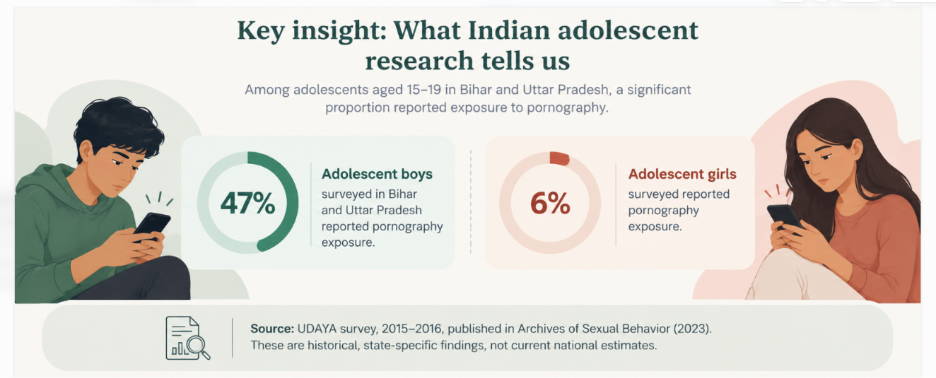
An Indian study published in Archives of Sexual Behavior in 2023 examined pornography exposure among adolescents aged 15–19 in Uttar Pradesh and Bihar, using data from the UDAYA survey conducted in 2015–2016.
Among the participants surveyed, approximately 47% of adolescent boys and 6% of adolescent girls reported exposure to pornography. The study also identified access to a personal mobile phone as a factor associated with a higher likelihood of exposure.
These findings offer an insight into adolescent exposure in the two states studied. However, the data were collected in 2015–2016 and should not be interpreted as current exposure rates across India.
How Early Exposure May Influence Development
Adolescence is a period of significant neurological, emotional, and social development. The brain systems involved in decision-making, impulse regulation, and planning continue to mature into young adulthood.
The prefrontal cortex, which supports planning and decision-making, is among the last brain regions to mature. This does not mean teenagers are incapable of making informed decisions. Rather, their developing cognitive and emotional capacities make age-appropriate guidance particularly valuable.
Early and repeated exposure to pornography may influence some adolescents in the following ways:
1. Developing unrealistic sexual expectations
Teenagers may begin to interpret scripted sexual performances as representative of typical relationships. This can create misunderstandings about physical intimacy, body image, and sexual responsiveness.
2. Confusion around consent and boundaries
If pornography is their primary source of sexual information, adolescents may not receive adequate explanations about mutual consent, respect, personal boundaries and the right to say no.
3. Risk of problematic consumption patterns
Some young people may begin using pornography to manage boredom, loneliness or stress. If this becomes a repeated coping mechanism, it may interfere with other activities or responsibilities.
4. Influence on sexual attitudes and behaviour
Research using UDAYA survey data has identified associations between pornography exposure and early sexual debut among unmarried adolescents. These findings indicate an association, not proof that pornography exposure directly causes early sexual activity.
The Role of Parents and Educators
In many Indian households, conversations about sex and pornography can feel uncomfortable. Parents may worry that discussing these topics will encourage curiosity or experimentation.
However, avoiding the conversation may leave adolescents to seek answers from peers, social media, or online content that may not provide accurate information.
A more supportive approach may include:
- Creating opportunities for age-appropriate conversations about puberty, sexuality, and relationships.
- Explaining that pornography is produced entertainment and may not represent real-life intimacy.
- Discussing consent, respect, privacy, and digital safety.
- Encouraging adolescents to approach a trusted adult when they encounter disturbing or confusing content.
- Avoiding humiliation, threats or punitive responses when a young person discloses exposure.
A useful parenting tip: If a teenager shares that they have watched pornography, the first response can be curiosity rather than confrontation. Asking, "What made you curious about it?" or "Is there anything you saw that confused or worried you?" may help keep communication open.
Why Digital Literacy and Sex Education Matter
Restricting access to explicit content may be one part of online safety, particularly for younger adolescents. However, restrictions alone may not equip young people to evaluate the content they encounter.
Digital literacy and comprehensive sexuality education can help adolescents understand the difference between entertainment and real-life relationships. They can also develop a better understanding of consent, healthy boundaries, online privacy, and responsible digital behaviour.
For parents and educators, the objective should be to provide guidance without creating fear or shame around sexual development.
For adolescents and teenagers, 1to1help’s Student Assistance Programme (SAP) offers a supportive space to discuss emotional and personal concerns, seek guidance on relationships and sexuality, and access help with challenges affecting their well-being.
Signs of Pornography Addiction: How to Recognise Compulsive Use
How can someone tell whether pornography consumption has become problematic?
The answer may not lie in how frequently a person watches pornography. Instead, it is useful to consider whether they feel in control of their behaviour and whether it is affecting their emotional well-being, relationships, or everyday responsibilities.
The term pornography addiction is commonly used in everyday conversations. However, it is not a separate formal diagnosis in the World Health Organization's International Classification of Diseases (ICD-11).
The ICD-11 recognises Compulsive Sexual Behaviour Disorder (CSBD) as an impulse control disorder. It involves a persistent pattern of difficulty controlling intense, repetitive sexual impulses or behaviours, resulting in significant distress or impairment in important areas of life.
A diagnosis requires more than frequent sexual activity. The pattern generally needs to persist over an extended period, typically six months or more. Importantly, distress arising entirely from moral judgement or disapproval of sexual behaviour is not sufficient for a diagnosis.
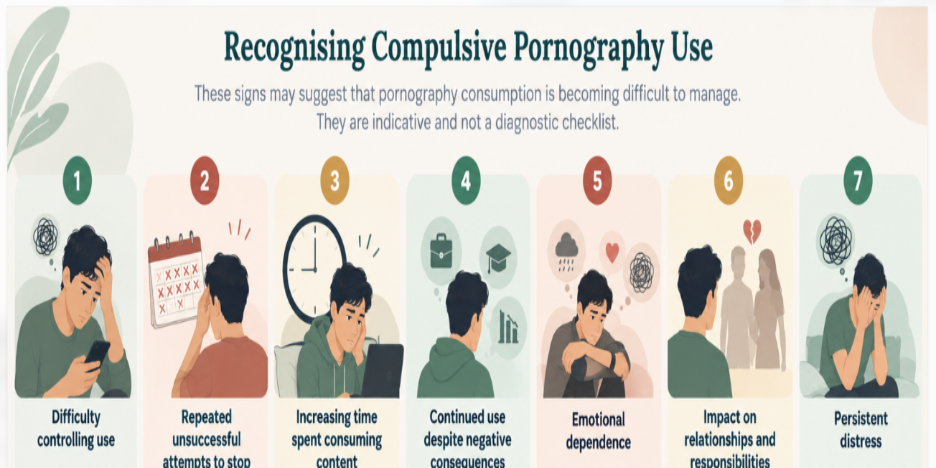
8 Signs of Compulsive Pornography Use
The following signs may suggest that pornography consumption is becoming difficult to manage:
1. Difficulty controlling consumption: Repeatedly trying to stop or reduce pornography use but finding it difficult to follow through.
2. Spending increasing amounts of time: Spending considerable time searching for, viewing, or thinking about pornography, sometimes at the expense of other activities.
3. Continuing despite negative consequences: Persisting with the behaviour even when it affects relationships, work, studies, or personal well-being.
4. Using pornography to manage emotions: Frequently turning to pornography when experiencing stress, anxiety, boredom, rejection or loneliness.
5. Seeking increasingly novel content: Feeling the need to explore different or more stimulating material to experience the same level of excitement. This may occur in some cases, but is not essential for diagnosis.
6. Experiencing discomfort when trying to reduce use: Feeling restless, irritable, or preoccupied with urges when attempting to change the behaviour.
7. Neglecting everyday responsibilities: Missing deadlines, losing sleep, withdrawing from relationships or neglecting personal care because of pornography consumption.
8. Secrecy and persistent distress: Feeling increasingly preoccupied with hiding the behaviour, particularly when accompanied by repeated unsuccessful attempts to regain control.
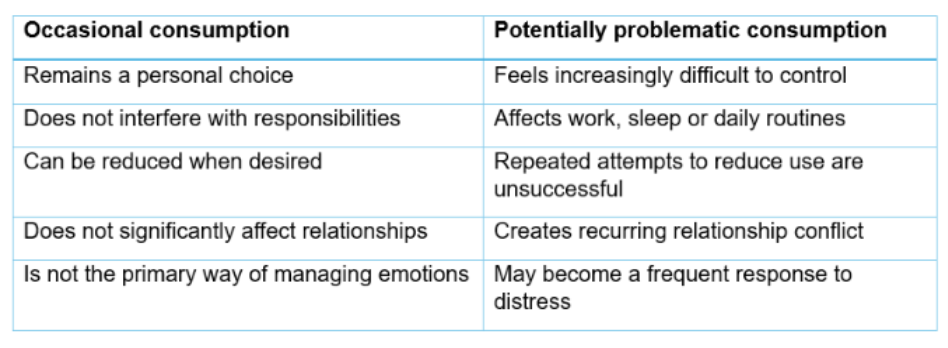
Compulsive Use Versus Occasional Pornography Consumption
These differences are indicative rather than diagnostic. A mental health professional can help assess the pattern, its duration, and its impact on the individual's life.
Recognising these signs is the first step towards understanding the behaviour, not a reason for shame. If several of these patterns feel familiar, seeking support may help clarify what is happening and what changes could be useful.
How to Overcome Pornography Addiction: Steps Towards Recovery
For someone experiencing compulsive pornography use, deciding to change the behaviour can feel difficult, particularly when previous attempts have not worked.
However, recovery does not necessarily mean relying on willpower or attempting to suppress sexual thoughts. It often involves understanding the emotional and behavioural patterns associated with pornography consumption and developing healthier ways of responding to them.
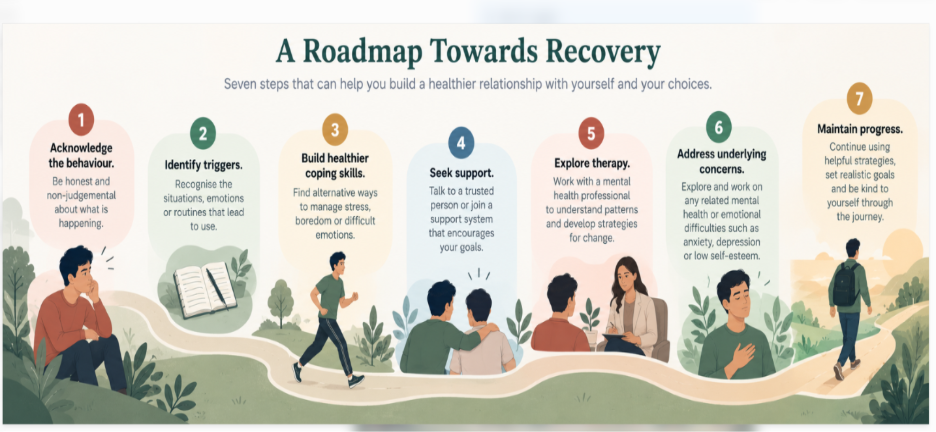
Here are seven steps that may help individuals working towards change.
Step 1: Acknowledge the Behaviour Without Shame
The first step is recognising how pornography consumption fits into everyday life.
Rather than labelling oneself as weak or lacking self-control, it may be more helpful to ask:
- How often am I engaging in this behaviour?
- Do I feel able to stop when I want to?
- Is it affecting my relationships, work or personal life?
- Have I been using it to manage uncomfortable emotions?
Self-awareness creates an opportunity for change without making the behaviour a reflection of one's worth as a person.
It may also help to distinguish between personal discomfort and actual impairment. Someone may feel guilty because their behaviour conflicts with their values, while another person may be struggling with repeated loss of control and significant disruption to everyday life. These experiences deserve to be understood separately.
Step 2: Identify Emotional and Situational Triggers
Pornography consumption may be associated with particular situations, emotions or routines.
For example, someone may notice that they are more likely to watch pornography late at night, after a stressful workday, or when feeling lonely.
Keeping a simple record of these situations can help identify recurring patterns.
Some common triggers include:
- Stress and work-related pressure.
- Loneliness or emotional disconnection.
- Boredom and unstructured time.
- Anxiety or low mood.
- Habitual smartphone use.
Understanding these triggers helps individuals work on the reasons behind the behaviour rather than focusing exclusively on restricting access.
Step 3: Develop Healthier Coping Mechanisms
If pornography has become a way of managing difficult emotions, replacing it with other coping strategies may be helpful.
Depending on individual preferences, these could include:
- Physical activity, walking or exercise.
- Creative activities such as music, reading or art.
- Mindfulness and relaxation exercises.
- Spending time with friends or family.
- Building a consistent sleep routine.
- Practising emotional expression through journalling.
The aim is not to eliminate every uncomfortable emotion. It is to develop different ways of responding to stress, boredom and loneliness.
Step 4: Create Accountability and Support
Trying to manage compulsive behaviour entirely alone can sometimes increase feelings of isolation.
Talking to a trusted person, joining an appropriate support group or seeking structured professional guidance may make the process feel more manageable.
Accountability should involve encouragement and realistic goals rather than surveillance, humiliation or punishment.
For some individuals, creating practical boundaries around device use may also help. This could involve keeping smartphones away from the bedroom, setting limits on late-night screen use or reducing exposure to situations that repeatedly trigger unwanted behaviour.
Step 5: Seek Professional Psychological Support
For individuals experiencing persistent difficulty controlling pornography use, professional counselling can help explore the underlying behavioural and emotional patterns.
Some therapeutic approaches that may be considered include:
Cognitive Behavioural Therapy (CBT): Helps individuals recognise triggers, examine unhelpful thinking patterns and develop alternative responses to urges.
Motivational Interviewing: Supports individuals in exploring their reasons for change, resolving ambivalence and identifying realistic goals.
Relapse Prevention: Helps individuals recognise situations that may increase the likelihood of returning to unwanted patterns and prepare alternative coping strategies.
A systematic review of treatment approaches for Compulsive Sexual Behaviour Disorder and problematic pornography use found promising evidence for psychological interventions, particularly those involving CBT. However, the researchers also highlighted limitations in the quality and quantity of available studies. Treatment should therefore be individualised rather than presented as a guaranteed solution.
Step 6: Address Underlying Mental Health Concerns
Sometimes, problematic pornography use may occur alongside anxiety, depression, loneliness or unresolved emotional difficulties.
For example, someone experiencing persistent low mood may use pornography as a temporary distraction. Unless the underlying emotional concern is also addressed, changing the behaviour alone may not provide lasting relief.
A mental health professional can help assess whether other concerns are contributing to the pattern and whether additional support is required.
Step 7: Find Culturally Sensitive Support in India
Seeking help for pornography-related concerns can feel particularly difficult in India, where conversations about sexuality may involve stigma, family expectations and fear of judgement.
Working with a counsellor who understands these cultural considerations can help individuals discuss their experiences more comfortably.
Support should be respectful of an individual's values, identity, relationship circumstances and personal goals. The objective is to improve emotional well-being and behavioural control, not to impose a particular moral position on sexuality.
Conclusion: Building a Healthier Relationship with Sexuality
The effects of pornography vary from person to person. While occasional consumption may not significantly affect some individuals, patterns that feel difficult to control or become a way of managing emotional distress may affect relationships, self-esteem and everyday well-being. Recognising the difference without judgement is important. Open conversations about sexuality, appropriate sex education and access to professional guidance can help individuals develop healthier patterns.
If pornography consumption is affecting emotional well-being, relationships or daily functioning, 1to1OnlineCounselling services offer a confidential, non-judgemental space to understand the behaviour, explore underlying concerns and develop healthier coping strategies. For adolescents and teenagers, 1to1help’s Student Assistance Programme (SAP) can provide access to appropriate support for emotional and personal concerns, helping young people navigate questions around sexuality, relationships and well-being in a safe and supportive environment.
FAQs
Q1. Is watching pornography a sin or an addiction?
Whether pornography is considered a sin depends on an individual's personal, cultural or religious beliefs. Psychologically, watching pornography does not automatically indicate addiction. Concern arises when consumption becomes difficult to control and begins affecting everyday functioning. Personal guilt and clinical difficulties are not necessarily the same.
Q2. Can pornography cause erectile dysfunction or sexual performance issues?
Research has not established that pornography consumption directly causes erectile dysfunction. Some studies have found associations between self-reported problematic use and sexual difficulties, but other factors, including anxiety, depression, medical conditions, and relationship concerns, may also contribute. Persistent difficulties should be discussed with a qualified doctor.
Read the research on pornography use and erectile functioning.
Q3. How do I know if I am addicted to pornography?
Repeated unsuccessful attempts to reduce consumption, difficulty controlling the behaviour and continuing despite negative consequences may indicate problematic use. Frequency alone is not enough to establish addiction. A mental health professional can help assess whether the behaviour requires attention.
Q4. Does pornography affect work performance and concentration?
It may affect work when consumption interferes with sleep, concentration, time management or professional responsibilities. For example, staying awake late to watch pornography may lead to fatigue and reduced focus the following day. The impact depends on the individual's pattern of use and its effect on daily life.
Q5. Is pornography addiction recognised as a mental health disorder?
Pornography addiction is not a separate diagnosis in the WHO's ICD-11. However, the ICD-11 recognises Compulsive Sexual Behaviour Disorder (CSBD) as an impulse control disorder. It involves persistent difficulty controlling repetitive sexual behaviour that causes significant distress or impairment. Distress based entirely on moral disapproval is not sufficient for diagnosis.
Q6. How does early exposure to pornography affect teenage brain development?
Adolescence is a period of ongoing brain and emotional development. Early exposure to pornography may influence how some teenagers understand sexuality, consent, body image and relationships, particularly without appropriate guidance. However, exposure does not automatically lead to addiction or harmful behaviour. Open conversations, age-appropriate sex education and digital literacy can help young people navigate online content.
Q7. What help is available for pornography addiction in India?
Individuals concerned about compulsive pornography use can consult a qualified psychologist, psychiatrist or sexual health professional. Support may include CBT-based approaches, behavioural strategies and work on underlying emotional concerns.
In India, 1to1help offers confidential counselling support. Another resource is iCALL, a psychosocial counselling initiative by the Tata Institute of Social Sciences.
References and Further Reading
1. Grover, S., et al. (2020). Research on pornography use among Indian adults. Indian Journal of Psychiatry. PubMed.
2. Jaiswal, N., et al. (2025). Understanding Pornography Addiction in India: Insights from a Retrospective Observational Study. BJPsych Open. Cambridge University Press.
3. Indian adults' problematic pornography use: Psychological correlates and predictors. (2025). Geopsychiatry. ScienceDirect.
4. World Health Organization. (2024). Clinical descriptions and diagnostic requirements for ICD-11 mental, behavioural and neurodevelopmental disorders. WHO.
5. Exposure to Pornographic Content Among Indian Adolescents and Young Adults and Its Associated Risks: Evidence from UDAYA Survey in Bihar and Uttar Pradesh. (2023). Archives of Sexual Behavior. PubMed.
6. Paslakis, G., Actis, C. C., & Mestre-Bach, G. (2022). Associations between pornography exposure, body image and sexual body image: A systematic review. Journal of Health Psychology. PubMed.
7. Grubbs, J. B., & Gola, M. (2019). Is pornography use related to erectile functioning? Results from cross-sectional and latent growth curve analyses. The Journal of Sexual Medicine. PubMed.
8. Antons, S., et al. (2022). Treatments and interventions for compulsive sexual behaviour disorder with a focus on problematic pornography use: A preregistered systematic review. Journal of Behavioral Addictions. PubMed.
9. National Institute of Mental Health. The Teen Brain: 7 Things to Know. NIMH.